The post Africa Going Bananas for CRISPR/Cas9-Altered New Variety appeared first on Techso Mogro.
]]>Dominating the world’s banana market is the Cavendish variety. That wasn’t always the case. Before the Cavendish, there was the Gros Michel, or Big Mike, considered a sweeter variety that succumbed to a global fungal infestation wiping the plant off the face of the Earth. That’s because commercial banana farming is a monoculture growing a single variety exclusively even though there are more than 1,000 different types including the banana’s bigger brother, the plantain (also a banana). Not only is commercial banana farming a monoculture, but also the bananas are all clones of the originally developed Cavendish variety.
In 2015 I wrote that 85% of bananas grown in Africa are consumed locally. That makes the banana, whose origin is Africa, even more popular than corn, millet and cassava on the continent. A distant cousin of ginger, bananas in Africa and elsewhere, have seen numerous diseases wipe out billions of dollars of crops in the past decade. Joining Fusarium, a fungal infection also known as Panama Disease, is the latest, Banana Xanthomonas Wilt or BXW, a bacterium that infects the entire plant. Once BXW takes hold, farmers have to cut down, uproot, and burn the entire plant.
The threat to the banana represents a food security issue for much of the Developing World where the crop is consumed locally and serves as a vital source of nutrition. In 2017, 5.6 million hectares (13.8 million acres) of land was dedicated to banana production globally. The biggest producers grown for domestic consumption exclusively were India and China, the former producing an average of 29 million tons per year from 2010 to 2017, and the latter, 11 million tons. Other large producers during the same period were the Philippines, Ecuador, and Brazil, again almost exclusively to meet domestic demand. In Africa, Angola has been the largest producer of bananas. Ivory Coast and Cameroon grow bananas for commercial export to the European Union. Just as do Honduras, Costa Rica, and Colombia in Central and South America, for the North American market.
Bananas are an African food staple, an important source of nutrition. A threat to the crop from disease could lead to local famines. That’s why scientists in Kenya at the International Institute of Tropical Agriculture are working with CRISPR/Cas9, a tool derived from a natural process within bacteria that combines RNA and the Cas9 protein to become a DNA editor capable of slicing out bad genes and replacing them with healthy ones.
The Institute’s focus has been on two particular genes, one called the Downy Mildew Resistance 6 gene or DMR6, and the other, the DMR6-Like Oxygenase (DLO1) which is expressed and activated when a plant is infected. The researchers successfully identified replacement genes from non-susceptible barley plants and removed the defective ones, splicing in healthy replacements into recipients, hopefully, to produce a mutated variety that was bacteria resistant.
The Institute’s most recent work, published in the May 2021 issue of the Plant Biotechnology Journal, So far shows that in greenhouse conditions, the recipient plants have demonstrated normal growth even when exposed to BXW. The next step is a field study. If successful banana farmers will once more see their crop flourish.
States lead author of the published paper, Dr. Leena Tripathi, “Investment in the genetic improvement of banana holds excellent prospects for improving food security as these crops feed more people per unit area of production than other staple crops.”
The post Africa Going Bananas for CRISPR/Cas9-Altered New Variety appeared first on Techso Mogro.
]]>The post Powerhive – A Company on a Mission to Bring Electricity to 1.3 Billion Who Don’t Have It appeared first on Techso Mogro.
]]>The company has developed a proprietary system combining software, hardware and third-party renewable energy solutions. Its software can analyze multiple sources of information including on the ground and satellite data to quickly determine a sites suitability for a microgrid. It then chooses the best renewable energy technologies, backed up by battery storage, and combines them with proprietary smart meters, inverters and a cloud-based management system for continuous oversight.
In 2015 the company established its first African subsidiary. Powerhouse East Africa Ltd., is the first private provider of energy in Kenya. Prior to its launch Powerhouse worked out the kinks at four pilot project sites in Kisii, Kenya. To motivate its first 300 customers upfront payments were kept low. In addition each was given a mobile app to monitor their own energy use and manage payment. Mobile payments are big in Kenya. The build-out used local materials and labour. Installed capacity amounted to 80 Kilowatts. The illustration below is of a typical Powerhouse microgrid site.

What are the challenges of microgrids?
It is not in deployment so much as in ensuring that all customers get power and that no one customer steals power from the rest. Reliable continuous power is another challenge. In the past when microgrids failed in remote areas it could take days to get them up and running again. Powerhouse wants to attain the kind of reliability in its microgrids that can be found in power grids throughout the Developed World.
The gold standard for reliability set by telecommunications companies is “five 9s” which means uptime of 99.999% which translates to downtime of less than 2 minutes per year. Many national power grids in the Developed World approach that standard but in the Developing World such reliability has been unattainable to date even from national grids.
Powerhive’s solution provides them with access to their installed microgrids through the Internet, giving them the means to monitor and provide remote troubleshooting continuously 24/7. A typical microgrid includes a community of homes each equipped with a smart meter and a base number of outlets and chargers. Customers choose the level of service that fits their economic means. For the poorest it gives them electrical lighting replace the cost of running and fueling kerosene lamps in their homes. For some customers it means getting their first refrigerator. And for small business enterprises in remote villages it means having enough power to operate equipment for manufacturing or services.
One customer story says it all. Dominic Ratemo Ondieki, a Kenyan describes how it has changed his life.
“Before signing up for Powerhive, I was a casual laborer. I earned enough to get along, but it was difficult…..when Powerhive came to our village, I started a business operating a posho [the Ugali word for corn or maize] mill, which has increased my daily income to 450 KES [about $4.50 U.S.]. I now have enough money to pay my children’s tuition. I hope Powerhive comes to other villages in Kenya so that more people can benefit.”
Currently the company with funding assistance from the United States government is working to provide microgrids to 20 million homes in Kenya as well as in Ethiopia, Ghana, Liberia, Nigeria and Tanzania. Within a decade it may light up all of sub-Saharan Africa.

The post Powerhive – A Company on a Mission to Bring Electricity to 1.3 Billion Who Don’t Have It appeared first on Techso Mogro.
]]>The post Communications & Biomedicine Update: Cellphones Impacting Healthcare appeared first on Techso Mogro.
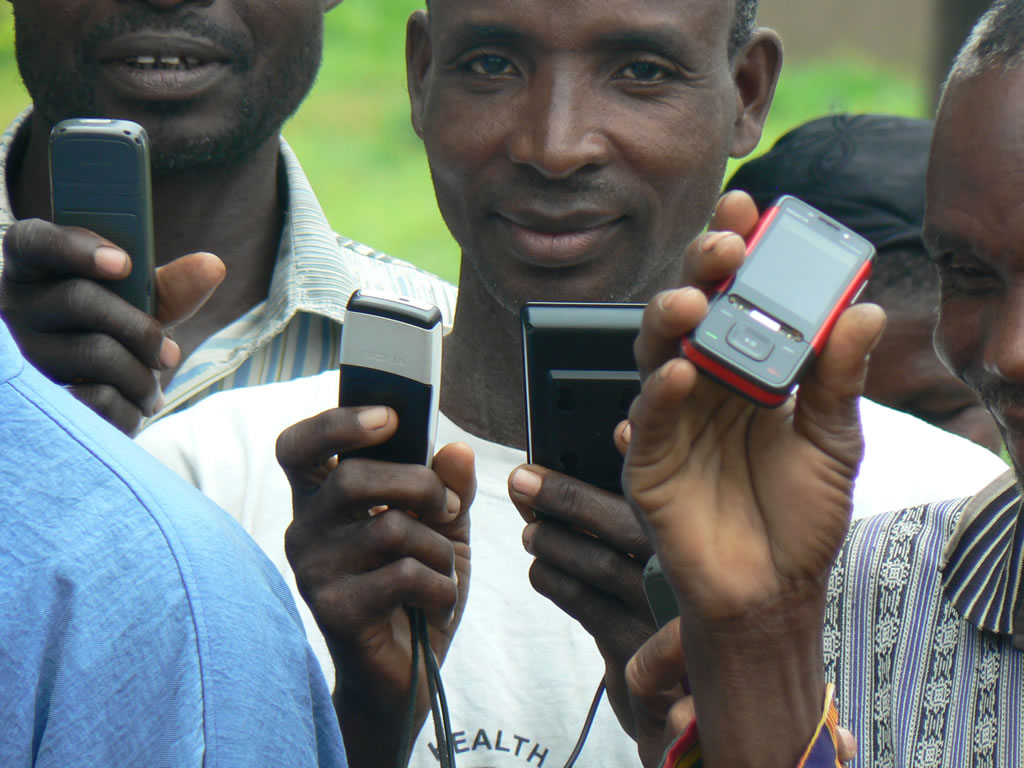
]]>A good example of how ubiquitous the technology has become can be seen in states like Nigeria where in 2000 there were 30,000 cellular subscribers. But today there are 140 million, an 87% market penetration. This growth can be seen elsewhere on the continent and it is leading to breakthroughs for emergency services and the medical community.
How can that be? Here are just a few examples.
Kenyan Study
Last year researchers published a 2008 to 2009 study of 15 million Kenyans tracking their travel habits by cellphone signal. The location data could be gleaned from the 11,920 cell towers in the country. The movement of cellular phone customers was then correlated to incidence of malaria outbreaks. What the study showed was how malaria spread (see map below) from west to east across the country, from Lake Victoria to Nairobi.

This is the type of information that makes it possible to pinpoint source of disease outbreaks and target interventions early to stop its spread. With malaria, for example, although mosquitoes are the source of the parasite, it is infected asymptomatic people that facilitate its spread because they get repeatedly bitten by other mosquitoes who then pick up the infectious agent and go on to bite uninfected people.
Peru and South African Studies
Another study in Peru used ordinary cellphones (not the smart kind) to do field research studying the results of a randomized drug trial. In South Africa recently a number of community health workers used a combination of a web-based application and short messaging services (SMS) on $40 Nokia 2626 mobile phones to gather survey information from 39,665 households related to family wellness.
Cellphones in Africa are also being used to monitor livestock health, to facilitate patient transport expeditiously from remote areas to urban hospitals, and to provide in field support for remote health workers. For overall global health there is no doubt that this type of data collection gleaned from cellphone networks will lead to better data modeling of disease outbreaks famines and natural disasters and should lead to faster responses from the emergency and medical facilities within Developing World countries.
The post Communications & Biomedicine Update: Cellphones Impacting Healthcare appeared first on Techso Mogro.
]]>The post Mobile Phones Spawn a Revolution in Entrepreneurship in East Africa appeared first on Techso Mogro.
]]>Today 26 million of Kenya’s 41 million citizens have mobile phones and almost two-thirds of these users conduct business from them including online banking, news searches and seeking of information on health and medical issues. And Kenya’s population is young with almost 60% between the ages of 15 and 35, a population eager to use new technology including mobile phones and the Internet.
All this connectivity is inspiring a new generation of entrepreneurs, some who have found a place in which to hatch their ideas. The organization is called iHub, an innovation community located in Nairobi, Kenya’s capital, that provides a physical incubator for new inventions and business ideas. But iHub isn’t just a physical space. It is also a virtual community reaching out to more than 6,000 members and receiving about 1,000 new applications to join annually.

If you visit the website Rolodex it currently lists 121 new startups of which the following nine caught my eye.
Recently 10 companies in the iHub incubator received seed funding from venture capitalists. iHub’s past success stories include two worthy of note.
Ushahidi
Ushahidi, meaning “testimony” in Swahili, came into existence because of the disruptive violence that followed the disputed Kenyan presidential election in 2008. Concerned citizens who were also good programmers got together and decided that crowdsourcing incidents of violence and pacification would be useful. They built Ushahidi as an open-source platform allowing anyone with access to the web or a mobile phone the ability to join an online community and submit incidents to the site which would then appear on a map. Since its founding Ushahidi has gone viral (see map below) and is now crowdsourcing crises around the world including the 2010 Haitian earthquake and more recently in 2012, Hurricane Sandy. I checked to see if Ushahidi has anything going in my neck of the woods and found a site focused on the Great Lakes, with news announcements, data reports, and events all accessible by clicking on the map interface.

MedAfrica
MedAfrica is a healthcare app that runs on mobile phones. It links people to health content and services with a goal to improve the overall health of Kenya’s population. The current app contains a directory of 7,000 doctors and 3,000 hospitals, plus information on diseases and on tracking signs and symptoms. The goal eventually is for MedAfrica to tie in content voluntarily provided by pharmaceutical companies and other players in healthcare, allow app users to connect to doctors by mobile phone to discuss medical problems and setup appointments.

Mobile phones have given a whole new meaning to the words “Out of Africa.” And maybe in the near future when I write about the MIT Technology Review 50 New Disruptive Companies, several will have taken their first steps from incubators like iHub.
The post Mobile Phones Spawn a Revolution in Entrepreneurship in East Africa appeared first on Techso Mogro.
]]>