I will start with the one most blog readers would be unfamiliar with unless you’re Canadian that is and know the name of our Prime Minister. His father Pierre Trudeau was Prime Minister, and the son has followed in his footsteps with three terms in office.
Where Pierre Trudeau bowed out of politics on a snowy February 29th evening, his son has yet to take the hint that it is his time to leave. Justin Trudeau is a classic example of being dead right; right on social policy, right on environmental policy, but not right in timing his departure.
Trudeau has implemented carbon pricing and stuck with the program that will in future years be seen as landing on the right side of history. Trudeau has made efforts to reconcile the country’s colonial history with its Indigenous population, also the right thing to do. He has instituted programs and policies like national pharmacare, dental care, childcare, and urban housing initiatives. He has bought a moribund pipeline company and completed the project to rescue landlocked oil sands operations to get their products to market, and done this despite it countering his stated goal to decarbonize the country’s economy to mitigate climate change.
It doesn’t matter that he has done all of the above because one thing he is not doing has made him dead right. He has overstayed his welcome after nine years in charge. Canadians in poll after poll see him as the problem. He doesn’t and that’s the definition of being dead right. He needs to resign as Prime Minister. A by-election this week in a Liberal bellwether riding in Toronto, a bastion for the federal political party could persuade him to go. By doing this he may save all the policies and initiatives he instituted from going down with him in a federal election expected a year from now.
Second on our list is Benjamin Netanyahu, Israel’s embattled Prime Minister. Netanyahu is not an easy man to like. By staying in office he has avoided corruption charges for accepting gifts from foreign entities.
In my opinion, he has been on the wrong side of issues more than being on the right. In the latest election, to return to the prime minister’s office, he brought extremist parties into his government.
His surreptitious policy of supporting payments to Hamas in Gaza for years, with Dubai being the middleman, has kept them in power while continuing to separate Palestinians from the West Bank and Gaza from establishing a united front. The money has served Hamas well, politically and militarily. No doubt this money helped to buy the weapons used on October 7th and continues to help it in spreading knowledge of its victimhood all over the Internet.
Post the October 7th, 2023 raid into Israel, Netanyahu has vowed revenge on Hamas. Most Israelis at the time agreed. Most people around the world detested what Hamas did on that day. Hamas still holds more than one hundred Israelis hostage and scores of bodies of those they captured or killed that day or who have subsequently died as captives.
Netanyahu has avenged the Gaza attack ten times turning Israel’s victimhood into the opposite in the view of many around the world. In swearing to wipe out Hamas and put the Gaza Strip and its people under Israeli military control, Netanyahu has instituted a policy bound to fail. Netanyahu’s revenge may seem right to him but it is a policy that is dead right. He has overstayed his welcome. If he cannot be pushed from office by the members of his cabinet, by the mass protests in Israel happening every weekend, then the Knesset’s members need to vote and replace him.
The longer Netanyahu remains in power, the less likely Israel and Palestine will find a peaceful resolution to a land dispute that has gone on for more than a century with origins in World War One and the Balfour Declaration.
The third on my list of leaders who are dead right is Joe Biden, President of the United States. When first elected Biden stated he would be a one-term President. As a one-term president, he would reverse the course set by the worst impulses of his predecessor, Donald Trump.
His progressive agenda on climate has made him an environmental champion. He is reindustrializing the American heartland. He has expanded the public health mandate. He has rallied Western democracies to help Ukraine in fighting Russia’s war of aggression.
He has largely stayed away from condemning the actions of the previous administration, and the attempt by Trump and his minions to overthrow election results.
What he hasn’t done is stay younger than his 81 years now show. He has noticeably aged in office and despite having done so much right, in running again, he is dead right. By staying on he may end up with the one result he doesn’t want, the return of Donald Trump to the presidency.
My U.S. friend who recently became a Canadian citizen, when asked if there would be any more elections for President if Trump is returned in November said: “Not while Trump is still alive.”
To not be dead right, Biden can still name a successor from the ranks of the Democratic Party or a prominent independent before or at the upcoming convention. It will cause a political earthquake but the shockwave may bring Trump tumbling down and prevent what could turn into a disaster for America.
I first came across the concept of “dead right” while working for a very large U.S. high-technology company. We were in the middle of a hostile takeover of a prominent competitor. We succeeded but those in the acquired company were unhappy. In a parting shot, the former CEO talked about our company leaders as being dead right. He said there would be consequences and he was right. Scrutiny by the Securities and Exchange Commission of both the takeover and my company’s financial reporting unleashed a scandal and charges being laid against our management with several ending up in jail. I had long departed before all of that came home to roost but the phrase “dead right” remained with me.
The meeting of the G7 leaders ended this week and some of them on display will soon find themselves equally dead right. Add Rishi Sunak, the Prime Minister of the United Kingdom, as one, and Emmanuel Macron, the President of France as another. It seems being dead right is a virus and transmissible when it comes to world politics.
Dead right may soon reappear in the technology world as the industry goes nuts over artificial intelligence (AI). In the last week, Apple jumped into the AI arms race with Microsoft, Google, OpenAI, Amazon and others. Each tech behemoth is trying to outflank the other with AI algorithms that train on billions of pages of unstructured data scraped from the Internet with little thought or rationale beyond keeping ahead of the competition to be first to create artificial general intelligence (AGI).
Without guardrails, one or more of these decision-makers will prove to be dead right when AGI makes humanity that much poorer and increasingly dependent on algorithms as substitutes for human intelligence and creativity. These tech giant enablers will make money for shareholders in the short term. But we will all suffer in the end. To me, those who lead us down this path will obtain the ultimate “dead right” prize.
]]>

Was Trudeau’s answer correct?
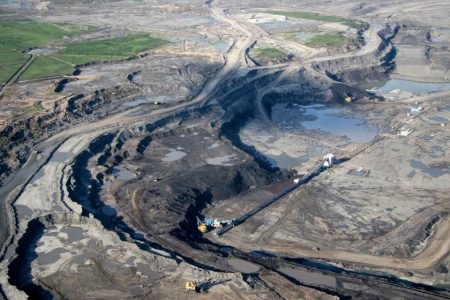
Only if you accept status quo thinking, that the economy of Western Canada will sputter and die without putting a pipeline in place to triple the flow of bitumen to the West Coast for oversea’s markets. The pipeline itself creates short-term jobs and very few of the long-term variety. But what it does do at the bitumen production end is encourage expansion of oil sands operations along with increased carbon emissions. Then if you follow the bitumen through the pipeline to the West Coast terminal where it will be loaded onto tankers destined for Asian markets, the decision will lead to increased emissions in shipping, and emissions created by the countries receiving, refining and burning the end products.
In effect what Canada will have done is pas the carbon buck overseas, putting off the hard decision of tamping down oil sands growth and production in pursuit of a low-carbon future. But Canada and its oil and pipeline companies aren’t alone in continuing to put money down on fossil fuel projects. Energy companies and governments around the world are doing the same thing. These are countries who have signed up to COP21 objectives to keep global warming well below a 2 Celsius (3.6 Fahrenheit) rise, striving for no more than 1.5 Celsius (2.7 Fahrenheit). But through lack of policy and regulation, they aren’t meeting their promises with very few exceptions (some Pacific and Indian Ocean island nations, and Costa Rica).
Andrew Grant, Senior Analyst at Carbon Tracker, and author of a new report published today argues that governments are a long way from Paris and November 2015 when they all signed on to reduce carbon emissions to beat the 2.0 Celsius upper limit. And because the vast majority of countries are policy deficient in addressing carbon reductions, and because demand for energy across the globe remains high, the fossil fuel companies are seizing short-term opportunity to drill and build more infrastructure. The worst offenders are in the United States under the climate change denying regime of President Donald Trump. Russia is equally culpable.
Grant quantifies the risk these countries, and the fossil fuel and energy companies they continue to support, are willing to take for short-term gain in his study by looking at projected energy demand based on trends. He creates three demand curve scenarios in his analysis.
In low demand new oil and gas projects between now and 2025 expose fossil fuel and energy companies to $1.6 trillion in investment risk.
In the middle curve increases in risk grow to $3.3 trillion.
And demand at the high end increases risk exposure to $4.8 trillion.
States Grant, “At present, governments’ policies fall a long way short of the ultimate goal committed to at Paris, but we should expect a ratcheting up of international efforts. Companies that misread the signals and overinvest in marginal oil, gas and coal projects based on a false sense of security could destroy shareholder value worth billions of dollars.”
Grant points out that the amount of money companies are slated to risk, in the absence of governments enacting climate change legislation with teeth, is staggering. We are talking trillions more than the risk exposure described above. Many of the companies with risk exposure are state-owned enterprises. So countries, by not committing to enforce COP21 goals to which they have agreed, double down on the risk exposure for their nations and citizens.
Millions of shareholders who own a percentage of these oil and energy companies are now exposed to risk and will take a financial hit having been misled, not only by their governments but also by the fossil fuel and energy companies, the latter having never been regulated to report their risk exposure.
Risk by specific sub-sector is further described in the report.
In light of the risk exposure identified by the study, I wonder if Prime Minister Trudeau might reconsider his comments about balancing economic and environmental goals as justification for Kinder Morgan and other oil sands’ capacity investments.
This begs the question, why methane and not carbon dioxide?
The latter accounts for 82% of all greenhouse gases emitted from human sources in both countries. So methane is a junior partner as global-warming gases go. In fact it accounts for approximately 10% of all atmospheric warming emissions. Tackling 9% of the problem then doesn’t sound like much of an effort in fighting the causes of climate change. And tackling it from the perspective of the oil and gas sector represents a subset of total methane emissions.
What is the largest source of human methane emissions?
It is not the fossil fuel industry. It comes from the food we put on our plates and the farms that produce it. According to the U.S. Environmental Protection Administration, livestock and livestock waste emissions represent 36% of all methane emissions whereas natural gas and oil production produce 30%. But the President and Prime Minister in their announcement mentioned not a word about agriculture methane reductions.
How much does methane contribute to global warming when compared to carbon dioxide?
Methane produces 100 times more atmospheric heat than carbon dioxide and it does this in the first 5 years after entering the atmosphere. Over a century its total heat trapping impact is 25 times greater than carbon dioxide. But in 10 years methane breaks down so its impact is short lived.
Tackling methane emissions, therefore, is all about the short term whereas hand tackling carbon dioxide may not yield discernible climate change results for decades. Maybe that’s why the President and Prime Minister chose to announce a methane reduction strategy with a hope that reductions would lessen global warming trends.

So why target the fossil fuel industry?
Probably because it is the easier methane challenge to fix. The Porter Ranch leak in California over four months represented the worst methane leak in American history. Some 97,100 metric tons of the gas entered the atmosphere. That is equal to the warming effect produced by 572,000 automobiles over one year.
According to Thomas Ryerson, a chemist with the U.S. National Oceanic and Atmospheric Administration, “Almost every time you have hydrocarbon production and infrastructure you can measure leaks out of them.” At every step of the process from exploring to refining to piping natural gas to customers there is methane finding its way into the atmosphere.
So in natural gas production many mini Porter Ranches are out there releasing lots of gas from production to consumption. And when you consider the last decade in which hydraulic fracturing has opened up new sources of natural gas supply methane has become a much more contentious greenhouse gas problem. It’s everywhere leaking from wellheads, pipelines, storage tanks and rail cars.
Creating regulations to enforce emission cuts would be in addition to new rules being released to cut wellhead emissions. It is not surprising that the industry feels they are unfairly being singled out for their methane contribution. Kyle Isakower of the American Petroleum Association, in response to the announcement stated, “Additional regulations on methane by the administration could discourage the shale energy revolution that has helped America lead the world in reducing emissions while significantly lowering the costs of energy to consumers.” When you consider that agriculture is by far the largest methane emitter you can understand to some degree Isakower’s remark.
In the industry’s favour, between 2005 and 2012 oil and natural gas production decreased methane emissions by 15%. But this success is believed to be short lived because the fracking energy boom is expected to increase emissions by as much as 25% by 2025. It is, therefore, a logical target for the President to address. Is it equally logical for the Prime Minister?
In Canada Alberta is the primary industrial methane emitter largely from venting of natural gas sources. The government of Alberta has already pledged to reduce methane emissions from oil and gas operations by 45% so the Prime Minister in agreeing to meet the President’s commitment is restating Alberta policy.
What’s still missing?
Tackling agricultural methane emissions, a much more difficult challenge. And of course establishing mutual national carbon dioxide reduction targets through the application of a carbon tax and other carbon mitigating policies.
And finally the unknown natural methane challenge of melting permafrost will run its course as the Arctic increasingly warms.

