“Climate change is a threat that magnifies other threats,” he stated using examples like Darfur in Sudan where disappearing pasture and water sources from prolonged drought produced a war between farmers and herders. Orbinski went on to state that “the number one health issue…is no longer AIDS, it’s drought,” when referring to the 29 million currently on food assistance in Southern Africa.
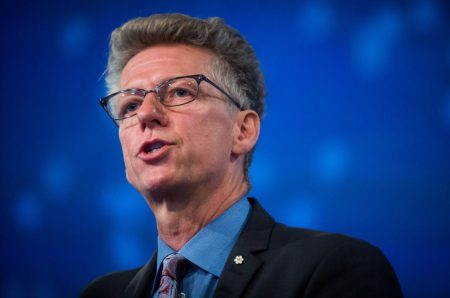
Orbinski also told his Canadian audience that our country is not exempt from the impacts of climate change stating, “the rate of increase in temperature in Canada is two times higher than the global average.” In particular, the people and wildlife of Northern Canada and coastal regions are at the greatest risk in the coming decades. Orbinski noted that city where he was speaking to Canadian Medical Association (CMA) members, Vancouver, was susceptible to rising sea levels that could make parts of it uninhabitable by century end.
Orbinski didn’t mince his words. He told his audience that humans are adding a billion people to the planet every 13 years and that alone is contributing to massive increases in carbon emissions. That is why he called on doctors to carry the message to the public asking them to be “genuinely courageous on climate change.”
So what are the marching orders for Canadian physicians in addressing the global warming challenge?
According to Dr. Cindy Forbes, CMA President, Canada’s doctors have been active already in calling for action by federal, provincial and territorial governments to address climate change. Representing 83,000 Canadian physicians, the CMA, along with other national medical associations was a signatory to the World Medical Association Declaration of Delhi on Health and Climate Change signed in 2009.
That agreement states that physicians have “an obligation to highlight the health consequences of climate change and to suggest solutions.” That physicians must:
Orbinski states, “it’s time for the CMA to step up and step out.” I agree. Until his speech this week did the public even know what physicians were thinking about climate change and the role their association had signed onto as both advocates and activists? The average Canadian didn’t have a clue.


