Roscosmos is the successor to the Soviet Union’s space program. Today it continues to launch Soyuz capsules to the International Space Station, ferrying cosmonauts, astronauts and freight to the circling low-Earth orbit laboratory. The technology being used is fifty years old with some hardware and software upgrades. Russia’s exploration of planets like Venus is moribund. And the latest failure, Luna 25, a mission to plant a robot lander near the Moon’s south pole crashed when a thruster fired for 43 seconds too long.
Luna 25 followed the 1976 Luna 24 mission. This 48-year gap itself demonstrates just how far Russia’s scientific space capability has declined since the breakup of the Soviet Union. And although future Luna missions are planned, many will borrow technology from other countries’s space agencies and non-Russian companies. The timetable for Russia’s return to meaningful science and exploration of the Moon which was to follow the year-long Luna 25 mission would have had a Luna 26 and 27 follow-up. The legacy Soviet Union, Venera program exploring the planet Venus, seems even further compromised by the Luna 25 failure.
Meanwhile, other nations are stepping into the gap left by Russia’s absence. Most notably this week it is India that has performed what Russia failed to do: land near the Moon’s south pole, the first national space program to achieve this feat.
India’s space agency is called ISRO. It has been developing its launch capability and has plans to send a crew into space in the next few years using a space module of its design and manufacture. ISRO tried to land on the Moon a few years ago with the Chandrayaan-2 mission. It crashed. But this time the Chandrayaan-3 lander with an onboard rover performed perfectly making a soft landing. Yesterday the rover descended by ramp to the surface to begin a mission planned to last less than one lunar day (about two Earth weeks). It is unlikely that Chandrayaan-3 will survive the deep freeze of the two-week lunar night. India joins the U.S., China, and the former Soviet Union as the only countries to land on the Moon.
Leroy Chiao, a former NASA astronaut who flew three Space Shuttle missions and copiloted a Russian Soyuz to the International Space Station, has written about the current state of the Russian program. In an opinion piece appearing on CNN’s website, he writes about the international prestige gained by the Soviet Union when it launched Sputnik in 1957. This was followed by the first animal sent into orbit in 1957 and the first human in space in 1961. These successes profoundly impacted the world demonstrating the capacity of the Soviet Union to achieve great technical and scientific feats.
But now, Chiao notes when comparing Russia’s failure and India’s success in the last week, that the former, unlike the United States, China, the European Union, Japan and India have all surpassed the nation that inherited the Soviet Union’s space successes. The disintegration immediately followed the collapse of the Soviet Union leaving a cosmonaut stranded on the Mir space station for more than a year. Without U.S. support, Mir would have ended with a human tragedy.
And without the U.S. buying seats on Soyuz flights and other national space program partners, Russia’s ISS presence may have been further compromised. The Soyuz filled the gap between the last Space Shuttle missions and the beginning of U.S. commercial space partners, specifically SpaceX. Other than continued presence on the ISS there is very little for Russia to brag about its current space program.
But now even Soyuz spacecraft have been compromised with one having to be replaced while at the ISS, and another found with a hole in it while parked at the space station. As Chiao notes, “Russia’s bedraggled space program mirrors the state of the nation itself.” Instead, he calls what is happening in Russia lamentable and further evidence of a nation that no longer leads in engineering and science in space. China has surpassed it. India appears to be on the way to surpass it. Others soon may follow. What a sad statement about the place where humanity first made it to space on the way to reach for the Moon and beyond to the stars.
]]>This will not be ISRO’s first lunar landing mission. Chandrayaan-1, launched in 2008, included an orbiter and probe which descended to the surface to detect the presence of water molecules. The October mission, Chandrayaan-2, is to include an orbiter, lander, and solar-powered rover. The plan is for a surface mission lasting 14 days with the rover covering a 400-meter (1,300 feet) radius. The rover will gather evidence of existing surface deposits of Helium-3 which naturally collects on the Moon’s surface as the solar wind strikes it.
Helium-3 today is being used in experimental fusion reactors. The isotope is not radioactive. And the moon NASA estimates has in excess of 1 million tons of the stuff valued at $5 billion per ton. If India and other space operations can harvest even a quarter of the Moon’s Helium-3 it could help provide clean nuclear fusion power to the entire Earth for up to the next five centuries.
India hopes to be the first into this lucrative opportunity. There are many obstacles to be overcome on the way to making this commercially viable. Mining Helium-3 is just one step in a very complex logistical supply chain. ISRO will have to develop a space infrastructure that can get the Helium-3 from the lunar surface to Earth. As of yet, no country or commercial space venture has put together such an operation.
Although the nations of the world have been governed since the 1960s by an international treaty that prohibits the commercial exploitation of space, it appears that keeping to this promise is getting harder to do. Two nations, the United States, and Luxembourg have both legislated the right of commercial entities to mine asteroids and other space bodies. India will probably soon enact legislation of its own to give legality to its ambitious plans.
Rakesh Sharma, who flew on board a Russian spacecraft back in 1984, is quoted in an article in The Times of India, stating: “You can’t go to the Moon and draw boundaries…..I want India to show that we’re capable of utilizing space technology for the good of people.”
Doing space missions on a small budget is turning out to be India’s thing. The country spends about $1.7 billion annually on national space projects which include two made-in-India rockets launching numerous satellites including telecommunications, global positioning systems, and scientific payloads. India is even competing with SpaceX in the space launch business these days. The country sent an orbiter to Mars on the first try (something the Soviet Union couldn’t do) and did it on the cheap. The upcoming lunar mission is expected to cost $125 million.

China
According to a recent article appearing in New Scientist, China has plans to build a spaceplane to do suborbital flights carrying up to 20 tourists to the edge of space. The China Academy of Launch Vehicle Technology (CALT) has designs for a spaceplane to take off in a similar fashion to the former American Space Shuttle (without external fuel tanks), reach 100 kilometers in altitude, and then unpowered descend and glid to an airstrip landing.
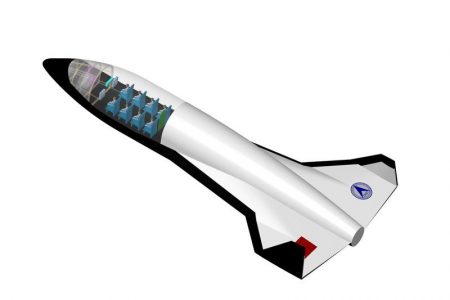
Two versions of the spaceplane are being considered. The first a 5-passenger suborbital craft. The second a 100-ton, 12-meter wingspan, spaceplane capable of reaching an altitude of 130 kilometers traveling at speeds of Mach 8 and giving 20 tourists a 4-minute weightlessness experience. The Chinese want to make suborbital flights affordable although the price tag they are contemplating is almost identical to what Virgin Galactic is charging for a single ride. The spaceplane will be designed for reuse, good up to 50 flights before decommissioning or refurbishing. The timetable for first test launch with no passengers is 2020.
China’s ambition to revolutionize space travel isn’t limited to suborbital flights. The country has announced plans to build a nuclear-powered shuttle capable of Deep Space flight to asteroids. CALT sees a nuclear fleet as the key to interplanetary flight, and commercial exploitation of near-Earth and Deep Space. These nuclear-powered ships will be built to colonize the Solar System. States Li Hong, Director of CALT, “By 2045, China will have the best transport system in space.” That includes a Chinese Moon base and taikonauts landing on Mars.
India
India’s space agency, the Indian Space Research Organization (ISRO), has made great strides in the last few years. The country has even begun testing a command module similar to Apollo, for future Indian astronauts to travel to low-Earth orbit on Indian rockets.
Like China, India sees two tourism opportunities for its space program: suborbital and orbital travel. But unlike China, India has yet to launch a human into suborbital or orbital space using a rocket or spaceplane of its own design.
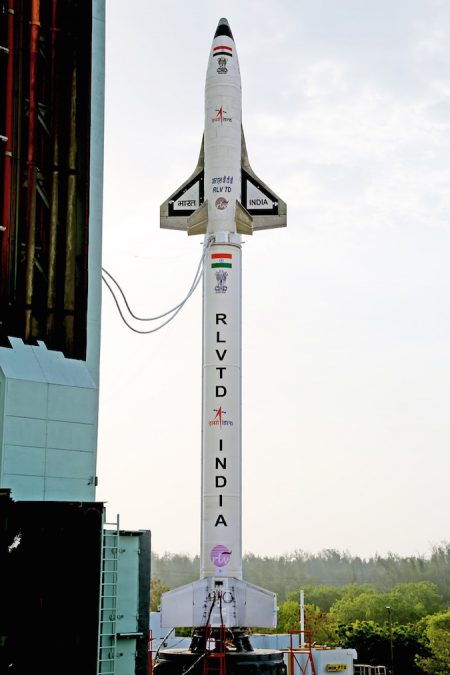
In 2016, India launched a prototype spaceplane, the RLV-TD, in a suborbital flight that reached 65 kilometers in altitude. The vehicle had no onboard engines but the initial test proved the viability of the heat shield technology, and the airflow design, which allowed the craft to hit its defined splashdown target 450 kilometers away. In the post-mortem press conference, Indian officials admitted that they were still 15 years away from offering suborbital space flights.
In 2014, India took its first steps to send Indians to space unveiling a 4-meter tall module designed to carry two astronauts and a payload of up to 9 tons into low-Earth orbit. Subsequently, an unpiloted successful launch was made in December of that year using India’s largest booster rocket, the Geosynchronous Satellite Launch Vehicle (GSLV) to test the design. The capsule landed in the Bay of Bengal and was recovered after splashdown. India continues to test its homegrown technology but has announced no timelines for a first Indian to fly to the edge of space or to orbit. Don’t be surprised, however, if by the mid-2020s, India joins the United States, Russia, China, and commercial space companies in achieving these milestones.
Japan
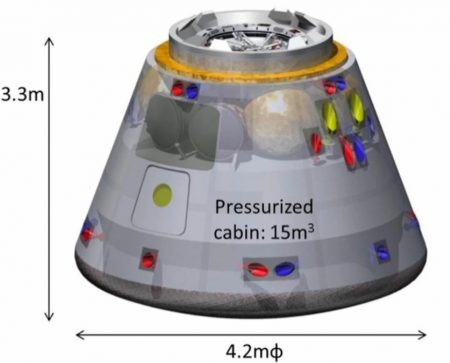
The Japanese Aerospace Exploration Agency (JAXA) back in 2012, according to Space.com, set a target date of 2022 to launch astronauts aboard two possible technologies: a home-built capsule, and a space plane. The capsule, depicted in the diagram below eerily resembles Apollo, and like its predecessor would be designed to carry a crew of three plus 400 kilograms of cargo.
The JAXA spaceplane would be similar to Sierra Nevada’s Dream Chaser. It too would carry a crew of three and would be designed to land on runways.
Currently Japan launches HTV resupply capsules to the International Space Station. This is expendable technology (use once and then burn up in the upper atmosphere). The plan is to make the HTV recoverable and reusable. If successful, this would be the first step to creating a crew capsule.
Japan also has plans to bild more powerful rockets capable of carrying larger payloads to low-Earth orbit and beyond. And it has ambitions to offer point-to-point suborbital passenger service with new spaceplane technology within a decade.
]]>The Indian Space Research Organization (ISRO) launch of its GSLV Mk-III X rocket from Satish Dhawan Space Centre in Sriharikota near the South Indian coast. The initial 20-minute suborbital test flight contained a 3-ton payload called the Crew Module Atmospheric Re-entry Experiment (CARE). It successfully separated from the rocket’s upper stage at an elevation of 125 kilometers (78 miles) and on descent deployed parachutes to assist in a splashdown in the Bay of Bengal. The scene of recovery very much looked like an Apollo event.

Developed initially to allow India to independently put up to 4,000 kilogram (8,800 pound) payloads into geosynchronous orbit, hence the acronym GSLV which stands for Geosynchronous Satellite Launch Vehicle, it is now hailed to be India’s primary launch system for its astronaut program.
The year 2014 represents India’s great leap forward in space. First there was the very successful Mangalayan Mars orbiter mission. And now India has launch capacity for human space flight. What are the country’s future plans? Eventually even larger payload GSLV versions are in the planning and production stage with the ultimate goal to send Indian astronauts to the Moon.
This further heats up the East Asian space rivalry between China and India and should be a further stimulus to other space programs in the region including those by Japan and South Korea.

MOM joins MAVEN, the NASA orbiter that arrived just two days prior. The contrasts between these two missions to Mars couldn’t be greater.
MAVEN cost $671 million USD. MAVEN will study the Martian environment and atmosphere in an attempt to reconstruct its history from warm and moist some 4 billion years ago to today’s cold desert. It will do this using a scientific package containing nine sensors designed to monitor solar radiation, rate of atmospheric loss, and the highly variable planet’s magnetic fields.
MOM cost between $74 and 78 million, about one-ninth the cost of MAVEN. MOM’s work is in many ways far more interesting if you are seeking signs of microbial life on Mars. That’s because MOM will study methane in the Martian atmosphere. Whiffs of methane have been detected by other Martian orbiters. Curiosity, however, has not detected methane in Gale Crater. So is methane on Mars a geological or biological phenomenon? MOM may help answer that question. The rest of the instrumentation on MOM is designed to study Martian weather and map the mineral composition of the planet’s surface.
One thing MAVEN doesn’t have is a camera. MOM does and will take colour pictures of the planet surface. India released the first image taken yesterday, reproduced below.
For India’s ISRO the success of MOM represents an extraordinary technological achievement, one the country hopes to duplicate before the end of the decade by starting its own human spaceflight program. It seems in the 2020s near-Earth orbit will be an ever more crowded bit of space. And who knows, maybe those NASA time frames on human space flight to Mars may be moved forward with more nations and commercial operators joining the race to space.

India joins Japan, China and South Korea in a new Asian space race. And India is doing it on the cheap with MOM costing $75 million U.S. India had hoped to use its next generation launcher for this mission but the program continues to run into problems with the upper stage of its more powerful rocket boosters, the Geosynchronous Satellite Launch Vehicle and its successor the GSLV Mark III. Instead it used the Polar Satellite Launch Vehicle (PSLV) which is the workhorse of India’s satellite launch vehicles.
You have to admire India’s space effort but one wonders how a nation still struggling to feed all of its people would choose at this time to go to Mars. The scientists and engineers at ISRO point out that India is as advanced as any of the Developed World countries with engineers and PhDs all capable of developing advanced technology. They believe that a space program will yield benefits for the country that will far exceed the investment. And for those who suggest that India is merely trying to keep up with China, they answer “we are not in a race with anybody….we are in a race with ourselves.”
MOM contains five Indian-built solar-powered instrument packages. Two are designed to do a detailed study of Mars’ tenuous atmosphere looking for methane and measuring deuterium to hydrogen ratios. The remainder will map the surface composition and mineralogy of the planet and will record high-resolution colour images. MOM will try and find the methane previously reported by orbiters but strangely not found by Curiosity in its exploration of Gale Crater.
So let’s hope over the month that MOM has several successful burns that place it in the right orbit for trans-Mars alignment on November 30.

]]>


