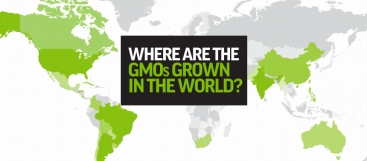
In 2012 according to a report released last year on GMO crops the Developing World represented 52% of all hectares dedicated to these types of crops. Farmers cultivated a record 170.3 million hectares of GMO crops in 2012. That represented an increase of 10.3 million hectares from 2011.
This trend to acceptance of GMO by an increasing number of farmers despite resistance from many who describe the produce as “frankenfoods,” speaks to its many benefits:
This unprecedented change in the Developing World has witnessed the adoption of GMO crops at a rate three times faster and five times bigger than in the Developed World. Globally 2012 saw a new record in the number of farmers adopting GMO with 90% of them, 15 million, represented by small plot growers from within Developing World countries. These farms, classified as subsistence in the past, now have the opportunity to free themselves from the cycle of continuous poverty.
I know that many of you reading this blog posting may be averse to GMO on principle. But the reality of food demand for a growing world population, most of it happening in the Developing World, is making GMO a technology of significance. Food security is overcoming fear, uncertainty and doubt.
Here are some additional statistics you may find interesting:
The European Union is the one region in the world that continues to question the science of GMO in food crops. This is the only part of the world where GMO crop planting declined with notably Germany, Sweden and Poland creating regulations that discouraged farmers from considering the technology.
In Africa where agriculture represents 35% of the gross domestic product and employs 70% of the labour force, population growth and changing climate are creating tensions around adoption of GMO crops. GMO planting has been approved in Burkina Faso, Egypt and South Africa. But has been confined to test fields in Uganda, Kenya, Nigeria and a number of other African countries. This hesitancy is somewhat tied to the European Union’s policies of limited acceptance of GMO. But according to the International Food Policy Research Institute, the demographic pressures will soon push African policy makers to adopt GMO as an answer to poverty and food challenges on the continent.