———-
How private is your personal information? Even if you don’t use social media, social media is using you.
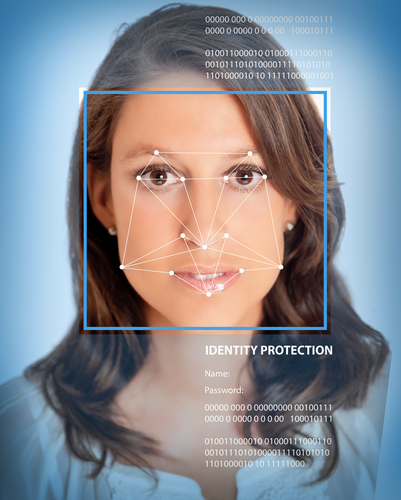
Facial recognition technology has been used by law enforcement and intelligence gathering agencies for the last century. Remember how police dramas always have victims looking through books of images to identify perpetrators?
So what protections exist for the average, law-abiding citizen who just wants to be left alone?
No Protections (Yet) Against Collecting Facial Recognition Data
Cameras are the main tools that collect data about us, particularly our faces. Security cameras help build intelligence and police databases. As more police forces now require officers to wear body cameras, will these images also be collected?
Police are “collecting a lot of information that could impact a lot of completely innocent people,” statesMichael German, a former FBI agent now with the Brennan Center for Justice, in an article appearing recently in The New York Times. The FBI’s Biometric Center of Excellence is developing sophisticated facial and gait recognition technology to identify extensive details, even how an individual moves.
Currently, we depend on the goodwill of local communities that balk against using technology that gets so, well, personal. Boston tested and rejected facial recognition tools in 2013, deeming it too invasive. Pressure from citizens and civil rights leaders persuaded the city council of Oakland, California to halt development of a center, backed by federal funds, that would link surveillance cameras around the city to license plate readers and “gunshot microphones.” Instead, it formed a committee to study privacy and access concerns. For now, individuals can turn to reputable sources that track cybersecurity and identity issues to stay informed.
Will There be a Backlash Against Invasion of Privacy?
More Americans are aware of and concerned about the lack of privacy protections in today’s cyber-soaked world, according to research conducted by the Pew Research Center. Pew surveyed 607 adults in the wake of Edward Snowden‘s revelations about cellphone tapping and Internet-based spying conducted by government security agencies.
Pew also found people are split over whether to assume new acquaintances will search the Internet for information about them. Interestingly, just 62% said they’ve done Internet searches to see what’s out there about them, and a mere 6% received alerts every time their name came up online.
People under age 50 seem to be the ones most proactive to investigate and take steps to protect their privacy and information.
Are We Imitating the Government with Parent Technology?
At the same time, the youngest Americans may very well grow up thinking electronic monitoring is acceptable.
The technology market is currently booming with devices and apps that allow parents to monitor children’s movements in the name of safety. Trax24 and Canary both use GPS tools to monitor where children are and to report when smartphones are being used inside a car. It also alerts parents when children are heading to areas deemed off-limits.