Peter Diamandis has his take on how AI will positively disrupt medical practice. Peter is both a medical doctor and an engineer. He is convinced that AI is the answer to much of what is currently wrong in the state of medicine.
He writes that doctors today are overworked and drowning in data. He quotes data from a 2017 report that stated 30% of physicians spent between 17 and 24 minutes with a patient, and that 29% spent less time, between 13 and 16 minutes per patient. So the majority of patients who wait an average of 26 days to see their family doctor, end up with a face-to-face visit between 13 and 24 minutes.
Why? One of the reasons is the fallout from COVID-19 which has witnessed since 2020 a large number of doctors, particularly general practitioners, retiring. In 2021, 20% of healthcare workers resigned with 117,000 physicians in the United States leaving. That same year only 40,000 got their medical license.
Another reason for physicians drowning in data is the sheer volume of medical information being published today. It is a wonder that doctors can keep up with the 28,000 peer-reviewed medical journals that publish more than 1.8 million articles per year, or roughly 5,000 new papers every day.
Then there is the paperwork and patient record keeping. Patient diagnostic testing results, consult reports, patient visit notes, prescriptions, phone calls to referring specialists, and more fill a doctor’s daily workload. The billing and other administrative tasks of a medical practice add even more to this.
As a patient, you have to ask, can my family physician keep up-to-date in the face of this incoming and outgoing information overload?
Should doctors feel threatened by the arrival of AI in their profession? Some may feel that their expertise is not to be trifled with. AI algorithms, some believe, are committing systematic theft on a mass scale using physicians’ online records in the large datasets that AIs use for training.
Others, however, welcome AI for its enhanced capability, speed, consistency, and accuracy in diagnoses. AI algorithms can consume images, test results, case notes and more and do it with blinding speed. An AI can train on hundreds of thousands if not millions of cases. A physician, even a specialist, will only have knowledge and exposure to a fraction of that number.
AIs see subtle patterns that humans miss. AIs can think outside the box and make associated links among data that indicate a disease may be starting. A physician may never see the links at all.
Some physicians fear that dependence on medical AIs will decrease the knowledge possessed by doctors and other health professionals and that the AI black box will take over. A Viewpoint article on the JAMA Network last month entitled “AI’s Threat to the Medical Profession,” notes that fear:
“Most of today’s knowledge on disease mechanisms will be forgotten and we will be ruled by systems that only focus on intervention strategies that will provide the best possible outcome. This era will show a decrease in intellectual debates among colleagues.”
Peter Diamandis argues that knowledge, nor methodologies, will not be forgotten when a medical AI starts working with a general practitioner or specialist. He states the transformation to a partnership between physician and AI co-pilot is to be celebrated and not feared.
Along with the arrival of the Internet-of-Things (IoT) and the proliferation of smart connected sensors and medical devices, medicine is entering a transformative moment with the patient being a partner in achieving healthy outcomes.
I’ll give you an example. When COVID-19 infected my heart I developed arrhythmias (rhythm disturbances) that in my case were considered life-threatening. I bought a Kardiamobile, a device that I could use at home to test my heart. Whether I felt a change or not, the use of this device once a day gave me a 30-second electrocardiogram that I could share with my doctor. I didn’t need an appointment or a lab requisition for me to know my heart’s status, and for my doctor to be kept informed.
The arrival of medical AI and this sensory revolution of medical devices means that wait time issues will no longer be all that relevant. Instead, medical AIs will continually monitor the sensors a patient has on hand and the data produced to assist a doctor without being intrusive.
Peter writes:
“Rather than waiting a month to book your annual medical checkup, sensors on your body, in your body, and your environment (bedroom, bathroom, office, and car) will be constantly monitoring your physiology and uploading data to your medical AI.”
Continuous monitoring will catch diseases at their earliest stages, allow for rapid intervention, and forego medical appointments, hospital visits, or prolonged hospital stays.
Medical AIs will fill the gap created by retired and missing healthcare workers. It will give physicians the means to provide continuous healthcare without being overwhelmed.
]]>The fifth generation of wireless connectivity is making its way across the world. For businesses, this game-changing technology will have broad impacts on what businesses are able to achieve—especially through Internet of Things (IoT) devices.
5G means wider bandwidth and more connectivity, not just people-to-people, but people-to-devices, and devices-to-devices. It means the ability for business to mine even more data and respond to clients in near real-time.
5G represents an upgrade from 4G by a factor of 10. That means everything is faster, that more devices than ever before can be connected, that the promise of autonomous vehicles can become a reality,
Exploring some of the details should help you to understand how the integration of this technology is impactful beyond anything in telecommunications we have seen to date.
5G stands for the fifth generation in mobile network connectivity. It isn’t limited to the newest smartphone models. In fact, its most significant innovation is the ability to connect many more people, machines, and devices than were ever possible before in a single network.
5G networks are already up and running in many countries and communities. You might even have a smartphone that supports the new telecommunication standard. It is intended to not just give us higher feeds and speeds, but greater reliability because the density of the network nodes (telecommunication towers) far surpasses that of 4G and the latter’s predecessors.
Facing the digital needs of a world reeling from the coronavirus pandemic, the arrival of 5G networks means innovative solutions as well as challenges for businesses as they shift to this new standard which better addresses the high-speed requirements of today and the future.
The benefits are a big step forward for business with 60% of executives already reporting new avenues of opportunity opened by 5G and the IoT. IoT will simply be better on 5G networks.
How so better? Connected IoT devices make it possible for vast networks to send and receive data. The result will be better insights into business processes, the condition of equipment, the status of inventory, and virtually anything else you can imagine with billions of sensors inter-communicating. Broader bandwidth will mean more awareness, more information, and more cost savings.
5G technology will impact business IoT devices by:
These and more offerings from a highly connected network give business leaders the ability to monitor equipment and processes at an unprecedented scale. As a result, businesses can receive a productivity boost, allow new industries to emerge, and support smaller organizations during times of fluctuating supply and demand.
Large businesses will enjoy the scale and scope of data insights offered by 5G combined with IoT. This means the potential to revitalize and streamline industrial processes, logistics and supply channels.
5G with IoT represents a game-changer. From smart factories to smart cities, managing the future requires the harmonization of IoT devices with the power and bandwidth of 5G. For businesses already using IoT it will be impossible to notice the difference.
But transitioning to 5G may require businesses to update computing and telecommunications devices and other parts of their network infrastructure which means there are new overheads to consider. Recouping the investment should happen pretty quickly as businesses see the value in the data mining, low latency, and connectivity that 5G will provide.
One final note of caution. Don’t neglect cybersecurity when integrating 5G and IoT devices into your IT and telecommunications infrastructure. As much as the technology will open new business opportunities, it will invite a new generation of cybercriminals seeking the weaknesses in your operating environment.
]]>Three characteristics of the material and some basic physics make its energy-generating capabilities possible. The thin lattices of combined metallic materials when applied to the silicon alter the positioning of atoms within the overall structure.
When the lattices are first laid down each of the metal components is uniform in structure, that is, iron atoms sit next to each other. But in combination with the silicon the iron atoms suddenly intersprerse with the vanadium, aluminum, and tungsten atoms in random fashion creating an irregular atomic arrangement which changes its electronic properties. This allows low electrical resistance created by an external heat source to travel from one part of the crystalline structure to areas of lower temperature.
In a recent University press release, Professor Ernst Bauer who heads up the Solid State Physics Laboratory, states, “The electrical charge moves through the material in a special way, so that it is protected from scattering processes. The portions of charge traveling through the material are referred to as Weyl Fermions.”
If you are unfamiliar with Weyl Fermions as I was, they were first discovered in 2015 and are massless quasiparticles found in special materials that move through them. This creates thermoelectric flow.
Thermoelectric materials have a unique ability to convert heat to electricity. Called the Seebeck effect, it happens when a material has a temperature gradient between its two endpoints. The energy generated tends to be so small and most of the time we overlook it. But this new material creates a thermoelectric effect 2.5 times or more greater than any thermoelectric materials created to date. At the same time the material transfers the thermoelectric flow without transferring the heat. This makes it ideal for electronics running without a battery or wire attached.
The growing number of electronic devices in the world of the IoT (expected to be in the trillions within a decade or two) means power requirements may grow exponentially. The Vienna University discovery could mitigate the energy capacity increase dramatically which has implications for greenhouse gas emissions from fossil-fuel emitting power plants, and climate change.
Sensors and other electronics with a small, efficient thermoelectric element attached to them could use waste heat sources to trigger the thermoelectric effect.
The University has filed two patents and is working with partner AVL Graz, the National Institute of Materials Science in Japan, and the Chinese Academy of Sciences to commercialize the discovery. Should it become widely adopted, it will represent a significant breakthrough in powering Internet-based devices without requiring the collateral increase in power generation capacity as the telecommunications world rolls out 5G networks.

It’s April 2026, a cold, rainy day in Chicago. You’re supposed to meet your mother for lunch, but forgot your coat. On the Uber autonomous ride downtown, a quick online search reveals a shop selling new eco-friendly vegan leather jackets you’ve heard so much about, a leather grown from stem cells, no cows harmed along the way.
You click the “interested” button on your smartphone. The store’s AI interfaces with your phone’s AI and redirects your driverless taxi. You arrive outside one of those throwback “craft retail” shops where they still employ actual humans. A woman named Sylvia meets you at the door, holding the vegan-leather coat you selected. The jacket fits perfectly which isn’t a surprise because a couple of months ago you used a modified Wii sensor on your phone to map your body precisely. The shoes you wear have weight sensors so if your waistline fluctuates, the mapping app automatically adjusts.
When you decide you want the coat there is no need to wait in line to pay. Cameras and sensors track both you and the jacket as you walk out the door deducting the price of your purchase from your smartphone bank app or cryptocurrency account. Plus, because the store’s AI knows this is your first trip to its premises it sends you a digital 25% off coupon for your next purchase. While the transaction is being completed the store’s smart racks let the retail AI know which leads to an immediate reorder from the manufacturer. And because you are the third person in the last two days to express interest in the product, the AI retail identifies a trend and orders a few more of the jackets in popular sizes while informing the marketing AI to spread the word.
This scenario by 2026 could very well become a reality as the ever-expanding impact of IoT technology becomes pervasive. In fact, according to research done by McKinsey, by 2025, IoT is projected to have a value impact on retail somewhere between $410 billion and $1.2 trillion USD.
Automatic checkout, which frees customers from the drudgery of waiting to pay is already here. Amazon first introduced the concept in 2016 with its initial Go store in Seattle. To date, Go has 13 stores, 4 more on the way, and up to 3,000 potentially planned for construction by 2021. The New York Times recently described the Go shopping experience as a combination of “shoplifting” and going through a turnstyle to enter the subway.
How does it work? Visitors to a Go store scan a QR code using their smartphones. The AI does the rest with cameras tracking customer movement down the aisles, while weight sensors built into the shelves track movements of inventory. Just grab what you want, drop it into your backpack and head home. As you leave the Go store sensors aggregate the cost of your purchases and automatically charge them to your Amazon account.
This is frictionless shopping with no long lines, and no cashiers. Staff requirements are reduced with the only employees currently in these stores being an individual who checks IDs in the liquor section.
How much can retailers who adopt this technology save? McKinsey estimates automated checkout will reduce retailer overhead costs by $150 to $380 billion USD annually by 2025.
That’s why Amazon isn’t the only company looking at a cashierless future. San Francisco-based startup v7labs, for instance, is helping any retail store to make this transition. And Alibaba’s cashierless Hema stores have been testing the concept in China a full two years ahead of Amazon’s Seattle site. And two other startups, AiFi and Grabango, are developing autonomous systems for retailers to compete with Amazon.
Smart shelf technology already exists employing RFID (radio frequency identification) tags and weight sensors to detect an item’s removal. This innovation deters theft, automates restocking, and ensures inventory is maintained in the right spot. Intel’s version operating today uses a screen built into the shelf. Tomorrow, smart shelves will be AI-enhanced and capable of conversing with consumers and employees. Is the sweater you’re holding dry clean only? Just ask the shelf.
Perhaps the biggest improvement for retail will come in the area of efficiency, particularly supply chain management. Back in 2015, a Cisco study found that IoT solutions will have impact supply chain and logistics yielding $1.9 trillion USD in savings. The use of AI will provide data pattern detection at a sophisticated level that humans cannot equal. Every link in the supply chain, inventory levels, supplier quality, demand forecasting, production planning, transportation management, and more will be impacted.
How far away are we from this supply chain and logistics overhaul? Today, 70% of retail and manufacturing companies digitize every aspect of their logistics operations, and they are doing this even before robots arrive to further alter the retail experience.
In an article appearing in the Harvard Business Review, entitled “Welcome to the Experience Economy,” author Joseph Pine describes 200 years of economic development using a curious metric, the birthday cake.
In the agrarian economy, mothers made birthday cakes from scratch, mixing the products produced by farms including flour, sugar, butter, and eggs. The cost of these commodities amounted to dimes. As the industrial economy advanced, mothers started paying a dollar or two to purchase Betty Crocker’s premixed ingredients. Later, as the service economy took hold, busy moms and dads ordered cakes from a local bakery or grocery store at a $10 to $15 cost, ten times as much as the packaged ingredients. By the 1990s, time-starved parents stopped making the birthday cake and even throwing the party, and instead outsourced the entire event, spending $100 or more at places like Chuck E. Cheese’s, the Discovery Zone, the Mining Company, or some other site that staged event for kids, often throwing in the birthday cake for free.
Welcome to the emerging experience economy. By replacing premade ingredients with premade experiences, the experience economy is a new kind of disruptive business model satisfying a new need. For most of history, we didn’t want pre-packaged experiences because life itself was the experience. Just staying safe, warm, and fed was adventure enough. Technology has changed that equation and retailers are capitalizing on this.
Today, for many of us experiences have become more valuable than possessions. Look at the Starbucks experience turning the drinking of coffee into a destination event. Outdoor retailer Cabela’s has turned its showrooms into faux outdoor adventures complete with waterfalls.
Consider the 10-year vision of the Westfield shopping center group in something they call “Destination 2028.“ Replete with hanging sensory gardens, smart changing rooms, and mindfulness workshops, Westfield proposes shopping centers that will be a “hyper-connected micro-city” with an incredible amount of personalization. Combining entertainment, wellness, learning, and personalized product-matching, Westfield aims to make you a better you, and the company is betting that this will be worth the inconvenience of having to leave home to shop.
This is a big bet. In the United States, there are more than 1,100 malls and 40,000 shopping centers. Minnesota’s Mall of America is a small town, spanning 5.6 million square feet and housing 500 stores. China’s largest mall covers over 7 million square feet, bigger than the Pentagon. Through an upgraded experience economy these malls may have a chance of surviving the bricks-and-mortar decline.
If Destination 2028 does the job, malls will be very different from what you see today and retail will become a convergent industry, where time spent in a mall pays multiple dividends. Shopping will become healthcare, will become entertainment, and will become education and so forth. If not then our malls will become distant memories as shopping becomes another task outsourced to AI.

]]>

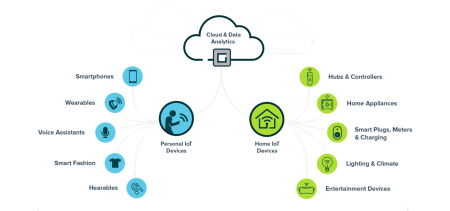
Where is IoT catching on?
The biggest challenges to manage this explosive growth include:
The bandwidth requirements are being handled by more radio spectrum auctions creating a bigger pipe for all the data sharing that IoT adds to the Internet. And the emerge of 5G networks means a dramatic increase in both feeds and speeds and volume.
But it is in the area of security where we need to focus our management of IoT. In the European Union this year, it has implemented the General Data Protection Regulation (GDPR) which will begin to be enforced this coming May. Although more focused on user interactions on the Internet, the GDPR has relevance to IoT related to the sharing of personal data collected by connected devices. IoT devices are built into processors and controllers, and therefore, have access to personal information. Think about when you buy a smart device and register it online. You enter personal data. It is, therefore, important that the information contained within or acquired by an IoT device be subject to the same privacy regulations of any other data on the Internet. That means IoT devices need to have a privacy design default.
In the United States IoT guidelines are set by the Federal Trade Commission (FTC) with the following recommendations:
In 2017 a bill was introduced in the U.S. Senate that required IoT devices to include a list of security features before they could be purchased for government use. Although the bill did not pass that year, it has been resurrected in the current Congress and should get the votes in both houses to become the law of the land this year.
So who is pushing IoT technology? Here are twenty companies who have joined the IoT arms race:
This above list is far from complete. New IoT startups are coming out of the woodwork these days and I suspect a year from now that we will have several significant players joining this group. After all, there is plenty of room in a market that projects the number of devices to go from 26 billion currently to more than 75 billion by 2025.
When I was a young man the North American industry was dominated by three major manufacturers, Ford, General Motors, and Chrysler. It wasn’t always this way. In the early days of the automobile, there were many more than just the Big Three. But the cost of remaining competitive in the age of automated assembly lines and rising demand soon drove many small players out of the market. The last to go included companies like American Motors and Studebaker.
In Europe, the same kind of concentration evolved, but unlike North America, national policies protected domestic manufacturers leading to a more fragmented and diverse group of car companies. Even in Europe as the 20th century unfolded, we saw fewer and fewer players.
The arrival of South Asian competition was the next disruptive change that impacted both North American and European manufacturers. With lower labour costs and a knack for gauging what customers in foreign markets wanted, Japanese and Korean car manufacturers established themselves globally. Today Toyota and General Motors vie for who is the largest car manufacturer in the world.
Today the industry faces an emerging series of changes that bear little resemblance to what has gone before. The disruptors include:
According to a Gartner report, there will be 250 million connected cars on the road by 2020. These will be vehicles containing sensors that not only improve the safety of your daily personal commute but also alter the way we drive. Gartner may be too optimistic with that number but I share with you my latest experience in driving from Toronto to Atlanta and back over busy highways and in urban streets.
My new car is a Toyota RAV4 Hybrid. It has sensors that provide radar, lidar and images of the road ahead, to the side and even behind. It has blind spot and pedestrian detection, lane veering and correction, adaptive cruise control, and onboard navigation. In leaving Toronto I entered the daily destination and let the vehicle guide me. On the highway each day I barely touched the brakes as the adaptive cruise control adjusted my speed to the vehicles around and in front of me. When it rained my windshield wipers operated automatically adjusting speed to the amount of precipitation falling. It was, for me, a remarkable demonstration of automotive technology advancement from my previous vehicle bought in 2006.
When we ran into a roadblock because of an accident, taking a detour didn’t mean we would inevitably be lost. Instead, the car adapted to the changed routing and plotted an alternate way to get to our destination. And as I wound through the mountainous, off-highway roads because of the detour, the car even advised me to take a break because it sensed a change in my driving behaviour (all those sinuous curves had me touching the centre line from time to time). And all of this capability came from sensors and cameras tied to an onboard computer system that sensed what was happening around the vehicle and to me the driver.
That’s what cars today are capable of doing, and not even high-end, expensive ones. So once cars are connected and talking to each other expect a whole different ballgame with vehicles becoming aware of driver health and alertness and being able to bring a car to a halt when detecting danger to driver and occupants.
We, today, are less than a decade away from seeing this level of technology deployed on a global scale.
Google and Apple are not car manufacturers in the classical sense. The former is a software giant. The latter creates gadgets from iPads to iPhones to iMacs. But both are in the automotive business these days creating software algorithms that will produce self-driving, autonomous vehicles. They are joined by old guard car manufacturers like Ford, General Motors, Toyota, and new guard companies like Tesla.
The estimated date when autonomous vehicles become ubiquitous ranges from the mid-2020s to 2030. Autonomous vehicles will use IoT technology and AI to make them far safer than their human-driven predecessors. And once cars are self-driving it will mean a change in who owns these vehicles, or just uses them as needed for commutes.
It is fair to say that those living in rural areas will still buy cars. But urban commuters may forego ownership and instead just summon an autonomous car as needed to get from point A to point B.
China has recently announced a total transition to EVs and other zero-carbon vehicles beginning in the mid-2020s. Volvo, Daimler-Benz, Volkswagon, Ford, General Motors, Toyota, and others have committed to expanding production of EVs and fuel-cell cars. The United States is building EV-friendly highway corridors by populating them with charging stations. Tesla is rolling out an EV charging network. Japan has more charging stations per capita than any other country in the world with maybe the exception of Norway. The latter gives preferential treatment to EV owners on its local ferries, on toll highways, and when parking in cities.
By 2030 the car landscape will be significantly different from what we see today. China today has scores of EV car companies with names we have never seen before. Some will make it to North American and European markets. Traditional manufacturers that don’t transition to EVs will find themselves losing market share and the confidence of a public committed to reducing carbon pollution.That means impacts will be felt on the fossil-fuel infrastructure that has been in place to service the internal combustion engine and diesel-powered vehicles from the dawn of the automobile age.
Impacts will be felt on the fossil-fuel infrastructure that has been in place to service the internal combustion engine and diesel-powered vehicles from the dawn of the automobile age. Service centers and gas and diesel pumps today predominate. In 2030 they will live side-by-side with an equal number of fast charging stations and other zero-carbon refueling technologies.
Cars Will Become Shape-Shifters
Today the first materials with a memory are in laboratories and being field tested. These materials can deform and reform. They are self-repairing. They even restore finish and colour.
What does that mean for an industry built to service fender benders and collision repair? That’s an industry worth close to $200 billion U.S. today. And what about the companies that provide vehicle insurance for collision and damage? Or about the lawyers that get involved in accident litigation?
The future of car ownership is in flux, particularly for urban commuters. Millennials are already less interested in owning or leasing cars than their parents. The reasons are numerous. First, cars are expensive and millennials are still finding their way in the job market which is being disrupted by many other 21st-century technology phenomena. Second, urban millennials are environmentally conscious and less willing to contribute to carbon pollution and global warming, prepared to use public transit and mobility-as-a-service operators like Uber and Lyft to get around.
Without traditional buyers, to whom will manufacturers sell their vehicles? Will Uber, Lyft and other fleet operators like Hertz, Budget, Enterprise, and Avis be the principal consumers of EVs and autonomous vehicles that roll off assembly lines in the late 2020s? In the case of the latter, the business paradigm will be dramatically different from a car-for-hire service.
Or will the manufacturers become fleet operators themselves, providing a service to consumers of all kinds, from freight hauling to passenger commutes? Some speculate that manufacturers will enter into partnerships with mobility-as-a-service companies offering ride-sharing to governments, companies and individual consumers.
The automotive industry, software developers, insurance companies, governments, and financial institutions will all face challenges as the technologies described above become integrated into cars. With vehicles bristling with sensors they will become a way for governments to collect data about the condition of road infrastructure and the environment. Even the medical profession will benefit as cars observe drivers and note behaviour that could uncover a potential health problem. Automotive repair will change from fixing things that are broken to anticipating maintenance before things break.
Traffic management with autonomous vehicles will be less fraught with bottlenecks and accidents as AI combined with IoT sense traffic patterns and improve the flow of cars and trucks. And as for auto thieves, I’m not sure there will be much of a market for stolen vehicles or parts since embedded sensors within components and materials will serve as an alarm beacon almost impossible to block from a prospective buyer or the police. So much for Grand Theft Auto. And maybe so much for traffic cops.
In an article appearing in The Market Mogul today, the author writes about the “two accelerating forces that will govern the automotive industry’s future.” They are fragmentation or convergence, and regulatory pull and consumer push. Regulatory pull will induce technology adoption at a faster pace, responding to issues like government environmental policy. Consumer push will reflect attitudes on the part of the next generations of car buyers. All in all, the industry and its supporting cast are in for a rollercoaster ride over the next 10 to 15 years.

IoT describes the communication among multiple physical devices, embedded in vehicles, buildings and equipment. These devices contain software and sensors that can exchange data over networks. IoT is in many of the tech toys that run our homes and lives. From high-tech thermostats and wireless cameras to voice-activated artificial intelligence, IoT, once a futuristic concept, is now very much a part of our present.
Wireless Technology
Think back to just 10 years ago, right before the first iPhone. Our home technology was contained to a cable box plugged into a wall outlet, a phone plugged into a landline jack, and a home security system wired to a dedicated security network. All of that is almost completely gone in 2017.
For example, take security camera systems. You can still pay a monthly fee for a legacy service to monitor your home, but many opt out of subscriptions for a one-time purchase of a wireless security system. With cameras available from Lorex Technology homeowners can record to a DVR with the images accessible by smartphone or tablet.
Lighting
Lights haven’t changed much in the last 50 years. Our bulb choices may burn longer and use less energy, but we still flick the same manual switches as our parents and grandparents before us. We have dimmer switches for mood lighting but even those are managed manually. And when our day is done we go around turning out the lights.
Today all that can happen automatically. Light systems like Philips Hue are connected to a hub using a Wi-Fi network so that every bulb can be controlled through a smartphone interface. You can dim the lights, change their color, and assign settings all through your phone. And you are not limited to bulbs. Light fixtures, desk lamps, and even LED strips can be connected to the hub and can be controlled by phone. You still have the old switches, but you won’t need to use them unless you can’t find your phone.
Automation
Like the lights and manual switches that controlled them in the last century, many of our other home systems required us to intervene by hand. If you left the house on a cool morning and it turned into a hot day, too bad. Your house when you got home would be roasting.
The Nest and other smart thermostats have changed all that. They learn your daily habits. They track your comings and goings. They are connected through your local Wi-Fi hub to your H/VAC units that provide heating and cooling. When you are out your smart thermostats left on their own can control temperatures in your home. Or if you choose you can use a smartphone app to control your H/VAC remotely. Any way you use them, these automated IoT devices save money by reducing your energy use.
Voice Command
In the last two years, this has become a game changer. Voice command hubs like Amazon Echo, Google Home, and Apple’s HomePod do everything from playing your favorite music to ordering products, to reminding us of appointments, and keeping us up-to-date on the latest news of interest. And all of this is controlled by your voice.
Voice command interfaces are the stuff of science fiction or so we thought. Our imagination about the voice-controlled home, or a voice-controlled spaceship such as in the series Star Trek, suggested a technology that would be ours sometime in distant future. But no, it’s here now. Through IoT today we are living in that Star Trek future, whether it is using your voice to command your security system, lights, thermostats, or to recall favorite music, the daily calendar, and the latest information and news. All of these Wi-Fi interconnected smart systems are accessible by voice creating lives in our home that can be managed hands-free.

]]>
According to a recent study by Gartner, Inc., smart agents will facilitate 40% of mobile interactions and usher in a post-app era by 2020. Virtual personal assistants and agents will analyze available data and consumer behavior to predict what you will need.
Do customers want artificially-driven engagement? The trends all point to a resounding “yes.” Consumers increasingly want omnichannel service experiences that allow them to pick up and continue a customer service interaction from social media and chat, to text and talk, without missing a beat. In order to meet this consumer demand, technology is continuing to develop more personalized interactive experiences.
The Gartner study doesn’t make any customer service predictions beyond 2020, but it is easy to see that industry will focus on three key ingredients to make the interactive experience ubiquitous:
Self-Service
Today’s consumers already use self-service options. They withdraw money from ATMs, use automated checkouts at grocery stores, and go online to get support questions answered. According to Fast Company, an American technology and business magazine, 70% of consumers expect company’s websites to include self-service where they can shop by browsing through product displays and get instant help without waiting around for a reply.
Tools like interactive voice response are enhancing the online experience. Aspect’s IVR solutions using advanced speech recognition can gather customer information and match it with data from customer relationship management tools. Once the information and data get collected, the technology is capable of delivering a highly personalized service.
The Internet of Things
Reuters, the newswire service reports that Europe’s biggest software firm, SAP, and German car parts maker, Robert Bosch, have teamed up to connect products, ranging from screwdrivers to cars, directly to the Internet. The partnership plans to harness a real-time database for Bosch customers to monitor the production process of orders and request customizations.
After customizing their order, customers will also use online self-service tools to reorder products or track shipments and delivery. Meanwhile, there are already services on the market to help companies reorder supplies or report technical issues. For example, a new connected Brita smart pitcher can reorder its own filters from Amazon without any human involvement.
The Interactive Experience
Self-service and the Internet of Things open a door to highly personalized, interactive experiences. Recently Bloomingdale’s Manhattan flagship store created an app that lets customers shop through an interactive window display. Customers stop, preview, and tap on the window. The interactive display allows them to place and customize orders without even entering the store.
And customers looking for an interactive fitting room experience to “blow your mind,” can step into Ralph Lauren’s flagship store in New York City where they can try on items, and browse through store inventory using the fitting room’s interactive mirror. Using the interactive display will summon a sales associate to complete the customer experience.
Regardless of how hyper-connectivity changes consumer behavior, customers will always demand quality and reliable customer service. Today’s companies are racing to leverage technology to create instant service and answers, while still producing a quality interactive customer experience. Will it dehumanize shopping, or will it enhance it? The jury is still out.

Smartphones are smarter than ever in 2017. At this January’s Consumer Electronics Show (CES), Huawei unveiled its Honor Magic phone, which uses facial recognition technology to take smartphone security to a new level. After configured to recognize your face, the phone uses its front-facing camera to verify your identity. If anyone else tries to look at your text message notifications, for instance, all they will see is a generic message that says “text message,” but when you look at the screen, the message sender and contents will be displayed. The Honor Magic phone is just one example of the kind of innovation happening in the mobile market, changes that are cutting edge.
Here’s a preview of tomorrow’s mobile technology as it looks from today’s frontier of innovation.
Artificial Intelligence Everywhere
The omnipresence of artificial intelligence is emerging as one of the key cutting-edge trends in technology in 2017, says Gartner. AI has become more sophisticated through advances in areas such as neural networks, natural-language processing, and deep learning. Meanwhile, the Internet of Things (IoT) has expanded connectivity within homes, cars and even cities. The convergence of these two innovations is making AI available everywhere, including mobile devices.
One byproduct of this development is the rise of virtual personal assistants (VPAs) such as Siri, Cortana, Alexa and Google Now. At this year’s CES, Samsung’s CEO, BY Yoon, pronounced that everything connected in the IoT will soon be controlled by voice. Amazon’s Alexa, which is today a VPA technology market leader, is being integrated with mobile devices such as Huawei’s Mate 9 tablet, enabling voice control of mobile devices to extend to other IoT devices. Amazon is also cultivating partnerships with major companies, such as Ford, turning Alexa into an onboard in-car system enabling users to control home appliances by voice while driving. Samsung now has a vacuum cleaner that lets you clean up by using your voice and Alexa.
Smarter Wearables
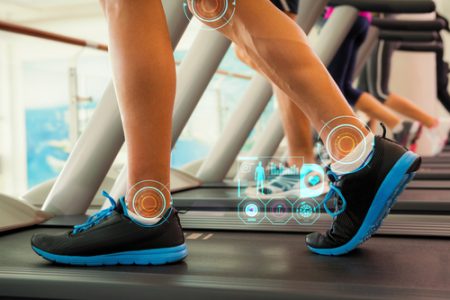
The extension of AI into IoT is promoting a trend toward smart wearables. Under Armour introduced an update to its smart shoe line at this year’s CES. The company’s previous smart shoes kept track of distance, time, split times and pace. The new upgrade adds sensors to track fatigue level. After making a series of test jumps, the shoes determine how tired you are, whether you should keep running, or whether you should increase intensity within your run.
Other smart wearables integrate global positioning systems (GPS) to help with navigation. For example, Garmin’s Fenix 3 Gray GPS Watch pairs GPS with an antenna and Extended Prediction Orbit technology to fix your position more accurately and faster than you could by GPS alone.
Apps for Everything
The ubiquity of IoT means a growing number of apps for everything, not just smartphones. States Bizness Apps CEO, Andrew Gazdecki, businesses, both large and small, are developing apps with AI embedded into them. Approximately half of small businesses already have an app, according to estimates based on a survey by Clutch. Organizations are using apps for everything from promoting ads, to accepting payments, to delivering services.
EffectiveUI won the 2016 Gold Stevie Award for helping the City of Denver design an app that lets citizens interact with their local government from anywhere. With the PocketGov app, citizens use their mobile devices to report problems, ask questions, renew license plates or perform a variety of other tasks. Expect to see more organizations into these types of useful apps helping them increase engagement with consumers and expand marketing outreach.
]]>
These are my top 10? What are yours?


