America was born of a revolution by colonies breaking away from Great Britain beginning with an independence declaration read to gathered Americans in towns and cities on July 4th, 1776. America’s revolution was one dominated by white males, largely of Christian faith, who were concerned about preserving their freedom to worship, to gain wealth, to obtain property, to be represented by peers in government, and to preserve slavery. Women, indigenous people, and, of course, the slaves had no say in the outcome.
Canada was born from a variety of disparate groups with a single thing in common. They did not want to be Americans. They were French Canadian. They were United Empire Loyalists who left revolutionary America to find a safe haven. They were Acadian survivors of British attempts to implement mass deportations in the 18th century. They were slaves brought to Canada from American they were freed black refugees looking to start anew after escaping America. And they were the indigenous people of the country who had signed treaties with the British Crown, and who had aspirations for a future of peace and opportunity guaranteed to them.
Those parts of the land where the colonists settled spread continent-wide from east to west skirting the U.S. border. They came together in Confederation on July 1st, 1867, to ensure their survival from a militarily aggressive post-Civil War America. It wasn’t about rebellion and individual rights. It was a search for a collective peace, order and good government, the words enshrined in the British North America Act which today form the basis of Canada’s constitution.
Left out of citizenship in this new country were women, slaves, freed blacks, indigenous people, and Metis (a French-Indigenous community). Canada’s citizenry and leadership were male, white, Christian, and the antithesis of Americans.
In 2021 on this July 1st the celebration of Confederation has been tainted by the revelation of mass indigenous graves found on the grounds of former residential schools, a program initiated by the post-Confederation government to “kill the Indian in the Indian” and turn indigenous Canadians into the equivalent of good white British citizens. It appears from these mass graves that the killing wasn’t limited to the spirit of the original human inhabitants of the Americas.
Was the Canadian government policy in the past egregious, racist, and genocidal? Absolutely. Was it much different than the policies of European, British and American governments? No.
The policies were the product of the time when European civilization saw its purpose as being the “white man’s burden.” It saw Europe seize much of Africa to civilize its native black population. And when Charles Darwin published his theory of natural selection, it manipulated it into a Social Darwinist creed to define European civilization’s place in the human pecking order. White and Christian on top, and everyone else beneath.
Remember this was a time when phrenologists determined human superiority and intelligence based on head shape and bumps on the skull. This was a time when people were measured for their worth and standing by place of origin, skin colour, religion, and ethnicity, and not by what was between their ears.
But these times in Canada are gone for good. The legacy, however, remains to this day and reconciliation has become the chosen path for Canada to heal its historic failings. It is not easy to fess up to a tainted past and on Canada Day. Many are wearing orange and not Canada’s red and white colours today to remember the lost children and the genocidal policies of our country’s past.
South of the Canadian border, the United States’ celebration should be more muted with the ongoing story of a condominium apartment building’s collapse in the suburbs of Miami and the mounting death toll. This event should be a reminder to Americans about the crumbling state of infrastructure and that the nation’s sense of exceptionalism appears to have reached a limit. A country that could put humans on the Moon less than a decade after its first human spaceflight, appears to be unable to create a safe infrastructure for its citizens such that they die in their beds at night as the building they live in pancakes to the ground.
We don’t know as of yet why this building failed. One of President Biden’s cabinet members suggested anthropogenic climate change was a contributor. I would think probably not. Others speculate about lax standards in Florida’s building code and the laws governing building and maintenance requirements for condominiums including mandatory minimum contingency funds to be used to keep structures and the people living in them safely.
If this were a single instance of failure we might call it an exception. But in the last week a pedestrian bridge across an interstate in Washington, DC, collapsed with several people injured. This one bridge is symptomatic of a nationwide problem. More than 617,000 bridges cross America’s roads, rivers and ocean coasts today. Some are pedestrian, some are for cars and trucks, and some are for trains. Of these, 42% are more than 50 years old, with 46,000 of them deemed structurally deficient. On the latter, 178 million trips are taken daily by people, in cars, trucks and trains. Is it only a matter of time before the next one fails?
Part of America’s ethos has been the individual pursuit of property and wealth, rights not to be trivialized or inhibited by government getting in the way. Unfortunately, safety and good governance take a back step to rights such as these that let:
If Florida’s weak condominium laws turn out to be among the failings in this building collapse tragedy, it shouldn’t be surprising. It is a metaphor for the entire country’s failings as a nation that presumes to lead the world to a better place in the 21st century, a world that is facing an ongoing pandemic, and the growing threat of human-caused global warming.
These are sombre thoughts for Canada Day and for the week when America commemorates its Declaration of Independence.
]]>Where Canadian federalism was born in incremental, and largely peaceful stages out of its British parent, (not including the short-lived and unsuccessful 1837 rebellion,) U.S. federalism emerged after thirteen separate colonies united in revolt against the Mother Country in 1776 and in a protracted conflict won independence by 1783.
Nothing like these two entities existed on Earth before their emergence in the late 18th and mid-19th century, and both have become models for subsequent attempts to create federal states.
As political experiments, Canada and the United States are far from perfect. Why?
Today, both countries are continuing to pay for their original sins in the marginalizing of indigenous people, and the enslavement of Africans unwillingly brought to North America.
Canada, unlike the United States, was formed as a federation of two linguistic and culturally separate groups of European origin. The British conquest of French Canada in 1763 was unique in its aftermath. Whereas Britain in previous colonial wars with France after conquests expelled defeated colonists, in the case of Canada, accommodated both the French language, customs, and law codes for the conquered people.
The English-speaking parts of Canada largely came about during the American Revolution when loyalists abandoned their homes and moved to the remaining British-held territories in North America.
Today, Canada is no longer a nation divided by English and French-speaking citizens. It spans the northern half of the continent of North America and is populated by people from all over the world. The country is no longer European in flavour having brought millions of immigrants to its shores from Asia, Africa, and the Americas.
Finally, since 2015 the federal government has attempted to remedy the past with the nation’s indigenous inhabitants recognizing them as founding peoples before Confederation, and equal partners going forward. The effort, so far, only begins to address the inequities and injustices of the past, the land, and charter treaties dating back to British control, and claims. Land claims based on British crown treaties are still disputed. And more recently, concerns about the environment and sustainable resource management have led to conflicts between indigenous people and the descendants of the colonizers. There remains a great degree of reconciliation to be done to complete the federal experiment.
In the post-pandemic country, will it transition from a federation of provinces and territories to one that also recognizes indigenous people as equal members on an equal footing to Canada’s provinces completing the federal experiment?
The United States was the first to create a federal experiment. It built a nation for largely European colonists that provided them with religious and other freedoms not possible before its formation. The United States created the federal mould for others to follow.
The federal experiment’s biggest failing, however, was the institution of slavery which became embedded in its Constitution and governance. In the end, the Civil War of 1861 to 1865 ended with emancipation of African Americans, but not equality. Reconstruction after 1865 did little to create equality, and Jim Crow laws that were put in place in the late 19th century produced a racialized underclass in permanent subservience.
The second failing of the United States was its marginalizing, displacement, and slaughter of indigenous peoples who mandated by government policy were driven from their ancestral lands.
How can you reconcile the forced immigration and employment of African Americans who played a significant role in the building of the country without compensation for their efforts? Are reparations owed to their descendants? Can America rid itself of the Constitutional baggage of the Electoral College, a legacy of its slave past? When will the United States address the failures of its historic policies towards its indigenous inhabitants giving them equal status within the federation?
We are currently being reminded of the failures in the federalist model of the United States in movements such as Black Lives Matter, and of legacies of indigenous injustice such as the slaughter of the Lakota tribe at Wounded Knee in December 1890.
Today’s federal states in addition to the ones above include Argentina Australia, Brazil, and India. The opposite of these is unitary states with some offering a level of local government. Russia describes itself as a federation, but in effect is a unitary state. China is a unitary state. Great Britain and Spain are unitary states where local autonomy has been granted to areas that have distinct linguistic or cultural differences. There are more unitary models than federal ones around the globe.
Emerging from the European experiment that began with the post-war economic community, is the European Union (EU), a very different federal experiment than either Canada or the United States. It remains whether by mid-century the EU will truly become a federation or dissolve into its national components.
And finally, very much in the mode of Europe and the economic community that preceded the EU, Africa has begun to form a continental free-trade zone that could lead to a new federation by the end of the century. Africa, like Europe, has to overcome language and cultural differences.
More on Europe, Africa, and federalism in a future blog posting. Watch for it.
]]>
Indigenous people, before Europeans arrived, lived close to nature and the land. Land wasn’t owned individually, but collectively. That made all people stewards of the environment. Their observations of the cycles of nature were critical to collective survival. Collective wisdom allowed them to thrive for much of the time. But even Indigenous people from time to time were overwhelmed by circumstances created by themselves or by nature. For example, Mayan civilization clearly was impacted by climate and other forces leading to conflict and social collapse. And the Anasazi who lived in what today is the Southwestern United States also experienced similar disintegration as a result of local deforestation and prolonged drought.
But there is no doubt that the societies of hunter-gatherers, and farmers, that made up Indigenous societies in Canada prior to the arrival of Europeans had a much better understanding of humanity’s relationship with the natural world. They had a strong sense of the “commons,” that which is held in common for the good of all in the tribe. They synthesized generations of observations and shared what was learned beyond their individual tribal units and extended families. Knowledge of best practices spread throughout the native peoples of the continent. Without European science and the scientific method, they used the power of observation and education to both understand and spread the knowledge about the fine balance within ecosystems. If they didn’t a tribe could end up starving, or going to war just to get enough to eat. And when they modified the natural environment to ensure their cultural and social survival, their impact on the resources of the land didn’t overtax it and lead to depletion of vital food stocks.
Can what Indigenous peoples know be transferred to the Canada that exists today? Can the collective wisdom of a culture based on hunter-gatherers and native farming help to overcome the challenges that the modern iteration of a nation faces from issues such as climate change, resource exploitation and depletion, pollution, industrial farming, and urban population growth, and then help it move to a more sustainable model compatible with the environment?
Back when the Pilgrims first arrived to establish a European colonial outpost in the place they eventually named Massachusetts, a word borrowed from the Indigenous population that interacted with the colonists, the founding fathers of what would become the United States, in their mythology of Thanksgiving, described how interaction with the native population proved lifesaving.
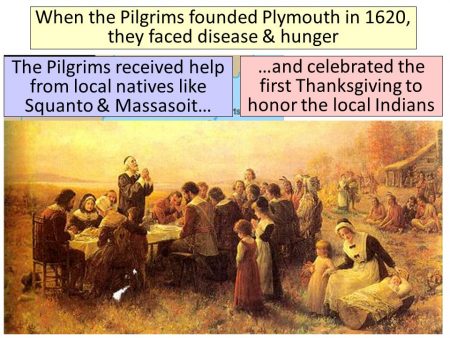
These so-called, sophisticated Europeans, who sailed from England to the shores of North America, came with their own native wisdom but it was clearly insufficient to deal with an unfamiliar environment and climate. It is a wonder that any of these early colonists survived. But many did by tapping into the native wisdom of Indigenous societies surrounding them. Too bad this cultural knowledge and interaction couldn’t be sustained.
Some four centuries later all of North America has undergone a transformation brought to fruition by foreign know-how. Transplanted European social, cultural, and economic models have changed the land. These European ideas have spread across the planet. The result for all the citizens of the world is a mixed blessing of technological progress accompanied by disastrous changes in the health of the commons with carbon-based energy byproducts polluting the planet and raising atmospheric temperatures and sea levels. And although the modern nations of the world have recently come together in Paris to commit to mitigating these changes, so far, the effort is yielding more words than results.
Could the planet have been different if we had adopted the native wisdom of Indigenous North Americans?
It is more than certain that our world would be a very different place than the one our children are being born into today. We would have a greater respect for what we hold in common. And what is so interesting is that even European culture had historical roots in the idea of a collective commons, from which the word commonwealth is derived, and was once a European fixture of feudal society.
How should we define Indigenous knowledge concerning the environment?
Let’s take a stab at this. Is it a collection of experiences, practices, and beliefs that create adaptive processes, culturally transmitted over many generations?
Yes.
Does it encompass an understanding of our human relationship with all living beings within a locality – every animal, every tree and every other kind of plant?
Yes.
Can it have broader implications that go beyond locality?
Clearly.
Why?
Because Indigenous people in North America have been keen observers of the characteristics of native species of animals and plants around them. They have noted adaptation strategies as species respond to the annual cycles of the seasons and different weather.
Hibernation and migration required native North Americans both past and present to adjust behaviour to sustain their societies. Paying attention could mean the difference between prosperity or famine.
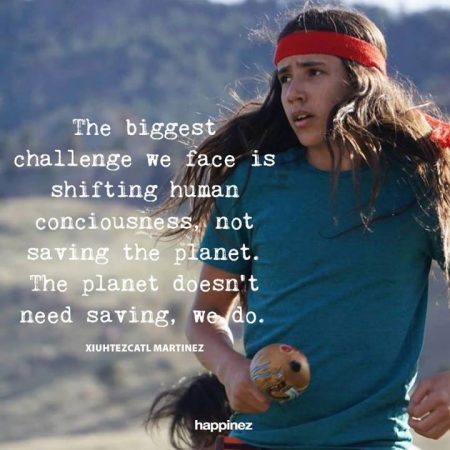
Today Indigenous populations tell us that all the data we collect about climate needs to be heavily supplemented by these personal observations from generations past to the present.
The Inuit of the north don’t have to measure the thickness of the sea ice to tell us about changing patterns in the Arctic Ocean. Nor do they have to do herd counts to state what they know about the declining populations of animals both on land and sea. They don’t need to measure the methane rising from permafrost melt to tell us that the ground beneath their feet is melting. They have been observing all of this over generations, passing down the collective wisdom of centuries.
It is apt to describe the collective wisdom of the Indigenous people of North America as a library of ethnobiological and botanical information. That from this lore we can create environmental and conservation policy. That we can learn about the unique characteristics of the plants and animals of North America to help us to be better environmental stewards and better planners of resource management. That we can adopt the strategies from Indigenous populations that have worked for centuries and that reflect best practices for adapting to the unique characteristics of North America.
It starts with listening, continues with respect, and ends with a better model for the management of our natural environment, leading to a more sustainable future to follow.
]]>