hydrogen infrastructure – Techso Mogro https://techsomogro.com/ Science, Technology and the Future Mon, 15 Jun 2020 23:00:27 +0000 en-US hourly 1 https://wordpress.org/?v=6.8.1 Vehicle Makers Conflicted Between Batteries and Fuel Cells – Which Will Be the Better Technology? https://techsomogro.com/vehicle-makers-conflicted-batteries-fuel-cells/?utm_source=rss&utm_medium=rss&utm_campaign=vehicle-makers-conflicted-batteries-fuel-cells https://techsomogro.com/vehicle-makers-conflicted-batteries-fuel-cells/#comments Tue, 24 Oct 2017 16:21:37 +0000 http://www.21stcentech.com/?p=24205 October 24, 2017 – Honda and Toyota are betting on hydrogen fuel cells as the ultimate power source for future zero-emission vehicles. Both companies have models on the road, Toyota’s Mirai, introduced in 2014, and Honda’s Clarity, in 2016. Even Korea’s Hyundai has recently shown a hydrogen fuel cell SUV under its Genesis brand, as well as a model of the Tuscon SUV. Mercedes plans to show a fuel-cell-plug-in electric car at an auto show by year end.

Yet electric vehicles (EVs) powered by lithium-ion (Li-ion)battery packs remain the industry response to the issue of carbon emissions for the moment from the transportation sector. But if every vehicle on the road today were to be an EV, impossible considering the lack of production numbers, we would reduce global carbon emissions between 10 and 20% from current levels.

Why the variable? The estimate is a function of where electricity is sourced that goes into battery-powered vehicles. If coal-fired power plants are large contributors, then the emission savings are closer to 10%. But if the electricity is drawn mostly from renewable sources, then emission reductions could hit 20%.

Hydrogen fuel cell cars have been a dream of those who have dabbled with the technology for decades. The biggest advantage these vehicles provide is familiarity. If there were a hydrogen filling station in your neighbourhood, you would pull your car up to the pump and in 5 minutes be refueled and ready to go 500 kilometers (approximately 310 miles) before having to stop to refill the tank. When you compare that to today’s EVs, there is little resemblance. At the fastest charge stations available today, a Tesla Model S would take 30 minutes to recharge to 80% capacity, and would, therefore, give you a driving range of fewer than 400 kilometers before another 30-minute pit stop. In both of these scenarios, there is a need for a fueling infrastructure which doesn’t exist today. If the infrastructure were there, however, one could easily see why consumers would pick hydrogen fuel cell cars over EVs.

There are several other caveats to the hydrogen story.

  1. Producing hydrogen economically remains a challenge. There are currently two methods. Hydrogen can be harvested from natural gas. Or it can be extracted from water. The natural gas route produces carbon emissions. The water route requires electrical power to break up the water molecule into its constituent atomic parts. The power can come from zero-emission sources and even be locally produced at a fueling station if solar panels or wind turbines were used.
  2. Producing hydrogen fuel call cars is more expensive and time consuming then manufacturing EVs. Fuel cells today use platinum, an expensive component. That’s why the Toyota Mirai retails in the United States for $57,500. And as for complexity, it takes over an hour to build a Toyota Mirai using current industrial processes, while a Toyota Camry rolls off the assembly line every 60 seconds.
  3. Creating a hydrogen fuel cell infrastructure with sufficient numbers of stations is far more expensive than current fueling infrastructure. Each hydrogen fueling station currently costs five times more at present. EV recharge stations in comparison are dirt cheap.
  4. There is a perception from history that hydrogen is far more dangerous than battery-powered technology. The Hindenburg explosion in 1937 comes to mind. Yet battery fires happen, particularly with today’s Li-ion technology at much greater frequency than fires from the current fleet of 14,000 hydrogen-fueled forklift trucks used in warehouse operations across the United States today.

But if autonomous vehicles should become the standard by which many of us commute to and from work each day, then the lack of a highly distributed fueling infrastructure is less of a necessity whether hydrogen fuel cell vehicles or EVs. Charging or refueling would be done at strategically distributed hubs with large fleets of vehicles ready to be summoned on demand by consumers.

Among the biggest detractors of hydrogen fuel cell cars is Elon Musk who described the technology a few years ago as “mind-bogglingly stupid.”  Musk at the time described hydrogen as always being the fuel of the future but never practical. He questions the advantages of harvesting hydrogen using electricity to then generate the power in a fuel cell stack versus just directly charging batteries.

Yet Japanese automakers are very much focused on hydrogen as an environmentally friendly alternative and are lobbying the government in Japan to make it simpler to implement a hydrogen fuel infrastructure. Today anyone opting to build a hydrogen fueling station has to demonstrate previous experience handling hydrogen. The Japanese government requires station operators to record the license plates of every hydrogen-fueled car that uses their facilities to refuel. Hydrogen storage regulations currently require tanks to be kept out of direct sunlight even though temperature controlled storage is used. Ultimately, the automakers believe that with revised regulation the cost of building and operating a hydrogen fueling station can be reduced by half by 2020.

The current Prime Minister of Japan, Shinzo Abe, who just won reelection in the last week, has made the rewriting of hydrogen fueling regulations a priority. He stated in April of this year that he wants to see 40,000 hydrogen fuel-cell vehicles on Japanese roads being served by 160 fueling stations in time for the Tokyo Olympics in 2020.

 

]]>
https://techsomogro.com/vehicle-makers-conflicted-batteries-fuel-cells/feed/ 2
On the Eve of the 80th Anniversary of the Hindenburg Fire We Look at the Current State of Hydrogen as an Alternative Fuel https://techsomogro.com/80th-anniversary-hindenburg-fire-current-state-hydrogen-alternative-fuel/?utm_source=rss&utm_medium=rss&utm_campaign=80th-anniversary-hindenburg-fire-current-state-hydrogen-alternative-fuel https://techsomogro.com/80th-anniversary-hindenburg-fire-current-state-hydrogen-alternative-fuel/#comments Fri, 05 May 2017 17:28:30 +0000 http://www.21stcentech.com/?p=22926 May 5, 2017 – The most compelling event around hydrogen remains to this day the catastrophe of the Hindenburg, a German-built dirigible that went up in flame and smoke over Lakehurst, New Jersey on May 6, 1937. It was on the first of several planned Trans-Atlantic voyages that year between Germany and the United States.


The Hindenburg was the world’s largest airship, as big as RMS Titanic, the “unsinkable” ship that made the world aware of the potent danger of icebergs back in 1911. But like Titanic, the Hindenburg succumbed to nature. What happened at Lakehurst took a mere 40 seconds, probably ignited by a build-up of static electricity in the air after a passing thunderstorm. That combined with inflammable paint coating the sealed hydrogen storage cells within the airship’s structure ignited a spark that started the fire. Of course, if Hindenburg had used helium rather than hydrogen there never would have been that all-consuming fire that caused 36 people to die that day.

To this day when presented with hydrogen as an alternative clean fuel to replace gasoline and diesel, there is general consumer resistance. Today Toyota, Hyundai, and Honda are building hydrogen-fuelled cars. But who is buying? Not many. In an April 14, Wheel24 Motoring News article it states, “Honda, Toyota, and Hyundai have leased a few hundred fuel cell vehicles over the past three years, and expect to lease well over 1,000 in 2017.” The article continues describing General Motors supplying the U.S. Army with fuel-cell pickup trucks. But not much more is happening with hydrogen. When you compare purchases in the U.S. of electric to hydrogen-powered vehicles, the ratio is 80:1 in favour of the former over the latter in 2016.

But not much more is happening with hydrogen. And when you compare purchases of electric to hydrogen-powered vehicles in the U.S. in 2016, the ratio is 80:1 in favour of the former over the latter.

Hydrogen is clearly not catching on with consumers or the fueling network needed to deliver the gas to consumers. Here are what I believe are the most likely reasons for hydrogen’s virtual invisibility to American consumers today:


  1. The Hindenburg disaster has left an indelible impression on Americans about the safety of hydrogen as a fuel.
  2. The Hindenburg isn’t the only disaster that Americans have witnessed in their history. A liquid hydrogen leak because of the storage tank’s structural failure caused the Challenger Space Shuttle disaster in 1986, a reminder of the latent volatility of the gas.
  3. Hydrogen as a fuel is not burned in the conventional sense. It is used as an energy source for chemical fuel cells which produce electricity to operate vehicles. Fuel cells have been around for a long time but have yet to catch the imagination of consumers when compared to battery-powered electric vehicles. There are fuel-celled buses out there, and fuel-cell powered off-road vehicles, but very few cars and trucks.
  4. Harvesting most of the hydrogen we store today is a carbon intensive process because we extract it from natural gas. That means with our current hydrogen extraction processes the technology is a net carbon emitter.
  5. Hydrogen as a fuel has to be compressed and put into reinforced fuel tanks when used in vehicles. Compression scares people. Do you or your neighbours want to have a hydrogen-fuelled car sitting in a nearby driveway that could explode like the Hindenburg? Or do you want the local corner filling station to have a big compressed-hydrogen silo sitting a few hundred meters from your front door?
  6. Where are hydrogen fueling stations today? Shell recently announced it was building 10 hydrogen filling stations in California to add to the hydrogen infrastructure there. Each filling station costs about $2 million U.S. which is a pretty steep price to pay to service 1,000 cars. To date, Shell has 2 demonstration filling stations located in the city of Los Angeles and the entire country has 32 more. That makes publicly accessible hydrogen filling stations virtually non-existent across North America. It is not that case in countries like Japan and Germany where there is a growing filling station infrastructure that may increase consumer interest in hydrogen-powered cars.
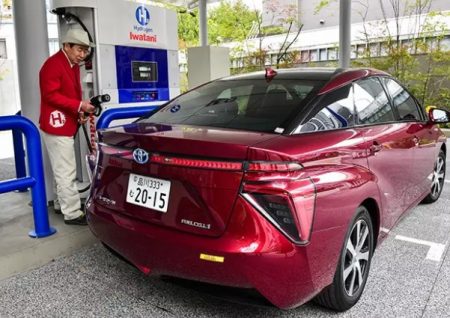
  7. And when you get to the pump at a hydrogen filling station today, the refilling experience is not as simple as pumping gas. The picutre below shows how the current technology features non-standard, heavy couplings that require the vehicle to be mated to the hydrogen fuel source using a clunky hose with a locking mechanism at the head. That’s nothing like popping open the gas cap and filling your tank. With hydrogen filling it is anticipated that significant amounts of the gas will escape into the surrounding air adding to the human fear factor that an explosion just like the Hindenburg could occur. That, of course, will not happen because hydrogen is so light an element that the gas dissipates rapidly.


]]>
https://techsomogro.com/80th-anniversary-hindenburg-fire-current-state-hydrogen-alternative-fuel/feed/ 1
United Kingdom to Fund Hydrogen Fuel Infrastructure Accessible to the Public https://techsomogro.com/united-kingdom-fund-hydrogen-fuel-infrastructure-accessible-public/?utm_source=rss&utm_medium=rss&utm_campaign=united-kingdom-fund-hydrogen-fuel-infrastructure-accessible-public https://techsomogro.com/united-kingdom-fund-hydrogen-fuel-infrastructure-accessible-public/#respond Fri, 10 Oct 2014 19:39:41 +0000 http://www.21stcentech.com/?p=15405 October 10, 2014 – There may not be many hydrogen-fueled trucks and automobiles on British roads today but this latest announcement from the government is an encouraging sign of commitment to build out an alternate fuel infrastructure for hydrogen.

The government is funding 15 hydrogen fueling stations to be completed by the end of 2015.  Toyota is beginning a trial in the United Kingdom with a hydrogen-fuel-cell-powered car. Hyundai is also bringing a hydrogen-powered vehicle (see picture of the ix35 Hyundai model below) to Britain.

Hydrogen fuel cells provide a range of 650 kilometers (about 400 miles) between fueling stops which take about the same time required to gas up today rather than the prolonged charge time requirements for pure electric vehicles (EVs).

Don’t get too excited right away. The United Kingdom currently has 10 hydrogen fuel-cell vehicles registered to private owners, a fleet of London taxis, and 8 hydrogen-powered buses.

Not every automobile manufacturer has bought in. Honda will soon join Hyundai and Toyota, but Nissan is betting on pure EVs like its Leaf model. Its reasoning – it is easier to build an EV charging infrastructure than a hydrogen one, and EVs already have a head start in the market.


Hyundai hydrogen fuel cell car


The United Kingdom’s hydrogen consortium, known as UKH2Mobility, includes Daimler, Hyundai, Toyota and Nissan (although the latter from the above comments appears to be highly skeptical of hydrogen’s success). These manufacturers are gearing up for annual sales of 300,000 and 1.6 million of these vehicles on British roads by 2030. The infrastructure envisaged would include a network of 1,150 refueling stations. If deployed CO2 vehicle emissions could be reduced by 3 million tons annually.

The government’s ultimate goal is to have by 2040 only ultra-low emission vehicles on British roads.

]]>
https://techsomogro.com/united-kingdom-fund-hydrogen-fuel-infrastructure-accessible-public/feed/ 0
Betting on Hydrogen – Japan Joins Iceland as Primary Developers of Gas-Based Economy https://techsomogro.com/betting-hydrogen-japan-joins-iceland-primary-developers-gas-based-economy/?utm_source=rss&utm_medium=rss&utm_campaign=betting-hydrogen-japan-joins-iceland-primary-developers-gas-based-economy https://techsomogro.com/betting-hydrogen-japan-joins-iceland-primary-developers-gas-based-economy/#respond Tue, 12 Aug 2014 14:16:51 +0000 http://www.21stcentech.com/?p=14937 August 12, 2014 – Iceland with its abundant geothermal energy sources and access to natural gas seems like a good place to develop a hydrogen economy. But along what it calls the Icelandic Hydrogen Highway, the country has encountered a few bumps and bruises. When the economy and banking system tanked a few years ago the plans for a hydrogen infrastructure were put on hold. But the dream remains alive with a number of projects including the first fuel-cell powered ocean-going tug, new hydrogen gas injection systems that work in diesel engines to reduce emissions and fuel consumption, and hydrogen production and compression technology that works in combination with solar and wind generators to produce 24×7 continuous renewable power. Today Iceland under its SMART-H2 project operates and services hydrogen vehicles including those operating with fuel cells and internal combustion engines.

But Iceland is a small country with a little over 320,000 people. It’s quite another story when a country like Japan decides to make a similar leap into investing in hydrogen for its energy future. The Japanese government sees hydrogen fuel cells as a critical player in the country’s energy future. Japanese companies hold the largest number of patent applications in the field of fuel cell technology. They see fuel cells as the power source for not only transportation but also for residential consumption.

Japan’s car manufacturers are at the forefront of this push to hydrogen. Honda, Toyota and Nissan are working with ten hydrogen suppliers with plans to introduce fuel-cell automobiles into the domestic market in 2015. Four urban markets are the initial target with a commitment to provide an infrastructure of 100 hydrogen-fueling stations in lock step with the release of new car models.

It took awhile for us to get used to the acronym EV for electric vehicles. Well now add another, FCV standing for fuel cell vehicles. Toyota’s first FCV is aimed at the EV, Tesla Model S. It will have a cruising range of approximately 700 kilometers (430 miles) with refueling taking three minutes. Compare that to the recharging rate for current EVs and you can see the attractiveness of an FCV over the former. And the only emission coming from the tailpipe of an FCV is water vapour.

According to a recent report in Bloomberg, Japan’s hydrogen market is to expand to $9.8 billion annually by 2030 and $75 billion by 2050. By 2030 Japan forecasts 5.3 million households will be powered by hydrogen-based fuel cells. And although FCV forecasts for 2015 amount to 1,000 automobiles, by 2030, that number should surpass 2 million annually.

Who else is jumping on the hydrogen bandwagon? Germany, South Korea and California. It seems that the fuel cell, a technology first described in 1839 and demonstrated in 1842, made famous much later in NASA’s Gemini and Apollo programs, is finally going mainstream here on Earth.


Toyota FCV

]]>
https://techsomogro.com/betting-hydrogen-japan-joins-iceland-primary-developers-gas-based-economy/feed/ 0
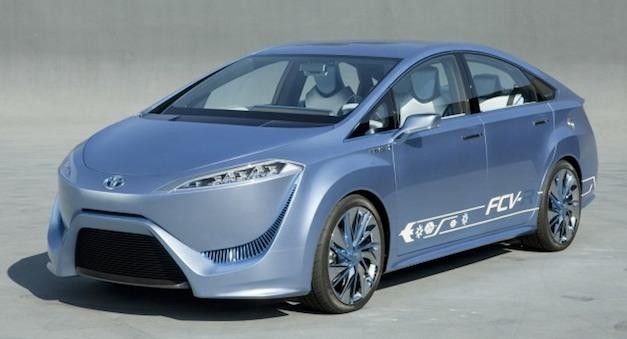
Transportation and Energy Update: Fuel Cell Cars Looking Even More Likely https://techsomogro.com/transportation-energy-update-fuel-cell-cars/?utm_source=rss&utm_medium=rss&utm_campaign=transportation-energy-update-fuel-cell-cars https://techsomogro.com/transportation-energy-update-fuel-cell-cars/#respond Thu, 11 Jul 2013 14:38:49 +0000 http://www.21stcentech.com/?p=10754 Some time ago I wrote about the fuel cell plans of major automobile manufacturers like Ford, Daimler and Nissan. The three pledged to have fuel-cell powered cars on the road by 2017. Now General Motors and Honda have announced that they are collaborating on fuel-cell cars, and Toyota is set to put a hydrogen fuel-cell-powered car on showroom floors by 2015 (see image below). And Honda is following suit with their own fuel-cell car making it available in Japan and the United States by 2015.

The challenges fuel cell technology faces include:


  • the need for a hydrogen filling station infrastructure similar to that which exists for gasoline-powered internal combustion engines (ICE);
  • the material cost of building fuel-cell systems which have been extremely high to date ( prototype Toyota and GM fuel-cell cars have cost as much as $1 million per unit);
  • hydrogen production from natural gas makes fuel-cell manufacturing a net carbon producer even though once the cars are on the road they are zero carbon emitters.


General Motors and Honda are collaborating to drive down the cost of fuel cell technology. They like Toyota hope to be putting sedans on the road by 2015 that sell for $50,000 making them cheaper than the Tesla-S electric vehicle (EV) from Tesla Motors. For GM, Honda and Toyota they argue that fuel-cell cars have distinct advantages over EVs with better range, up to 650 kilometers (400 miles),  and faster refueling, less than 4 minutes, although Tesla is experimenting with new processes that can swap out an electric battery in under two minutes as it builds its station infrastructure.

Fuel cell backers also argue that their technology is cleaner than EVs and any ICE car because when EVs are recharged from dirty power sources such as coal-fired power plants, it negates their operational zero emission performance. In addition even if the hydrogen is derived from natural gas they point to U.S. Department of Energy studies on carbon emissions that claim fuel-cell vehicles when all is considered will emit less than half the CO2 of ICE-powered cars.

As for the safety of hydrogen technology (think Hindenburg and you’ll undersatnd the issue), I recently wrote about advances in hydrogen production that make it a much safer source of energy, and about Firewater Fuel, a new start up company that is commercializing a low-cost catalyst for hydrogen production. Also research at the Brookhaven National Laboratory in New York has found a way to store hydrogen in a liquid state at ambient room temperatures making it much easier to transport safely. All of these advances point to a potential rosy future for fuel-cell cars. But it won’t happen without a massive investment in hydrogen infrastructure to make filling your fuel-cell car as easy as your current gasoline-powered vehicle.
 

toyota-fcvr-650x0


]]>
https://techsomogro.com/transportation-energy-update-fuel-cell-cars/feed/ 0
Transportation – Part 3: Energy Conservation and Alternative Fuels https://techsomogro.com/transportation-part-3-the-impact-of-energy-conservation/?utm_source=rss&utm_medium=rss&utm_campaign=transportation-part-3-the-impact-of-energy-conservation https://techsomogro.com/transportation-part-3-the-impact-of-energy-conservation/#comments Wed, 28 Sep 2011 20:21:58 +0000 http://21stcentech.wordpress.com/?p=546 According to Ward’s Auto there are more than 1 billion automobiles and light trucks on the road today with forecasts reaching 2.5 billion by mid-century. At current levels of consumption per vehicle 2.5 billion automobiles will translate to 150 million barrels of oil per day, compared to today’s 90 million barrels. The automobile and oil consumption are on an unsustainable course and that is leading to new energy conservation technology that may indeed prove a planet saver. Today the electric car is an oddity, but by 2050 alternative fuel and electric cars will be in the majority. This transformation is just one of many that will change transportation in the 21st century.

In Energy in the 21st Century – Part 7: From Biomass to Biofuels we talk about alternative energy sources that includes fuels such as ethanol, bio-diesel, natural gas, propane and hydrogen. The problem with ethanol and bio-diesel is two-fold:

  1. These fuels are largely obtained in North America from a food crop, corn. In South America, sugar cane is the primary source. With sugar cane there are environmental issues that contribute to rising CO2 levels in the atmosphere as well as issues related to soil degradation and destruction of rain forest habitat.
  2. These fuels require a significant amount of energy to create output and that includes the use of fossil fuels to make the end products.

Natural gas and propane are fossil fuels. Using these fuels doesn’t solve the problem of fossil fuel dependence.

A Hydrogen Transportation Alternative

Hydrogen is the most abundant element in the universe and on the planet but for us to make it we have to separate it from water or fossil fuels. Hydrogen is seen by environmentalists as the miracle solution to revolutionize transportation. But building capacity to produce it and an infrastructure to fuel automobiles and trucks means an enormous investment on the part of national governments and private enterprise. Today the energy required to deliver gasoline and diesel represents about 10% of the energy derived for automobile and truck usage.  There is no political will at present in North America or Europe to create a system with similar or better efficiency to deliver hydrogen. Besides the challenge of infrastructure hydrogen has some other challenges:

  1. Hydrogen when not combined with other elements is highly inflammable. In water, H2O it is stable. By itself….not so much. Remember the Hindenburg?
  2. Hydrogen generates less energy output than fuels like gasoline or diesel. A  kilogram (approximately 2.2 pounds) of hydrogen generates about the same amount of energy as a gallon of gasoline or 9/10s of a gallon of diesel.
  3. Because it delivers less energy punch than these other fuels by volume to maximize its efficiency it needs to be compressed  or liquified. This means extra energy and production costs as well as the need to manufacture pressurized storage or cryogenic containers. Neither gasoline or diesel require compression and both are in a liquid state. Both can be stored in conventional fuel tanks.
  4. Hydrogen when derived from fossil fuels produces less energy than the energy needed to create it. This means conventional coal or natural gas power plants are economically unsuitable for generating hydrogen in volume.
  5. The economics of generating hydrogen using cleaner energy sources currently does not make sense because it is considerably more expensive to produce it by electrolysis than from fossil fuels. A 1997 study calculated the cost around $20.10 U.S. per Gigajoule (GJ, about 240,000 kilocalories equivalent) from electrolysis versus $5.60 per GJ from natural gas  and $10.30 per GJ from coal.
  6. Storing and distribution of hydrogen requires a very different infrastructure than the current one constructed for gasoline and diesel. There are two ways hydrogen can be stored. One involves combining it with another material where it can bond and then be extracted later, or storing it as a compressed gas in its pure state. The former would make the hydrogen safer while the latter would entail reinforced containment. Distribution by trucking hydrogen to filling stations would require the building of containment vessels to withstand the compressed gas or maintain it at cold enough temperatures to keep it in a liquified state. Distribution through pipelines would require a higher frequency of pumps to move the gas along because of hydrogen’s very low density compared to natural gas.
  7. Hydrogen can be generated right at a filling station, a very different model than current gasoline and diesel infrastructure. Generating the gas this way would be energy intensive using current technologies, would require a rethinking of the power grid, and would present safety concerns for neighbouring communities.
  8. Hydrogen fuel cells have been around since the American space program first implemented them in the 1960s to power spacecraft and generate oxygen for the crew to breathe as a byproduct. But fuel cell technology has never scaled to a point where it was affordable for use in standard automobiles and trucks.

Hydrogen as an alternative to fossil fuels, therefore, has considerable challenges to overcome before it can displace our current dependence on gasoline and diesel as the fuels of choice for automobiles and trucks. Conservation gains are more than offset by the massive investment needed to develop the technology and infrastructure to make it practical.

Electric Vehicles

The Toyota Prius was the first commercial, mass-produced hybrid vehicle, combining an electric motor with an internal combustion engine. The Prius was not designed to operate purely using its electric motor. The Chevrolet Volt, however, combined an electric motor with a supplementary internal combustion engine making it possible to operate the automobile on electricity alone for short distances. In 2006, Tesla Motors launched the Roadster, an all-electric vehicle capable of driving close to 400 kilometers (245 miles) before its batteries needed recharging. The Roadster uses lithium-ion battery technology and is rechargeable through a conventional 110 volt or 220 volt circuit. Tesla has launched a second vehicle, a more conventional sedan using the same technology. Of the major automobile manufacturers Nissan is first to market with the Leaf, an all-electric vehicle.

Electric vehicles or EVs truly represent a significant technology paradigm shift. They offer lots of advantages including:

  1. Energy efficiency and performance benefits when compared to internal combustion engines. An EV converts 75% of the energy stored in batteries to power the vehicle. EVs are quiet, low maintenance, and high performance. Compare that to 20% using internal combustion engines with the noise that these engines create and the number of moving parts that can break.
  2. Better for the environment with no tailpipe emissions. The batteries have pollutants and need to be recycled appropriately at end of life. When charging an EV may take its power from any electrical source. If the source is coal-fired then the pro-environment argument is weakened.
  3. Reduced energy dependence because batteries are charged through the domestic power grid.

This advantages are largely related to the state of current portable storage technology and include:

  1. Batteries that take considerable amount of time to recharge. For example the Tesla Roadster takes a minimum of 4 hours to fully recharge using a 220 volt connector, or 6 hours using more conventional 110 volt connections. On a 15 amp, 120 volt circuit plugged into a conventional outlet it can take up to 30 hours to fully recharge the vehicle.
  2. Batteries that are expensive and need replacement as they lose their efficiency.
  3. Batteries are heavy and limit the carrying capacity and interior vehicle volume.
  4. Limited driving range before recharging. Currently the Leaf has a range of between 100 and 160 kilometres between charges. The Tesla Roadster has a range of up to 400 kilometers. Variability is determined by passenger load, weather and temperature, driving style and speed.

With all these limitations, EVs are still proving an attractive alternative to hydrogen and other fuel technologies with more and more automobile and truck manufacturers in the planning or delivery stage of bringing them to the market. By 2020 EVs will represent about 3% of the total market. But as the cost of fossil fuel technologies increases EVs should rapidly build market share and predominate by mid-century.

Some EVs will use hydrogen fuel cells. Most will be plug-in battery driven and hybrids will be only a small percentage of the automobile market but will play a more significant role in heavy truck market where the technology will deliver conservation along with long distance performance.

]]>
https://techsomogro.com/transportation-part-3-the-impact-of-energy-conservation/feed/ 1