The AEM is installed in a modular unit called the Electrolyser 2.0, (EL2). Each unit takes tap or rainwater and splits it into oxygen and hydrogen. The latter is then pressurized and stored to supplement electricity generated by intermittent renewable sources. Enapter’s latest showcase is a residential installation at the home of Arno Tilsner, a magazine publisher who has been living off-the-grid since 2012. Tilsner uses solar panels on the roof of his home to power up his electric vehicles. The acquisition of the EL2 is Tilsner’s use case validation of the technology and a showcase which he is writing about weekly in his magazine. The on-site energy system is equipped with 5 Kwh solar panels which generate electricity throughout the day. Excess energy produces 500 liters of hydrogen per hour which can then be converted back into electricity through a fuel cell.
Tilsner calls hydrogen “the stuff of the century, the universal building block of the post-coal-oil-gas era.” He is not wrong in making this claim. The hydrogen problem, however, is seen as multi-faceted. First there is the perception of its volatility. Hydrogen was used by the Hindenburg, the German zeppelin that caught fire and burned back in 1937. Liquid hydrogen fuel combined with liquid oxygen powered the Saturn 5 rocket during the Apollo Program.
And then there is the challenge of producing hydrogen gas economically. To date, it takes more energy input to produce hydrogen than the energy gained from the harvested gas. Electrolysis from water has always been seen as cost-prohibitive when compared to harvesting the gas from fossil fuel sources. But the problem of hydrogen extraction from fossil fuels ends up defeating the whole idea of the gas as a green fuel.
The El2 changes the economics of hydrogen generation from water. It is stackable. Starting with a single 500-liter module it can be expanded to a stack that can handle up to 10,000 liters per hour. As Tilsner describes his experience to readers of his magazine, he may begin to convince more potential customers to adopt the technology. That is already happening with installations in 26 countries around the world providing grid-independent energy storage in remote areas, seasonal energy storage in extreme environments, industrial on-site hydrogen generation, backup power for telecom providers, and hydrogen fuel for mobile applications.

]]>
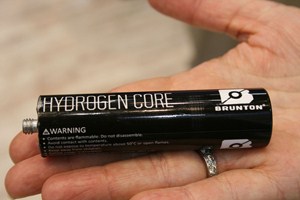
Each Hydrogen Core can recharge a smartphone as many as 6 times before you need to pull it out and plug in a replacement. A Hydrogen Core provides power equivalent to more than 15 individual AA batteries. The Hydrogen Reactor sells for $169.99 U.S. and comes with 2 Hydrogen Cores. Replacements go for $19.99 U.S. but you don’t have to unless you are planning a long expedition away from power sources. That’s because the Hydrogen Core is rechargeable and unlike rechargeable batteries (NiCad and Lithium-Ion) these babies do not deplete over time.
Brunton has been in the business of developing technology for those who seek adventure in the outdoors since 1894. At the 2014 Consumer Electronics Show, the Hydrogen Reactor will receive a CES Innovations Design and Engineering Award.

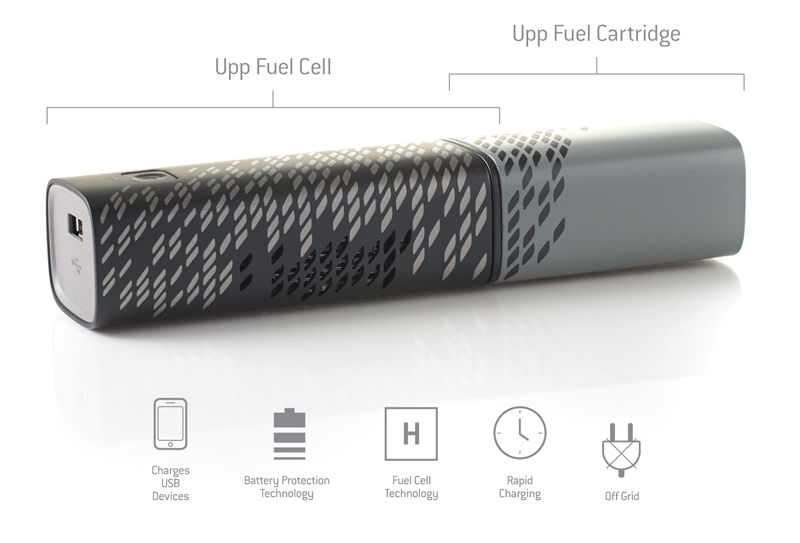
As the CEO of the company, Henri Winand states, “the Upp fuel cell personal energy device has the power to extend your everyday life experiences and untether you from the wall socket, while making sure you stay connected.” The cost, $199 U.S. No pricing as of yet on the cartridge service or on replacement cartridges.
Upp is expected to be available for Christmas. Watch the YouTube video to learn more.
]]>
The Ford, Nissan, Daimler venture intends to mass produce fuel cell EVs and help develop an infrastructure to support them within the decade.
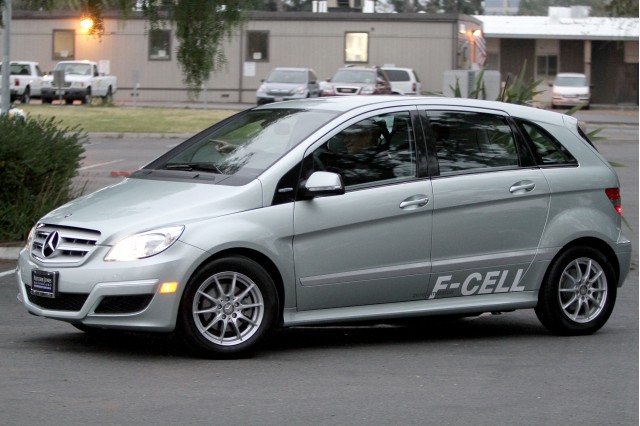
What factors are driving automobile manufacturers to fuel cell EV technology?
What’s slowing down the development of fuel cell-based vehicles?
Remember the Hindenburg and you indeed understand just how volatile hydrogen can be. But companies like Nuvera are providing safe hydrogen infastructure solutions with products like PowerTap, an on-site hydrogen generation technology. And researchers like those at Brookhaven University are finding ways to make hydrogen a much safer bet when transported.
Featured in the NASA Gemini, Apollo and Shuttle Programs, (see image above) and pioneered by companies like Ballard, fuel cells have been around for more than a half century. So we have lots of research and development dollars already expended in perfecting a number of different successful designs. And now there appears to be a confluence of circumstances to kick start the technology to the next level of commercial, high volume production, just in time to help us deal with CO2 and other greenhouse gas emissions, giving us another weapon to beat back the threat of human-induced climate change.
]]>


