human rights – Techso Mogro https://techsomogro.com/ Science, Technology and the Future Mon, 25 Nov 2024 19:51:05 +0000 en-US hourly 1 https://wordpress.org/?v=6.8.1 Indigenous Leaders Define Protocols For A Sustainable And Just Green Transition https://techsomogro.com/indigenous-leaders-define-protocols-sustainable-planet/?utm_source=rss&utm_medium=rss&utm_campaign=indigenous-leaders-define-protocols-sustainable-planet https://techsomogro.com/indigenous-leaders-define-protocols-sustainable-planet/#respond Mon, 25 Nov 2024 19:51:05 +0000 https://techsomogro.com/?p=37307 Last October, in Geneva, Switzerland, Indigenous leaders from around the world agreed unanimously on what would constitute a just transition that would impact their way of life. Nearly 100 gathered to promote what they believe are their roles and responsibilities in achieving a clean green sustainable future for all humanity.

The published document from the conference was entitled Indigenous Peoples Principles and Protocols for Just Transition. It declares several principles for state actors to agree to follow for future projects that impact Indigenous ancestral lands.

The Indigenous people of the planet have always described their relationship with the land, ice, water and traditional territories as sacred. They see themselves as the stewards of the planet and its defenders. Their traditional way of life before the coming of colonial settlements in the Americas, and colonial conquests elsewhere is seen as being in harmony with nature. They see correcting the historical wrongs, and intrusive, harmful and sometimes violent actions by countries and non-Indigenous groups as violations of this sacred trust.

At Geneva, the Indigenous leaders described the principles they deem essential to their and the planet’s future. These include:

  1. The Right to Life guarantees Indigenous people’s present and future existence.
  2. The Right to Self-determination to recognize the sovereignty and inherent rights of Indigenous people under standards in the United Nations Declaration on the Rights of Indigenous Peoples (UNDRIP) including their right to freely determine their own political, social, economic development and future, and rights to equitable benefit-sharing.
  3. Decolonization to reject the colonial exploitation of Indigenous lands.
  4. Reparations and Land Restoration to ensure unrestricted access, restoration, recognition, and respect of Indigenous people’s rights to their ancestral lands, water, territories, and resources that have been taken without consent. This includes guarantees of economic and non-economic reparations for historical and continuing damage.
  5. Respect for the Indigenous Way of Life to guarantee food sovereignty and lived experiences as well as respect for Indigenous economies, science, technologies, innovations, jurisdiction, languages, cultures, spirituality, beliefs and ancestral practices.
  6. Transparency and Accountability for all projects with the opportunity for active and effective negotiations that recognize the requirement for informed consent from design to implementation, monitoring, and evaluation, affecting Indigenous lands and water, territories and resources.
  7. Eliminating Human Rights Violations of Indigenous Peoples as environmental defenders and cultural practitioners, including ending extrajudicial killings, torture, imprisonments, surveillance, and other threats, intimidation, and reprisals in response to the Indigenous right of patrimony regarding protecting the land and environment.
  8. Recognizing Indigenous Roles and Responsibilities as caretakers, stewards and guardians of traditional lands, forests, deserts, savannas, lakes, rivers, air and ice. – Recognizing Indigenous Peoples’ roles “as caretakers of the plants and animals of the planet and stewards, and guardians of traditional lands, rangelands, forests, deserts, savannas, water, air, ice, and resources.
  9. Limiting global warming to no more than 1.5 Celsius degrees with direct access to financing Indigenous Peoples’ projects addressing climate change mitigation, adaptation, and resilience with direct access to funds to cover loss and damages.
  10. A Rights-based Approach to Supply Chains to ensure they do not cause harm to Indigenous Peoples, other peoples, ecosystems, or sacred sites including the assessment of the totality of supply chains from raw materials to end-use projects to waste.

To ensure these principles are followed the attendees of the conference committed themselves to consider “utilizing international human rights bodies and national, international and regional mechanisms to submit urgent complaints to stop states’ actions and rights’ violations” and refusing to tolerate any forced evictions, displacements, relocations, dispossession, and expulsion, in the name of “green transition” projects.”

Defining the current and future role of Indigenous People was a widely discussed subject at COP29. In a just and sustainable green transition, it was recognized that the world could no longer marginalize the voices of the Indigenous whether in the Amazon or the Arctic. The conference attendees professed there can be no green transition without their full participation stating that the role of the Indigenous People has always been about protecting the Earth and that it is their responsibility and their right. Without Indigenous voices, the conference noted that “even the greenest economy will run dry.”

]]>
https://techsomogro.com/indigenous-leaders-define-protocols-sustainable-planet/feed/ 0
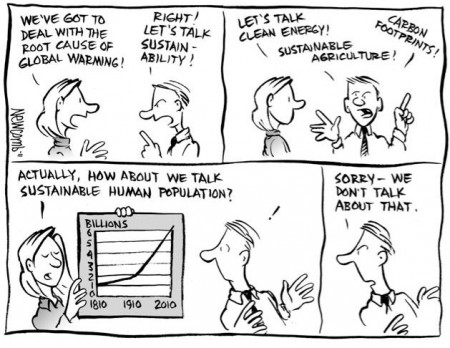
Yes We Have Climate Change But Isn’t World Population Growth The Real Problem? https://techsomogro.com/climate-change-world-population-growth-real-problem/?utm_source=rss&utm_medium=rss&utm_campaign=climate-change-world-population-growth-real-problem https://techsomogro.com/climate-change-world-population-growth-real-problem/#comments Sat, 27 Jun 2015 16:24:01 +0000 http://www.21stcentech.com/?p=17731 June 27, 2015 – One of my readers constantly points out when I write about climate change that atmospheric carbon isn’t the problem. Instead it is the continuing hockey stick graph of human population growth which closely resembles the rise in CO2.

When I was born in 1949 the world had less than 2.5 billion. I’m 66 and in those few short decades we’ve seen a tripling in the number of humans on the planet. This is unprecedented. The food and freshwater crises, the burning of fossil fuels, all of these issues are manifestations of a runaway growth in humanity, proving my reader’s argument he would assert.
 

Climate change and human population

It is hard to blame national governments for wanting to eradicate disease, improve reproductive health care, and raise the quality of life for citizens. But in doing so whether in the Developed or Developing World, the results have created explosive growth in human numbers.

Back in the 1990s the United Nations sponsored a conference in Cairo to come up with answers to the Earth’s growing population. At the time governments in concert agreed to provide:

  • better family planning and reproductive health care services.
  • better education so that women in their reproductive years can make informed choices.

Many governments in the Developing World back in the 1990s were just beginning to see rural to urban migration within their countries. Today we are witness to this mass movement by the rural poor to mega cities. Far sighted planners thought that this alone would lead to a decrease in human population growth based a similar phenomenon observed much earlier in the Developed World with urban families having fewer children. But this is not yet observed in some Developing World states, particularly those in Sub-Saharan Africa, Central and South America, and South Asia. All of these regions are expected to contribute the greatest population growth to mid-century adding more than 2 billion of us to the planet.

Now we know that humanity is technologically ingenious. We are inventive. We can improve crop yields to feed more mouths. We can grow things on roofs, inside buildings, and even turn marginal lands into crop producing fields by applying our technological wizardry. We manipulate the genes of plants to grow more of them. We invent new medical technologies to defeat infant and maternal mortality, conquer disease, and extend our age limit. We build more energy generating plants to heat, cool, and light homes so that we can live in greater comfort. The end result is the hockey curve we see in the graph above. Far too successful for our own good!

What comes with all this ingenuity? Urban centres that are growing uncontrollably. Overcrowding, underemployment and poverty, crime and other socio-economic problems, pollution and war. Witness the increasing desire by people in many parts of the Developing World to find refuge in the Developed one – crossing the Mediterranean Sea by the tens of thousands and dying by the thousands in an attempt to flee their failed state homes.

So what is the world’s answer to the human population challenge, a measure of our technological success as a species? It certainly is not technology. The science fiction scenarios of “Logan’s Run” or “Soylent Green” are solutions that come from the darkest depths of our imagination. We cannot cull humanity or turn our surplus population into food for the rest of us.

The Worldwatch Institute with a vision focused on sustainability has on its website “Nine Population Strategies to Stop Short of 9 Billion,” the estimated mid-century population based on more “optimistic forecasts.” I say optimistic because the expected decline in birth rates from rural to urban migration has yet to happen which would suggest 9 billion is an underestimate. I share with you these nine strategies:

  1. Provide universal access to safe and effective contraceptive options for both sexes. Today 2 in 5 pregnancies occur not because they are wanted. Lack of good family planning services is a gap that needs filling so that each baby born is wanted by its parents.
  2. Guarantee education through secondary school for all, especially girls. In every culture women who complete some secondary school education produce fewer children and have them later in life.
  3. Eradicate gender bias from law, economic opportunity, health, and culture. Women remain in many parts of our planet, chattels of their male partners or their families. This has to end. Equal rights for women means they can get jobs, participate in civic and political affairs, and make choices about childbearing and the number of children they have.
  4. Offer age-appropriate sex education for all students. Hard to accept for some cultures, but sex education taught in the classroom helps prevent unwanted pregnancies, reduces birth rates, and demystifies sexuality.
  5. End government policies that reward parents for having more children. Governments can reward parents for family planning and provide better services to them for child rearing rather than pay subsidies based on a head count.
  6. Teach students about population and the environment at all levels. Knowledge is power. Knowledge means better informed choices.
  7. Put a price on the environmental costs and impacts of family decision making. Educate families to understand the cost of adding more children by helping them to calculate direct and indirect costs so that they make informed decisions about family size.
  8. Adjust policy to an aging population rather than one that boosts childbearing. Meet the needs of changing demographics by providing social and economic programs that extend work and income opportunity for the existing population rather than reward childbearing.
  9. Convince leaders to commit to stabilizing population growth through the exercise of human rights and human development. Educate policymakers to address population challenges through programs that empower families on reproductive issues.


For humanity, what is the alternative to what the Worldwatch Institute is recommending? We can try “one child” policies like the great experiment that China underwent in the latter part of the 20th century. It certainly stabilized that country’s human numbers but it also had unintended consequences – an outbreak of female abortions and female after-birth infanticide, a society where men today greatly outnumber women, a population that by mid-century will have a disproportionate number of elderly with more than 25% over the age of 65, and a decline in the number of workers available to industry as a consequence of negative population growth.


China one child policy


]]>
https://techsomogro.com/climate-change-world-population-growth-real-problem/feed/ 1