Today’s topic is visualizing the Anthropocene. Not familiar with the term? Well, the Anthropocene refers to current geological chronology. You may be more familiar with geological ages such as the Pleistocene, the Ice Age, or the Cambrian, when the Earth experienced an explosion of biodiversity leading to all of the life forms we see today. Well the Anthropocene has become the term to replace a geological period we formally called the Holocene, stretching back 10,000 years to the first organized human settlements and the agricultural revolution. The Anthropocene means the Age of Man and a Canadian scientist, Felix Pharand-Deschenes has used satellite images to map our impact in a visually stunning way. Some of those images I have reproduced here.
The Anthropocene is more than just the glowing lights you see in these pictures. It covers our contribution to changes in atmospheric carbon with CO2 reaching levels in the atmosphere not seen in 15 million years. It doesn’t show how fertilizer runoff is creating vast algae blooms in our oceans and lakes leading to oxygen depleted water where fish and other sea life cannot survive. It doesn’t show the deforestation caused by our need to increase agricultural land use to feed our growing population. Nor does it show us glaciers and ice caps in retreat, or increasing desertification in the Sahara and other Earth deserts.
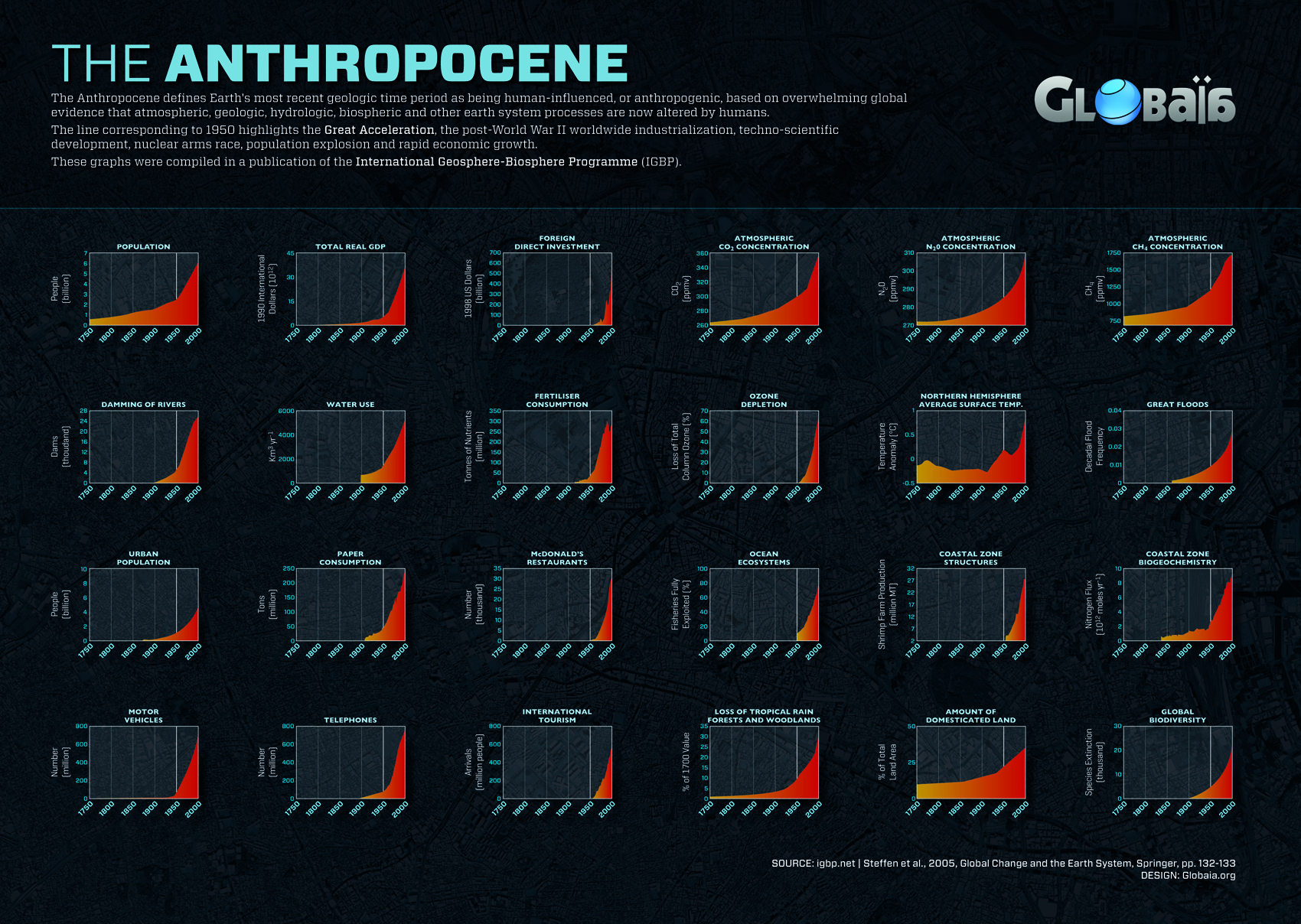
Use your right mouse button to click on this first image to enlarge it and see the human impact on a number of key metrics that include everything from CO2 levels to motor vehicles to McDonald’s restaurants.
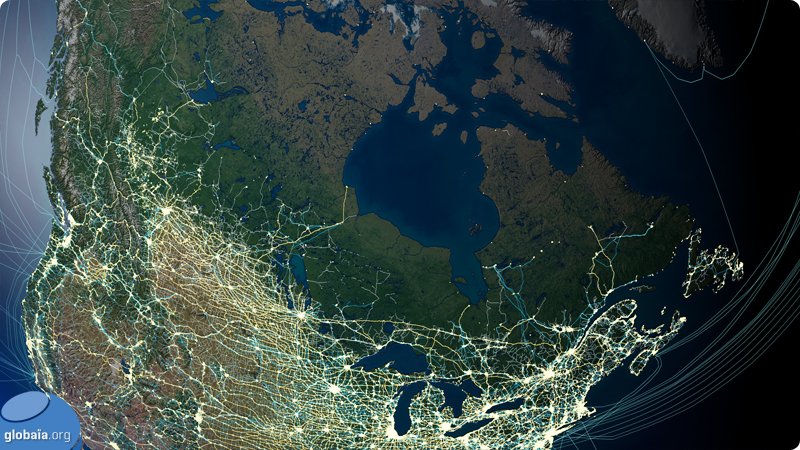
The next image is a view of Canada and the Northern United States. You can right mouse click on it to see it in greater detail. Undersea cables stream from both the Atlantic and Pacific coasts. Note just how significant our transportation and urban network has become.
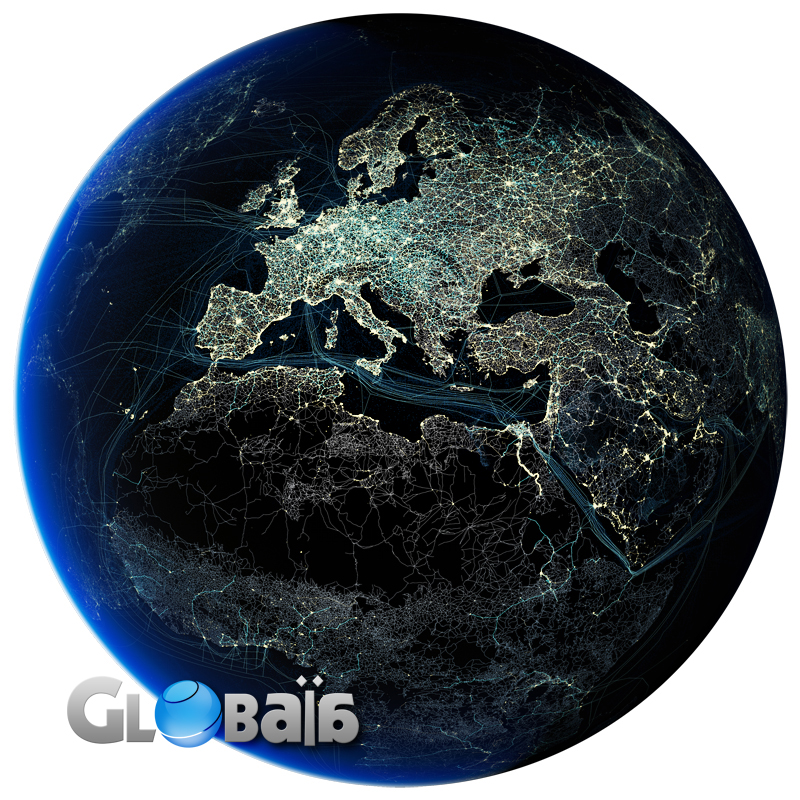
Next we have an image that shows Europe and much of Africa. Treatment is similar to the satellite image of North America. You can see undersea cables crossing the Atlantic and Mediterranean, transportation networks and the distribution of cities. Note the difference in density between Europe, Africa and Saudi Arabia. As our world population increases much of it will be in the Developing World. Expect the Sub-Saharan parts of Africa to look more like Europe by 2100.
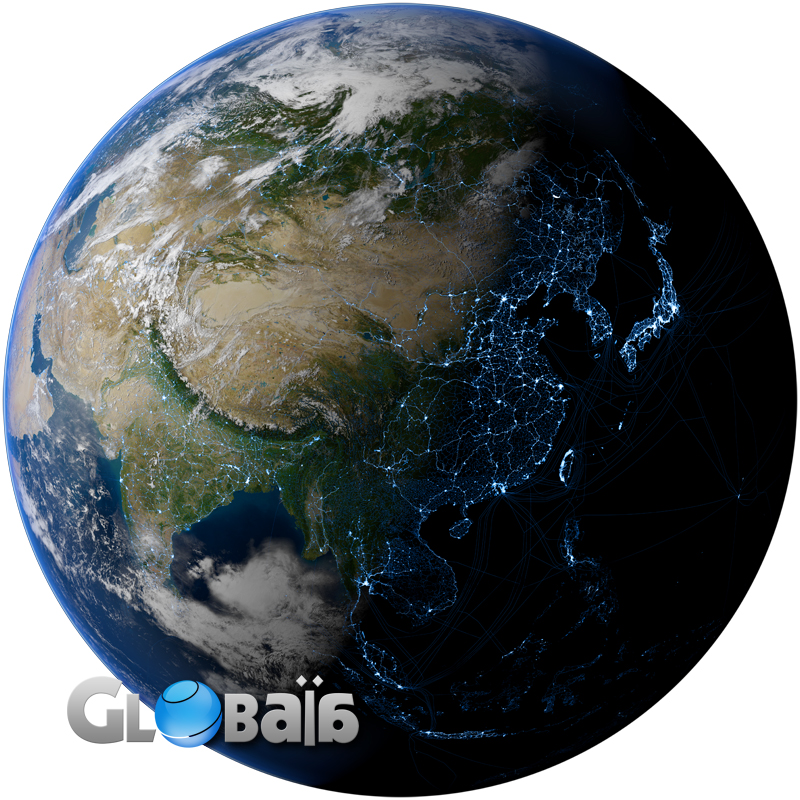
In our final image you can view how Asia appears today. Much of Central Asia is mountainous or desert and you can see how this has influenced human settlement. As China’s population continues to age we shouldn’t see significant changes in urban land use but India and other parts of South Asia are another story.
I am sure you find these images as compelling as I do. They illustrate just how much we humans are impacting the planet today. What will they look like in 2100? With India at that time projected to be the most populous country on Earth, and Africa’s population expected to double, what will we see from space?
The Anthropocene has just begun and we humans are now a part of the geological record.
]]>1. The cost of energy and the transportation of agricultural products
The rising cost of fuel and energy impacts agriculture many ways. Industrial farms in North America and Europe need to find ways to reduce hydrocarbon energy dependency. The grow local movement is reinventing the very definition of what is a farm.
2. Our changing view on chemicals, fertilizers, herbicides and pesticides.
We have created both a revolution in agriculture and a potential monster in making our crop yields so chemical dependent. In saturating the soil with herbicides and pesticides we have created new varieties of resistant weeds and insects. This ongoing accelerating arms race between our technical fixes and the evolution of pests is one that we could inevitably lose with catastrophic consequences.
3. Bioengineering of crops and livestock
Bioengineering is changing the very nature of what we grow and eat. We have always been in the business of bioengineering ever since humans first changed food sourcing from being hunter-gatherers to farmers. The difference today is our bioengineering is in the laboratory and not through selective fertilization in the fields. We are now inserting genes into the DNA of plants and animals to fundamentally alter the end products. We are growing meat in the laboratory rather than on hoof. We are farming bioengineered fish rather than catching wild varieties in the open seas largely because we have overfished and exhausted natural population regeneration.
4. Climate change
Our fossil fuel dependency is altering the climate raising temperatures, causing prolonged droughts and more severe weather events. The impact on agriculture from environmental change cannot be underestimated.
5. Fresh water availability
Whether we draw water from lakes and rivers or aquifers, cities compete with agriculture for what is becoming a very precious resource. What can we do when we start reaching the limits of fresh water accessibility?
6. Human population growth
Can we continue to grow enough to feed a burgeoning human population let alone our livestock? At 7 billion today and with predictions of 9 billion by mid-century, will agricultural intensification meet our food needs. Considering today that over 1 billion people on this planet are underfed or malnourished, what will that number be at the end of the 21st century?
7. Implication of biofuels on growing food
Do we grow crops to feed our engines or are stomachs? This is a basic dilemma in countries like the United States and Brazil where corn in the former and sugar cane in the latter are both food and fuel crops. Part of the challenge lies with the practicality of moving food from where it’s grown to where it’s needed. The United States has had huge corn surpluses for years. Farmers have been paid to not grow it. A food industry has grown up built around corn byproducts just to suck up the surplus yield. Now the surplus is being used for biofuel rather than being shipped to where it can feed the hungry.
If I have missed any issue please feel free to comment. The subsequent blogs on agriculture will explore each of these topics in greater detail.
]]>