The post In 2070 Many Parts of Our World Will be Too Hot for Humans States New Study appeared first on Techso Mogro.
]]>
May 5, 2020 – The world is 1.1 Celsius (1.98 Fahrenheit) degrees warmer on average than it was in 1950 according to the latest data collected by the International Panel on Climate Change (IPCC). This is a mean average increase. Has the rise made any parts of the world uninhabitable for humanity as of yet? It’s a near thing in some parts of the world with places in Pakistan, India, and Iran hitting 50 Celsius (122 Fahrenheit) or higher in the last couple of years.
In central Australia, in areas of the Middle East, the Sahara Desert, and on some asphalt-covered city streets, it is not uncommon to see summer daytime high temperatures exceed 50 Celsius. Asphalt melts and the human population abandons the streets when the temperature reaches halfway to the boiling point of water.
These types of temperatures are toxic to humans. Our cell function diminishes. Our bodies try to release moisture to cool down but in many cases, the atmospheric heat is compounded by high humidity interfering with our natural cooling apparatus. We don’t even need to hit 50 Celsius in high humidity for our bodies to be compromised. A web-bulb temperature of 35 Celsius (95 Fahrenheit), one that combines the metrics of both heat and humidity, is a killing combination. Yet today around the world, more than 350 of our cities are seeing average summer daytime high temperatures that exceed 35 Celsius.
In a paper published yesterday in the Proceedings of the National Academy of Sciences of the United States of America (PNAS), researchers from the Nanjing University (China), Washington State University, University of Exeter, Aarhus University (Denmark), and Wageningen Univesity (The Netherlands) describe how current trends in the growth of greenhouse gas (GHG) emissions without climate mitigation will leave us with a world by 2070 where living conditions for between one to three billion of us will be severely compromised. It will render entire sections of our planet as uninhabitable for our species.
The authors define humanity’s natural climate niche as a mean annual temperature of approximately 13 Celsius (about 55 Fahrenheit) and consistent for the past 6,000 years. Many of you may think 13 degrees seems awfully low. But remember, this is a weighted mean average temperature across the entire habitable area of the planet. The weighting includes diurnal and seasonal temperature changes. This is what defines our human optimal environmental niche. The 13 degree Celsius mean temperature also refers to where the crops and domestic livestock we grow and husband can thrive. This is the human habitability zone for business-as-usual. Any place beyond the zone exists for us because of our technology. That’s where HVAC systems make it possible for us to live in the hottest deserts, the coldest polar regions, and at extreme altitudes. But we cannot apply HVAC technology to the great outdoors.
The authors describe what is likely to happen in the absence of climate change mitigation noting that temperatures by 2070 will be 2.3 times the mean global temperature rise of the last three centuries or as much as a mean increase of 7.5 Celsius (13.5 Fahrenheit) on land. If that number seems high, the weighted mean increase of 3 Celsius (5.4 Fahrenheit) across the globe takes into consideration temperatures over our oceans. And since we don’t live on the ocean, or under it, the 7.5 Celsius is the right number in the redefinition of our future habitable zone.
What this means is that places currently at a historical mean of 13 Celsius will in fifty years rise to 20 Celsius. Canada should fair well in this scenario without mitigation. But for places today hotter than the 13 Celsius mean where 3.5 billion of us live today, it means temperatures will rise to a mean 29 Celsius (84 Fahrenheit). Currently, a portion of the Sahara reaches that mean temperature representing a mere 0.8% of the planet’s land surface. But in 2070, that temperature regime will cover 19% of the world’s landmass.
In the absence of mitigation, migration is the likely response to these rising land temperatures. Predicting the climate-driven redistribution of our human population, however, is not a simple task. Warming will not be uniform, very much the way it is distributed today, and it is likely that migration will move in waves and pulses responding to rising heat, increased droughts, and extreme weather events. Add to these factors the changing vectors for tropical diseases that will migrate right along with rising temperatures and you have a very complicated scenario that will more than likely lead to conflicts and increasing death rates.
The redistribution of humanity as seen by the authors of this study will become our greatest challenge in the mid to late 21st century, that is, if we make no concerted effort to mitigate GHG emissions in the present. The paper concludes “it is not too late to mitigate climate change and to improve adaptive capacity,” and that “looking at the benefits of climate mitigation in terms of avoided potential displacements may be a useful complement to estimates in terms of economic gains and losses.”
With as much as one-third of our global population expected to experience mean temperatures of 29 Celsius, we cannot afford to wait on tackling the GHG emissions causing global warming. The areas of the planet most affected are already the least capable of adapting to these forecasted changes. Many of the countries located on the edge of uninhabitability today, will certainly be totally uninhabitable in 2070.

The post In 2070 Many Parts of Our World Will be Too Hot for Humans States New Study appeared first on Techso Mogro.
]]>The post When Snakes and Alligators Show Up in Your House Maybe It’s Time to Start Fighting to Stop Global Warming appeared first on Techso Mogro.
]]>

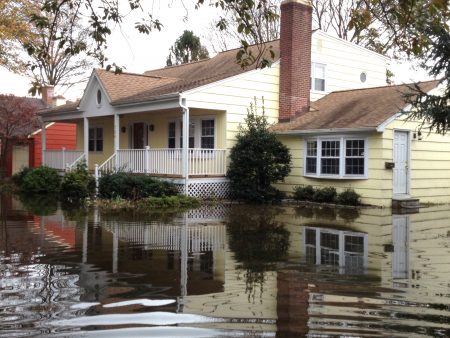
And in Southern Florida after Hurricane Irma, the storm surge and rain produced alligators on roadways, water snakes in people’s backyards, and an occasional octopus swimming around in city parkades.

For those who stay behind and rebuild, there are others who have reached their limits and decided to move elsewhere. It is fair to say that climate change, extreme weather and other natural disasters rather than economic determinants will be the fuel for human migration throughout much of the remainder of the 21st century.
And as nations fail to achieve significant carbon reductions this phenomenon will accelerate not just in the United States but in almost every country impacted by rising sea levels, rising temperatures, and rising weather extremes.
Today 4 in 10 humans live 60 kilometers (37 miles) or less from the world’s oceans. More than 1 billion of us live in areas with elevations above sea level of less than 5 meters (16 feet). The vast majority of these people live in Asia. In the United States, the population living along or near the coast exceeds 130 million.
I have stated before on this site that if you want to fully comprehend the impact of climate change ask insurance underwriters. These companies that reinsure the insurer of your home measure the cost of climate change annually. They are calculators of risk and right now they are raising costs to insurance companies who provide policies to homeowners who remain in areas deemed most likely to be inundated as sea levels rise. If you are contemplating buying a beachfront property or planning to build one, the sticker shock you’ll experience for flood protection should make you think twice. And if you are not putting new construction on stilts, then you may not even qualify for these inflated premiums. Whereas insurance companies, banks, and other financial lenders act because of rising risk, it appears, to-date, that governments continue to fail at recognizing the risk to their citizens.
In doing the research background to this posting I came across an article appearing in Newsroom, a New Zealand publication. Written by Eloise Gibson, Newsroom’s environment, and science editor, and appearing on January 15th of this year, she writes about Belinda Storey, a climate risk specialist in her country that has been studying how government, insurers, and homeowners need to adapt to rising sea levels. Storey notes, “A lot of people focus on, when does the probability [of flooding] become an annual event or a daily event. But that is not the most important question…..The most important question is, when does it reach that insurance threshold?” So that threshold when insurers withdraw from the world’s coastlines is only a matter of when and not if.
Storey is working with a team of researchers at Victoria University, in Wellington, New Zealand, to create a roadmap predicting areas of greatest risk in her country. She believes that the insurance thresholds when they withdraw are much sooner than most people realize. A 10 centimeter (about a 4 inch) rise in ocean sea levels off New Zealand’s coasts turns the 1 in a century flood event into a 1 in 20 years event. And that’s just sea level rise incidents and does not include additional extreme weather storm surges which will impact New Zealand’s coastlines.
Where does the government of New Zealand, or for that matter any national government, fit into the equation of risk? Likely when the government facing the rebuilding costs of coastal infrastructure finally gives up.
States Storey, “Property effectively has a time limit on it now….the value won’t go to zero immediately, because there will still be people who want to live, work and play at the coast, even if….risks increase.” But when governments say they can no longer repair repeatedly damaged roads, and rebuild the pipes to deliver fresh water, and remove sewage, then the migration will inevitably begin.
For New Zealanders, Americans, Europeans, and many others the migration won’t be a decision driven by a lack of insurance coverage, but rather by basic Malthusian-defined needs which will go wanting as oceans rise and extreme weather events take their toll.
The post When Snakes and Alligators Show Up in Your House Maybe It’s Time to Start Fighting to Stop Global Warming appeared first on Techso Mogro.
]]>