
It is called the Ecocapsule. You cannot get a more compact, feature-filled home than this. Not your average camping experience, Ecocapsule is designed for those who don’t want to rough it where you would normally rough it.
From the outside it has the appearance of giant silver jelly bean. Dimensions are:
The floor plan seen below shows the layout:

There’s a window you can open, and generous exterior and interior storage space. From the outside it looks like a giant silver jelly bean, but the interior seen in the two images below shows the living space is well appointed. Plenty of light and the wood finishes are a nice touch.


Self sustainability features include:

The architects designed Ecocapsule to comfortably house two adults for off grid locations up to a year. It can easily be shipped using standard containers or hauled to a location on a trailer. No special precautions required.
The price is to be announced in the last quarter of 2015. At that time pre-orders will be accepted. If all goes according to plan the first Ecocapsules will ship early in 2016. And in case you want to know shipping costs from Slovakia to New York, the price is estimated to be 2,200 Euros (currently around $2,500 US).

]]>
When we think of world cities today, which ones come to mind?
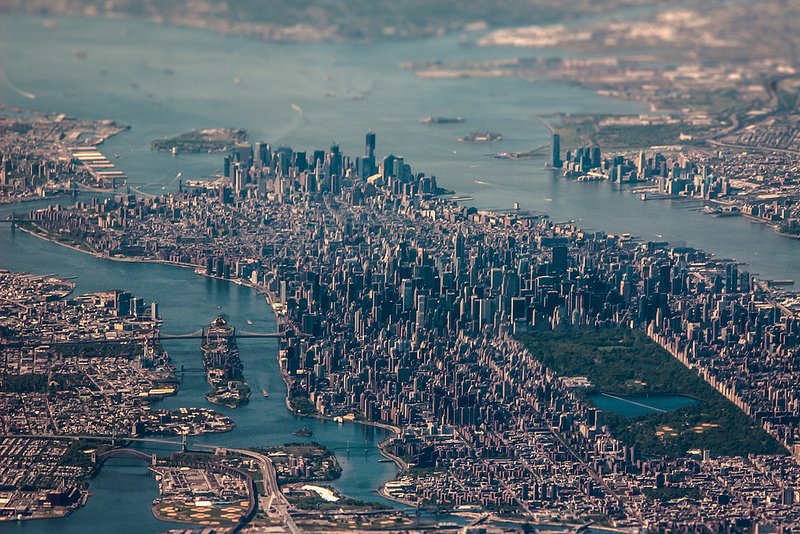
New York, London, Paris, Hong Kong, Berlin, Beijing, Shanghai, Moscow, Mumbai, Sao Paulo, Sydney, Singapore….these are the places that are on my list. They dominate the countries and regions in which they are located. New York and London are the banking and financial centres of the world. Berlin is the geopolitical centre of the European Union. Hong Kong is the Asian equivalent of New York and London. Beijing and Shanghai are the urban giants of China. Tokyo and Osaka are Japan’s urban megacities. Singapore is both a city and a nation, a centre of innovation and influence for all of Southeast Asia. Moscow is the geopolitical centre of the Russian nation. And Sao Paulo and Sydney are the economic epicenters of Brazil and Australia respectively.
What should be the measure of a global city? What defines it? Well according to surveys about cities, their power and influence in the 21st century, the following are key attributes that define urban success on a global scale:
So from my list of world cities the following contenders remain based on the above criteria. They are:
Beijing, Shanghai and Moscow don’t make the cut because their societies fail to meet the last six criteria on the list. And Mumbai doesn’t make the grade either because of its struggles with housing, transportation and security.
What The List Will Look Like in 2050
The Developing World will with certainty alter the balance of the world economy by 2050 and no doubt, the cities within that sphere will assume increasing influence. Of our ten leading cities which ones will remain and which ones will fall from the list?
As Europe’s population ages and as its cities fail to become magnets for diverse populations from around the world, Paris and Berlin may no longer qualify. The same cannot be said for New York and London, two of the most diverse cities on the planet. Sydney as well may disappear from the list as Australia increasingly restricts immigration from its South Asian hinterland.
So here is my top 10 forecast for world cities in 2050.
Name your contenders and then let’s compare lists and criteria.
]]>
A 3D Printer To Go
Called the PopFab, Ilan Moyer and Nadya Peek at MIT have built a 3D printer in a suitcase. The printer features a computer-controlled multi-tool print head capable of handling a variety of materials and a motion-controlled platform upon which to assemble finished 3D-printed objects. Attach a CAD software package to the device, design something, feed the printer with the appropriate material, and hit print. The printer has the functional capability to operate as a computer numerical control milling machine, a programmable drawing tool, or vinyl cutter. The designers promise much more in the near future but for CAD users PopFab sounds like a perfect fit.

A 3D Printed House
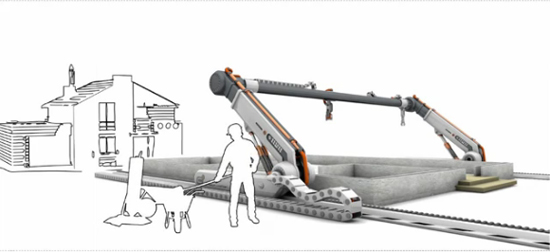
Behrokh Khoshnevis, a professor at USC’s Viterbi School of Engineering, has developed 3D printing technology that uses concrete to build houses. The technology is called contour crafting. This 3D printer doesn’t fit in a suitcase. It is as large format as you can imagine, capable of fabricating walls by extruding materials in layers, taking instruction from computer-aided-design and manufacturing software. A 185 square meter (2,000 square foot) home using contour crafting technology can be built in 24 hours. This includes inserting rebar (reinforcing steel), plumbing and electrical wiring in the manufacturing process.

Contour crafting can use any construction material that can be extruded through its 3D printer heads. That means builders using local rather than transported materials on the construction site. The 3D print technology can be fed numerous designs so that no two houses appear the same. Even the colour and finish of interior and exterior walls can be applied through this printing process.
For the many informal settlements and shantytowns that have come about as mass migration alters urban centres in the Developing World, contour crafting technology appears to be a way to provide housing and services for new urban immigrants at affordable costs. And ultimately contour crafting presents an ideal tool for the manufacturing of off-world buildings such as on the Moon and Mars.
]]>