The scientific name for the static charge you receive when you walk across carpeting in a room and then touch a metal doorknob is triboelectricity. In dry interior conditions in Canadian winters, we all get “shocked” by these static charges. And some of you may remember public school science experiments when we rubbed a metal rod against silk or fur and touched an object to cause a spark.
Triboelectricity is electrical energy that occurs when two objects interact causing electrons from one to jump to the other. The amount of electric charge is usually quite small, yet measurable. But what if we could harvest the collective amount of energy produced from triboelectricity to help power devices, or even entire homes and towns?
James Chen is an Assistant Professor of Mechanical and Aerospace Engineering working at the School of Engineering and Applied Sciences at the University at Buffalo in New York. Chen, in an article published in 2019 states, “The friction between your fingers and your smartphone screen. The friction between your wrist and smartwatch. Even the friction between your shoe and the ground. These are great potential sources of energy that we can to tap into.”
Chen, along with Zayd Leseman, Associate Professor of Mechanical and Nuclear Engineering at Kansas State University in Manhattan, Kansas, is studying the triboelectric effect on nanomaterials. The goal is to build different types of triboelectric nanogenerators (TENGs) capable of controlling and harvesting static electricity and recently received a $400,000 USD National Science Foundation grant to pursue the research.
Chen and Leseman are not alone in studying the potential of harvesting triboelectricity. Zhong Lin Wang, of Georgia Tech, has built a triboelectric generator capable of powering an array of 1,000 LED lights just by tapping a foot. He has published a number of books on the triboelectric effect and in an article that appeared in Discover last fall, stated, “In our environment, everything is moving, everything is changing…It’s all energy, and so much is wasted.” Like his Buffalo and Kansas colleagues, Wang is convinced that triboelectricity can help solve the power needs of our civilization without the menace of greenhouse gas (GHG) emissions, and pollution. A demonstration device he invented is a ball containing a smaller one inside. When shaken it can light up an LED. The more the ball shakes, the brighter the light. There is nothing particularly exotic about the materials Wang is using to produce an electric current.
Studying triboelectricity is not a new science. In fact, it is one that appears to have been abandoned back in the 19th century when Michael Faraday invented the first electromagnetic generator, the foundation for the Industrial Revolution of the last two hundred years, and a contributing factor in our current global warming crisis.
Wang’s ball is a TENG relying on contact between two materials, the interior lining of the larger ball with the exterior surface of the smaller inside ball. The slightest bobble generates power. Wang estimates that 1,000 of these balls could power a standard lightbulb, and a grid 0.85 square kilometers (a third of a square mile), could power a small town.
On an entirely different triboelectricity scale, there is lightning. On the How Stuff Works website, it describes the potential energy that could occur if we were to capture just one lightning bolt strike, equivalent to 5 billion joules (almost 1,300 Kilowatts) or enough to power a typical North American home for up to a month.
With that much energy one would think this would be a great source of electrical power. But the challenges are many including logistics and infrastructure.
In terms of logistics, it is nearly impossible to predict when a lightning bolt will strike a specific place on the planet where the energy can be captured.
In terms of infrastructure, the immense heat that accompanies the static charge means the materials used would have to be resilient to the extreme.
Ideas to channel lightning have emerged from time to time. In 2008 a French team from the Applied Optics Laboratory at ENSTA ParisTech tried to use a strong laser to direct electrical activity within storm clouds. It didn’t create any lightning. Four years later this same group was successful in capturing laboratory-generated lightning using a laser. So, in theory, this laser idea might eventually work.feature
Other experiments have attempted to replicate Benjamin Franklin’s kite-flying episode, (the lightning didn’t hit his kite in reality) using large airborne kites tethered to power cables to attract lightning strikes. So far, no research group has claimed demonstrable success.
A Brazilian research group argues that lightning’s energy can be captured by preventing it from striking. They suggest that the atmospheric conditions in the humid tropics that potentially lead to lightning could become a way to harvest the energy before a strike occurs. Called hygroelectricity, it would involve capturing triboelectricity from the air by absorbing it from water vapour. The technology would take advantage of the ionizing effect of water droplets in collision freeing up and transferring electrons through the creation of small static electrical charges.
The Brazilian research may have potential. It certainly would be far easier to capture the energy from water molecules in collision, than from a nanosecond bolt of lightning. It would make storing the energy far easier because today there is no technology as of yet capable of capturing a 5 billion joule nanosecond static charge without becoming seriously damaged in a short period of time.

The Gallium Nitride Energy Revolution is About to Happen
Cambridge Electronics, Inc. (CEI), whose motto is “Dream it. We’ll power it,” is a Massachusetts company on a mission to reduce energy consumption while giving energy users access to all the familiar technology they want and need.
How can it achieve this promise?
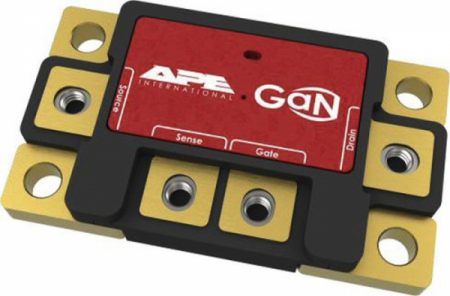
Through a new semiconductor material, gallium nitride (GaN).
Already being used in LED light bulbs, television and computer displays, and mobile phones, GaN has efficient light emission capability, something silicon cannot duplicate. But silicon remains the defacto material of choice semidconductors and transistors found in all the computing devices of our modern world.
CEI, through GaN, hopes to change because not only is the material more efficient in light emission, it also handles power more efficiently than any silicon-based transistor.
Over nine years CEI has been perfecting GaN and today it can outperform silicon providing 1/10th the resistance of silicon transistors. This means faster switches, faster computers, and smaller form factors. For example a GaN power adapter can be integrated into a laptop and other electronic devices eliminating the clunky brick that is commonly comes with a device’s power cord.
It also means huge savings for energy utilities who will benefit not only from the use of GaN in power generating equipment but also in capacity to fulfill consumer demand.
So why aren’t we seeing a flood of electronic devices on the market made from GaN now? Because the expense of GaN manufacturing when compared to silicon has always been its Achilles Heel. But that’s changed. New GaN manufacturing techniques that mimic silicon wafer fabrication have brought the cost down to match the latter.
It should be a no brainer for GaN going forward, a material that cuts power consumption by more than 90%, produces the same or better levels of performance, and reduces the size and cost of electronic devices. Massachusetts Institute of Technology, the brain trust from which CEI was hatched believes using GaN in data servers, electric vehicle inverters, solar power inverters, industrial motor controllers, and other electronics will produce $900 billion in energy savings annually by 2025. That’s impressive.
But don’t count silicon out just yet. That’s our next story.
Hybrid Silica Changing Sol-Gel Supercapacitors
A new material made from a common fatty acid, octylphosphonic acid, may soon be found in supercapacitors used in electromagnetic propulsion, electric vehicles, defibrillators and other instant quick-discharge devices. Sporting higher energy density than lithium-ion we may even see batteries made with this material.
Called sol-gel thin film, it is made up of a single layer of silicon atoms and a nanoscale self-assembled layer of octylphosphonic acid. The structure provides low current leakage, high energy extraction and heat tolerance.
Performance of sol-gel thin film electrodes at Georgia Tech’s laboratories has exceeded all existing commercial electrolytic capacitors and thin-film lithium-ion batteries. States Professor Joseph Perry, School of Chemistry and Biochemistry at Georgia Tech, “sol-gels…such as phosphonic acids are well known…but to the best of our knowledge, this is the fist time these two types of materials have been combined into high-density energy storage devices….this is the first time I’ve seen a capacitor beat a battery on energy density.”
The research into sol-gel supercapacitors appeared in the July 14th edition of the journal, Advanced Energy Materials. Now the question becomes, can the materials be scaled up and become cost competitive.
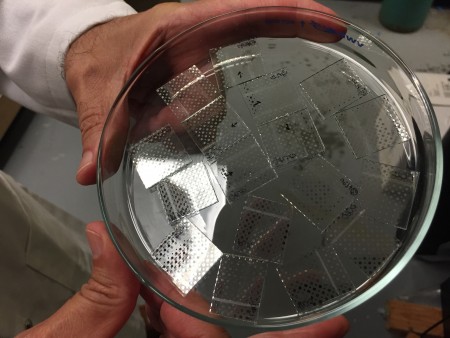
The materials of photovoltaics today come from glass and plastic. But scientists at Georgia Tech College of Engineering recognize that these materials can break and present a recycling challenge, so they have invented an organic substitute made from trees that can process sunlight in the same ways a plant does. They call it CN, short for Cellulose Nanomaterial. CN is cheap to make. It can be mass produced. It’s easy to replace on the fly so that power arrays maintain their level of energy output. And finally when it wears out it is easy to recycle because it breaks down into its organic components.
Current efficiency in converting sunlight to energy is 2.7%. Compare that to the average silicon or plastic-based photovoltaic array at 10% or the current record holder, Sharp, with its compound solar cells reaching conversion efficiencies of 37.7%.

With so many promising initiatives in the field of solar power it would appear that despite uncertain economic times and the continuing glut of fossil fuel energy sources, the desire to find a clean energy alternative is proving to be a powerful stimulus.
In addition production costs for photovoltaics continues to drop, as much as 60% in the last three years. That is making it more cost competitive when compared to fossil fuels but still not there yet.
The dropping costs however have caught many suppliers of solar technology with inventory that is no longer state-of-the-art leading to financial distress. Some solar manufacturers have not been able to adapt fast enough to changing market conditions and that has led to some bad press and finger pointing by Republicans in the United States Congress. But that’s the price of a technology that continues to develop rapidly in response to the challenges of the 21st century.