“Is there anything that the National Forest Service or Bureau of Land Management can do to change the course of the Moon’s orbit or the Earth’s orbit around the Sun?”
As crazy as this question is, so is the so-called expert from the Forest Service’s response:
“I would have to follow up with you on that, Mr. Gohmert.”
Really, there’s a follow-up to this imbecilic question posed by a “learned” member of the U.S. Congress?
Here are some basic facts about altering our planet’s position in the Solar System.
A move of three million kilometres further away from our current orbit around the Sun could in theory lower global average atmospheric temperatures by 3 Celsius (5.4 Fahrenheit). How so? For the same reason that Mars being further from the Sun gets less solar radiation than Earth, an increase in Earth’s orbital distance would diminish the amount of solar radiation striking the planet’s surface and cause our atmosphere to cool.
Our current global average temperature has risen in the last century by close to 1 Celsius (1.8 Fahrenheit). The current global average today is 15 Celsius (59 Fahrenheit). And based on current climatologists’ projections, by 2060, we should reach an average of 16 Celsius (61.8 Fahrenheit).
In the Congressman’s mind maybe. By moving Earth back a few million kilometres, something we could conceivably do once a century or so, we could keep burning fossil fuels indefinitely, and keeping the cows farting away or until they come home.
But there is nothing simple about moving the Earth. The amount of energy needed to move Earth’s mass to a new orbit just a fraction of the distance proposed would be equal to thousands of times the amount of energy we humans produce today. We wouldn’t be able to do it with all the nuclear bombs in our global arsenal. Nor would we be able to do it using the thrust of thousands upon thousands of rockets equivalent in size to the Saturn V or Space Launch System. The likelihood of ever achieving that level of energy production within the next several centuries and beyond is inconceivable.
Conceivably we could use orbital mechanics to push Earth further away from the Sun. But this couldn’t be done with one asteroid or another celestial object that we could conceivably manipulate. But first, we would have to capture such an object and redirect it towards Earth. And woe to us if we should misfire and the object strikes the Earth to cause an extinction event. And even if we could do it with a few asteroids it wouldn’t be enough. In fact, the entire mass of the Asteroid Belt is equal to 5% of the Moon’s mass, and if were to redirect all of the Belt the most we would move the Earth would be three-quarters of a million kilometres further from the Sun, one-quarter of our objective.
The Sun is not constant. It changes. Our celestial best friend and neighbour is slowly getting larger as it ages. There are some who deny climate change is caused by human activity. They point to physical changes in the Sun like sunspot minimums and maximums as contributors to atmospheric warming. But sunspots have nothing to do with the Sun growing over time. Based on our current understanding of solar dynamics, in the next 100 million years the Sun’s expansion will lead to an increase of 1% in solar radiation striking our planet.
At the current rate of greenhouse gases being added to the atmosphere from human activities, we will produce the same retained solar energy effect as a swelling Sun and do it in a few centuries.
I’m talking about space mirrors or a space sunshade, an idea that has been bandied about within the engineering community going back a few decades. In 2016, the BBC published an article that described a proposal by James Early back in 1989 to build a 2,000 kilometre-wide space umbrella for diverting the Sun’s energy from striking the planet’s surface. Early thought we could source all the material needed from the Moon which would be much easier to get into orbit than if launched from Earth’s deep gravity well. The structure would be built in segments and assembled in space where it would be positioned far enough from the Earth to emulate a solar eclipse. The BBC article doesn’t mention the cost. And nor does it talk about the potential for the structure to fail and what that would suddenly do to an Earth now dependent on this enormous sunshade. Imagine how quickly the cooling would be reversed by a return to peak solar radiation striking the planet’s surface.
Another geoengineering idea that the Congressman didn’t suggest is one that Harvard University, Bill Gates and a few others have proposed. A pilot project to increase particulate matter emissions in the stratosphere to do artificially what large volcanic eruptions have done in the past has been proposed by Harvard. The proponents of this cite a recent example: Mount Pinatubo in the Philippines. The volcano erupted in 2001 and emitted an ash and gas cloud that reached as high as 50 kilometres (31 miles) in the stratosphere. Upper atmospheric winds soon disbursed the particles and gases (sulphuric acid droplets) planet-wide forming a haze that contributed to a drop in global average temperatures of 0.6 Celsius (1 Fahrenheit). The impact lasted almost two years. To create a Mount Pinatubo effect would require humans to release aerosols into the stratosphere continuously. This would involve the building of a dedicated fleet of aircraft and no one has studied how it might alter other atmospheric conditions such as impacting wind and precipitation patterns.
]]>How did we get to this point on the only inhabitable planet in our Solar System? We did it by extracting and burning carbon accumulated over hundreds of millions of years through natural geological and climatological processes. And we did it in two centuries. From the beginning of the Industrial Revolution until 1970 our burning of fossil fuels, our cement making, our manufacturing industries, our heating requirements, and our use in transportation produced 420 billion tons of greenhouse gas emissions of which the majority was carbon dioxide. But between 1970 and 2011 we tripled the amount of greenhouse gases emitted into the atmosphere reaching more than 1.3 trillion tons.
Asking our atmosphere to absorb that much carbon in gaseous form without expecting changes to its chemical balance would be naive, to say the least.
And expecting the rest of the planet to absorb the extra carbon within the atmosphere through natural carbon sinks in light of continued human activity — industrial expansion, further fossil fuel resource development and extraction, the growth in marine and land transportation, and the enormous explosion in world population, approximately double what it was in 1970, without something giving, would also be naive.
Some interesting statistics:
What’s so special about CO2 and why we have to pay attention to the amount we emit?
So having CO2 in our atmosphere is a good thing if kept in balance.
For climate change skeptics who argue that more CO2 will mean more lush vegetation and higher crop yields, the most recent search points out that other factors such as precipitation and soil nutrients play a much more important role.
Then there is the presence of natural carbon sinks on the planet. These include:
As we stated before, the oceans since 1970 have absorbed more than a quarter of all the CO2 we have emitted into the atmosphere. That amount of CO2 has created a noticeable impact on the ocean’s pH balance which has gone from 8.2 to 8.1 meaning the ocean is getting more acidic. With so much ocean life dependent on a higher pH to allow for shell formation, this type of drop has potential negative ecological consequences. With more CO2 in the ocean it is absorbing long-wave radiation in increasing amounts and getting warmer as well. And warmer water expands raising sea levels. And sea levels rise too when sea ice melts because it is in contact with warmer water.
As for the atmosphere, the consequences of increased CO2 have coincided with a warming of 1.0 Celsius (1.8 Fahrenheit) above mean values from less than 150 years ago when we first started keeping accurate temperature records. Coincidence or correlation? I’ll let you decide.
The world’s climatologists and scientists already have and the result has led to a culmination with a worldwide agreement signed in Paris to address carbon in the atmosphere, and in particular CO2 levels. Countries have pledged to reduce emissions but since the 2015 signing, CO2 and other greenhouse gas emissions have increased.
So the world’s nations have looked at their options of which there are four.
Option #1 is the Trump option. The U.S. under Trump has announced its withdrawal from the Paris Climate Agreement. The administration has loosened regulations governing sources of carbon pollution. And although there is resistance from lots of American cities and a number of states, the results have seen American emissions go up since Trump took office.
And don’t think China is off the hook even though it professes to be committed to the Paris Climate Agreement. Although China has been building renewable energy resources at a dramatic pace until very recently, and has closed or is phasing out domestic coal-fired power plants, it has chosen to export its carbon emissions by being a prime contractor for the building of coal-fired power plants throughout the Developing World.
Without the U.S. and China committed to emission reductions that are real and measurable, the world is going along in Option #1 and the rest of us are along for the ride.
Option #2 is what Paris was all about if the agreement had been binding, rather than non-binding. The political will of leadership to make the hard choices of decarbonizing seems to be absent with exception of those countries already being overwhelmed by visible and measurable changes associated with atmospheric and oceanic warming (Pacific and Indian Ocean island nations in particular, and low-lying countries like Bangladesh).
Part of the problem of achieving Option #2 is the lack of alternatives to the status quo. What do we do about cement and steel? What do we do to decarbonize transportation rapidly? Can we abandon the internal combustion engine in a flash? And what about air travel and marine shipping and the emissions these two methods of transportation produce? Should we be grounding all planes and keeping marine shipping anchored? And what about shutting down coal-burning power plants when countries in the Developing World are energy hungry as their economies expand?
So far, a few countries have attempted to introduce market mechanisms to inhibit carbon emissions. These have included pricing carbon through a levy or tax based on tonnage, and industry sector caps with companies buying and selling carbon credits. China has rolled out a carbon trading program for the entire country but how reliable will its reporting be? California is the paradigm for cap-and-trade. And Canada is attempting to become the first G7 nation to impose a progressively higher price on every ton of carbon pollution beginning this year. Will such market-based strategies keep warming to under 2 Celsius? Highly unlikely unless universally adopted to alter human behaviour on a global scale.
Option #3 comes with two acronyms, CCS, and CCUS. The first stands for carbon capture and sequestration. The second stands for carbon capture utilization and storage. Option #3 involves full-scale carbon removal from the atmosphere to achieve zero emissions. And going beyond that Option #3 can reverse the amount of CO2 over time to produce negative emissions.
The problem with Option #3 is startup costs. Every CCS and CCUS project so far have been very expensive. Without government money, all would never come to fruition. And although there are hundreds of sites where CCS and CCUS projects are in the works, the scale of the requirement requires tens of thousands of these installations.
There is also the issue of finding sufficient places to store captured carbon beneath the surface of our planet. An inventory of stable underground containment needs to be explored before we can pump CO2 into these natural geological subterranean structures. Some CCS proponents have suggested we create impermeable storage tanks sunk into the ocean where we can fill them with CO2. Should some of these “permanent” sequestration sites start leaking as is bound to happen then we will need a further remedy.
The cost, based on estimates by the Energy Transitions Commission, a global body, for net-zero technological solutions would be in the trillions of dollars annually to get to atmospheric carbon levels circa 1970.
Option #4 is by far the most problematic. Blocking the sun through human manipulation of the atmosphere is not a trivial thing. What would be involved? Countries would send aircraft into the stratosphere to spray aerosols to reflect sunlight. This geoengineering of the atmosphere would require repetition. Once started you couldn’t stop because the effect of the aerosols would wear off and the blowback could mean sudden spikes in mean global temperatures. And then there is the unknown? How much aerosol volume would produce how much of a drop in mean global temperatures? How would aerosols in the stratosphere affect global precipitation patterns? What if blocking the sun caused a drought in an area of the world, or altered ocean circulation, or impacted extreme weather events like hurricanes and typhoons?
What if some countries turned Option #4 into a weapon? Whether wittingly or unwittingly, deploying aerosols can easily set off unintended consequences. Spraying aerosols in one area could lead to significant climate change far away from the deployment. And a country could begin to use aerosols as a weapon to damage the agricultural production of a rival or cause its freshwater resources to be negatively impacted. With little in the way of international agreement on the technology and its deployment, we could see weather wars emerge. So Option #4 could be the worst of all the technological fixes we humans have ever thought of as a means to address atmospheric warming.
I’m betting that getting international agreement on deploying aerosols in the stratosphere will certainly be as difficult as it was to get a non-binding climate agreement such as the one signed in 2015 in Paris. And finally, when looking at Option #4, it will do nothing to reverse the acidification of the world’s oceans.
So there you have it. Four options and its decision time according to the latest scientific reports on our warming planet. Which to choose? What level of sacrifice are humans willing to make to ensure a sustainable environment for future generations?

The Americans under Donald Trump have announced that they are withdrawing from the Paris Climate Agreement. So why were they at Katowice doing PowerPoint presentations about the efficacy of coal-fired power and endorsing a future with “clean coal?”
There can only be one reason why the American federal government is opposed to addressing climate change. Those in the cabinet and the West Wing of the White House are beholding to the fossil fuel industry and its continued desire to render profit from its existing on the book assets rather than see them stranded by regulation or market mechanisms like an emissions tax and cap-and-trade.
But you would think that the industry would look at the Special Report and see a straw to grasp in some of its discussion related to mitigation pathways. To make everybody in the fossil fuel industry happy, a perfect scenario would be one in which they would continue to produce their products which the people of the planet would use for transportation, plastic, medicines, agriculture, energy production, and a thousand other uses, while the carbon pollution from the product would be removed to yield a net-zero result. But it is clear that those in the industry want no restrictions on their future and have found willing accomplices in the United States, Russia, Saudi Arabia, and Kuwait.
Too bad they can’t read because if they had allowed the tabling of the Special Report at COP24 they would have found in its pages pathways to limit global warming through the removal of CO2 and other greenhouse gases through carbon capture and sequestration (CCS) as well as carbon capture and utilization (CCUS) in the discussion of system transitions. Considering that the fossil fuel industry is already vested in CCS and CCUS technology the economic opportunity to grow this side of their businesses would seem worth doing.
More troubling in the Special Report is a reference to geoengineering, specifically solar radiation modification (SRM). Although the Report describes SRM in theoretical terms, even the mentioning of it in a document focused on dealing with anthropogenic climate change caused by growing carbon emissions seems inappropriate. It is as if this is seen as a resort of last use should emissions continue to rise. Putting sun blockers in the high atmosphere, or mirrored satellites in orbit to deflect the energy of the sun would do nothing to reverse carbon-associated ocean acidification.
So it appears that CCS, CCUS, and geoengineering, all technological fixes that could be worth trillions of dollars to those who develop them, didn’t really make an impact on the delegates at Katowice. I would have thought that the fossil fuel companies’ and American federal leadership would have seen the immediate PR value of presenting these fixes rather than a lame presentation spouting the benefits of coal-fired power plants.


May 10, 2018 – While in Aruba last week I met a couple from Kentucky who described the bitter cold and snow they experienced this winter. When I mentioned climate change they looked at me like I was crazy because to them the only climate change is global warming and if it isn’t warm out then the whole idea is bunk. This is not an uncommon state of mind for many who find themselves confused by the two very different terms. Whereas global warming makes us think of a very specific type of climate change, the latter more generic term better describes what is happening here on our planet.
Climate change has always happened throughout our planet’s history. Before our modern civilizations came into existence the planet experienced several million years of episodic ice ages. Prior to that, the climate of most of the planet was warmer than anything we experience today. And going back further Earth has gone from a frozen ball of ice to a tropical sweatbox. The carbon we burn today came from one of those sweatbox periods in the planets’ geological past.
To clarify terminology, when speaking to people on this subject I call what we are experiencing anthropogenic climate change, that is, climate change influenced by human activity. It may sound more high fallutin than plain climate change, but adding anthropogenic points to the problem of the current planetary experience, and it is unprecedented in terms of the speed in which the change is occurring.
In the past few weeks, a number of reports have come out that should be troubling to all of us.
CO2 Continues to Rise
The first was results of tracked carbon dioxide (CO2) in the atmosphere as observed from the top of the Mauna Loa Observatory in Hawaii. Those readings exceeded 410 parts per million over an entire month for the first time since CO2 records started being kept. To put it in perspective, atmospheric CO2 since 1880, when humans started burning a lot more fossil fuels to serve industrial growth, has increased from 280 to plus 410. That’s a 130 parts per million increase in a little more than 130 years. Project that out to the end of the century and CO2 could be as high as 490 parts per million with no human ever having lived through a time in Earth’s past when CO2 levels were that high. And that’s putting a positive spin on CO2 levels. Because in actual fact the rate of CO2 atmospheric growth is accelerating. Steady-state projects of 1 part per million a year underestimate the current reality of increases of 2.5 parts per million annually. That conceivably means we’ll see CO2 levels more than double from the first records kept back in 1880 by 2100. These are indeed uncharted waters. In the Mauna Loa observatory’s announcement, Katharine Hayhoe, climate scientist at Texas Tech University states, “As a scientist, what concerns me the most is not that we have passed yet another round-number threshold but what this continued rise actually means: that we are continuing full speed ahead with an unprecedented experiment with our planet, the only home we have.”
Disease Vectors on the Move
The United States Centers for Disease Control and Prevention (CDC) also gave us troubling news describing changes to disease vectors not normally seen in the Continental United States. New tickborne diseases were reported to be on the rise. In Puerto Rico, mosquito-borne Dengue and Zika were more prevalent. The latest Vital Signs CDC report noted that mosquito, tick and flea-borne diseases had tripled in the United States from 2004 to 2016. That nine new mosquito and tick-spread germs (Zika among them) had been discovered since 2004, and that 80% of disease control organizations within U.S. counties and states lacked the critical skills and capacity to deal with these spreading outbreaks. Why was this happening? As has become the case in almost all U.S. public service sites, there is little mention of anthropogenic climate change. These are words that are being scrubbed clean from the government under the new administration. But there is no doubt that disease vector changes and anthropogenic climate change are inextricably linked.
Nature Ill Adapted to “New Norms”
And to make matters worse, the alteration in weather patterns with exaggerated polar vortices, a Jet Stream that no longer conforms to what we have seen in the past, and even a weakening of coastal ocean currents with their attendant climate impacts, the new norms being experienced are screwing mother nature. Birds are arriving from winter habitats to conditions where feeding is difficult. Where unnatural warming is occurring the timing of insect emergence and bird breeding is completely getting screwed up. If birds are born before insects emerge, there is no food for them. If birds are born after insects have emerged and pupated to become adults, food supply may be insufficient as well. Mounting evidence in recent UK studies shows this to be the case. The animals that rely on seasonal change to mate and rear young are getting screwed.
Mad-hatter Geoengineers at the Tea Party
And then there are the reports of geoengineering experiments, from China’s Sky River artificial rain experiment to a number of U.S. experiments involving sunlight reduction including:
Even the Antarctic and Greenland are not being spared from geoengineering tamperers who want to wall off the continental and island-based ice sheets from the eroding effects of warming ocean waters. In one case engineers propose building walls of artificial islands to separate land ice from the ocean. In another idea it is proposed that glaciers be shored up by removing water from under the glacier to slow their descent towards the sea, and using the water collected to construct ice berms at the ice face. One proposal calls for artificial islands to jam ice shelves so the land-based glaciers behind cannot move the ocean edge and calve bergs. These ideas appear in a March issue of Nature.

Meanwhile, with all these geoengineering pie-in-the-sky proposals, a science advisor to the U.S. Senate warns that “there is zero governance” around humans tampering to reverse engineer anthropogenic climate change’s worst effects. Whether engineers are attempting to hold back the ice, or manipulate atmospheric processes, or deflect sunlight, there is no one in charge globally or locally. Yet if one or more of these projects is enacted, the consequences of a butterfly effect have not been considered. Change atmospheric processes in one area and who knows what negative consequences will occur somewhere else.
]]>A roadmap to achieve net zero has recently been published in Science, the journal of the American Association for the Advancement of Science. Authored by researchers from Stockholm University, The Royal Swedish Academy of Sciences, the International Institute for Applied Systems Analysis, ETH Zurich, the Potsdam Institute for Climate Impact Research, and University of Melbourne, it describes what needs to happen globally:
The line graph displayed below provides a visual reference to these three objectives.

These three objectives are seen as consistent with a 75% probability of limiting warming to below 2 Celsius (3.6 Fahrenheit) degrees, and a 50% probability of limiting warming to below 1.5 Celsius (2.4 Fahrenheit) degrees by 2100. If humanity can achieve these results then CO2 levels in the atmosphere will drop by century end to 380 parts per million.
The researchers have looked to Moore’s Law for inspiration, inspired by Gordon Moore, a co-founder of Intel, who predicted that the number of transistors per square inch on integrated circuits would double every two years. Moore’s Law has continued to apply 50 years after his first speculation. When applied to climate and carbon emissions, the researchers chose decades and not years as units with a reduction formula of 50%. And they didn’t draw up the formula purely on speculation. They looked at the trajectory of the current decade where we have witnessed a flattening in human CO2 emissions over the last three years largely from the reduction in the burning of coal and came up with the following milestones.
2017-2020
Universal application of carbon taxes and other market solutions such as cap-and-trade, feed-in tariffs, and quotas will put a break on annual emissions. The floor price for CO2 should be $50 U.S. per ton and be rising above that amount after 2020. Fossil-fuel subsidies of $500-600 billion annually would have to end by 2020. Currently, the target set by G7 nations is to end fossil-fuel subsidies by 2025. All cities and corporations in the Developed World will have in place comprehensive decarbonization strategies. More than 100 countries (up from 49 today) will have established carbon neutral by 2050 programs. Developed nations will provide financial and consultative help to Developing World nations to help them grow using low-carbon development strategies. And agribusiness and farms, plus food distribution providers will implement sustainable practices that remove carbon, reduce food waste, and alter diet choices globally.
2020-2030
Global improvements in energy efficiency should reduce emissions by 40-50% over the decade. Carbon pricing will rise from $50 to $200 per ton. Coal will almost be eliminated. Internal combustion and diesel engines will be phased out so that all new cars from 2030 onward will be fully decarbonized. Renewable fuels and electrification will be the primary energy source for land and air transportation. Natural carbon sinks will be expanded with initiatives to expand forests. Investments in CCS will be realized in this decade through global deployment of sequestration in existing fossil-fuel facilities, and deployment of direct-air CCS to achieve up to 500 Megatons of CO2 removed annually.
2030-2040
A number of Developed Nations will be 100% electrified by 2040. Carbon pricing will rise to $300 per ton. The internal combustion engine will be a rare site on roads. Air transport will run on biofuels and hydrogen. Construction materials and buildings erected in this decade will be either carbon-neutral or carbon-negative using emissions-free concrete and steel, and negative-emission materials such as wood, stone and carbon fiber. CCS capacity to remove CO2 will grow to 2 Gigatons per year by the end of the decade. Global energy generation and distribution will encompass the Developing World through new methods of delivery. Financial instruments and government reforms will foster investment in transformative and sustainable technologies while penalizing wealth generated from carbon emitting sources.
2040-2050
Trial and error will winnow out technologies and policies that don’t achieve targets. The Developed World nations will be net-zero early on in the decade with the rest of the world following by 2050. Natural gas with CCS technology will continue to be used but largely for backup to a world running entirely on renewable energy sources. Modular nuclear power stations and fusion reactors, dissimilar to those we use today will contribute to the energy mix. Agriculture will be net zero. And CCS technology deployment globally will draw down over 5 Gigatons of CO2 annually.
The researchers note that “disruptive progress” of this type will require a revisit and refinement every two years to ensure that decadal targets are met. They write, “although signs are positive that the world is on track to rapidly transform to a net-zero–emissions global economy, contagion dynamics cut both ways. If political signals do not support a rapid transition, for example, by a failure to implement worldwide financial and regulatory reform that places a cost on carbon, then it is difficult to imagine keeping warming at well below 2 Celsius.” They also advise that in global governance, “climate stabilization…be placed on par with economic development, human rights, democracy, and peace.”
I have stated before that only a Manhattan Project mindset by world governments can meet the climate crisis in this century. The political will backed by global citizenry is needed to achieve net-zero. There are very few politicians prepared to talk about this on these terms. Maybe that’s why federal scientists in the United States are recommending considering tinkering with the atmosphere using geoengineering technologies to see if reducing solar radiation rather than tackling carbon emissions can help to manage climate change.

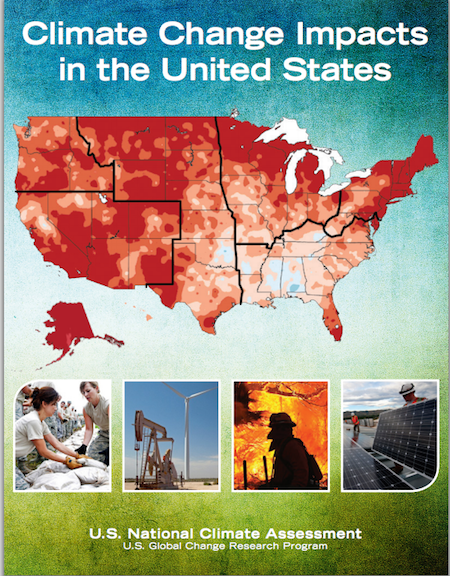
The four goals of the NGCRP are:
Which departments of government within the United States are involved?
Agriculture, Commerce, Defense, Energy, Health and Human Services, Interior, State, Transportation, EPA, NASA, National Science Foundation, Smithsonian and U.S. Agency for International Development.
What have these U.S. institutions concluded?
In its analysis of the science, the report discusses “potential pathways for climate intervention.” Climate intervention equals geoengineering. Among the strategies is the removal of carbon dioxide (CO2) from the atmosphere and sequestering it. A second discussion looks at reflecting sunlight to cool the Earth. The report also considers intended and unintended consequences should geoengineering be applied to global warming. Carbon removal and storage, states the report, is no substitute for reducing greenhouse gas emissions, or for adaptation to the changes that the climate will cause. It is seen, rather, as one of a number of tools that humans could deploy to manage future climate change. The report also acknowledges that “other countries or the private sector may decide to conduct intervention experiments independently from the U.S. Government.” The report also notes that experimentation with any geoengineering will require global agreement. After all, any atmospheric experiment with aerosols would impact the global commons the same way naturally occurring phenomena such as volcanic eruptions. And carbon removal will require a better understanding of impacts on the geochemistry of the locations where sequestration occurs.
Although not discussed in this report, one of the more promising industry trends is to find ways to convert CO2 emissions from a waste product into a marketable commodity. This goes well beyond existing sequestration technologies that pump captured CO2 into existing fields to enhance oil recovery (EOR). Known as CO2-EOR, the oil and gas industry has applied a variety of solutions within oil fields since the 1970s. Back then no one thought of it as a means of permanently sequestering carbon. Today, however, the benefit is acknowledged. In a report last fall the International Energy Agency (IEA) stated that CO2-EOR produced a 0.19 metric tons of CO2 storage for every recovered barrel of oil. The National Coal Council in the United States, in a recent report concluded that CO2-EOR provided the “most immediate, highest value opportunity to utilize the greatest volumes of anthropogenic CO2.”
But the use of CO2 for commercial purposes goes well beyond pumping it into oil fields. An X-Prize competition offering $20 million U.S. to applicants has drawn many entries with plans to create products from CO2 including concrete, biofuels, paint, fertilizers, health supplements, toothpaste, and carbon nanotube batteries. The size of the CO2 utilization market for carbon aggregate products has been estimated to be as much as $700 billion U.S. by 2030, using 7 billion metric tons of CO2 per year, or 15% of current global emissions.
For the new administration in the United States, experimentation through geoengineering could be seen as an excuse for eliminating the reduction strategies of President Obama. So could CO2 utilization and commercialization. But this would be a mistake. Intervention and commercialization are complimentary strategies but no substitute for carbon reductions, adaptation and mitigation to deal with current and future environmental consequences from the present carbon footprint and the state and rate of anthropogenic-caused global warming.

Why?
Because theoretically it is believed this will work in similar fashion to what happened in 1991 with Mount Pinatubo (see image below).

That eruption was the second largest of the 20th century with columns of ash reaching 40 kilometers in altitude. Over 17 megatons of sulphur dioxide (SO2) was injected into the lower stratosphere. The SO2 formed sulfate aerosols spreading around the globe in less than three weeks. Within the year the net impact to mean atmospheric temperatures was a decline of 0.5 to 0.6 Celsius (0.9 to 1 Fahrenheit) degrees in the Northern Hemisphere. For the Southern Hemisphere where the larger presence of oceans mitigated the cooling temperature decline was less.
What do aerosols do that can alter mean atmospheric temperatures?
They inhibit sunlight from reaching the Earth’s surface.
By how much?
In the case of Mount Pinatubo scientists calculated an light inhibition factor 10 to 100 times normal levels.
Mount Pinatubo wasn’t the first volcano to give scientists pause about the relationship between volcanoes and climate. The Mount Krakatoa eruption of 1883 which pumped millions of tons of ash into the stratosphere also created volcano-induced cooling with records of the time showing exceptionally cold temperatures around the globe over the next year. Even ocean temperatures declined after Krakatoa’s eruption with lasting effect into much of the 20th century.
So let’s get back to the U.S. Senate. It seems that human influence on climate is denied when talking about greenhouse gas emissions. But human intervention through technological wizardry to mitigate atmospheric warming is accepted.
Geoengineering has been proposed as a means to mitigate and reverse climate change. It is seen as a way for us to “have our cake and eat it too.” Through geoengineering we can continue to burn fossil fuels at present rates while offsetting their impact by tinkering with the amount of solar energy reaching the Earth’s surface.
Some scientists support the idea of testing the geoengineering capacity of current technology. I’ve written about it in the past with proposals made by some to operate fleets of jet aircraft to pump aerosols into the stratosphere. And these scientists argue that without testing the hypothesis and technical feasibility we lack the data to know whether human-induced albedo modification is viable.
In 2015 the U.S. Departmetn of Energy, NASA , NOAA and the National Academy of Sciences commissioned a study “Climate Intervention: Reflecting Sunlight to Cool Earth.” What had been thought of in the past as a “last-ditch response” to climate change, was now being explored as an option worth studying. The Senate, participants in blocking Executive efforts to address climate change, suddenly has reversed course in its thinking about how humans interact with the planet by proposing a bill that would fund us geoengineering the atmosphere. The cost a mere $5.4 billion U.S. for a pilot project and who knows how much more in the future.
There is a supreme irony in all of this. We have the Environmental Protection Agency (EPA) heading up programs to convert coal-fired power plants to capture carbon emissions. We have carbon capture and sequestration (CCS) projects being funded to the tune of billions of dollars with a facility about to open in Mississippi this year. And now we have another government agency being given money to study putting human-produced pollutants into the atmosphere to mitigate global warming.
It sounds ridiculous because it is.

“Dumping Iron in the Ocean Violates UN Agreements”
Headlines similar to the one above appeared in newspapers throughout the world. The articles spoke of violations of United Nations’ agreements, of a rogue engineer experimenting on the living ocean without consultation, of the violation of Canadian sovereignty. Why?
An American businessman, Russ George (seen below), dumped 100 tons of iron sulphate in the Pacific Ocean off the British Columbia coast in July. Apparently he did this without the knowledge and consent of the Canadian government. The end result was an algae bloom covering more than 10,000 square kilometers (3,861 square miles) of ocean surface, an area twice the size of the state of Delaware.

Geoengineering the Ocean to Reduce Carbon in the Atmosphere
Iron and lime ocean fertilization have been proposed as a way of dealing with atmospheric carbon dioxide. The idea behind lime has been looked at by an open source organization, Cquestrate, set up a few years ago to carry out an experiment similar to that which happened this past July with iron. But to-date know liming of the ocean has happened although lime was experimentally applied to lakes back in the latter part of the 20th century to counter the impact of acid rain.
So what is the big deal? There may be unintended consequences to Mr. George’s experiment. Oceanographers point out that it is impossible to know the long term impact of iron or lime seeding activities. They have expressed concerns such as:

Apparently Mr. George convinced the chiefs of the Haida nation living on the islands of Haida Gwaii, off British Columbia’s West Coast, that his seeding experiment would benefit the local ocean to help restore salmon populations. It is reported that $1 million sealed the deal.
In an article that appeared in Nature in July of this year, and that was prominently listed on the Haida Salmon Restoration Corporation news site, the Haida espoused the theoretical benefits of iron seeding the ocean based on research from the European Iron Fertilization Experiment (EIFEX) conducted in 2004 on 167 square kilometers of ocean water in the Southern Hemisphere. That study was led by marine biologists at the Wegener Institute for Polar and Marine Research in Bremerhaven, Germany.
With the postings on the the Haida website it is hard to believe that the Canadian government was unaware of what Mr. George was doing. It would seem, therefore, that the subsequent uproar is a bit of a public relations effort to distance the government from any potential fallout.
Mr. George may be in violation of the United Nations’ convention on biological diversity and be prosecuted for illegal dumping in the open ocean, but no one in the United Nations or in the Canadian government can claim that his experiment caught them unaware. After all Mr. George has been advocating for iron seeding the ocean for a number of years through the company he has created.

]]>
A recent study published in the April 2012 edition of Environmental Research Letters, the Journal of the British Institute of Physics, and entitled The Long-Term Effect of Increasing the Albedo of Urban Areas, looks at proposals to make cities more sunlight reflective by painting roofs white and using light-coloured materials in paved areas. The authors, Hashem Akbari, H. Damon Matthews and Donny Seto, of Concordia University in Montreal, argue that pavement and roofs represent more than 60% of city surfaces. Dark roofs and asphalt are solar energy traps responsible for much of the heat effect cities experience. Called the heat island effect, cities are much warmer than their surrounding rural settings. This extra heat contributes to increased energy usage for air conditioning. The heat also plays a role in urban smog leading to increases in human respiratory diseases. And finally the heat is the primary cause of weather-related deaths effecting both young and the elderly frail.

The authors argue that reflective surfaces create a high albedo reducing the rate of heat absorption in urban surfaces. If you are not familiar with the term albedo, in scientific terms it is the fraction of light striking a surface that gets reflected from that surface. Objects with high albedo tend to be light. Objects with low albedo tend to be dark. Snow and ice have high albedo. That’s why the presence of snow in winter conditions contributes to further atmospheric cooling. The absence of snow, however, lets the uncovered land surface absorb light, convert it to heat and warm the air above it, a low albedo effect.
To obtain high albedo and reduce the heat island effect in urban areas the authors argue that a simple white coat of paint would provide an immediate cooling effect. They propose as cities renew infrastructure that paved areas use materials that are light-coloured which will increase their reflectivity.
It should be understood that with only 0.05% of the world’s land masses covered by cities a dash of white paint won’t do anything to mediate global atmospheric warming but it sure can help keep your urban neighbourhood a little cooler in the summer.
Solar Energy You Can Paint On Your House
University of Southern California researchers have created a liquid containing solar cells made from nanocrystals. Richard Brutchey and David Webber’s research is featured in Dalton Transactions, an international journal for inorganic chemistry. The solar nanocrystals are four nanometers in size. You can fit 250 billion of them on the head of a pin. In liquid they can be painted or printed on to a surface and represent a much cheaper way to produce solar energy.

The solar nanocrystals are not as efficient in generating electricity as current photovoltaic silicon wafers but their abundance makes up for this. By making the liquid suspension an efficient conductor the nanocrystals can build tiny bridges among them to transmit electricity. The liquid can be painted on almost any surface material and the result solar panel can be shaped to fit anywhere.
The researchers used cadmium, a highly toxic substance, in creating their nanocrystals. They are now looking at less toxic materials to create their solar cell paint, coming soon to a big box hardware store near you.
]]>


