These were my immediate thoughts as I began to read about the Earth BioGenome Project, (EBP)a $4.7 billion US, 10-year project, to sequence, catalog, and analyze every living eukaryotic life form on our planet. That includes every plant and animal but not bacteria and archaea. The latter two are being sequenced since 2010 under a different publicly funded program called the Earth Microbiome Project (EMP).
Why else would we be sequencing all life here?
It could be because climate change and our human activity on the planet is leading to the extinction of so many species that conservationists and scientists fear we will lose them for good. It could be because the remaining wild spaces are insufficient to support the biodiversity that is still with us. It could be because we don’t want to lose the potential benefits we could derive from the fauna and flora we preserve through their DNA record. But I can’t help but return to the scenario of a future interplanetary venture which takes our descendants over centuries to some distant world which we then terraform and using synthetic biology, populate with species recreated from DNA records kept in data storage.
Both the EBP and EMP are projects in a hurry because our Earth is in the midst of the sixth great extinction event for life on the planet. The evidence is clear. Sources like the Living Planet Index, a measure of species and habitat destruction, have recorded a 58% decline in vertebrate populations between 1970 and 2012. The International Union for Conservation of Nature has estimated that of 80,000 species surveyed, approximately 23,000 are nearing extinction. By 2050 we may witness the loss of 50% of our planet’s species from human activity. Consider the concern of farmers globally should bee populations continue to plummet. Without these pollinators, many crops we depend on for food will fail.
In the EBP description that appeared in the April 23, 2018 publication of the Proceedings of the National Academy of Sciences of the United States of America (PNAS), the authors not only discuss the threat of extinction, but also the “unimaginable biological secrets” that will be uncovered in the genomes of millions of the creatures and plants that inhabit our world. They refer to the “dark matter” of biology as critical to “unlocking the potential for sustaining planetary ecosystems.”
They also talk about what will be lost to pharmacology, should we not have a genetic record of every living thing and cite recent clinical trials where drugs being used were derived from 25 different marine species. Discovering medicines that can cure cancer or genes we share with other species that lie dormant in us that if switched on could help us fight disease, is something we cannot afford to lose. In our mapping of other species, we may even find the key to help us reduce greenhouse gas emissions and rebalance carbon on the planet.
Sequencing technology which cost billions of dollars two decades ago is now accessible to us for hundreds today. And that cost continues to drop making the two projects, the EBP and EMP financially feasible.
What are some of the anticipated outcomes?

That is the message you find when you first click on the link to DNA.LAND, a place where you go to learn about your genome, and while learning about it you help scientists make discoveries to benefit all of humanity.
But you can’t get started unless you have submitted to a DNA test at an accredited lab. Right now accredited DNA testing sites for DNA.LAND include 23andMe, Family Tree DNA, AncestryDNA or GEDMatch. DNA.LAND upon registration gives you instructions on how to do a DNA upload. You are also asked to provide some background on your ancestry and health. Once done then you become part of a not-for-profit community affiliated with Columbia University and the New York Genome Center and will be making a valuable contribution to our understanding of genetics and disease. At the same time you will be given the option to find relatives based on genetic matches.
The relative finder gives you a report (see image below) on the nearest 50 matches sorted by degree of relationship based on shared DNA segments. If the number of shared segments is high the likelihood of a match is good. You receive a name and email address of matches and the degree of relationship between you and them. They also receive a similar report so either of you can decide on whether or not to connect. The report also classifies shared DNA segments as ancient or recent helping you to understand whether the relationship is one of distant kinship or a potential lost close cousin.

DNA.LAND even gives you a contribution badge based on your degree of involvement in delivering information through the filling of questionnaires about you, your parents and your known ancestry. The badge you get compares you to others in the community. Nothing like a sticker to get someone involved.
If you have already submitted your DNA samples to 23andMe, or other testing sites referenced above, why join DNA.LAND? The site states it has no for profit motive, that it is purely academic and research oriented. It also states that analysis of your existing DNA sample may yield additional genetic information not previously reported that could prove invaluable in determining whether your genome profile indicates potential future problems. So that $149 U.S. you spent when you sent in your DNA sample to these testing sites will yield the kind of detail that could of cost $1,000 or more in a retest.
]]>Biomedicine Update: Ethical Babies in Our Future?
An Oxford academic, Julian Savulescu, stated in the last week that since we have the means to create designer babies we should consider it a moral obligation to ensure we imprint ethical behaviour into their genetic maps. This would be done by suppressing genes known to be associated with personality disorders that could be harmful to other humans.
Contributing fuel to the nature versus nurture debate, Professor Savulescu encourages parents during genetic selection to pick traits that benefit society. “To do otherwise is to cosign those who come after us to the ball and chain of our squeamishness and irrationality,” he states.
Is this fiction or fact? Currently we can identify genes that lead to many diseases and disorders. We know, for example, the genes associated with cystic fibrosis, with Down’s Syndrome, with many congenital heart defects, with Huntington’s, Tay-Sachs, bowel and breast cancer, and so on. In our near future will we identify a gene for avarice, gluttony, violent behaviour, and other anti-social characteristics? Professor Savulescu is convinced as are many other scientists.

Inner Space Update: New Marine Robot Proposed to Clean Up Plastic Garbage
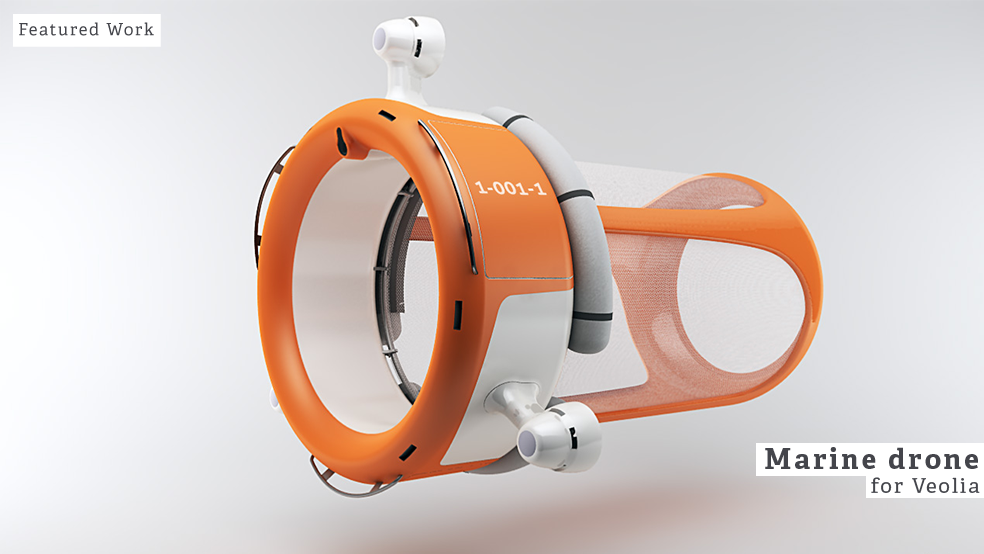
Students at the International School of Design in Valenciennes, France, have designed a device to remove plastic pollution from our oceans. There have been numerous articles about the Great Pacific Garbage Patch also known as the North Pacific Gyre, an area with concentrations of plastic and debris in suspension to a significant depth in the ocean. Cleaning this debris field represents a significant challenge, not only because the debris can be found at variable depths, but also because the plastic breaks down into ever smaller particles.
Faced with this challenge the students came up with a drone that would act as a vacuum cleaner capturing a wide range of plastic particles at variable ocean depths for return to docking stations where the plastics could be recycled. The eco-friendly design would protect sea life by using sound to deter creatures from getting trapped along with the plastic.
Can a Robot Become Self Aware?
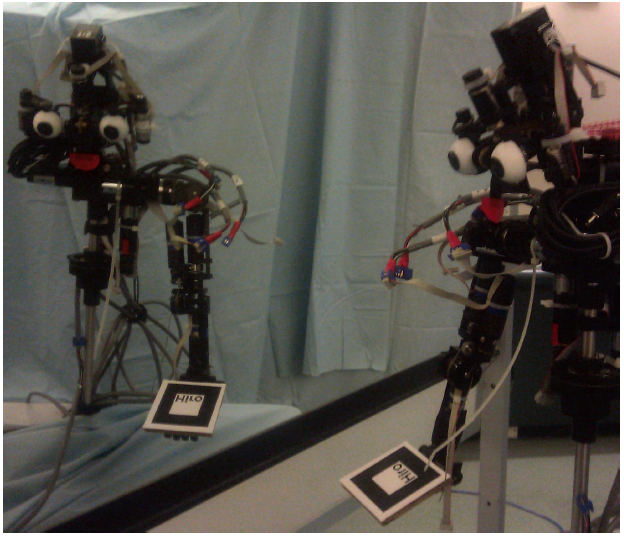
The Social Robotics Lab, at Yale University in Stanford, Connecticut, has built and programmed NICO, a robot that recognizes itself when it looks in a mirror. NICO uses spatial reasoning, finding objects nearby by their reflections in a mirror rather than looking for them behind it, something one of my dogs always used to do. My current dog, a miniature red poodle named Maya seems to look at herself in the mirror. Don’t know if it’s self awareness or she’s just too darn cute and likes what she sees.

But seriously the mirror test has been used to determine self awareness for many animal species. Of those dolphins and killer whales, elephants, chimpanzees and bonobos, gorillas, magpies, and crows have all passed. Now a robot joins their ranks. NICO recognizes its own arm in three-dimensional space and uses fine motor coordination skills to pick up objects. The programmers plan to develop code to create self recognition for NICO’s other body parts.
If we are to develop home assistance robots self awareness will be critical as it roams about the house and avoids colliding with the furniture, pets and humans.
Urban Landscape Update: New Farm Technologies Adaptable to Urban Settings
TruLeaf
A company located in Truro, Nova Scotia here in Canada has developed smart farm technology that combines LED lighting, hydroponics, nutrient-film technology and automation to build year-round farms that produce lettuce and other leafy plants for local consumption.
The smart farm system is called TruLeaf. It reduces water consumption per kilogram of yield by 80%, and spoilage between the grower and retail by 75%. Compared to field produced lettuce, TruLeaf produces higher yields in half the time.
TruLeaf modules can be deployed anywhere, from polar regions to urban centres.
EnviroIngenuity
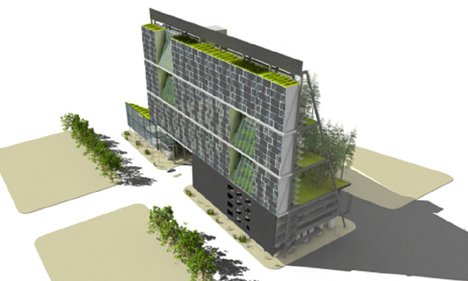
Alegria Farm, in densely populated and urban Orange County, California, is a hydroponic farm designed for vertical food production in green buildings. Nicknamed the “farmacy”, it operates on 1/4 acre and consists of 120 vertical towers growing 7,000 plants from lettuce to medicinal herbs. The system being deployed is the Verti-Gro (R) hydroponic system.
Plants use 90% less water, 50% less fertilizer, 70% less of a footprint, no soil (the medium of growth is coconut fiber) and no pesticides or herbicides while producing 10 times the yield of other organic farms.
A Postscript
I’m still looking for more reader feedback and welcome your questions and comments. Readership continues to climb and for that I am greatly appreciative.
Find us on Facebook, Google+, Twitter and StumbleUpon if you subscribe to any of these social media applications.
Once again thanks for dropping by. – Len Rosen
]]>