Wind Catching Systems is a Norwegian company founded in 2017 that is the developer of these novel wind turbine arrays. Instead of single towers supporting windmill rotors hundreds of metres across, the company has designed arrays that are 324 metres (1,000 feet) tall, containing 126 small wind turbines and generating as much energy as five standalone conventional wind power systems today, Because of their height, Wind Catchers take advantage of higher-altitude wind conditions. Their design provides greater energy capacity and structural flexibility to allow them to operate far from shore in places where conventional turbines dare not go.
In the last week, the company won Fast Company’s Innovation by Design Award in the Sustainability category. Designed specifically to float, each Wind Catcher provides a platform that is easy to maintain, eliminating the need for service boats to provide support. The self-contained array reduces the amount of ocean surface needed per Kilowatt-hour of electricity produced.
The first operational array is expected to go into service in 2024 producing five times more energy than any existing wind turbine. In using smaller rotors and because of its height each Wind Catcher takes advantage of higher wind and rotational speeds.
In June Wind Catching Systems received $10 million USD from General Motors. The investment will help the new company develop its supply chain to mass produce the arrays.
States Ole Heggheim, the company’s CEO, “The turbine system today is a very complicated machine. We’re trying to make it as uncomplicated as possible.” The company hopes to win widespread adoption by offshore wind operators and developers looking to produce electricity at costs that compete with other energy sources and without the need for government subsidies.
Each Wind Catcher is designed to last 50 years without requiring significant maintenance. Compare that to the 30-year average lifespan of conventional wind turbines. And because of the design, Wind Catchers will be easier to manufacture, easier to maintain on location, and easier to recycle at the end of their operational life. One Wind Catcher is rated to produce from 75 to 126 Megawatts of electrical power. That’s enough capacity to power 80,000 homes.
Why did the founders choose to go the multi-turbine route? They looked at the basic design being used in offshore wind production and noted that it became far less efficient when put on a floating platform. That’s why they looked to create something lighter, more flexible, and capable of producing much higher energy yields in a small amount of space. That led to the multi-turbine array that is the Wind Catcher today. In modelling the founders were impressed with the energy yield from a multitude of small turbines.
Their first test was a Wind Catcher mounted on a trimaran. From there they scaled up to the Wind Catcher design seen in the image above. Scaling potential has yet to reach its upper limit with future designs even larger than those to be deployed in 2024.
Beyond the General Motors investment, the company has received backing from Innovation Norway, and Norwegian investors Ferd and North Energy. If all goes well it should have a transformational impact on the offshore wind energy sector.
The concept EV was on display at the Los Angeles Car show last November, and rumor has it that an investment deal may come today according to Bloomberg. The suggested price for Rivian’s all-electric truck is $61,500 USD.
How does the Rivian’s price compare to a Ford F-150, the truck that is the most popular vehicle of its class in North America?
The F-150 and its competitors, Dodge Ram, and the Chevy Silverado, come in at a base price of just under $42,000 so they remain a better buy in initial investment, but not necessarily over the long term based on operating and fuel costs. Also the entry-level Rivian’s range will have a range limit of 320 kilometers (200 miles) between charges. No pricing has yet been announced for the model with better mileage range.
Rivian made a big splash states the Los Angeles Times when it debuted at the L.A. Show. Founder R. J. Scaringe, was introduced as “the version of Elon Musk you’d want your daughter to marry.” Scaringe has put together an EV that he describes as designed for off and on-road adventures. It comes with four 147-kilowatt electric motors, one placed at each wheel. There is no drive train, and no motor under the hood in front.
The company has been operating for nine years in “stealth” mode, buoyed up by early investors that include Sumitomo Corp., and Abdul Latif Jameel Co., a Saudi-based conglomerate.
Why would General Motors want to invest in Rivian? Isn’t this direct competition for its very profitable small truck business? GM may see in Rivian a way to get an EV truck on the market sooner that it could put into its distribution system, a way to bolster the company’s latest commitments to shift the goal posts to an electric future. The company has stated it will introduce more than 20 EV models into its lineup by 2023.
Why Amazon? Because Amazon Prime wants to put in place a fleet of fast-delivery vehicles that speak to shareholders as being state-of-the-art, and environmentally friendly.
The amount of money being talked about is between $1 and 2 billion to start.
Competition is expected from Ford who has made announcements to have its own F-150 hybrid and all EV pickup truck on the market in the near future. Tesla has rumoured that it too will have an electric pickup to add to its lineup of EVs. And there are some new startups equally looking to break into the electric truck market including Bollinger Motors, a New York-based company, that claims on its website to already have 20,000 reservations for its B1 EV which it expects to start manufacturing in 2020.

]]>
Ford Motor Company in November notified the world that it was getting into the self-driving taxi business with plans to launch the service in 2021. For Ford the transition to becoming a transportation-as-a-service company is well underway. The company is buying into first-and-last-mile services using a wide range of autonomous and semi-autonomous vehicles providing transit for a number of cities and university campuses.
In both cases, we are witnessing disruptive innovation leading to these multi-billion dollar enterprises making dramatic right-hand turns in the hope that they can avoid being dinosaurs in the 21st century.
The advent of Tesla was just a minor inconvenience to the major automotive manufacturers when Elon Musk began manufacturing electric vehicles (EVs). Musk’s venture was never profitable yet investors put money in to help him realize his EV dream. Today the company produces three different EV models and in its last quarter turned a profit. Tesla is scaling up to build a half-million EVs per year. It is building a recharging infrastructure to support a U.S.-wide network, and it is at the forefront of developing battery technology to eliminate any remaining range anxiety.
Whether Tesla ends up being a long-term success or not, the company is reflective of an industry in disruptive transition for many reasons. The major automotive manufacturers have been remarkably unaware of the implications of climate change to their existing business. They haven’t fully realized the implications of their adoption of artificial intelligence (AI) and autonomy on their business. They have been slow to react to the changing demographics of buyer behaviour.
To describe all of these as the arrival of a perfect storm may appear to be hyperbole, but in fact, it is not. Ford, GM, and certainly Fiat-Chrysler, are facing market dynamics far different than those experienced in the 20th century.
The North American automotive industry was hit by a wave of disruptions in the latter half of the 20th century. First came inexpensive Japanese cars that negatively impacted sales for more than a decade. In their effort to compete the North American Big Three failed to produce products of equal quality at the bottom end of the market. And while they were fighting off competition for lower-priced product, European manufacturers attacked at the high end with very competitive products.
The second 20th-century shock came with the politicization of oil globally followed by concerns about tail-pipe pollution and the growing concern about climate change. Conserving oil and reducing pollution and greenhouse gas (GHG) emissions became major policy initiatives in North America. The price for new vehicles climbed as a variety of new technologies were introduced to deal with rising government regulation in the industry. Higher pricing required the industry to rethink its selling strategies as vehicles became the second largest expenditure for North American families. Overall the number of vehicle units sold or leased by North American manufacturers has slid as prices have risen. Profitability has taken a hit and the industry has reduced its workforce as a result.
The third disruption is one which the industry is experiencing now. The rise of AI in vehicles is leading to partial to fully autonomous transportation. And with autonomy, the old personal transportation model is making way to vehicle sharing. Changing buyer behaviour, pollution, climate change, and AI are all taking at least two of the Big Three down a new road. Hence GM’s ending a number of its name-brand products, the closing of existing factories, and investments in software and service companies.
Julia Steyn, VP of Urban Mobility at GM recently spoke at a technology conference describing society’s move to shareable assets. “People don’t want anymore, to have the dream that their parents had, which is they don’t want half of their paycheque to go to housing and transportation. And so that’s just fundamentally what’s happening in the world.” She continued, “The wasted assets that the car represents when it sits there 95% of the time, idle, is ridiculous. So you want to be able to monetize it.” Steyn and others at GM see car-sharing services as the mainstream future for the company.
And we know GM is not alone because Ford has announced the launching of a car-sharing service involving tens of thousands of vehicles by 2021. The company is making investments in the new vehicle models, software, and services needed to turn this into a brand new for-profit business. That means developing dispatch, routing and payment systems that fit in any city, and for a diverse range of transportation applications. To test the concept Ford is operating an autonomous vehicle delivery service in Miami for Domino and Postmates, and have announced an agreement with Walmart. Ford sees the market for autonomous vehicles providing transportation-as-a-service at more than $330 billion by 2026.
Both GM and Ford intend to launch new model vehicles to fit a number of micro-business service scenarios. And both companies will look very different before the middle of the next decade.

But that’s not the picture today. GM is a shell of what it once was and with yesterday’s announcement of the future closing of 5 of its assembly plants in North America, eliminating 14,700 jobs, the company demonstrated that disruptions in the 21st century come as sudden shocks to those impacted by them. In a carefully worded press release entitled “General Motors Accelerates Transformation,” the company announced its vision to transform itself into a “zero crashes, zero emissions, zero congestion” technology deliverer while saving $6 billion by 2020. The word “proactive” is featured in the announcement as are the words “highly agile, resilient and profitable” to describe the company that will emerge from this restructuring.
Just to the east of Toronto, the city of Oshawa, a home to GM for more than a century, will see the closing of its assembly plant putting close to 3,000 out of work. The Oshawa plant assembled Chevrolet Impalas, a sedan with a declining market share. The company has no plan to replace the model with something that is zero emission or autonomous and hence will jettison a more than one hundred year legacy.
GM’s announcement is the face of 21st-century disruption. It describes its transformation as a fundamental change to its significantly diminished global workforce “to ensure it has the right skill sets for today and the future.” It seems the 21st century has caught up with GM and to survive and keep its onhand cash from being depleted, it needs a new workforce rather than the one that has contributed to its 20th-century success. And it also has given the finger to the governments of the United States and Canada, which saved GM in 2009, bailing out the cash-starved company.
Interestingly, after the company announcement, its publicly traded shares rose in value by 5%.
So what are the right skill sets GM is talking about? There is no hint in the press release largely because the company is still trying to figure out why it no longer makes the vehicles consumers readily want to buy. One of them the Chevrolet Volt was supposedly the face of the company’s future investment in hybrid-electric vehicles. With the closing of the Volt assembly line, it appears that GM’s future vision was either mistimed or mistaken. It’s not the first time, nor the last. Back in the late 20th century, GM produced an electric car that didn’t roll out of showrooms in any kind of quantity to justify continuing to build the model. Mistiming the market on that occasion proved not to be a good thing for business.
GM right now still makes its money from vehicle sales. But for how much longer? Uber, Lyft and other vehicle-as-a-service models are changing consumer habits. As more people move into urban centers where owning a car or truck is less important than having access to one on demand, buying one is less compelling than in the past. The price of vehicles has risen to the point where they represent the second largest investment, after housing, that most people will make in a lifetime. But unlike a home, a car doesn’t last forever and so people cycle through new models every few years. The new car sale cycle that was once every 3 to 5 years is now becoming every 5 to 10 years. Younger people, many in the gig economy, are not buying cars. Add to this the anticipated arrival of autonomous vehicles on urban streets and you have a lifestyle destructive paradigm shift that is not just impacting GM, but also all other vehicle suppliers.
GM’s plant closures are all about conserving cash so that the company can place a series of new bets on the future. But it still doesn’t seem to know where the automobile industry will be in five, ten or twenty years. Will the electric vehicle finally become the standard as climate change and government regulations and policy force consumers out the doors of their internal combustion engine cars? Today in their announcement it appears that GM is betting on a pure electric play with fewer lines of vehicles planned for the next decade. But is that the right bet?
Maybe the hydrogen fuel cell will finally come of age and give the electric car a run for its money? Does GM have any skin in that game?
Or will it be better for GM to become a fleet operator of cars it builds rather than trying to sell them to consumers through a dealer network? Then GM would be a transportation-as-a-service company and could unload another overhead, its dealers.
Inevitably will the transportation-as-a-service business end GM’s need to be a manufacturer of anything? Any route the company takes will no longer equate the U.S. and GM’s interests as one and the same. That era is over.
Disruptive change in the 21st century is following an accelerating curve state futurists like Peter Diamandis. Keeping up with the pace of this creative destruction is leaving all kinds of name-recognizable businesses in the dust. Think Sears for one.
But the impact of disruptive change on labour is its most damaging consequence. In this case, creativity in the destruction is hardly positive at the beginning. But for those empty factories that will soon dot parts of the American and Canadian landscape, would it be too surprising to find a company like Tesla or one of the Chinese electric vehicle manufacturers picking up these properties for a dime on the dollar and turning the assembly lines and lights back on?
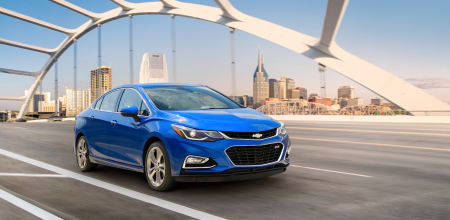
But south of the border, the Trump administration has been attempting to rollback emission and fuel economy standards for manufacturers of automobiles and trucks. These are standards adopted by the former Obama administration. The Trump regime has gone even further by challenging the State of California and its zero-emission vehicle policies.
California has for the last fifty years demonstrated the most environmentally conscious policies regarding vehicle mileage and emission standards. Responding to the Los Angeles smog conditions prevalent in the 1950s and 60s, governments in California have advanced the agenda for the development of low emission technology through a combination of carrot and stick policies. The state has raised mileage standards progressively and demanded all vehicles sold there be equipped with pollution abatement technology such as catalytic converters.
As California has gone, so has the United States over time with 18 other states, and the District of Columbia joining them in accepting tougher emission, mileage and safety standards. But Trump regulators are trying to end California’s influence regarding automobile standards.
You would think, therefore, that the automakers would be cheering the federal administration for its efforts. Precisely the opposite, two of the world’s largest automakers, General Motors, and Honda are taking California’s side in promoting EVs and increasing mileage standards for vehicle fleets.
General Motors wants to see 7 million long-range EVs on U.S. roads by 2030 which would reduce carbon dioxide emissions (CO2) by 375 million tons annually. And Honda sees the Trump attempt to rollback emission and mileage standards as creating uncertainty in the industry. Honda is also urging a national program acceptable to all automakers.
The Trump administration’s recommendations want to keep fuel economy requirements to 37 miles per gallon (6.35 liters per 100 kilometers) in the period between 2020 and 2026. The Obama administration had called for a fleet standard of 47 miles per gallon (5 liters per 100 kilometers) by 2025. The government of California sees the Trump rollback as a benefit to the oil companies exclusively, and certainly doing nothing to fight climate change. It means that oil consumption by 2030 will be a half-million barrels more per day than if the Obama standards were met.
For General Motors there is a further concern if emission standards are rolled back, and if zero-emission policies such as those adopted in California, are overturned by the federal government. The company sees the chief beneficiary of such acts to be China where its government has adopted aggressive policies to replace gasoline and diesel vehicles with EVs. China may not be alone in this windfall produced by backward-thinking policy. German and Japanese automobile manufacturers, along with their governments, are fully vested in replacing fossil-fuel burning vehicles with EVs and other zero-emission technologies by the end of the next decade.
If Trump succeeds in rolling back emission and mileage standards nationally while California, its 18 state supporters and the District of Columbia adopt their own path, it means manufacturers of vehicles sold in the United States will have to deal with two very different markets. That will raise production, distribution and point-of-sale costs. And it doesn’t help automakers if California and its partner states fight endless court battles with the federal government to determine a jurisdictional winner. The uncertainty this brings will stifle investment. In General Motors and Honda’s support of the California position they are telling the Trump administration they would rather have a common national standard that promotes a move to cleaner, greener vehicles which will make them globally more competitive.

There are now more than 1 million electric vehicles (EVs) on roads today. But to address transportation’s carbon footprint, vying with utilities and the energy industry today for being at the top of the pyramid of greenhouse gas polluters, that 1 million number needs to grow to 1 billion. Manufacturers have in the past paid lip service to EVs. They have added a few models to their mostly internal combustion and diesel engine lineups and used the EVs to help them meet government fleet mileage and emissions regulations. It is only since Tesla began ramping up the production of its Model S, announced its Model 3 with over 400,000 pre-orders, and General Motors, its Volt and now Bolt EVs that we are beginning to see a different industry approach.
Investors are telling established automobile manufacturers that they face a threat from new entries to the vehicle sector that are pure EV based. Companies in China like Chery International, Zotye International, BYD, Kandi, BAIC and Geely are EV evangelists and as entrepreneurial as Tesla. And they have state backing, little overhead and existing infrastructure dedicated to older fossil fuel burning technologies, and a government attempting to impose some of the toughest greenhouse gas emission regulations on the planet to deal with its urban pollution problems.
A new Institutional Investors Group on Climate Change (IIGCC) report published in the last week points out that regulating carbon emissions means vehicle companies are continuing to back the wrong horse in sticking with their existing business models. That tougher vehicle emission standards to meet government obligations under the Paris climate change agreement will force the industry’s hand.
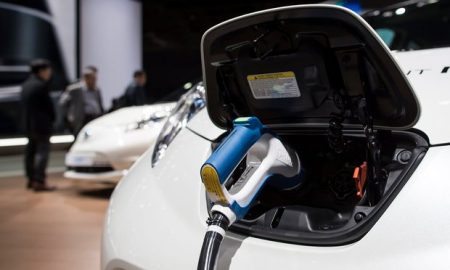

That seems to be a strong motivator for Mercedes-Benz according to its chief executive, Dieter Zetsche. He fears that “third parties would step between yourself and the customer” with the auto industry becoming no more than a hardware supplier. By third parties Zetsche is referring to Apple and Google (Alphabet). His company and others are seeking software technology company acquisitions with this goal in mind. Joining Mercedes-Benz are General Motors, Ford, Toyota, Nissan, Hyundai, Audi, BMW and Volkswagen and more, all shopping for the apps and services that can be integrated into their vehicles and that will keep them connected to customers and not just the makers of hardware.
General Motors (GM) recent $500 million US investment in Lyft (an Uber competitor) back in January is a good example of a common industry trend. This is GMs bet on autonomous cars reshaping the market sooner than later. States GM President Dan Ammann, “we think our business and personal mobility will change more in the next five years than the last 50.” With Lyft software GM driverless cars will become available on demand to consumers providing network coverage in urban centres. Lyft will also be used by Toyota and Ford and be integrated into dashboard screens. Ford is testing ride hailing by putting a fleet of autonomous driven transit vans into its Dearborn campus in Michigan.

GM has also entered into partnership with Mobileye, an Israel-based company offering sophisticated vision algorithms that interpret scenes in real time to provide drivers with crowd-sourced imaging downloaded to any vehicle with GM’s OnStar on board service. This is fact checking driving conditions and a perfect segue into driverless cars in the near future. GM Executive Vice President, Mark Reuss, describes as “a critical enabler” in getting the company to its ultimate goal of autonomous vehicles. GM isn’t alone with Volkswagen joining them in partnership with Mobileye.
Toyota, the world’s largest car manufacturer these days, owns more patents for self-driving cars than any other company. In fact Japanese companies lead all others in developing autonomous driving technology with German companies second, South Korean third, followed by GM. In January the Wall Street Journal published an article describing Toyota’s “late shift into self-driving cars.” The company recently invested $1 billion of its annual $9 billion research and development budget to set up shop in Silicon Valley, California, where it hopes to hire away some of the talent that can help it turn patents into apps and products. Setting up in Google and Apple’s backyard represents a direct challenge to those companies for supremacy in the development of autonomous and semi-autonomous technologies.
Meanwhile Google’s StreetView is feeling the heat from competition from Here Maps, a former Nokia division. Here Maps (see a sample map in the image below) is a multi-platform mobile application recently acquired by a consortium of car manufacturers that includes Mercedes-Benz, BMW and Audi. According to a Nokia spokesperson, “its focus is on developing precise and accurate mapping as well as services that will enable an entirely new class of driver experiences, including highly automated driving.”

All of this investment doesn’t preclude the use of Apple and Google apps in automakers’ products. But what it does do is give the manufacturers leverage with the app communities created by these two hardware and software industry giants. Expect many more acquisition and partnership announcements from automakers in 2016 and beyond as we see an accelerated push to implement autonomous technologies sooner than later.

Having said all this, in the last week a Google autonomous vehicle crashed into a bus with the Google vehicle being blamed. According to the report the vehicle was traveling at a speed of 3.2 kilometers (2 miles) per hour. According to Google the autonomous vehicle presumed that the bus would yield to the car. It didn’t. Google announced it redesigned its algorithms in light of the accident.
]]>The challenges fuel cell technology faces include:
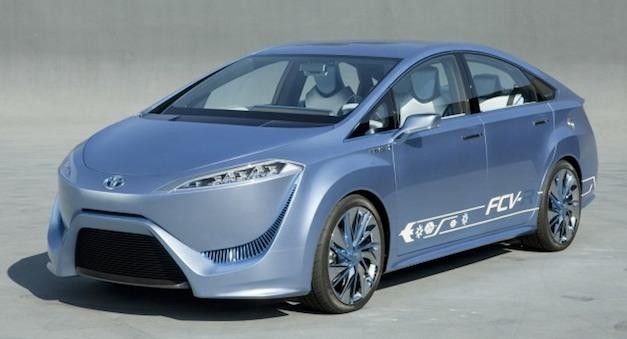
General Motors and Honda are collaborating to drive down the cost of fuel cell technology. They like Toyota hope to be putting sedans on the road by 2015 that sell for $50,000 making them cheaper than the Tesla-S electric vehicle (EV) from Tesla Motors. For GM, Honda and Toyota they argue that fuel-cell cars have distinct advantages over EVs with better range, up to 650 kilometers (400 miles), and faster refueling, less than 4 minutes, although Tesla is experimenting with new processes that can swap out an electric battery in under two minutes as it builds its station infrastructure.
Fuel cell backers also argue that their technology is cleaner than EVs and any ICE car because when EVs are recharged from dirty power sources such as coal-fired power plants, it negates their operational zero emission performance. In addition even if the hydrogen is derived from natural gas they point to U.S. Department of Energy studies on carbon emissions that claim fuel-cell vehicles when all is considered will emit less than half the CO2 of ICE-powered cars.
As for the safety of hydrogen technology (think Hindenburg and you’ll undersatnd the issue), I recently wrote about advances in hydrogen production that make it a much safer source of energy, and about Firewater Fuel, a new start up company that is commercializing a low-cost catalyst for hydrogen production. Also research at the Brookhaven National Laboratory in New York has found a way to store hydrogen in a liquid state at ambient room temperatures making it much easier to transport safely. All of these advances point to a potential rosy future for fuel-cell cars. But it won’t happen without a massive investment in hydrogen infrastructure to make filling your fuel-cell car as easy as your current gasoline-powered vehicle.
]]>

Automobiles today are computers and sensors wrapped in a steel, aluminum or fiberglass frame. High-end model features such as the following:
are becoming available on mid-range and lower priced automobiles. Today’s vehicles contain millions of lines of software code with sophisticated databases that can synthesize information rapidly from all the sensory input on board and make instant decisions.
Current legislation on self-driving vehicles require a human in the driver seat for now. But it is only a matter of time before we start to see vehicles running in autopilot because this technology will ultimately save both lives and energy consumption. The American Automobile Association estimates that 90% of the vehicle crashes occurring annually are in part caused by human driving mistakes. A U.S. highway traffic safety study recently concluded that vehicle-to-vehicle autonomous communication could cut down the number of crashes by 79%.
Currently Ford has developed a modified WiFi and GPS system that broadcasts a signal 10 times per second showing a vehicle’s position and speed in relation to other vehicles around it. If a collision is imminent the system sets off an alarm. Another technology, DSRC, short for dedicated short range communication, can be used to manage traffic flow through intersections so that all vehicles on approach can cross without crashing into each other.

Scania, the Swedish truck manufacturer, has been developing a wireless network system for inter-vehicle communication to allow trucks to convoy with a lead truck closely followed by as many as six or seven others. The system uses GPS to do routing, obtains real-time information on road conditions ahead, communicates with traffic lights to minimize braking, comes with adaptive cruise control, and through platooning reduces fuel consumption for those trucks following the leader. The vehicles maintain a 25 meter (about 82 feet) distance between them but the goal is to get them even closer to decrease drag and lower fuel consumption by as much as 20%.

Lockheed Martin has been developing a similar system for the American Army. Called CAST, short for Convoy Active Safety Technology, the system attaches to a truck to enable it to drive itself to a programmed destination while keeping in formation with other convoy partners. The system is designed to allow any vehicle in the convoy to assume the lead position should that vehicle be disabled. CAST has more than 12,000 hours of unmanned road testing driving distances of 56 kilometers (35 miles) during daylight and 24 kilometers (15 miles) at night.

Ultimately autonomous vehicles will replace human-operated cars and trucks. The increased safety factor will mean a dramatic reduction in vehicle weight and size. Why? Because much of the weight of automobiles today represents design elements for protecting human occupants from crashes. With the human element taken out of the picture vehicles will shed hundreds if not thousands of pounds in weight. By 2050 traffic congestion will be a thing of the past and deaths from traffic accidents will be non-existent.
]]>