Although I have decided to shine a light on these seven subjects in these first two postings of 2018, there are many other fields where 2018 will see significant advances, and I intend to cover most of them as the year unfolds.
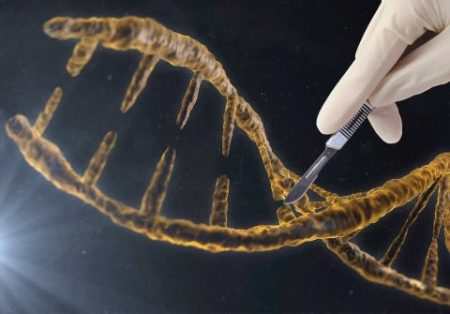
If any one field of science is to be singled out as game breaking, it is the one that is parsing the genetic makeup of all life on Earth with the intention of curing inherited and acquired diseases that cause changes to our DNA and RNA. Under the name “gene drive,” we saw in 2017 the first use of CRISPR/Cas9, to correct diseases of a genetic origin. In 2018 we will see the first therapies carried out on patients suffering from a variety of cancers, ALS, Muscular Dystrophy, Multiple Sclerosis, Sickle Cell Anemia, Huntington’s, Alzheimer’s, and other inherited or epigenetically acquired diseases. And this is just a beginning use for this amazing scientific breakthrough. Variants of CRISPR can now edit nucleobase pairs, the steps in the staircase that is the DNA ladder.
Not just humans will be the recipients of gene drive technology. New variants on staple crops will help feed a world where climate change presents a considerable threat to agriculture. Scientists are engineering wheat, corn, rice, soybean, millet, cassava and other principal food crops to withstand drought, excessive heat, saltwater intrusion, insect and weed infestations, and other environmental challenges to feed a planet that will see our human population increase by more than 2 billion by mid-century.
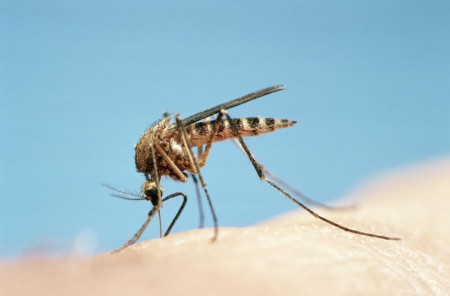
Genetic modifications to insects that not only infect humans with diseases like Malaria, Zika, Chagas, West Nile Virus, Chikungunya, and others will do more to wipe out these diseases than all previous efforts to date. We will see the first deployments of genetically altered insects that will sterilize whole populations responsible for destroying the food we grow.
This technology is just getting started in 2018 with the next 10 years being positively revolutionary.

The race to build the first commercial quantum computer using silicon, complete with operating system and application development tools, has almost been run. Why silicon? Because we have been building other types of computers with this material since the dawn of the age of computing. But quantum bits or qubits, the equivalent of bits in regular computers, have always been a bit of a challenge to build into a physical substrate. Producing qubit chips using current manufacturing technology, as a result, has been difficult.
Today, the leading supplier of quantum computers is a small company headquartered in Vancouver, British Columbia. D-Wave sells a single quantum computer for as much as $15 million U.S. per unit. Its customers aren’t everyday computer users but rather companies like Google, NASA, and Lockheed-Martin. IBM and Microsoft may have home-grown quantum computing devices of their own but they aren’t building any for customers just yet.
The big breakthrough may come from Australia where University of New South Wales researchers have architected a quantum chip built using silicon that is based on “flip-flop” qubits. These qubits are controlled using electric signals, instead of magnetic ones which makes construction of the chip far easier. The precise arrangement of single atoms to ensure qubits function properly is no longer a constraint meaning conventional manufacturing processes will soon be able to turn out significant numbers of these qubit chips. With this new type of qubit, quantum entanglements can happen hundreds of nanometers apart. That makes quantum computer manufacturing to scale realizable for the first time in 2018. That’s almost a decade ahead of what prognosticators and futurists have been predicting.

Heavy-lift payload capacity is about to become a reality in the space business in 2018 as SpaceX prepares to launch its Falcon Heavy this month in a test that will be just the first of many space firsts. These include the first human-crewed launches to the International Space Station by SpaceX and Boeing. By the end of the year, SpaceX plans to send two tourists on a trip to and around the Moon, duplicating the Apollo 8 mission of 1968.
We should also witness the finalists in the Google Lunar XPrize attempt to come away with the $20 million that remains at stake. No finalist represents a big corporation which is an interesting development. All are working with small budgets showing that billions need not be spent to get to the Moon. Should one or more succeed, it will lead to accelerated commercialization of both the near-Earth and lunar space, a development that only a few short years ago was considered inconceivable.
CubeSats and an increased number of commercial space launch providers will further democratize the study of Earth, near-Earth and Deep Space. The miniaturization of sensors and instrumentation have made it possible to build satellites that can do real research for as little as $10,000, and can be launched economically with a bundle of other CubeSats on commercial or national space carriers such as India, and Japan, for a fraction of what it cost for NASA, Roscosmos and even China. Calling 2018 the year of the CubeSat may not be that far from the truth.

Electric vehicles (EVs), autonomous transportation, and hyperloops have dominated 2017 transportation headlines. In 2018 expect to see autonomous ships and long-haul trucks become part of the tech talk conversation. The commitment to EV technology among the major manufacturers of automobiles globally is a welcome response by these companies to do their bit to reduce our reliance on fossil fuels. Autonomous vehicles being tested today in a limited number of cities around the world will see a growing proliferation of both closed circulation and public street testing.
Now consider adding three more technologies to emerge in 2018.
The first is the reappearance of commercial supersonic transport with a number of vendors in the running to create a next-generation version of the Concorde. Aerion, Boeing, and Lockheed-Martin are all in the running.
The second is the race to create commercial travel through suborbital space to shrink the time and distances for global travelers. There are so many companies which have thrown their hats into this ring that we should see considerable progress made in solving the technological barriers to entry in 2018. The companies in the running include Virgin Galactic, SpaceX, Blue Origin, and the UK’s Skylon hybrid jet-rocket plane.
Third is the evolution of vertical urban transport with magnetic levitation elevator technology that soon may change how cities get built. Thyssen Krupp is the technology leader in this field. And the implications for future buildings will turn them from today’s vertical towers, into structures that may resemble the branches of trees. Maglev elevators have no cables. They run on rails that can go vertically or horizontally or somewhere in between. This is technology that has profound implications for what could be defined as micro-urban transportation within and across complexes of buildings, literally highways for passengers to travel through the urban sky.

]]>
Gene-drive technology is associated with the wunderkind genetic tool CRISPR/Cas9. Using it scientists can snip out targeted strands of DNA and replace them with genetic material that alters the characteristic of a species whether it be a plant, or animal, or us. With such a powerful tool we can eliminate an entire species by interfering with its ability to reproduce. And that’s precisely what cherry orchard farmers hope can be done to end an invasion of the Spotted-Wing Drosophila.
Some scientists, however, fear the unintended consequences of unleashing gene-drive technology in the wild. When you remove a plant or animal species could it alter the ecosystem of that locale? As some scientists point out, nature tends to find a way around most of our technology fixes. Hence we get pesticide and herbicide-resistant species that appear to arise from the dead to cause damage to food crops and farm animals. Some argue that a CRISPR/Cas9 gene drive system, when unleashed into nature, could become self-propagating, acting like an invasive species.
That’s why the developers of CRISPR/Cas9 technology are cautious about taking it to market prematurely. There has to be a means to make the technology self-limiting so that when it is used to cull an invasive species it doesn’t end up creating a problem for other species. For example, if a beneficial animal that preys on Spotted-Wing Drosophila eats a gene-drive altered fruit fly, by ingesting it causes unintended DNA changes to the predator?
But getting back to the cherry growers of Northern California, it appears that the California Cherry Board along with researchers in The Akbari Lab at University of California, Riverside, have the green light to attack Spotted-Wing Drosophila and eradicate the species. Right now re-engineered fruit flies are confined to the laboratory but ultimately, the farmers want to see them released into their orchards rather than continuing to spray pesticides that kill not just the flies but helpful insects like bees. To the cherry growers, gene-drive technology appears to be a precision tool like a scalpel. Whereas their current practices are seen as using a hammer to squash a bug.
The research at Riverside funded by a $100,000 grant from the Cherry Board, goes by the project name, Medea. If you remember your Greek mythology, Medea was the wife of Jason, of Golden Fleece fame. It is told that she was a sorceress who bewitched Jason and married him. But when the spell was broken and Jason planned to leave her, she took her revenge by killing their children. A brutal image indeed, but one that fits exactly with what gene-drive technology can be used do; altering the female fruit fly’s reproductive capability and thus making any offspring unviable. In the laboratory, Medea is working with 100% of the flies in the experiment producing no live offspring.
Ther are alternatives to the Medea effect that would use gene-drive technology. Because the flies over winter by hibernating, one could use gene-drive technology to block the chemicals they use as antifreeze to help them survive the cold. Or gene-drive technology could change the flies anatomy so that it can no longer penetrate the surface of cherries to lay eggs in ripening fruit. In the latter case, the technology would not wipe out the species, but rather would make it benign, that should it spread outside California, would not pose a harm to any other region of the country.
The Cherry Board is giving the experiment five years before considering deployment in the wild. By this approach, and through education, the Board hopes to curry public favour, answering all questions before unleashing the end product of gene-drive technology into California orchards.

The U.S. military through DARPA is one of the largest funders of gene drive research. And in a Scientific American article on the subject, DARPA program manager, Renee Wegrzyn, states, “if we’re going to be really bullish about genome engineering, we need to be just as aggressive with tools to reverse those changes.” She heads up a team focused on inhibiting unwanted genetic changes and reversing them. One line of research involves developing molecular tools to combat a genomic editing that produces undesirable results. It could be delivered in a pill. Another area of research looks at ways to overwrite gene mutations to reverse unintended effects.
Gene drives today are seeking ways to control mosquito populations that spread diseases like Zika, Dengue, Chikungunya and Malaria. The technology is seen as so powerful that companies like Oxitec, the Oxford University spinoff that produces and releases genetically modified mosquitoes and other insects, believe within a generation we can wipe out public health scourges this way.
A project, Target Malaria, focuses on doing just that in sub-Saharan Africa. Variants of female Anopheles mosquitoes are the target. Gene drive technology is being used to create a number of potential outcomes. One targets fertility genes to make them no longer function. Another targets the genes responsible for allowing mosquitoes to host malaria pathogens. Modifying the genetic structure of the insect makes the offspring perform in ways that reduces traits that contribute to the spread of the disease in human populations.
How the gene drive works is simple. The technology uses DNA-cutting enzymes, called nucleases, to cut and paste new instructions into one or more chromosomes. In this way you create an insect population with new characteristics. For example, a mosquito that resists becoming a malaria or other pathogen host. Or a population of insects that produces only male offspring who not only don’t bite but don’t reproduce.
You can make a gene drive fool proof so that the inherited trait happens 100% of the time unlike the process of natural selection where genes of a parent are passed to offspring only 50% of the time. Eventually the genetically-modified insect becomes dominant or, in the case where you create an all male offspring population, extinct.
The dark side to eliminating a disease spreading species of insect is unintended consequences. Suppressing one species may kick-start a competitive species capable of producing a whole new series of pandemics. Once we start toying with natural ecosystems the consequences can be mighty serious.
And then there is the potential for malicious gene drives with humans turning the technology into a weapon targeting us. The mechanism to spread a pandemic-causing outbreak in a human population could be delivered through an insect bite, or an aerosol, through the water system or food supply that alters our chromosomal construct.
Engineering genes safely and ensuring we have the means to deconstruct or reverse what is created, therefore, is of primary importance. The safeguards we put in place must surpass even those currently used by nuclear weapons programs.

The project is based at Imperial College in London. The technology, called gene drive, uses tools such as CRISPR/Cas9 to alter genetic instructions in a species to produce traits not beneficial to its survival. In the case of mosquitoes the goal is to create a population incapable of reproduction either through making females sterile, or having them only produce male offspring. Gene drive technology could also create mosquitoes incapable of transmitting malaria and other diseases.
The controversy surrounding gene drive technology goes back to a fear of genetically engineering any life form, even mosquitoes. GMOs or genetically modified organisms have raised the ire of campaigners who consider altering genetic information by inserting new genes into a species DNA as dangerous. In some cases I’m sure the resistance to GMO is about humans playing God but doesn’t consider that we have been altering the genetics of plants and animals since the start of the Agricultural Revolution almost 12,000 years ago.
Gene drive technology isn’t just about saving human lives. There are many more species at risk where the technology can turn back disease and unwanted intrusions by exotic species almost all introduced by humans to isolated communities on islands. For example in Hawaii where human-introduced mice and rats have endangered unique-to-the-archipelago, birds and lizards, Hawaiian researchers are looking at gene drive technology to create only male offspring mice and rats. They are also looking at using gene drive to eliminate mosquitoes, also not native to Hawaii, which have been responsible for spreading avian malaria to native bird species.
The use of gene drive technology remains an issue for we as a species who have yet to determine rules of governance through legislation and policy. Of particular importance is its use on our own species. What if we used gene drive to alter us? This is the stuff of Star Trek’s television episode called “Space Seed” and the subsequent movie “The Wrath of Khan.” In this case we would not be attempting to eliminate an entire species but rather enhance it. But in doing this we would unleash consequences, both good and bad. At its best gene drive could tackle the mosquito, the most dangerous animal on our planet. But at its worst we could open a Pandora’s Box.
When Monsanto, Bayer, Dupont and others created the first genetically modified crops, the goal was to increase agricultural yields and earn a profit for the respective companies and the farmers planting their seeds. But now with gene drive we are moving into a whole new realm of genetic modification. So how do we regulate it? Today nations and sub-jurisdictions sway back and forth between approving GMOs or banning them. Fear and a lack of scientific understanding have accompanied debates in legislatures around the globe. But now it appears to be the right time to bring together scientists and ethicists to create guidance for the regulation of the technology.
One rule will not fit all. Whereas gene drive to wipe out a disease spreading mosquito can be regulated by specific controls on pilot programs, limited releases, follow up studies and more, gene drive regulation applied to many other species may be more rigorous or relaxed depending on the circumstances. What shouldn’t happen is an overall ban. This technology is an instrument for good when the Bill and Melinda Gates Foundation fund specific research to fight mosquitoes responsible for millions of human deaths annually.
The biotechnology tools that made this genetically modified salmon are the same tools being used to alter the DNA of staple crops to make them drought and weed resistant. The technology tool is called CRISPR. It can produce new strains of soybeans, rice, potatoes, tomatoes and even allergy-free peanuts to help feed the world. It can give plants the ability to thrive even in a world undergoing extremes of climate change. And now it can modify mosquitoes that can stop parasitic diseases like malaria from being transmitted to human populations.
CRISPR is the leading edge of what is being called “gene drive” technology. With gene drives we can remake the biosphere. In the case of the genetically modified mosquito we create an insect that inhibits plasmodium, the single-cell parasite responsible for malaria, from living within the insect.
This year scientists at University of California San Diego used CRISPR to create what is referred to as a molecular motor to spread anti-malaria genes throughout a mosquito population. To date the mosquitoes have yet to be released into the wild and are kept behind locked doors. Why? Because there is a controversy among researchers debating the merits of releasing “gene drive” technology into the real world without a mechanism to reverse its affects. Some researchers see the sinister side of the technology, engineering insects to spread deadly toxins. But those behind the advancement of the technology argue that there are much easier ways to kill people than carefully breeding a captive insect population to do it. They want to see their engineered mosquitoes released to end malaria which kills 670,000 people every year, mostly children, and mostly in sub-Saharan Africa.