As the boundaries between the digital and the real world increasingly blur, the impact of the former on marketable skills is becoming more significant. Digital games today are not merely entertainment. They are also potent educational tools. Educators have even created a word for this method of learning. It is called gamification, which is defined as using games to improve learning engagement, problem-solving, and teamwork. Gamification is being integrated into education, healthcare, scientific research and business. This article explores how different game genres and specific games can enhance real-life skills.
Real-time strategy (RTS) games represent a genre that require players to juggle multiple tasks simultaneously under pressure. These games are ideal for developing and honing strategic thinking because they simulate complex environments where decisions may have immediate or long-term consequences. Players learn to manage resources and strategies in real-time, offering a perfect analogy for similar real-life strategic challenges.
Two RTS game examples are StarCraft II and Age of Empires. Both offer complex, multi-layered gameplay requiring quick thinking and strategic foresight. They leverage advanced AI and real-time processing to create challenging scenarios. Players face AI opponents who can rapidly adapt to strategies thrown at them. For the players, not the AI opponents, it is a dynamic environment to develop critical thinking and adaptive strategies.
The skills learned in playing RTS games transfer well to the real world of business management, military strategy and crisis response. Players lmanage resources efficiently, anticipate opponents’ moves, and make quick decisions.
For a practical application within a fantasy realm, RAID: Shadow Legends offers an excellent example of an RTS game that focuses on strategic resource management, and through onscreen tactical combat serves to enhance planning skills.
Puzzle games are uniquely designed to challenge our intelligence. They make players approach problems from different angles, fostering mindsets that are both flexible and analytical. Two examples of puzzle games are Portal and Tetris Effect. Both use advanced algorithms in puzzles that require logical reasoning, spatial awareness, and pattern recognition. They employ physics-based mechanics that entertain, educate, and improve mental capabilities.
Playing puzzle games enhances one’s ability to analyze data, structure projects, and navigate complex issues in professional settings. The cognitive skills learned are especially useful for real-world fields requiring high levels of analytical thinking and innovation including engineering, computer programming, and scientific research.
Massively multiplayer online role-playing games or MMORPGs are virtual playgrounds where players interact in persistent and expansive worlds. These games are powerful platforms that mimic the complexities of real-world social interactions. Participating in digital societies develops interpersonal skills that are transferable to the real world. Two examples of these games are World of Warcraft and Eve Online. Both create social communities where players collaborate to achieve common goals. These games have been able to achieve their success because of the evolution of high-speed, high-bandwidth networks that facilitate real-time communication and interaction for thousands of players to engage each other worldwide. Through these types of role-playing games set in virtual worlds and societies, players learn to negotiate, collaborate, and lead, providing a training ground for managing real-life group dynamics.
First-person shooters or FPS games are high-octane, demanding virtual worlds where players make rapid decisions and hone their psychomotor skills. FPS games’ immersive and fast-paced nature is ideal for developing critical skills associated with high-stress jobs. Call of Duty and Overwatch are two fast-paced demanding action games that improve hand-eye coordination, reflexes, and split-second decision-making. They use high-frame-rate graphics and responsive control systems to simulate real-time engagements. They have practical applications for jobs like driving, piloting, and medicine.
Sandbox games feature open-world experiences where creativity is encouraged and required. These games are about exploration without defined goals. Players can manipulate the virtual environment and create complex structures and systems from scratch. They serve as a canvas for innovation and experimentation, providing players with the tools to think creatively and problem-solve. They feature open-ended play. Minecraft and The Sims are these types of games, digital sandboxes that allow players to test and implement ideas without real-world constraints.
Narrative games are about storytelling. They promote character development and offer players a deeply emotional and ethical landscape in which to play. They feature situations where characters face difficult decisions, mirroring real-life scenarios that require empathy and emotional insight. The Last of Us and Life is Strange are two narrative games that challenge players to make moral decisions, build relationships, and enhance empathy and emotional intelligence. These can be invaluable in professions requiring strong interpersonal skills and emotional insight such as teaching, counselling, and team management.
In our technology-driven world, where digital literacy and cognitive flexibility are paramount, the role of gaming extends beyond entertainment to become a crucial part of personal and professional growth. As games continue to evolve along with high-speed, high-bandwidth networking and telecommunications the potential for them to serve as advanced learning platforms grows.
Technologies like virtual reality (VR), augmented reality (AR), and artificial intelligence (AI) are now part of the gaming world, enhancing immersive experiences and offering new ways to learn. No longer are video games just escapist entertainment. They are transformational environments for skills development. For educators and trainers, games provide simulated challenges that resemble real life.
Imagine as feeds and speeds continue to accelerate, what the world of video games will be like a decade from now. Imagine how this technology will change how we learn and work. It will have elevated that art beyond the world of Pong and Monday Night Football.
]]>Living with continuous change is hard and we are trying to accommodate it. For different generations, there are different aspirations. At age 70 by the year 2030, I will be 81. For me managing the change of my last forty years may reflect what so many younger people are going through today. In my personal life, I became a father and dealt with a child born with a significant genetically-caused heart condition. The continuous innovations in medicine proved to be the difference between her living or dying as she has survived into adulthood and now is happily married, working, and enjoying life. Today she faces a world I couldn’t have envisaged at the time of her birth, where full-time employment was hard to achieve, and where a degree earned had little to do with the realities of the new working world.
Continuous change was the norm of my business career and that was rare at the time. I started in book publishing, went on to manage a computer store, then on to writing software and computer systems documentation, software development, and eventually telecommunications systems design. I would describe this multiple career path as one that more reflects the norm of today than of my time. For today working at a job for 10 or more years is a rare occurrence. Instead, we see the proliferation of what is being called the “precariat,”
My futurist friend, Thomas Frey, recently posted in his blog an article that looks at the future through the eyes of a child. It’s not so much the child talking about the future as it is Frey’s speculation on what skills that child will need in growing into a world of continuous change.
He begins stating “the workforce of tomorrow will need to be resilient, flexible, resourceful, creative problem solvers, ethical, epithetical, situationally aware, perseverant, purpose-driven, relentless, and totally distraction-proof.”
He goes on to state the future will require young people to “be better at virtually everything – smarter, quick to adapt, high energy, work long hours, durable, and much more resilient.”
Are parents today preparing their children to be this? If you understand the expression, “helicopter parents,” then you can see the challenge that lies ahead for the next generation that will face 2030.
So what will continuous change mean to those entering adulthood and the world of work by 2030?
Adapting to this world of continuous disruptive change will require flexibility in mind and spirit. Of that, there is no doubt. And I hope it will end our fixation with the distraction of digital screens rather than their purposeful use for mastering the skills necessary to adapt to a future of relentless change.

A bit of background that is less personal than Ban’s family story. According to the Global Atlas on Cardiovascular Disease Prevention and Stroke, the number one global cause of death from disease today, amounting to 17.3 million annually, is caused by a cardiovascular event. Many of these include strokes, from minor transient ischemic attacks, to major incidents leaving the patient partially paralyzed. Consider that number. It is just under half the population of Canada each year succumbing to this disease.
Now I’ll let Ban tell the rest of the story.
———-
According to the World Heart Federation, 15 million people worldwide suffer a stroke every year. Predictions for the next two decades suggest this number will triple with the largest growth in Latin America, the Middle East, and sub-Saharan Africa. Stroke is happens everywhere. It is the biggest cause of adult disability in the United States with 85.6 million Americans living with some form of cardiovascular disease or the after effects of stroke.
The victims of stroke often experience long term disability due to neuron damage, not damage to their muscle cells. The neurons cannot be revived but you can enhance the brain’s plasticity by training those cells that remain undamaged.
To achieve this NEOFECT looked at a combination of hardware device, to aid movement in the disabled body part, and software to analyze and boost the rehabilitative process. The end result the RAPAEL Smart Rehab Solution, a combination of biofeedback device (a sensor-loaded glove worn by the patient) and systematic software, designed specifically to help patients with central nervous system disorders recover movement. The solution provides game contents designed by physicians and medical experts to cause brain plasticity and muscle retention for patients with chronic stroke. Furthermore the use of advanced gaming technology makes rehabilitation more effective and fun.

RAPAEL Smart Glove was featured as one of 13 innovative products in the most recent REHACARE, the largest annual European rehabilitation fair. There it received device approval from several regulators including those in Korea and the United States. NEOFECT’s long term aim to make RAPAEL accessible for both rehabilitation therapy in hospital and clinical settings as well as for home use. Watch this YouTube video to see just how it works.
]]>———-
You might have heard the term “gamification.” The overall premise is rather simple: apply gaming technology to non-gaming tasks and motivate your audience to achieve a goal. Through gamification you can promote behaviors that participants might otherwise not engage in. It falls in line with the old principle of making work fun.
In business practice today, gamification is being used for employee training and onboarding, customer loyalty initiatives, and unlocking the mysteries of protein interaction in cells. A famous retail example is McDonald’s’ annual Monopoly sweepstakes, borrowing from the famous board game that has been with us for over a century. By offering rewards and employing game-play mechanics, McDonald’s has boosted sales of hamburgers and french fries. And because the sweepstakes is fun, people participate.
But now gamification has gone digital – and it’s being used for mobile and email marketing initiatives among other things.
Emails as Billboards – Fun and Interactive
An overriding premise behind gamification in emails and mobile apps is to make readers and users want to engage. It works as evidenced by applications like Domino’s pizza builder (see image below). Make engagement fun – and target loyal customers – and the results come. But gamification can be more than just a fun exercise.

By catering to customers’ desires and providing an engaging user experience, gamification allows companies to form deep and long-lasting relationships with customers. Immediate financial gains result but the goals go beyond that by creating return customers that continue to buy the company’s products and services, and act as ambassadors for the business.
It doesn’t work for every business, however, and often only a subset of a company’s customer base actually participates. But gamification can be a tremendous marketing tool because for the people it does reach, it proves incredibly effective in driving word-of-mouth connections, loyalty, and sales. That’s why companies looking to implement gamification into their marketing strategy have much to gain.
The How-To of Business Gamification
The first thing businesses must do is make gamification initiatives fun. After all, that’s the whole point. Thankfully, doing so is now easier than ever thanks to advanced mobile GPUs and retina displays. Mobile app gaming s are limited only by imagination. Take Domino’s pizza builder, for example. It features 3D graphics and an interactive pizza, complete with toppings. Even Pizza Hut fan boys have to admit that it’s pretty clever. Mobile apps now feature graphics that would put desktop and console games from a decade ago to shame.
Beyond making a game pretty and engaging, companies also need to think about the fundamentals behind the marketing strategy. Who are their customers? Are their customers motivated by game playing? What do customers stand to gain? What would motivate them to participate beyond the fun factor?
Businesses must be able to answer these questions before setting going down the gaming path. Otherwise, a lot of time, effort, and money may be spent on an idea that falls mostly on deaf ears.
Gamification won’t work for every business. Nor will it work with every customer. But it can work. And mysteriously it just doesn’t work in the for profit world.
Gamification Comes to Science and Engineering
Probably one of the more interesting uses of gamification is in the sciences and in technology applications. Game mechanics provide a number of fields with the means to make significant gains through crowd sourcing solutions as well as through behavior modification.
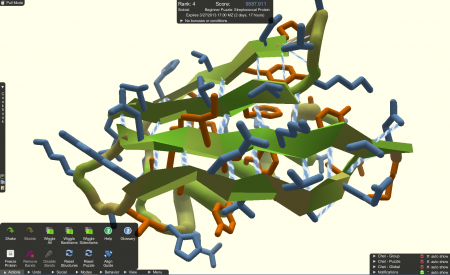
Foldit is a great example of how gamification can impact scientific discovery. It is an online game that has the public folding proteins. Now protein folding may sound silly but it is not. Proteins play a significant role in cell function. They carry out instructions given to them by genes. The way they are structured can determine whether a body fights off a disease like Ebola or succumbs to it. Proteins contain sequences of amino acids that take many shapes based on the way the protein folds.
In Foldit, citizen scientists get to fold synthetic proteins into different shapes receiving game reward rankings for their effort. The proteins they are creating in the game and the cell interactions are proxies for the real thing. When shared with scientists the latter use the solutions to apply them to real biomedical challenges. In the future, Foldit may be used to create DNA nanomachines with gamers constructing pieces of DNA from scratch that can turn into disease-fighting mechanisms.
Another gamification use is being applied by automobile makers to alter driver behavior. For example Nissan has incorporated gaming into its Leaf electric vehicle (EV) to benefit owners. Its “Eco Mode” software tracks driver habits and provides feedback through the in-vehicle display screen (see below).

Drivers can compete with other Leaf owners to achieve high ranking based on energy-efficient use of the vehicle’s braking system, accelerator, heater, air conditioner and even efficient route selection. Although the drivers don’t win a prize per se their modified behavior pays dividends because they can drive farther on a single charge and can even achieve bragging rights within the Leaf-owner community.
A Final Word
Gamification has even more applicability to touchscreen technology deployed in smartphones and tablets. Everything you do on these devices seems ideally suited for gaming. Through gamification even email messages have a whole new appeal. What you may have automatically trashed or relegated to your spam filter in the past may now be something worth opening and you won’t even mind that those sending you information are the ultimate beneficiaries each time you play. Whether it’s creating your own pizza, folding a protein, or trying to beat your last energy usage EV score, you are getting hooked by gamification.
]]>Allowing your students to play video games in the classroom might seem counterproductive to their success. However, a study conducted by the University of Virginia and the Korea National University of Education found that game-based learning combined with meta-cognitive strategies actually increases students’ performance in the classroom. Gamification, or the process of using game design elements in non-game contexts, allows students to visualize success, have a sense of pride for a job well done and continuously unlock information, reports an infographic created by Knewton. Here are a few ways to add gamification to your classroom:
Positive reinforcement is one of the many reasons gaming is so widely enjoyed. Apply B.F. Skinner’s theory in your classroom to turn learning into an interactive experience. You can reward students with badges, a method that closely simulates the emotions gamers feel after leveling up. If you decide to implement badges, Top Hat cautions that it is important to also integrate bonus points and skill levels for added value. Some good examples of badges include a “Test Taking Expert” for students who get an A on three tests in a row or a “Homework All-Star” for homework turned in on time the entire semester. Additionally, you can use ClassBadges, a free online tool that lets teachers award customized badges to students.
Adding the right amount of competition in the classroom is a great way to motivate and energize students, says TeachHub. Make sure to tailor the difficulty level to your students grade when implementing gaming in your lesson plans. For instance, educational bingo is an appropriate game for all ages, but can be varied based on the content. Spelling bees, game show contests and group versus group activities are other great ways to get students excited about learning new classroom material.
Avoid the negative effects of competition by keeping activities short, fair and symbolically rewarding, states John Shindler, author of “Transformative Classroom Management.”
Mark Griffiths, a professor at Nottingham Trent University, stated that there has been “considerable success when games are designed to address a specific problem or teach a certain skill.” In other words, it is possible for students to build or strengthen language, math and reading skills by playing the appropriate video games.
Introduce this gamification concept by giving students access to educational video games. Create a play space complete with a PlayStation 4, bean bag couches and even a mini fridge, and watch how quickly your students strive to achieve in the classroom. Then, choose fun and popular games like The Lego Movie Videogame, which improves reasoning skills, encourages creativity and cultivates collaboration, says Common Sense Media, an advocate of educational games.
What does World of Warcraft and homework have in common? Quests! TeachThought recommends assigning quests instead of homework to your students because assignments presented in a gamified context gets kids excited about tackling the next challenge. Once a quest is assigned to your students, they must complete it to receive a reward, much like in Warcraft. Classroom-friendly quest ideas include completing the assigned reading to advance on a map of a virtual world, earning experience points for turning homework in on time and math assignments that reveal a code needed to unlock a real or imaginary treasure chest of rewards.

]]>