For the nuclear power industry, GAI is both a tool to enhance the performance of nuclear reactors, but as well, a reason for a nuclear industry renaissance. GAI needs lots of power to support the data centres that work with the Large Language Models (LLMs) used to train GAI.
GAI placed five times greater demand on data servers than standard search engines according to Sarah Myers West, Managing Director of the research group, the AI Now Institute. According to an October 2023 article appearing in Scientific American, the demand for AI on servers noted that data centre electricity use to date was accounting for up to 1.5% of global demand. That was then, but GAI capacity adoption trends show significant growth in AI server unit demand with as many as 1.5 million units shipping per year by 2027 from just one vendor, NVIDIA alone. By 2027, the addition of 1.5 million servers running at full capacity will require energy producers to generate 85.4 Terawatt-hours of electricity annually. In the October Scientific American article, it notes that this would be more energy “than what many small countries use in a year.”
Where is the energy being used? There are two phases involved with GAI: training and inference. The latter covers user queries and responses. Both phases are energy intensive with Google’s historic data demand history putting the ratio between training and inference at 40:60. OpenAI’s ChatGPT numbers require less energy for inference but remain energy intensive for training.
There are data centre energy demands that go beyond power to the servers. These facilities need additional energy to remain cool which could add 50% to electricity requirements.
Machine learning is already in use in existing nuclear power plants. AI algorithms provide real-time monitoring and predictive maintenance by sifting through the data being generated and identifying anomalies that human operators might miss. Jeremy Renshaw, an expert on technology innovation at the Electric Power Research Institute, describes how AI is enhancing precision noting that a human operator and inspector “only looks at pertinent data. Instead of searching for the ‘needle in the haystack,’ we remove the haystack.”
AI used in existing nuclear power operations doesn’t replace human analysis. It enhances and speeds up operator responses. Machine learning can spot minor structural problems like cracks in tanks and pipes that are hard to detect when just monitoring gauges.
AI combined with a digital twin that runs in parallel with a real nuclear plant would dramatically enhance power production, and bolster efficiency and equipment performance.
AI combined with robotics can be used to do maintenance in areas of a power plant that would put human technicians at undue risk.
I am old enough to remember the nuclear accident at Three Mile Island that saw a partial meltdown of the reactor core in 1979. It coincided with the release of the movie, The China Syndrome, about a nuclear accident. The combination of the two made the public uneasy about nuclear power technology.
Three Mile Island was the worst nuclear industrial accident before the events at Chornobyl, in the Ukraine (then part of the Soviet Union), and later at Fukushima in Japan.
In the news in the last few weeks, the name Three Mile Island has reemerged because Microsoft wants to use the power from a reopened unit at the nuclear plant to provide electricity to its AI data centres.
Microsoft isn’t alone among the technology giants seeking nuclear energy to power existing and future data centres.
In a world where AI spending is projected to reach US $632 billion by 2028 and $1.81 trillion by 2030, it means energy demand for GAI will see rapid growth as well. GAI spending by 2028 is estimated to reach US $202 billion or 32% of overall AI spending.
The demand for nuclear energy, geothermal, renewable and thermal sites will grow as GAI and AI demand increases. The renewed interest in nuclear with the latest news about Three Mile Island still has to take into consideration the many challenges this highly regulated form of energy production undergoes. New nuclear projects in North America can take decades to be approved and built.
Will the approval process speed up in the future? Despite lobbying by technology companies looking for more power to fulfill energy demands for GAI, untangling the regulatory process because of past problems with this form of energy production could probably use AI and digital twin solutions to ease safety and operational concerns. New fission reactors will also need to address an old and persistent problem that impacts existing operations, the disposing of spent nuclear fuel, a current environmental problem that seeks a permanent solution.
]]>
But that belies the truth. In fact 12.3% of electricity generated globally today comes from nuclear power plants. Around the world 434 operating nuclear reactors are generating 2.4 trillion kilowatt hours of electricity annually (2012 figures). In the United States nuclear power has a 19% share of the nation’s generating capacity. In Canada that number is 15%.
And despite Fukushima and decisions such as Germany has recently made to decommission its nuclear capacity, 69 new nuclear plants are under construction. The storage and remediating of spent fuel rods remains a significant challenge, as does the potential for bombs to be made from nuclear fuel, and yet many new countries, including Iran, see nuclear as critical to their future not for the bombs but for electrical power generation. Why is that? Because electrical energy is largely what separates developed from developing nations. And generating electricity without contributing more CO2 to the atmosphere addresses climate change challenges directly.
It is not entirely true that nuclear power is green energy. The energy generated is green but the building and maintenance of today’s nuclear plants is GHG intensive. Just think of the hundreds of thousands of concrete used for containment structures, and the contribution to GHGs from the transportation requirements needed to build and maintain these facilities.
When you compare the threat to human and other life on the planet posed by nuclear power station disasters, and that posed by continued use of coal and other fossil fuels to generate electricity, the numbers are in stark contrast. NASA estimates for the number of deaths from nuclear power accidents including exposure of local populations to radioactive contamination total just under 5,000 over less than 70 years since the technology emerged. Compare that to the more than 1.5 million in China who experts say die each year from respiratory and cardiac illnesses correlated to the burning of coal for power generation.
Today a typical American nuclear power plant produces 20 tons of spent fuel each year. Over 40 years the waste from nuclear in the U.S. has reached 70,000 tons with no permanent disposal solutions in place. This is an indictment of the nuclear power industry but nevertheless, compare that to the environmental blight from coal mining in places like West Virginia where whole mountain tops have been leveled, river valleys filled and water sources polluted. Yet the American public has a NIMBY attitude about nuclear.
Finally looking at the next generation of nuclear power plants, smaller, safer (no meltdowns, no China Syndrome, no fissile material for bomb making), capable of absorbing the 70,000 tons of spent fuel from older plants, or using less volatile fuels like thorium, it would seem a no brainer to back this solution to meet future energy needs.
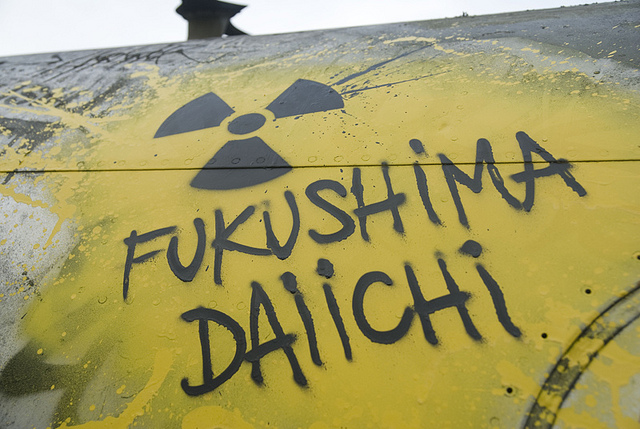
We cannot forget what happens when human hubris interferes with careful planning. The results are Chernobyl, and Fukushima. Today 157,000 Japanese citizens have been impacted by the earthquake and following tsunami that has resulted in the abandonment of 11 towns and hundreds of square kilometers of the country. And in the Ukraine near Chernobyl a swath of the country is no longer inhabitable by humans although it appears the animals and other wildlife are enjoying our absence.

]]>
Fukushima is costing the Japanese government $80 billion at the moment to clean up the environmental mess. And estimates by independent nuclear engineers believe the total cost will approach minimally $250 billion and possibly as much as $500 billion. Compare that to BP’s Deepwater Horizon blowout at $30 billion and the latter looks like chump change.
For Japan which generated 30% of its energy from nuclear it probably means a full bore effort to develop renewable energy using solar, wind, geothermal and tide. For the rest of the world that is considering fission reactors for power generation it is a wake up call to look at alternative nuclear models like thorium reactors, hybrid fission-fusion reactors, and fusion.
With no precedent to follow, Fukushima is the ultimate disaster for a nuclear industry that has had a reasonable safety record considering the toxicity of the fuel it uses. For the Japanese who lived near Fukushima there is now a wasteland that will remain toxic for several hundred years. This is the same result as Chernobyl except that the former has also impacted the neighbouring ocean. The environmental consequences of the meltdown at Fukushima has so far affected the Pacific Ocean to the east of the country. But the radioactive discharge will creep across the Pacific in time and do we completely understand what the impact will be on Pacific islands and the west coast of North America? How is the marine environment being impacted? Should Pacific islanders continue to eat the fish they catch? Will exotic beaches in tropical islands in time be off limits to swimming?
This is what we know right now. The Japanese have restricted fishing in the offshore area directly opposite Fukushima. But for migratory species like the Pacific Bluefin Tuna which will certainly be exposed to this radiation pollution, these offshore areas are feeding zones. And the Bluefin migrates across the Pacific where it can be caught off North America’s west coast.
Fortunately, from studies done by Woods Hole Oceanographic Institute we know for the moment that levels of radiation (cesium, polonium and strontium) are not at any level to suggest it would be hazardous to eat large fish species caught in the ocean. If there is a potential threat it might be from strontium contamination in sardine populations but even here it is only impacting the local Japanese fishery and not the traditional west coast fishery off Peru. In fact the level of radioactive exposure appears to be far less than the dose one gets from dental x-rays. So for the moment we can thank the diluting power of the Pacific Ocean for making Fukushima less a threat to those of us further away from Japan’s shores. The inshore fishery and coastal beaches near Fukushima, however, will remain problematic for years to come.
For a reliable source of information on radiation health risks from Fukushima check out the Woods Hole Oceanographic Oceanus online magazine site.
So Fukushima has pretty much killed conventional fission reactor technology. But safer nuclear technologies are on the horizon and I have written about them in previous blogs. The real question is will post-Fukushima fears lead to a NIMBY response from those who will live near these plants should they receive the green light from government and utility providers?
]]>