When we think of world cities today, which ones come to mind?
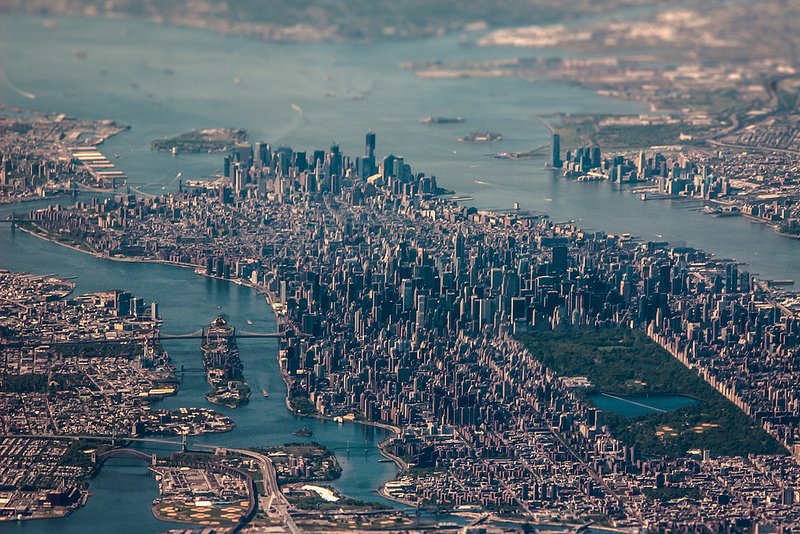
New York, London, Paris, Hong Kong, Berlin, Beijing, Shanghai, Moscow, Mumbai, Sao Paulo, Sydney, Singapore….these are the places that are on my list. They dominate the countries and regions in which they are located. New York and London are the banking and financial centres of the world. Berlin is the geopolitical centre of the European Union. Hong Kong is the Asian equivalent of New York and London. Beijing and Shanghai are the urban giants of China. Tokyo and Osaka are Japan’s urban megacities. Singapore is both a city and a nation, a centre of innovation and influence for all of Southeast Asia. Moscow is the geopolitical centre of the Russian nation. And Sao Paulo and Sydney are the economic epicenters of Brazil and Australia respectively.
What should be the measure of a global city? What defines it? Well according to surveys about cities, their power and influence in the 21st century, the following are key attributes that define urban success on a global scale:
So from my list of world cities the following contenders remain based on the above criteria. They are:
Beijing, Shanghai and Moscow don’t make the cut because their societies fail to meet the last six criteria on the list. And Mumbai doesn’t make the grade either because of its struggles with housing, transportation and security.
What The List Will Look Like in 2050
The Developing World will with certainty alter the balance of the world economy by 2050 and no doubt, the cities within that sphere will assume increasing influence. Of our ten leading cities which ones will remain and which ones will fall from the list?
As Europe’s population ages and as its cities fail to become magnets for diverse populations from around the world, Paris and Berlin may no longer qualify. The same cannot be said for New York and London, two of the most diverse cities on the planet. Sydney as well may disappear from the list as Australia increasingly restricts immigration from its South Asian hinterland.
So here is my top 10 forecast for world cities in 2050.
Name your contenders and then let’s compare lists and criteria.
]]>
If current trends reflect what lies in our mid-century future then we will continue to see urban intensification with cities ever reaching upward.
Here in the Greater Toronto Area, a city of well over 5 million, a place I call my home, the city increasingly is relying on residential and commercial construction focused on multiple-residence dwellings rather than single-purpose commercial buildings and family homes.
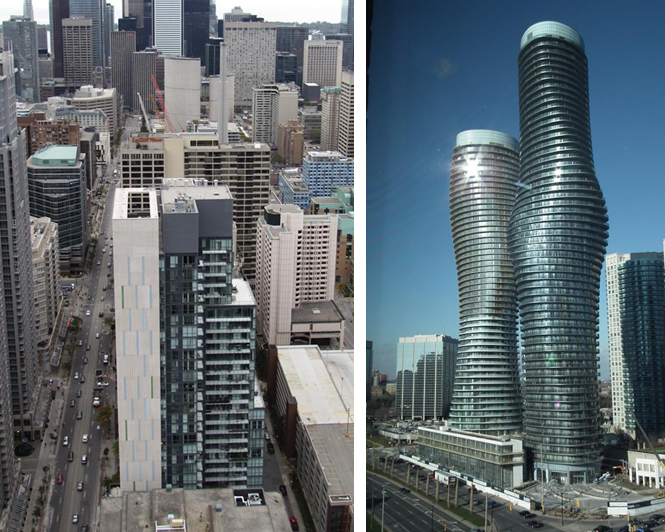
But buildings are not just going to get taller. They are also going to become energy independent, carbon neutral, and capable of adapting to seasonal and daily changes happening around them by using new materials and technology.
One such building that speaks to urban landscapes in our near future is the Media-ICT building in Barcelona, Spain. Barcelona is known for its innovative architecture but this building pushes the envelope of technical advancement.
When you look at it (see below) you get an inkling that there is something very different about this building and you are right. Its features include:
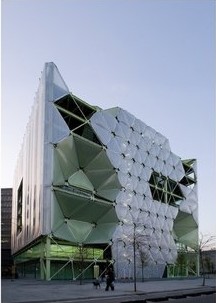
The Media-ICT building’s exterior membrane is like our skin and responds to external changes in a similar way. We call this bio-mimicry because it’s almost as if the building has become a living thing.
]]>