The challenges fuel cell technology faces include:
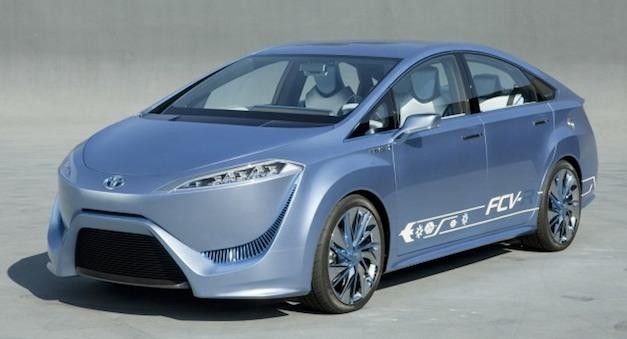
General Motors and Honda are collaborating to drive down the cost of fuel cell technology. They like Toyota hope to be putting sedans on the road by 2015 that sell for $50,000 making them cheaper than the Tesla-S electric vehicle (EV) from Tesla Motors. For GM, Honda and Toyota they argue that fuel-cell cars have distinct advantages over EVs with better range, up to 650 kilometers (400 miles), and faster refueling, less than 4 minutes, although Tesla is experimenting with new processes that can swap out an electric battery in under two minutes as it builds its station infrastructure.
Fuel cell backers also argue that their technology is cleaner than EVs and any ICE car because when EVs are recharged from dirty power sources such as coal-fired power plants, it negates their operational zero emission performance. In addition even if the hydrogen is derived from natural gas they point to U.S. Department of Energy studies on carbon emissions that claim fuel-cell vehicles when all is considered will emit less than half the CO2 of ICE-powered cars.
As for the safety of hydrogen technology (think Hindenburg and you’ll undersatnd the issue), I recently wrote about advances in hydrogen production that make it a much safer source of energy, and about Firewater Fuel, a new start up company that is commercializing a low-cost catalyst for hydrogen production. Also research at the Brookhaven National Laboratory in New York has found a way to store hydrogen in a liquid state at ambient room temperatures making it much easier to transport safely. All of these advances point to a potential rosy future for fuel-cell cars. But it won’t happen without a massive investment in hydrogen infrastructure to make filling your fuel-cell car as easy as your current gasoline-powered vehicle.
]]>