The post A Health Checkup for the Planet Following Earth Day 2023 – Part 2: The State of Water appeared first on Techso Mogro.
]]>When seen from space, Earth appears to be inappropriately named. It would be apt to call our planet Ocean when you consider most of it is covered by water. Measuring the state of health of that water, whether salt, fresh, or ice is today’s subject.
On the website of the United Nations, it states “Water and climate change are inextricably linked. Climate change affects the world’s water in complex ways. From unpredictable rainfall patterns to shrinking ice sheets, rising sea levels, floods and droughts – most impacts of climate change come down to water.” The worsening floods, the shrinking of ice fields and sea ice, the rise in sea levels, and the increase in droughts and wildfires in terms of length and severity speak to a climate change-water link.
Oceans, lakes and rivers cover more than 70% of the planet. Beneath the land lie aquifers where additional water is accessed for agriculture, consumption and industrial use. What’s happening to all of this water is setting off alarm bells in the scientific community and with policymakers in government.
In the United States, rivers like the Colorado are running dry because of drought and overuse. The Great Salt Lake in Utah is vanishing as more water is diverted to agricultural and urban use. The Missippi-Missouri River system is seeing a rise in low water days because of less precipitation and over-exploitation with the impact on shipping palpable.
The Great Lakes bordering Canada and the United States have seen significant algae blooms that deplete oxygen from the water and contribute to a decline in fish populations and inhibit freshwater security for local cities and communities.
Outside of North America, the conditions aren’t much better.
I’d say the Earth right now has a failing health report based on all of the above.
In our State of the Atmosphere report for Earth Day, our focus was on the rise in air temperatures and greenhouse gasses (GHGs). Water vapour is a GHG, but it is one we cherish unlike CO2, methane (CH4), nitrous oxides (NO2) and others.
As the atmosphere warms it increases its capacity to draw on surface water which creates water as a vapour. Increasing amounts of water vapour in the air sounds like a good thing for those suffering from persistent drought. But more water vapour in the air can lead to damaging consequences. What are some of these?
The state of water vapour appears to be in disequilibrium, another failing grade.
I grew up in Canada where the Northwest Passage traverses the country’s northern archipelago. In the past, it has seldom been ice-free. Today, however, cruise ships cross the Passage in the summer months. And forecasts fifty years in the future have sea ice thinning to a point where the Passage will be ice-free for much of the year.
The Southern Ocean that rings Antarctica is the other major domain of sea ice. Here as well the ice pack is thinning which is affecting coastal ice shelves as warmer ocean water intrudes.
Destabilizing Antarctica’s ice shelves is of concern to climatologists with the continent currently losing an average rate of 150 billion tons of ice per year and forecasts for the future see that number rising.
Other locked-up ice in the Arctic’s northern islands includes the largest, Greenland. Surrounded by a warming North Atlantic, Greenland is seeing an even greater loss of ice than Antarctica, with up to 270 billion tons melting into the ocean and contributing to sea level rise.
Ice fields also are found at high elevations in mountain ranges that ring the planet. The importance of these ice fields cannot be underestimated since they provide water sources for most of the great rivers of the planet. The Himalayas, home to the largest alpine ice fields containing over 600 billion tons, have seen over the last four decades significant melting with some glaciers retreating at rates of tens of metres annually.
The ice health report is no better than the one for the oceans, lakes, rivers, aquifers, and atmosphere. Our water stewardship in the age of climate change gets a failing grade.
The post A Health Checkup for the Planet Following Earth Day 2023 – Part 2: The State of Water appeared first on Techso Mogro.
]]>The post What Seven Technologies Both Old and New Are Helping to Fight Freshwater Scarcity Around the World? appeared first on Techso Mogro.
]]>

Without food and water, humans die. Without access to clean water, they get sick or worse. That’s precisely why the United Nations considers water a fundamental right for all humanity. It’s also one of the United Nations Sustainable Development Goals.
Every person needs 20 to 50 liters daily of safe, clean freshwater to survive. That’s not just for drinking, but also for cooking and bathing. While the United Nations and affiliated organizations are trying to meet this threshold, 2.5 billion people today, according to the World Health Organization, lack access to reliable freshwater. And for many of the 2.5 billion the water they do access requires a 3o-minute or greater round trip daily.
There are many reasons why people experience water insecurity. Population growth is a major factor. Groundwater depletion is another. Competition for freshwater makes freshwater even more scarce as farming irrigation, manufacturers, and energy producers consume vast quantities.
Contaminated freshwater through poor sanitation often renders sources of supply useless. It isn’t always because of consumer behaviour, but rather often from negligent business practices leading to severe contamination.
Luckily, today we have a few a number of technologies that can help us fight the freshwater problem. I’ve picked seven to talk about.
In some places, the problem isn’t access to water, but freshwater contamination. That’s where filtration can help. Filters automatically remove harmful contaminants from freshwater, making it safe to drink. Water filtration systems are not an expensive technology to develop. They are, however, energy intensive, which makes for problems in Developing World countries.
Combining filtration systems with local or distributed renewable energy solutions, however, can solve the power problem giving remote and off-grid areas safe water for drinking and other household uses. Whether solar, wind or geothermal, the energy gained to power filtration can also be used to turn on lights, and refrigerate foods for storage.
A filtration technology known as reverse osmosis can also be used to create fresh water. Reverse osmosis which uses specialized membranes doesn’t require a lot of energy to provide clean water making it an excellent choice for communities struggling with contaminated water sources.
Nevermind rivers, waterways and other smaller water sources, if a city or country is located within a reasonable distance of the ocean, desalination becomes an option. The process of separating salt and water is a well-established technology that produces incredible quantities of clean water. Desalination plants are expensive to build and have a limited lifespan or require periodic refitting. Add to these issues the need for lots of power makes the desalination option a bit less attractive for those in the Developing World. And then there is the problem of what to do with the leftover salt from the desalination process.
Traditional water filtration methods can be condensed to generate small, portable filtration tools and devices. When distributed to a local populace, the devices instantly provide access to clean drinking water. Portable technologies like xylem filters, represent an inexpensive way to produce fresh water that has 99% of contaminants removed. The filters are produced from the inner lining of trees and a small length of a tube made from xylem removes 99% of contaminants, and up to 4 liters of water daily, enough drinking water to sustain a person daily.
Natural condensation happens all around our planet when warm air cools resulting in it losing some of its moisture content. We see it each day with morning dew. Today, there are a number of technology options for collecting fresh water this way. Called air wells, on a small scale, they generate quantities of fresh water sufficient to keep a person hydrated every day. And because they condense out of the air, there are no contaminants. Devices like the DewBank and other water harvesters cannot solve the larger issue of freshwater scarcity, but can easily provide small scale solutions for individual use.
Fog catchers are a variation of air wells. They are used to collect passing moisture. Large deployed nets get deployed daily to collect freshwater from the air. In some areas prone to fog, hence the name fog catchers, substantial quantities of water can be harvested daily. In the past the nets were made from natural fibers. But today nanomaterials made from polymers are being used to harvest freshwater in both desert and mountainous environments.
In some places, toxic chemicals contaminate ground and surface fresh water sources. Using hydrolysis these contaminants can be neutralized. The U.S. Army has developed a portable chemical processing and disposal system that employs a reagent connected to a central reactor. Hazardous chemicals are siphoned into the reactor, then mixed with water and a reagent until the water is clean.
Stormwater and runoff collectors provide two additional sources of fresh water. A msall treatment facility or portable device can both collect and clean runoff. The U.S. Navy has developed, tested, and patented a system that works like a multiple layered sand filter. When stormwater and runoff enter the system, the fluid passes through the layers to suspended particles and toxic elements like metals.
So these seven technologies that Emily has described can help us find freshwater relief for the moment. But will it be enough?
The United Nations in a recent report estimated that half of the world’s population will be living in freshwater stressed areas by 2030, and that 250 million of in Sub-Saharan Africa will be at greatest risk. A different study looked at 70 cities, in 39 countries, with urban populations greater than 750,000 today face extreme freshwater risk. And it is estimated that by the end of the century nearly three-quarters of us will be facing freshwater shortages. Deploying some of these described technologies may help. Improvements to water conservation practices are also desperately needed. And some are even calling for population control of our species as a way of ensuring there will be enough fresh water to go round in the centuries to come.
Back in 2013, I posted a blog with a link to a video clip that juxtaposed four spheres. the first was Earth, the second was a sphere representing all the water of the planet, the third was all freshwater resources, and the last all accessible freshwater. It certainly puts the issue of freshwater scarcity into a new perspective. Freshwater is already scarce on this planet. We abuse it at our peril.
The post What Seven Technologies Both Old and New Are Helping to Fight Freshwater Scarcity Around the World? appeared first on Techso Mogro.
]]>The post Homeowners Opt for Smart Irrigation Systems to Save Money, Water, and the Planet appeared first on Techso Mogro.
]]>If wasteful human habits don’t change, the world’s freshwater supply could be in danger. A 2018 United Nations report posited that “if the natural environment continues to be degraded and unsustainable pressures put on global water resources, 45% of the global gross domestic product, 52% of the world’s population and 40% of global grain production will be put at risk by 2050.”
Currently, Americans use billions of gallons of water per day with a large amount going to sustain lawns and gardens, of which up to half is wasted due to inefficient irrigation systems. But it is possible to live more mindfully and sustainably. With a sensitivity to eco-friendliness, however, and a tendency to be among the earliest adopters of new technology, millennials are leading the way to find ways to reduce residential water waste. This makes sense considering millennials, who are now in their 20s and 30s, are in the process of buying their first homes, putting decisions around smart, economical technology use front and center. What might that mean in terms of water conservation? Switching from a manual irrigation method to a smart system that can be synched to other smart home systems. Of course, millennials aren’t the only one taking advantage of smart residential water systems. Anyone determined to change his or her impact on the planet can explore these cutting-edge ways to reduce water use, save money, and preserve precious resources for generations to come.
Practically speaking, smart irrigation systems are designed to solve the inefficiencies and waste inherent in traditional methods of watering. Hand-watering with a hose, among the least economical and effective methods of irrigation, was long ago improved upon by the development of sprinkler systems connected to programmable controllers.
Now, smart irrigation controllers offer more than just the convenience of preset watering schedules. They actively use weather station data like temperature, and humidity, and moisture data from sensors buried in the root zone of plants to make real-time adjustments to these schedules. Other technologies that work with smart controllers to maximize water efficiency include flow sensors, which shut down water flow to broken sprinkler heads, and rain or freeze sensors, which halt irrigation in cold weather conditions.
The positive impacts of smart systems are significant. The Environmental Protection Agency surmised that if every American household that currently uses a programmed watering system switched to a smart irrigation controller, 100 billion fewer gallons of water would be wasted on lawns and gardens each year.
Smart controllers can be added to many types of watering systems, though as water-wise homeowners move away from lawns, the need for systems that water such large expanses dwindles. Sprinkler systems were meant to be used in large, flat landscaped areas, though they have become common in large gardens. Designed to water an area evenly they don’t discriminate among plants with some that need less water getting too much, while others that need more water, getting too little. And then there is the spray that lands on concrete walkways and patios, producing runoff which can carry fertilizer or pollutants into storm drains and nearby bodies of water.
Drip irrigation systems, on the other hand, target the right amount of water for every plantr saving dramatically on water costs although they initially are more expensive to install. Micro-sprayers or bubblers, a variant on the drip concept, can deliver water very slowly and directly to the soil with little moisture lost to evaporation or runoff. A smart controller working with both of these systems increases efficiency and lowers water use and operational costs.
Because both systems make use of smart controllers and sensors, the decision on which to use is dependent on the area and type of plants being watered. Reducing water-intensive landscaping and then treating smaller, productive garden areas with low-waste drip systems and smart sensors is ideal, but taking any steps toward a more efficient solution—by making a less-efficient sprinkler system smarter, for example—is better than taking no action at all.
Gray water systems capture household water after use so that it can be repurposed to water lawns and gardens. While capturing this used water from bathroom sinks and showers, and from washing machines, can be very water-wise, the presence of contaminants requires gray water systems to include the installation of proper filtration. There are gray water systems on the market that make water filtration and use easier, some of which can be connected to a smart controller to save money, and keep gray water out of local sewer or septic systems.
Without change on both an individual and societal level, evidence indicates that world stores of usable freshwater could be in danger. Furthermore, if the demand for clean, potable water continues to grow unchecked, energy expenditures to clean and deliver that water will also grow, contributing to further warming of the planet. In turn, extreme weather events point to water-based disasters increasing in the coming decades. We are already seeing flooding, the most common natural disaster on the increase in the United States, and as mountain glaciers and ice caps melt, the threat will only grow larger.
The looming freshwater crisis may seem too big for one household to make a difference, but through small steps, by many, we can collectively make a dent in demand. For further incentive to explore how to conserve water in the home, July is Smart Irrigation Month, so there’s no better time than now to protect this most vital of our planet’s resources.

The post Homeowners Opt for Smart Irrigation Systems to Save Money, Water, and the Planet appeared first on Techso Mogro.
]]>The post Finding Solutions to the Growing Problem of Freshwater Scarcity appeared first on Techso Mogro.
]]>In recent years the lack of sufficient available freshwater resources to support water requirements of many areas of the planet has grown immensely, so much so that drought risk is on the rise and that nations affected are threatened by significant economic impacts in the coming decades.
Here are some water facts to ponder:
According to the United Nations, “Water scarcity can mean scarcity in availability due to physical shortage, or scarcity in access due to the failure of institutions to ensure a regular supply or due to a lack of adequate infrastructure. Water scarcity already affects every continent. Water use has been growing globally at more than twice the rate of population increase in the last century, and an increasing number of regions are reaching the limit at which water services can be sustainably delivered, especially in arid regions.”
In a number of cities and countries around the world, solutions are being found to tackle scarcity. Some of these are traditional (damming rivers for irrigation), and some are potentially problematic in terms of environmental impact, and others are truly innovative. Here are a few examples:
Miroslav Lajčák, President of the United Nation’s General Assembly, has called for greater international cooperation around the issue of freshwater scarcity. At a recent meeting he stated, “Scarcity of water – exacerbated by climate change or humanitarian disasters – can cause tensions between people, communities, and countries….We will need more than action from governments…Strengthening water infrastructures and systems costs money. And we will need a lot more of it, from different sources. We also need to create environments in which innovation and entrepreneurship can flourish.”

The post Finding Solutions to the Growing Problem of Freshwater Scarcity appeared first on Techso Mogro.
]]>The post Pakistan and Capetown Have A Climate Change and Human Population Problem appeared first on Techso Mogro.
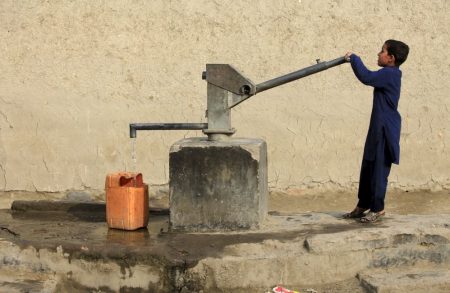
]]>Freshwater shortages are a consequence of two human failings, both correctable.
The first is climate change brought about by the burning of carbon-based fuels.
The second is our inability as humans to manage world population.
The additions of greenhouse gases to the atmosphere beyond the capacity of natural carbon sinks to absorb successfully is creating disruptions to Earth’s weather patterns. The two most recent headlines cover the city of Capetown, South Africa, and Pakistan.
In Capetown, we are being told that the city is running out of freshwater with a shutdown date for water delivered to homes imminent. In the last week, the date has been extended from April 12th to mid-May because of the latest emergency measures tapping into reservoirs and aquifers used only in emergencies. This temporary reprieve doesn’t address the two issues: climate being altered to impact rainfall patterns; and too many people living in an area where intermittent precipitation normally presents challenges to the natural environment.
In Pakistan, headlines about President Trump denying the country a multi-billion dollar subsidy, have hidden a much greater crisis. The country is running out of freshwater. Runaway urban growth, corruption, crime, and mismanagement have combined with a prolonged drought to make freshwater accessibility an even bigger challenge than American policy changes.
Pakistan had been working on freshwater infrastructure for the past 30 years to give most of its citizens access to the resource for drinking, sanitation, and cleaning. The focus had been on rural freshwater accessibility and not urban. But increasingly people are migrating from farms to the cities with the rate of change annually amounting to 3%. Imagine if American cities suddenly faced a population growing by 3% a year. For New York City alone that would mean a rise of over one-half million annually. Maybe New York could handle it with its layers of infrastructure, but I doubt it. Now imagine the same thing in Lahore or Islamabad.
Why is this happening here?
Climate change is raising the mean average temperature throughout the Middle East and South Asia. One of the reasons for the political turmoil, the rise of Muslim extremists, the Taliban, and other anti-government forces appears to correlate with the temperature rise combined with changes to precipitation in the Indus River valley, the freshwater lifeline of the country.
Combine this with the urban population shift, the overall increase in the country’s population, and weak government, and you have all the seeds planted for negative disruption. Water piracy has become the way of doing business in Pakistan as freshwater resources are depleted. Municipal water sources get siphoned off by a water mafia with fleets of tanker trucks available to the highest bidder. Local populations join in the theft stealing water from municipal hydrants openly making a mockery of local government controls.
Pakistan’s drought, like Capetown’s, is not ending soon which brings us to how we address these challenges. Governments can ration freshwater. Governments can find new places for people to live where there is freshwater security. Family planning can help in dealing with population growth. But we continue to see policy drift on both files: climate change and overpopulation. Not addressing both is a recipe for future pain for the generations that follow.
The post Pakistan and Capetown Have A Climate Change and Human Population Problem appeared first on Techso Mogro.
]]>The post Why Antarctic Ice Not Reacting the Way We Expect in the Age of Climate Change appeared first on Techso Mogro.
]]>In the paper, the authors argue that climate modeling has failed to explain long phases of enhanced and reduced Antarctic ice mass and the impact this has had on overall climate variability.
“There is a natural variability in the deeper part of the ocean adjacent to the Antarctic Ice Sheet that causes small but significant changes in temperatures,” states Andreas Schmittner, Oregon State University. “When the ocean temperatures warm, it causes more direct melting of the ice sheet below the surface, and it increases the number of icebergs that calve off the ice sheet.” The combination causes a significant amount of freshwater to enter the Southern Ocean during warmer periods. As in paleoclimate studies of the past history of North America and the North Atlantic where sudden influxes of freshwater led to surface cooling of the ocean causing disruptive changes to the climate of Europe, the Southern Ocean phenomenon surface cooling produces a similar outcome. But the isolation of Antarctica completely surrounded by the ocean just causes the water to freeze. Hence increasing sea ice even when there are warmer temperatures both in the air and in the seawater to depths of hundreds of meters.
But there is another phenomenon previously not fully understood that is directly linked to the increased calving of icebergs from Antarctica’s ice shelves. States Nick Golledge, University of Wellington, “What is less-known is that the input of fresh water also leads to changes far away in the northern hemisphere, because it disrupts part of the global ocean circulation…..Meltwater from the Antarctic won’t just raise global sea level, but might also amplify climate changes around the world. Some parts of the North Atlantic may end up with warmer temperatures as a consequence of part of Antarctica melting.”
In another Antarctic study of sea ice history over the last century, it shows that the Southern Ocean has experienced very little change in ice volume from the time of Ernest Shackleton and others voyages of discovery in the late 19th and early 20th century. That research appears in a November edition of Cryosphere. Now there is a consistent explanation for this phenomenon. Sea ice is being rejuvenated because volumes of freshwater from calving icebergs caused by overall global warming are releasing significant amounts of freshwater as they melt in the Southern Ocean. And the icebergs of Antarctica make Arctic icebergs look like pop guns compared to howitzers. Many are tens of thousands square kilometers, bigger than many Pacific and Atlantic islands. Thus the ocean in proximity to Antarctica is not experiencing the same pattern we see in the Arctic where sea ice minimums appear to be setting new records annually.
Previous paleoclimate studies of the Antarctic done by members of the team writing this latest paper appearing in Nature have described a record of ice sheet collapses from the end of the last Ice Age lasting 10,000 years. Since then Antarctica’s pattern has remained in steady-state until recent history where we are witnessing increased calving and ice shelf collapses in the Antarctic Peninsula which I have written about and posted to this blog site.

The post Why Antarctic Ice Not Reacting the Way We Expect in the Age of Climate Change appeared first on Techso Mogro.
]]>The post Gizmos & Gadgets: A Chlorine Maker for 1.8 Billion Who Have Unreliable Contaminated Drinking Water appeared first on Techso Mogro.
]]>In keeping with that mission spirit the company has created a product it describes as a community chlorine maker. Designated the MSR SE200(TM), the company has launched an Indiegogo crowdfunding campaign to raise $50,000 U.S. to put 2,500 units in the hands of low-resource communities around the world in 2017, giving them the power to produce their own bacteria-free freshwater.
Drinking water is a challenge for many in the world. According to the World Health Organization (WHO), 4.2 billion today get freshwater through piped connections with 2.4 billion receiving water through public taps, protected wells and boreholes. That leaves 663 million relying on unimproved water sources including 159 million dependent on surface water. WHO estimates 1.8 billion get drinking water today from sources contaminated by human and animal waste. Contaminated water transmits diseases including cholera, dysentery, typhoid and polio. 842,000 people (361,000 of them children under the age of five) die from diarrhoea annually from unsafe drinking water. And although we have seen improvements in delivering uncontaminated freshwater the WHO estimates that by 2025 half of the world’s population will be residing in water-stressed areas which will make clean freshwater even more scarce.
Chlorine can stop waterborne infections but its availability in low and middle-income countries is limited by a lack of transportation infrastructure, poor storage facilities, and insufficient quantities for treating community drinking water.
The MSR SE200 is a potential drinking-water solution that is a simple, effective and an inexpensive way to create chlorine through a process of mixing salt and water and then having the battery-powered or pluggable device treat the brine through an electrolysis process to produce enough chlorine in five minutes to treat 200 liters of water. The average human needs to consume a liter of water a day, so that’s enough treated drinking water for 200.
World Vision, PATH, the Lemelson Foundation, Laird Norton Family Foundation, and Washington Global Health Alliance have partnered and funded MSR at various stages in developing the SE200. The company donated 100 kits to Haiti to decontaminate freshwater after the country was hit by Hurricane Matthew in October destroying many remote communities in the southwestern part of the country.

The Indiegogo campaign has a month to go and so far has raised more than $21,000 from 279 backers. If you want to participate a pledge of $160 will provide enough money to send one device to reach 200 people in need. The company will also give you a 30% discount coupon for purchases of any of its MSR gear. A minimum pledge of $10 will help provide treated water for 2 families, $30 for a classroom, $50 for over 60 people, $80 for over 100, and $320 a buy one and give one device offer.
For the more adventurous supporters a $16,000 campaign pledge will get you a trip to a World Vision community in Kenya. You can add on an optional safari while you are there. The pledge doesn’t include airfare, visas and vaccinations.
Corporate sponsors can pledge $40,000 to deliver 250 devices to 50,000 users to treat their own water. The sponsors company brand will be imprinted on each MSR SE200 shipped. The product is ready to ship now.

The post Gizmos & Gadgets: A Chlorine Maker for 1.8 Billion Who Have Unreliable Contaminated Drinking Water appeared first on Techso Mogro.
]]>The post Freshwater Isn’t Just About Climate Change appeared first on Techso Mogro.
]]>
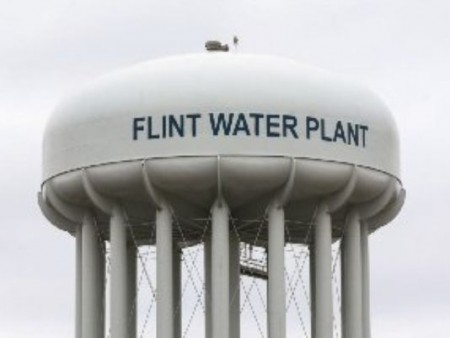
Flint, Michigan
The Flint problem was twofold, a tainted river source containing high levels of lead and other toxins, and a government trying to save a buck. When you consider that Flint has access to the water of Lake Huron, the third largest body of freshwater on Earth, and part of the Great Lakes, it is hard to understand how a city could ever have gotten to a state where it was poisoning its citizens every time they turned on their kitchen taps.
The population of Flint was a victim of its political leadership even though the city sat right next to clean freshwater wealth. The result, a population-wide exposure to lead that will resonate through the community for a generation and beyond.
And maybe it all didn’t matter in the political scheme of things because Flint was a marginalized community, a rust belt city where 40% live below the poverty line, and 33% of the population is illiterate. On top of that most of the population was largely not the skin color of those in the government offices responsible for ensuring freshwater safety.
Flint’s experience is far from unique.
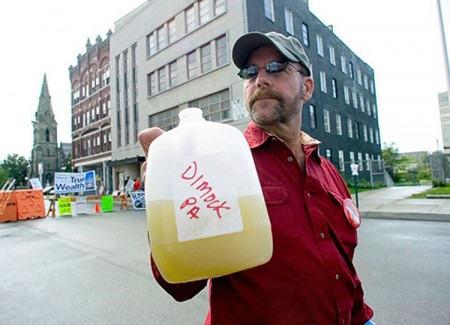
Dimock, Pennsylvania
In Pennsylvania the federal government denied that hydraulic fracturing was contributing to well water contamination near oil and gas company drilling sites. The Environmental Protection Administration (EPA) issued a report in mid-2015 stating no evidence exists that fracking was causing drinking water contamination. A backlash from 31 scientific contributors to the report, describing it as a whitewash, soon followed. The 31 called the report’s conclusions misleading because of words like “no evidence fracking has led to widespread, systemic impacts on drinking water resources.” Note the words “widespread” and “systemic,” weasel-words to give the EPA an out. It turns out in the last month a federal civil suit against Pennsylvania’s largest fracking company, Cabot Oil and Gas, has led to a judgment awarding two Pennsylvania families, $4.24 million where in fact their well water was indeed contaminated by fracking operators. This may be the tip of the spear leading to numerous law suits against the fracking industry and should lead to a tighter regulatory environment.
Waukesha, Wisconsin
I have previously written about Waukesha, Wisconsin and its freshwater problems. That was back in October 2013. Waukesha lies just to the west of Milwaukee and draws its water from an underground aquifer highly contaminated by naturally occurring radium. Only a small part of the city lies within the Lake Michigan watershed. The rest is part of the Mississippi-Missouri river basin. But because a portion of the city straddles the dividing line between the two watersheds it has repeatedly requested it be allowed to take water from Lake Michigan to solve its radium crisis.
Waukesha isn’t alone in Wisconsin in having contaminating drinking water. Take a look at the map below to see just how many parts of the state are currently impacted by freshwater challenges. That’s part of the problem.
The Great Lakes come under an international water agreement between Canada and the United States that specifically bans diverting water from the system with few exceptions. So as close as Waukesha may be to Lake Michigan the vast majority of it lies outside the watershed. Ontario, within its rights, as a signatory to that international agreement, has expressed concern about the proposed diversion. Creating a precedent could lead to many other diversion exceptions as seen on the Wisconsin map. It could even lead to requests to send Great Lakes water by pipeline through the Mississippi-Missouri river system further west to join up with the Colorado River basin and feed the freshwater requirements of the parched American Southwest.
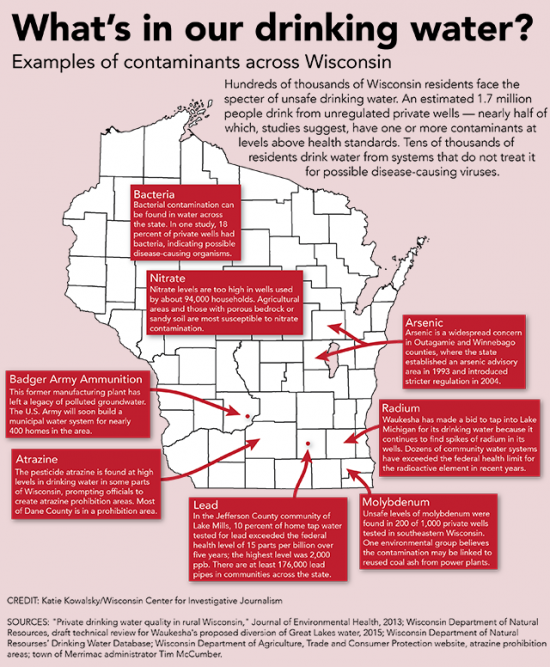
These are just three examples of freshwater crises in America today. We haven’t talked about the coastal freshwater aquifers of the eastern United States becoming contaminated by intrusive saltwater from rising sea levels. Nor have we discussed California, Nevada and Arizona’s freshwater challenges brought on by prolonged drought that may be the beginning of a climate change inducing megadrought lasting centuries.
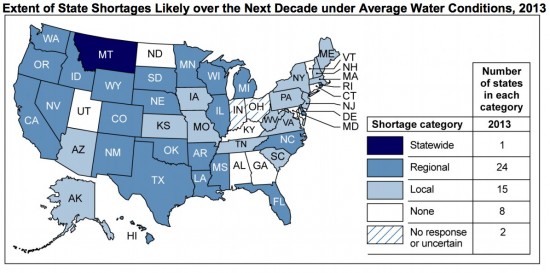
In fact, a recent survey by the Government Accountability Office of the United States, has water managers in 40 of the 50 American states reporting current and expected freshwater shortages in at least some parts of their states through the next decade. See the extent of the problem in the map below.
A Global Problem
Freshwater scarcity is far from unique to the United States. China is diverting water from the Yangtze to the Hwang He River to meet the freshwater demands of its northern cities. This is water engineering on a colossal scale and is producing all kinds of unintended consequences, the kind that the signatories of the Great Lakes-St. Lawrence water convention fear could happen.
And yet America’s freshwater crisis is not the worst in the world. Freshwater is a global challenge. Today 20% of the world’s population lives in a state of freshwater scarcity. Another 25% have limited access to freshwater largely because of a lack of infrastructure. And by 2030 the United Nations estimates 50% of the world’s population will be living with freshwater scarcity. It is fair to say that freshwater has become in the 21st century what oil was in the 20th. It is in high demand but limited in supply with climate change only going to make things worse. Yet fossil fuel companies, who produce the carbon generating pollutants leading to global-warming climate change, continue to frack with impunity and apply to national governments globally for additional lease rights to do further exploratory drilling both on and offshore. All of this while governments around the world have agreed on a plan to wean humanity off fossil fuels because of the very climate change that is contributing to global freshwater shortages. How nuts is this?
The post Freshwater Isn’t Just About Climate Change appeared first on Techso Mogro.
]]>The post Are 70 Cities at Risk of Running Out of Freshwater by 2040? appeared first on Techso Mogro.
]]>In a recent study entitled, Global analysis of urban surface water supply vulnerability, by environmental scientist, Julie Padowski and Steven Gorelick, Director of the Global Freshwater Initiative at Stanford University, the authors analyzed 70 cities with populations greater than 750,000. The cities were distributed over 39 countries.
The parameters used to assess risk assigned a daily ration per urban resident of 4,600 liters of freshwater. They defined this as “virtual water” encompassing all freshwater usage within the urban environment and its immediate surroundings. That included water use for domestic, manufacturing, commercial, and agricultural consumption.
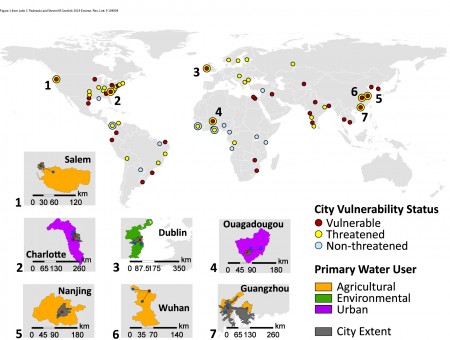
When measured against this “virtual water” ration it was found that 36%, that is 25 cities, were already vulnerable in 2010. They then projected population growth, and freshwater supply and demand to 2040. By that year 44% of the 70 cities, 31 in total, would be vulnerable. The additional six cities were identified as Dublin, Ireland, Charlotte, North Carolina, Salem, Oregon, Ouagadougou, Burkina Faso and Guangzhou, Wuhan and Nanjing, China. With the exception of Ouagadougou which resides in a semi-arid climate zone, you don’t think of these other cities as suffering from potential freshwater scarcity. But the problem of adequate availability is driven by multiple factors of which climate is just one. And for this study, Padowski and Gorelick didn’t even factor in the potential impact of climate change.
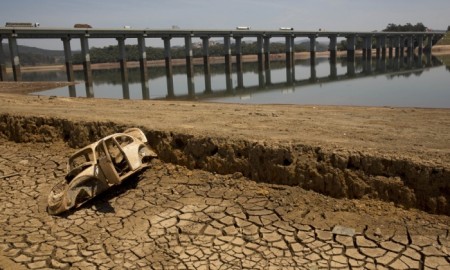
A good example of just what can happen to urban areas when freshwater demand exceeds supply is Sao Paulo in Brazil. The worst drought in 80 years has systematically drained the reservoirs and rivers that feed this city of 20 million plus. The key reservoir that supplies much of the city’s freshwater in January of this year reached record low capacity (see picture below), just 6% of its normal volume. What brings even more urgency to the crisis, the readings were done halfway through Sao Paulo’s rainy season.
Is this the fate of Las Vegas and Los Angeles as Lake Mead and the Colorado River basin get tapped beyond their capacity to sustain the urban populations of these American cities? California is attempting to ration freshwater as one means of extending the resource. But even without the prolonged drought that has impacted the American Southwest, these large urban centres, reliant on surface freshwater resources, would be in trouble.
Look at Los Angeles. Early in the 20th century it had already commandeered much of the surface water capacity of its surroundings. And today it draws water from pipelines and rivers outside of California, across the Sierra Nevada Mountains.
Guadalajara, Mexico, is another city that draws freshwater from well outside its immediate vicinity competing with local agriculture for the declining resource.
In India Hyderabad, Pune and Chennai have almost sucked dry the Krishna basin.
There are cities that seem to be doing all the right things. One is New York City which has protected its watershed and enacted measures to ensure it has more than enough freshwater for now and well into the future.
The world map visible below shows the cities that formed part of the study. Note none of the California cities described in this posting were included. Nor were Las Vegas, Phoenix or Tucson. I am not sure why even though the authors do cite the history of water use in Los Angeles within their commentary.
To help you better understand the map, colours and circles identify which are currently vulnerable or at risk by 2040. Status changes are marked by a coloured outer ring for 2010 and inner circle representing at risk by 2040. Cities marked in red are those currently facing urban water scarcity. Cities marked in yellow are those with growing freshwater and environmental issues. Cities with no water supply issues are marked by light blue circles. The seven numbered locations represent the cities and surrounding regions that the study projects to be freshwater vulnerable by 2040. The urban centres are depicted in gray on the inset maps below the world map. Freshwater sources are marked by blue circles.
Is your city on this map?
The post Are 70 Cities at Risk of Running Out of Freshwater by 2040? appeared first on Techso Mogro.
]]>The post Why I Give Loans to Kiva appeared first on Techso Mogro.
]]>“This ambitious loan to the community association of El Grupo Eden outside of Cochabamba, Bolivia has successfully funded the construction of a well and plumbing system that now provides clean drinking water for over 250 families. Despite government initiatives in Bolivia to expand access to clean drinking water, implementation is slow and plagued by bureaucratic red tape and corruption. Fed up with this situation and concerned for the welfare of their community, the small all-woman leadership group comprised of Martha, Ada, and Rosaria decided to take matters into their own hands. This precocious team worked tirelessly to gain community support, conduct the necessary land assessments, and oversee the complicated installation process. In defiance to the naysayers who were concerned other members of the community would take advantage and not pay their water bills to the collective community fund, El Grupo Eden has seen zero delinquency and has had no problem making their loan payments to CIDRE.
Now that the well is fully functional, the group is able to provide clean drinking water to 250 families that previously had to pay a middleman to bring in clean drinking water at over 10x the price. This saves the members of the community a significant amount of money and allows them to live more comfortably. Not only that, but the group has also been able to earn a modest profit above their loan payments, allowing them to hire three employees including a plumber to mantain the pipes, a book keeper to manage the payments and a handyman to make small repairs. Once their loan is entirely paid off, they plan use the small collective fund they have compiled from the modest fees to construct more tubes to reach even more families and fund community projects like better street lights for increased community safety.”

The post Why I Give Loans to Kiva appeared first on Techso Mogro.
]]>


