Entergy is a monopoly provider of power to New Orleans. It is also turning out to be a bad corporate citizen when fighting climate change, having doubled down on building capacity through implementing thermal power plants that burn fossil fuels and contribute to greenhouse gas (GHG) emissions.
According to an NPR report published on September 22, 2021, Entergy’s New Orleans subsidiary, ENO, has made little progress in implementing measures to ensure it can keep the power flowing to the residents of the city. When Hurricane Ida made landfall all of New Orleans’ eight transmission lines failed. For the poorest neighbourhoods of the city, the power failure quickly turned into a health disaster in the late summer heat and humidity that enveloped the city.
When confronted with the evidence of failure, an ENO spokesperson described the company’s $6 billion investments in Louisiana alone since 2016. It has three million customers in four southern states. The spokesperson went further describing how Entergy is seeking U.S. federal funds to help pay for grid modernization and reduce its contribution of GHGs. Meanwhile, in 2020, Entergy made a record profit of $1.4 billion.
The history of southern Louisiana has been dominated by repeated extreme weather with hurricanes like Katrina in 2005, Gustav in 2008, Isaac in 2012, and Laura and Zeta in 2020. Repair costs for each of the previous hurricanes ranged from hundreds of millions to billions of dollars. And each time repairs showed the failings of Entergy’s grid.
Katrina forced Entergy into bankruptcy. It came out of it in 2007 and has been profitable ever since. Where is it getting its profits from? High utility rates and little in the way of maintenance. Today, when it rains in New Orleans, parts of the city experience blackouts. And even on sunny days blackouts occur because of chronic equipment failures.
So what lessons are to be learned from this story?
For every dollar invested in disaster mitigation and adaptation, a utility like ENO could save multiple dollars down the road in not having to spend on repairs. This is something that was stated by an academic and insurance industry expert at a virtual climate adaptation webinar I attended last week. A panellist, Blair Feltmate, of the Intact Climate Adaptation Centre, at the University of Waterloo in Canada, described how electrical grids throughout North America remain chronically underfunded, and not ready for what climate change is already bringing, let alone what the infrastructure will face as the century further unfolds.
Feltmate isn’t alone in touting the multiple dollars saved from preventive investment. Similar comments can be found in the literature on the subject. And at the United Nations, Secretary-General António Guterres in a 2019 message stated that “making infrastructure more climate-resilient can have a benefit-cost ratio of about 6 to 1. For every dollar invested, six dollars can be saved.” These types of savings are similarly described in World Bank literature, and by reinsurance giants Munich Re and Swiss Re who track extreme weather events and the damage they cause.
Do these observations fall on deaf ears? It would seem so in southern Louisiana at least where extreme weather events, referred to as storms of the century, seem to be happening with a high degree of frequency.
And specifically, how has Entergy reacted to the notion of a prescriptive approach to its grid infrastructure failings? In the last week, Entergy stated in a press release that it was making an offer to the city of New Orleans to buy ENO. Could the city run it better? Does New Orleans have the financial means to invest in upgrades that would harden the grid? Can it implement a distributed energy strategy, harness the tidal power of the Mississippi, or partner with a company to build offshore wind farms in the Gulf? Can it add solar to the mix and encourage New Orleans homes to put photovoltaic panels on roofs?
For Entergy, getting ENO off the books will appeal to shareholders. Unloading the subsidiary without making necessary upgrades will remove the headache while leaving the city a broken system. For the utility, it will mean out of sight, and out of mind.
Where are the state and federal governments to provide oversight and ensure New Orleans can keep the lights and air conditioning working now and in the future? The current fight over the $3.5 trillion infrastructure bill in the U.S. Congress may play a part in determining the city’s future viability.
One has to ask the obvious. How much more can the residents of New Orleans take? How much longer can the region be a viable place to live? And when will Americans and the rest of the planet learn from the evidence that climate change is presenting to us, both physical and fiscal?
]]>

In a recent article by Ben McLannahan, Financial Post, he describes how big banks are experimenting with digital financial assistant bots. These smartphone apps track all of your financial assets and liabilities and are proactive in giving advice.
What’s out there? McLannahan talks of two offered by banks including
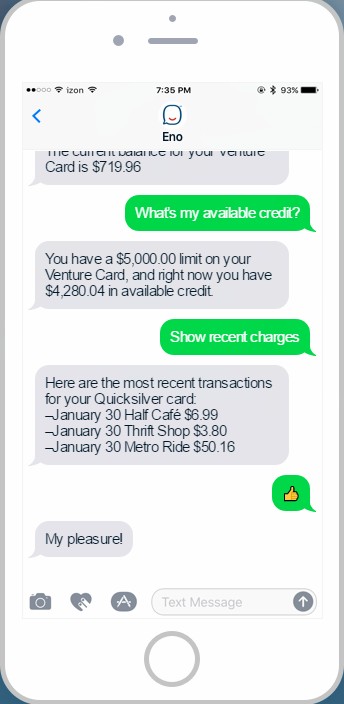
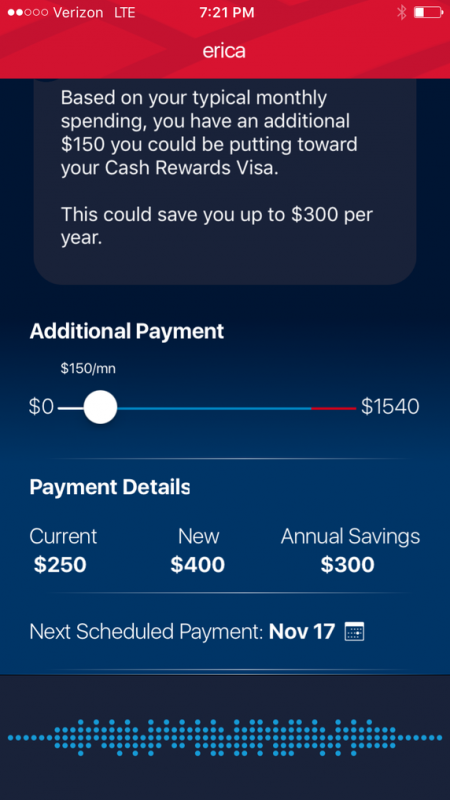
Although many banks have developed online banking and now smartphone apps to give consumers access to all kinds of financial transactions, the use of artificial intelligence (AI) to enhance customer relationships beyond answering rote questions, opening an account or paying bills, represents a significant breakthrough. When an app can tell you that you may be making a mistake in an impulse buying decision at the point of sale, showing you that spending the money is an unwarranted risk, it could mean thousands of dollars saved annually. It is truly an early warning system, a conscience on the shoulder, to keep consumers from falling into unmanageable debt. And that means for the banks cost savings with less bad debt exposure.
For the banks, it is another step into automation that reduces face time between bank employees and customers. Starting with automated tellers that date back to 1969, and online banking beginning in 1983 even before the Internet, financial institutions have been embracing automation at a steady clip. Because they are banks they have been cautious in adopting these technologies.
When independent fintech app developers arrived on the scene in conjunction with the explosive growth of smartphones, the banks were largely caught flatfooted. They are now catching up embracing the use of chatbots and virtual assistants, voice recognition, and AI. In a recent press release from Bank of America, on the subject of mobile banking enhancements, it states, “we recognize that for each individual, gaining control over their financial lives and making finances simpler and easier to manage means something different, and we are committed to providing customers the tailored solutions they want to make their financial lives better.”
It is likely through widespread fintech apps we will see fully synchronized text and voice banking, payments, commerce become the primary way consumers will interact with where they keep their money within this decade. This is in lockstep with the rise of the millennial generation who have demonstrated a preference for apps and bots and smartphones, and appear to value personalization without a lot of human contact. At least that’s the way it seems when you ride on a subway train and watch 70 to 80% of the passengers looking at their smartphone screens.
If your bank isn’t offering its own AI bot you can find apps that will give you an opportunity to experience the future now. Here are three:

]]>