Going the battery route, therefore, seems only to make sense with short-haul, smaller aircraft, a developing industry niche. Solutions exist to develop lighter batteries that don’t use a liquid oxidizer, which saves considerable weight. Air-breathing batteries that use lithium, zinc, potassium or sodium metals as the anode and a cathode fed by air represent a promising alternative. Another route to go is air-breathing fuel cells.
Researchers at the Massachusetts Institute of Technology (MIT) have not been working on a battery but rather a fuel cell that uses liquid sodium. It uses a solid ceramic layer as an interface between the sodium and an electrode exposed to air. This sodium-air fuel cell stores more than three times the energy per weight as the lithium-ion battery packs used in electric vehicles today.
The MIT team has produced two versions of cells. One uses a vertical design where liquid sodium flows down through a ceramic electrolyte to connect to a porous air electrode to generate an electrochemical reaction. The second design is horizontal with the liquid sodium positioned in a layer next to a porous air electrode. The horizontal design allows the fuel cells to be stacked in layers. They can be rolled in and out of an aircraft on a hand cart.
The research team described their invention in the May 27, 2025, edition of the journal Joule. Material Sciences Professor Yet-Ming Chiang, one of the 5 involved in the project, described the advantages of the design to MIT News, stating, “The threshold that you really need for realistic electric aviation is about 1,000 watt-hours per kilogram.” Compare that number to current lithium-ion batteries that top out at 300 watt-hours per kilogram.
The power limitations of lithium-ion, plus the weight of each battery pack, make using them impractical for flying transcontinental or trans-Atlantic routes. The MIT prototypes have been able to generate 1,500 watt-hours (Wh) per kilogram with the ambient air’s humidity precisely controlled. The result is a multilayered fuel cell stack that generates over 1,000 Wh per cell. Aircraft equipped with these fuel cells can fly 80% of the domestic routes in the United States while producing 30% less pollution.
As the sodium metal transforms through the electrochemical reaction, the cells produce sodium oxide (Na2O) that is passed into the exhaust stream. Three things are good about this.
Professor Chiang notes that using the MIT fuel cell would be far safer than lithium-ion batteries. Although liquid sodium is extremely reactive and can spontaneously ignite like lithium-based battery materials, the use of ambient air and the solid ceramic interface eliminates the danger of a runaway reaction.
Chiang states, “In this fuel cell, one side is just air, which is dilute and limited. So you don’t have two concentrated reactants right next to each other. If you’re pushing for really, really high energy density, you’d rather have a fuel cell than a battery for safety reasons.”
So, what’s the next stage for this MIT team in their fuel cell initiative? Commercialization is in the offing with the inventors forming a company called Propel Aero. Although the website is no more than a home page at present, the team plans to produce brick-sized cells to power a large drone within the next year. Each fuel cell would contain a refillable cartridge containing liquid sodium metal.
Before the advent of unleaded gasoline, the U.S. produced 200,000 tons of sodium metal annually. Sodium metal is produced from salt. Salt melts when it reaches 98 Celsius (208.4 Fahrenheit), turning into a liquid. There is no lack of salt around, unlike more rare sources of liquid metals like lithium. It shouldn’t, therefore, be a difficult step to overcome in getting back to producing sodium metal.
]]>Designers of aircraft are challenged by the amount of energy that can be harvested from batteries by weight, as well as the cooling and wiring requirements in designed electric-powered commercial airplanes. Then there is the range issue. Just how far can an electric airplane fly on a single charge?
The barrier to entry can be found in an energy density comparison between jet fuel-powered aircraft and those powered by batteries. Expressed in watt-hours or kilojoules per kilogram (Wh/kg), batteries today fall well short. A jet-fueled engine packs 12,000 Wh/kg. Current battery packs produce 250 Wh/kg. The differential in favour of liquid fuels is 48:1.
Battery packs regardless of whether they are fully charged or not remain the same weight during aircraft operations throughout a flight. Jet fuel is consumed lightening the aircraft as it flies which helps extend its range. So when considering an optimal performance range for an electric aircraft, distances are short, and weight considerations limit the passenger and payload capacity. The current thinking in aircraft design is an optimal range of 400 kilometres (250 miles) and seating capacity of 19.
NASA sees battery improvements by 2030 approaching 350 Wh/kg which would all for all-electric short-range 30-seat airplanes. By 2035 if energy densities hit between 400 and 500 Wh/kg, we could see electric and electric-hybrid models with seating capacity of 50.
In the end, hydrogen fuel cells that produce zero carbon emissions could be the game-changer. Their energy density in terms of Wh/kg today is already more than twice that of current battery packs (530 Wh/kg compared to 250). Fuel cells can be stacked and are comparatively lightweight. A hydrogen fuel source stored onboard could continuously feed the cells with the end output zero carbon emissions.
Airbus, the European aircraft manufacturer, sees a future in hybrid drive trains that combine fuel-cells with gas turbines. The company is working with ElringKlinger, a German fuel-cell developer, on ZEROe, a hybrid-powered aircraft. Several models are contemplated (see the above image), for regional short flights and longer-distance routes.
Lead ZEROe architect, Matthieu Thomas, notes that “hydrogen fuel cells could be a great alternative [to batteries] because they can generate—with zero emissions—significantly more power and energy for a given weight. This makes fuel cells an extremely interesting technology to achieve our ambitions.”
Even the gas turbine component in the Airbus ZEROe could include an electric motor for a unique hydrogen-fed fuel-cell hybrid-electric propulsion system. The remaining issue Airbus is working on is to overcome the reinforcement requirements for stored hydrogen onboard. Hydrogen tanks would be heavier and bulkier than those currently used to store jet fuel. New material composites or weight reductions found elsewhere in the airframe are contemplated. Airbus expects to have its first commercial ZEROe models flying by 2035.
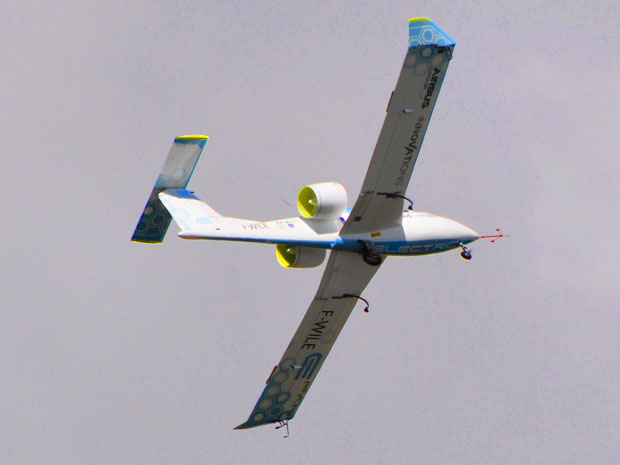
]]>E-Fan 2.0
Airbus demonstrated its E-Fan 2.0 all-electric two-seater aircraft back in April of this year. Currently a test airplane it comes equipped with two 125-volt batteries developed by Kokam, a Korean manufacturer of lithium-polymer storage technology. Each battery is housed in a wing and provides 60 Kilowatts of power to the two variable-pitch fan electric motors. Current range is 45 minutes in the air. A backup battery can be deployed for emergency landing. Commercial production is expected by 2017. A four-seater hybrid aircraft, the E-Fan 4.0, is under development. The combination of an internal combustion engine and battery pack will provide much greater flight range.
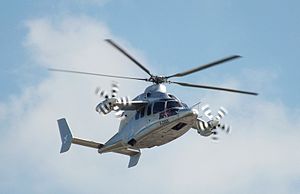
Airbus has also been testing hybrid designs for helicopters. The Eurocopter X3 is an extension of an older airframe using conventional power sources. The addition is a lithium-ion stack of batteries to help power the 5-blade rotary-wing, 2-seater helicopter. With battery power an X3 can run quietly during ascent and descent in urban areas reducing the common complaint of high levels of noise associated with traditional helicopter technology.
Lange Antares 20E
A cross between a powered airplane and glider, the Lange Antares 20E is a German designed single-seat electric aircraft. Lange has been flying electric airplanes successfully since 2011. With a range of about 190 kilometers (97 nautical miles) under power provided by Lithium-ion batteries, the aircraft’s enormous wingspan (18 meters) gives it the ability to glide extending its range. Current configuration allows for about 13 minutes of powered flight at maximum climbing speed. The operational powered flight time can be extended during horizontal flight. A more recent upgrade the 23E has a glide range of 60 kilometers (32 nautical miles) from a height of 1,000 meters (3,280 feet).

GreenWing eSpyder and e430
Located in California, GreenWing is a subsidiary of Yuneec International, a company with roots in China and Taiwan. GreenWing sells what Yuneec develops, and the company has two electric-powered aircraft currently available for early adopters of this technology.
The eSpyder is for the flight hobbyist. It is a kit that sells for under $40,000 U.S. A single-seat aircraft, it has a 10.13 meter (33 foot) wingspan and is powered by lithium batteries with 13 Kilowatt hours load capacity. The Yuneec developed electric motor generates 24 Kilowatts of power with a flight duration of between one and 1.5 hours. Recharge time takes between 2 and 3 hours.

On the other hand, the e430 is a serious electric aircraft with a two-hour flying range. It seats two and features a fast recharge and battery swap out for quick turnarounds upon landing. Empty it weighs 302 kilograms (666 pounds) and features a wingspan of 13.8 meters (45 feet). Maximum speed is 161 kilometers (87 nautical miles) per hour. The combination of electric motor and lithium battery produces 48 Kilowatts of power for its single prop. Conventional recharge time is 3 to 5 hours.

The aircraft mentioned here don’t represent all the inventors and manufacturers currently developing electric airplanes. But they indicate a trend to develop a non-fossil fuel alternative to the current aeronautical technology. Most of the companies invested in electric airplanes are small. But Airbus isn’t. So why are they so hot on electric airplane technology? The European Commission has established a guideline for its aeronautical future. It’s called Flightpath 2050 and has set ambitious target reductions in a number of critical areas. Based on year 2000 data avionics companies in or supplying Europe must produce technologies that lead to a net reduction in CO2 emissions by 75%, nitrous oxide by 90% and noise pollution by 65%. Electric and hybrid aircraft represent two ways to achieve these ambitious goals.


