
Who should use Haven?
From the Haven website, it states the audience as including “investigative journalists, human rights defenders, and people at risk of forced disappearance.” But there are really many more users for this app. Haven turns a smartphone into a security system for any hotel room when you are on the road, or for your home, or to monitor a baby’s room.
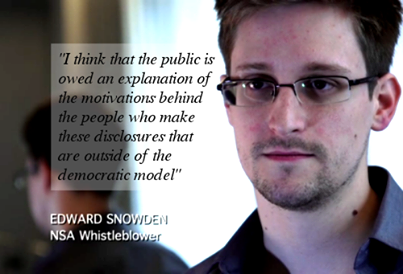
Snowden, who has lived in Moscow since 2013 because he is wanted by the U.S. Justice Department, in a recent interview told Wired Magazine, “Imagine if you had a guard dog you could take with you to any hotel room and leave it in your room when you’re not there. And it’s actually smart, and it witnesses everything that happens and creates a record of it.” That sums up how Haven works.
Haven uses the technology in smartphones. In fact, it really is a misnomer to call these devices smartphones considering all the technology on board. They are personal assistant devices which contain multiple core processors, gigabytes of storage, two high-definition still and video cameras (one front, one rear), several microphones, multiple radios and signal processors, touch screens and connectivity through WiFi, Bluetooth, and telecommunications interfaces with access to a library of downloadable applications.
Snowden and Micah F. Lee, his development partner, created Haven to be a safe room that fits in a pocket.
Lee writes, “Here’s how Haven might work. You lock your laptop in a hotel safe — not a secure move on its own — and place your Haven phone on top of it. If someone opens the safe while you’re away, the phone’s light meter might detect a change in lighting, its microphone might hear the safe open, its accelerometer might detect motion if the attacker moves the laptop, and its camera might capture a snapshot of the attacker’s face.”
I don’t know about you but typically when I travel I’m not that paranoid about leaving my Chromebook in my hotel room with it password secured and shut off. But I can see from Snowden’s personal experience why he might see the potential for skullduggery.
But for a sleuthless use of the app consider using it as a baby monitor. When Haven is placed near the crib and the baby starts to cry the app can send out SMS (short message service) alerts. And because Haven is open source it is capable of communicating using open-source tools such as Signal or Torso sending the alerts in encrypted format. It’s not that Haven needs to use encryption to let you know your baby is crying, but at least you know that no hackers or botnets can intercept any Haven created content.

That brought to mind Edward Snowden and Wikileaks and the recent series of disclosures that have given us a new picture of government’s overreach into our private lives. Snowden’s leaks of which the latest reported in The Washington Post, show us that 90% of conversations, texts and emails sent over telecommunications networks are intercepted and have nothing to do with legitimate targeted surveillance. And to make matters worse, the captured data by organizations like the National Security Agency where Snowden worked as a contractor, is being retained. This captured data which you and I would consider personal and private, is now in the hands of an agency that appears to have few limits put on its authority.
So my friend had a point when he pointed to his smartphone. Every picture you take, every text you send, every phone call you make, is no longer private. And this is not limited to transmissions through mobile networks. Your WiFi home network is as vulnerable. Your land line phone calls which today are converted from analog to digital signals may also be intercepted as they travel from you to the person on the receiving end. Privacy is vanishing rapidly. So should we be worried? Absolutely and when we elect our governments we should be holding them to account on the issue of what is private and should remain so.
But getting back to our debate on greatest threats, I couldn’t help but think that we have seen cycles of this type of invasive and irrational “fear stoked” behaviour in the past by governments. We have had Soviet Communist invasive behaviour. We have seen fascist and Nazi invasive behaviour. We have had McCarthyism. We have profiled people by the colour of their skin and shape of their eyes and displaced them in times of war. We have discriminated and murdered people because of their cultural heritage and beliefs. So is this behaviour today much different than the past? Only in scale because we have the technology to reach further into private lives than ever before all because we are addicted to a telecommunications revolution that makes two-way communication ubiquitous. And with that comes the dark side.
On the other hand, our influence on the environment is more subtle than eavesdropping on conversations. When sea levels rise they go up in fractions of millimeters per year. You don’t notice the change that much because it is gradual and insidious. Climate scientists like to talk about the frog sitting in pot of water being heated on a stove. The frog doesn’t know to jump out until it boils to death. That’s the threat to humanity that I see as most compelling because we can ignore its insidious effects more easily.


