What is a microbot?
A very small robot that can be directed by operators through the use of electromagnetic fields. The size of these devices can be measured from as small as a few nanometers to several millimeters. Microbots can work alone or in groups exhibiting swarm behavior. In a swarm they communicate with each other and coordinate actions. It is all very sci-fi. Remember Michael Crichton’s “Prey?” The book told the story about microbots escaping from a laboratory and becoming a self-sustaining, self-reproducing, intelligence. You would think the story would have scared researchers from even considering developing the real thing.
But that hasn’t happened because microbots even in swarms are a useful technological innovation. It is their tininess that makes them so powerful. Microbots contain no on board means of locomotion, which begs the question, just how did Crichton’s microbots manage once outside the confines of their laboratory?
In the real world of microbots the technology responds to external magnetic fields. But unless an application requires all microbots to act the same, it would seem the devices would have little real world application. The trick, therefore, is to make each microbot work individually. That requires external magnetic controllers sensitive enough to manipulate each individual precisely without affecting others in the immediate surroundings.
That’s what engineers at Purdue University set out to do. They built a magnetic controller that can operate individual microbots within a group. They did this by creating tiny coils that alternate attractive and repulsive forces. This allowed them to manipulate individual 2 millimeter-sized microbots within a group. Now the team is working on the next generation of even smaller microbots measuing 250 micrometers (0.25 millimeters) in diamter. Their current success has been described in a paper appearing in this month’s issue of the journal Micromachines.

SRI International, whose Motobot (the motorcycle riding robot featured at this January’s Consumer Electronics Show) excited the crowd, has also been experimenting with magnetically-activated microbots. In a posted YouTube video SRI’s version of microbots can be seen crawling at real-time speeds of 35 centimeters per second. In another segment you watch microbots doing a variety of assembly tasks in a coordinated process. SRI sees these types of microbots as integral to manufacturing, building integrated circuits and smart structures.

But that’s not all, biomedical engineers are exploring how to manipulate robot molecules and use them as surgical instruments. They call their invention, nanorobots, tiny charged particles that work in concert within blood vessels. Applications include unblocking occluded arteries.
At Drexel University, MinJun Kim, is working with an international team from the United States, Switzerland and South Korea to perfect nanobots controlled by magnetic resonance imaging (MRI) machines. After all an MRI uses magnets to create images. This new MRI application turns the machines into command and control centers capable of steering molecule-sized nanobots through the bloodstream while watching them do their work.
Right now the nanobots are only being tested in animal studies. After these molecular machines blast through a clog in an artery they will swim away and biodegrade. If all goes well human clinical trials are expected to start in 2019.

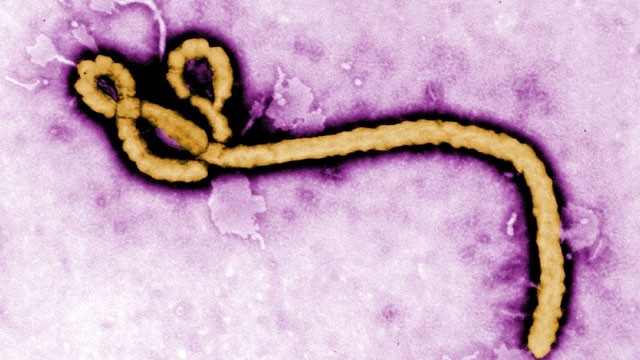
One of those assumptions is the incubation period. A new study at Drexel University questions the 21-day quarantine protocol. It may not be enough according to a study done by Professor Charles Haas, in the College of Engineering.The study entitled, “On the Quarantine Period for Ebola Virus” appeared in the October 14th edition of PLOS Currents: Outbreaks. The professor studied the data from the current outbreak and concluded that the World Health Organization had no conclusive evidence to support the number of days at the extreme end for Ebola quarantine. The World Health Organization used results from prior outbreaks in Zaire and Uganda in coming up with the 2 to 21 days incubation period. But Haas’ review indicates there could be a 12% chance that someone could still begin to show signs of infection after 21 days.
Haas is an expert in analyzing transmission risk of pathogens. He states, “While the 21-day quarantine value, currently used, may have arisen from reasonable interpretation of early outbreak data, this work suggests reconsideration is in order and that 21 days might not be sufficiently protective of public health.” It is not his purpose to increase the fear and uncertainty but to ensure that transmissibility of such a dangerous pathogen requires a greater degree of caution in establishing quarantine standards. And in his mind 21 days is not enough.