A recent Euronews article states, “The world is grappling with a mental health crisis.” The first two decades of the 21st century have seen a dramatic increase in the use of antidepressant drugs. Between 2000 and 2020 in 18 European countries, usage has grown by 250%. Even in countries reported to be the happiest nations on the planet, the latest being Finland, antidepressant usage is dramatically on the rise.
And Europe is far from alone. Almost every country on the planet (the exception may be Bhutan) is seeing a rise in the use of antidepressants.
Are there good reasons for this evergrowing state of mind that suggests chronic depression is a fixture of 21st-century society? Anxiety has been doubling in the global population as the century unfolds. What are the triggers?
We are living with scenarios like the one that the Bulletin of Atomic Scientists tracks with its Doomsday Clock getting closer and closer to the midnight hour. The Doomsday Clock was created by the University of Chicago scientists involved in the Manhattan Project responsible for the development of the atomic bomb. These scientists meant it to symbolize how close humanity is to destroying the planet using the tools and technology of our civilization. It is metaphorical, not real. But for some, the Doomsday Clock is just that, marking the minutes and seconds until humanity is wiped out.
There have been many predictions of the planet’s demise. Back in 2012, it was supposed to happen on the winter solstice day, December 21st, when the galactic plane was to align with the Sun and Earth at the moment a space rock the size of a planet was scheduled to smash into us.
Death-wish mentality appears to be a phenomenon linked to human experiences for centuries. Psychologists believe this is unique to humans among the animals on the planet because we are aware of future death and have embedded rituals and rationales to justify our mortality.
The Zoroastrian faith which emerged in Persia in the 6th century BCE, described a future apocalyptic event. Judao-Christian tradition in the Book of Daniel from the Old Testament appears to have borrowed this idea in predicting a coming apocalypse. The Book of Revelations in the New Testament is a narration focused on the end of humanity on Earth.
In medieval times, Christian leaders accepted the idea of a millennial apocalypse believing that 1,000 CE was the date when Jesus Christ would return to mark the end. The Second Coming didn’t happen then and hasn’t happened since although there have been umpteen predictions of it over the centuries.
The Doomsday phobia transcends religion today to embrace technology. Some good examples include the 1938 radio broadcast of a play based on H. G. Wells’ War of the Worlds which caused millions listening to believe the alien invasion had begun and we were about to be wiped out. The invention of the atomic bomb led to nucleomituphobia, a fear of nuclear war. In the year 2000, a variation on messianic religious millennium thinking occurred with the Y2K crisis which was supposed to mark the collapse of civilization as world computers stopped working because of a two-digit rather than four-digit date field. When the atom-smashing CERN project began operating in 2008, doomsdayers predicted a black hole would open up and swallow Earth. Even the renowned Scripps Institute of Oceanography in 2017 predicted extinction for humanity, giving us a 5% chance of making it to the end of the 21st century because of anthropogenic climate change.
Today, we have a billionaire Doomsdayer, Elon Musk, who launched his commercial rocket business based on a doomsday assumption that at some point in the future, life on Earth would be wiped out by a cataclysmic event. That is the rationale for SpaceX’s existence and why Musk wants to establish a city of one million survivors on Mars.
Is there a cure for those consumed by the doomsday mindset, for the growing number of those experiencing depression and anxiety in the 21st century? Yes. There are things we can control, and there are things we cannot. And some of the things we think we can’t do, we probably can in the future through technological innovation.
Here are some examples:
Instead of taking anti-depressants to deal with our anxiety triggers which appears to be a growing global mental health and addiction problem, we can use non-drug means to deal with our fears. Cognitive-behavioural therapy can desensitize fears, both rational and irrational. Yoga and other exercise programs, as well, can also help dissipate depression and doomsday thoughts.
]]>Nuclear tests were common throughout the Cold War. In 1991, the Soviet Union declared a moratorium on nuclear tests shortly followed by the United States the next year. That led to the Nuclear Test Ban Treaty which was signed but never ratified by America yet adhered to until now. With the Trump administration announcing that it is pulling out of the Open Skies agreement designed to reduce war from accidentally breaking out by allowing reconnaissance flights over each others’ territories by the 34 member countries who signed it, there is concern that the next treaty to be trashed will be the test ban.
Is it important to test nuclear weapons today? Not so much anymore because under the Stockpile Stewardship program, the weapons are regularly inspected, and sophisticated simulations replace physical testing. In an article published by the Bulletin of the Atomic Scientists, Robert Rosner, Professor of Physics at the University of Chicago and the Bulletin’s Chair for Science and Security states: “Do we actually need to test? The answer is—with the current weapon systems that we have—I think the answer is clearly no, we don’t need to test. I think there’s a very high consensus on that.”
Trump has already withdrawn from a treaty with Russia to limit intermediate-range missiles, accusing the other side of numerous violations which is likely true. There seems little justification to abandon Open Skies, but the current administration appears to no longer want to support it. Does that mean the Test Ban treaty will soon follow?
If it does and the United States resumes nuclear bomb tests in Nevada it is seen by those at the forefront of weapons development as being nothing more than a political stunt. Rosner states, “there is a really fantastic tactical and strategic value for the United States in maintaining a testing ban.” Besides the Russians being given the impetus to resume their testing, there are numerous other nuclear and nuclear wannabe countries that will see this as an open invitation to start doing the same, unleashing a new technological arms race to make these weapons even more sophisticated and destructive.
In this election year, however, demonstrating power seems to be the new Trump mantra in the absence of his administration’s ability to defeat COVID-19, and address the problem of police brutality towards U.S. people of colour. The need to “dominate the streets” may translate into other forms of overbearing behaviour with indeterminate consequences.
The people of Nevada may also have a say should the President resume testing in their state with consequences for the November vote. The Test Ban Treaty had no end date. It included both remote and onsite monitoring of countries with nuclear weapons programs. Withdrawing from it was described as limited to “extraordinary events” of “supreme national interest” for the original 44 signatory countries that signed on. The only known countries with nuclear weapons that have not signed are North Korea, India, and Pakistan. Five of the original 44 have signed but not ratified. They include China, Egypt, Iran, Israel, and the United States. Meanwhile, including the original 44, 184 nations have signed and 168 states ratified the treaty to date.
This year the U.S. State Department claimed without providing evidence that Russia was conducting illegal nuclear tests in violation of the Test Ban Treaty. This could become the pretext for Trump to withdraw from the Test Ban Treaty. Resuming testing could bring us perilously closer to midnight on the Doomsday Clock, let alone it may make Nevada voters in November really mad, particularly after the state’s citizens fought to end the Yucca Mountain site project which would be used to store the nuclear waste from power plants.

]]>
In today’s announcement the full statement begins as follows:
“Humanity continues to face two simultaneous existential dangers—nuclear war and climate change—that are compounded by a threat multiplier, cyber-enabled information warfare, that undercuts society’s ability to respond. The international security situation is dire, not just because these threats exist, but because world leaders have allowed the international political infrastructure for managing them to erode.”
What surprised me is that it didn’t single out the state actors who are the culprits in this escalation of insecurity that the world faces: No mention of Donald Trump, Vladimir Putin, Xi Jinping, Kim Jong-Un, the U.S. Republican Party, Mark Zuckerberg, and a few others of notoriety that have proved to be actors in the global drama that is pushing humanity closer to an existential crisis.
The Doomsday Clock announcement pointed to these eight trends:
The anti-science movement in the United States is particularly a problem whether it be anti-vaxxers, climate change deniers, or a disdain for facts, what the data shows and the experts in universities and company laboratories. Propaganda, once associated with dictatorships, has now become the means to indulge in prejudice, bias, and ideology, spreading false and manipulative messages to millions.
The twenty-second move toward midnight puts the world nearer to doomsday than at anytime during the Cold War when the United States and Soviet Union faced each other with tens of thousands of nuclear weapons.
So what can be done? These are five steps the Atomic Scientists believe need to happen if we are to move the minute hand of the Doomsday Clock further from midnight:
The Atomic Scientists believe the present global situation is unsustainable and dangerous. Citizens can alter this by demanding of their leaders the truth.
The move of the Doomsday Clock closer to midnight is a warning. The minute hand can still be moved further away but it will only happen through wise leadership, and mass civic engagement to compel existing leaders and governments to make the changes the world needs.
Empowering citizens will unmask the lies, and improve “the long-term prospects of their children and grandchildren. They can insist on facts, and discount nonsense. They can demand—through public protest, at the ballot box, and in many other creative ways—that their leaders take immediate steps to reduce the existential threats of nuclear war and climate change. It is now 100 seconds to midnight, the most dangerous situation that humanity has ever faced. Now is the time to unite—and act.”


At the time I didn’t know about the Doomsday Clock, the virtual time piece created by Atomic Scientists that tracked the likelihood of global catastrophe. That clock seemed to always be a few minutes from midnight throughout my life with the only time the hands moving back before 11:55 p.m. when the Soviet Union disintegrated.
Today it stands at 3 minutes to midnight having not moved a minute back even though COP 21 produced the Paris climate agreement and the United States brokered a nuclear agreement with Iran.
Why is that?
Because the United States and Russia (the principal remnant state of the former Soviet Union) have restarted the Cold War that led to the Cuban missile crisis. This has happened because of positions taken by the two countries over the civil war that is destroying Syria, and over the tattered remnants of failed Middle East politics and policy over the last 100 years. From the post-World War One division of the Ottoman Empire by European political and Western nations’ economic interests, politics in the Middle East has drifted from one crisis and war to another. It has produced many failed states and a number of artificially propped up ones that were created by and for oil companies and the nations behind them.
How and why Russia and the United States have become part of this Middle East mess is the main reason that today’s Doomsday Clock sits at 3 minutes to midnight, about as close to global catastrophe as at any time in the recent past. The Russians have the legacy of Soviet attempts to establish a Mediterranean and Middle East presence on Syrian soil. The United States’ legacy is to protect the interests of Israel, Jordan, Saudi Arabia, the Persian Gulf states and the total mess which they created after the 2003 invasion of Iraq. Standing on opposite sides of the Syrian civil war complicated by the rise of a reborn Islamic caliphate known as ISIS or ISIL, has brought the two most potent nuclear weapon states into a confrontation almost as frightening as the one I remember back in my beginning teenage life in 1962.
Three weeks from an American presidential election the world is watching two states trying to intimidate and stare each other down. When the 2016 Doomsday Clock statement came out reporting 3 minutes to midnight it made little mention of a 20-year-old program agreed to by Russia and the United States. Called the Plutonium Management and Disposition Agreement, it pledged both nations to rid themselves of stockpiles of weapons-grade plutonium that each had accumulated. The total amount, 34 tons each, in other words, 68 tons in total, could be used to build 17,000 bombs. And the 68 tons represents about one-third (32.5%) of the two countries weapons-grade plutonium.
Is there a peaceful use for the 68 tons the two countries have stockpiled for potential destruction?
This is plutonium-239. And the only thing it is good for is blowing things up. It is not the plutonium that provides the power to the Curiosity rover on Mars, or to the New Horizons spacecraft that flew past Pluto and is now exploring the Kuiper Belt in our outer solar system. That is plutonium-238. Finding a peaceful use for plutonium-239 has been a tough act. And getting rid of it is proving difficult.
The current methods to convert plutonium-239 is to turn it into plutonium oxide. The United States has a number of options available to it including:
That $34 billion price tag was the justification for halting the project. This has produced the third option which involves diluting plutonium-239 and disposing of it by sealing it in an underground vault. First converted to plutonium oxide, the fuel would then be blended with gels and foaming agents to become a substance referred to as “stardust” containing less than 10% plutonium. The stardust would then be mixed with sand and put in containers which would be buried deep within a geologically-stable rock formation.
Does Russia have similar plans to deal with its plutonium-239 disposal?
If they have it is currently a moot point. Because in the last two weeks Russia has suspended the Plutonium Management and Disposition Agreement arguing that geopolitical circumstances have changed. Using the abandonment of the MOX facility in South Carolina, Russia has chosen not to move forward with disposing of its 34 tons. The Russian government argues that unfriendly acts by the American government pose a threat to its security and justify suspending the deal.
So the Doomsday Clock that at the beginning of 2016 was at 3 minutes to midnight, may move to 2 just as the United States votes on a new leader for the country. We should all be concerned should Americans make a choice that could make the clock move even closer to Doomsday.

Planck Telescope Reveals An Older Universe
First published data from the 15 1/2 months of Planck telescope mission observations gives us a revised estimate of the age of the Universe. No longer 13.7 billion years, it is now 100 million years older. Planck (seen in the image below) is mapping cosmic background radiation by filtering out interference from stars and galaxies. The latest data has given us a picture of what our Universe was like 370,000 years after the Big Bang. From this data we have revised estimates on its make-up. Matter, the things we can see like stars, planets, nebula and galaxies account for 4.9%. Dark matter represents 26.8% and enigmatic dark energy, the balance, at 68.3%.

Calculating Doomsday for the Human Species
Oh what fun! Apparently physicists with nothing better to do have been calculating the future of our species. It is a common premise among scientists to argue that enduring civilizations are rare. But there is little in the way of science to back this up. So a group of researchers at University of Oxford decided to tackle the problem in greater detail by factoring in nuclear war, asteroid impacts, climate change, global pandemics, and unknown threats. Their conclusion is less gloomy than the Doomsday Clock that nuclear scientists hatched in the 1950s always showing the minute hand creeping closer and closer to the midnight hour. The Oxford team also offered suggestions to improve our chances of survival including the following:

HP Labs Develop 3D Display
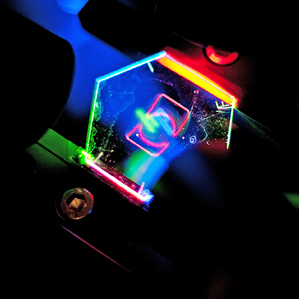
Researchers at Hewlett-Packard are moving us closer to the holodeck of Star Trek with the development of 3D displays that don’t require us to wear dorky glasses. The technology involves a modified liquid crystal display (LCD) just like the one on your high-definition television, smartphone, flat-screen computer display or portable gaming device. Where conventional 3D provides a viewer wearing glasses with one perspective, HP 3D gives the viewer the ability to walk around an experience the image from many viewpoints. This multi-view capability comes from changes made to conventional LCDs. HP’s display has patterned nano-grooves with three sets of grooves for red, green and blue light.
Wireless Blood Testing May Make Needles a Thing of the Past
Patients with illnesses that require constant blood tests will appreciate the potential implications of this technological innovation on their lives. Researchers at the Ecole Polytechnique Federale de Lausanne in Switzerland have developed a personal blood testing laboratory, a few cubic millimeters in size with a built-in Bluetooth. It can be implanted just under the skin to read vital blood signs which can then be read by doctors using computers, tablets or smartphones. The current prototype detects five proteins and organic acids simultaneously. It can detect chemical changes that predict a heart attack hours ahead of time. For diabetics it can continuously measure blood sugar levels and send alerts. Or it can be used to monitor patient blood chemistry during cancer chemotherapy. The inventors state that they can potentially “detect just about anything.” The implant is so small it is easy to place or remove. Currently being tested in animal studies it is hoped that it will be available within 4 years for human use. So say goodbye to needles and all those vials of blood.

UK Company About to Mine Nodules from the Sea Floor
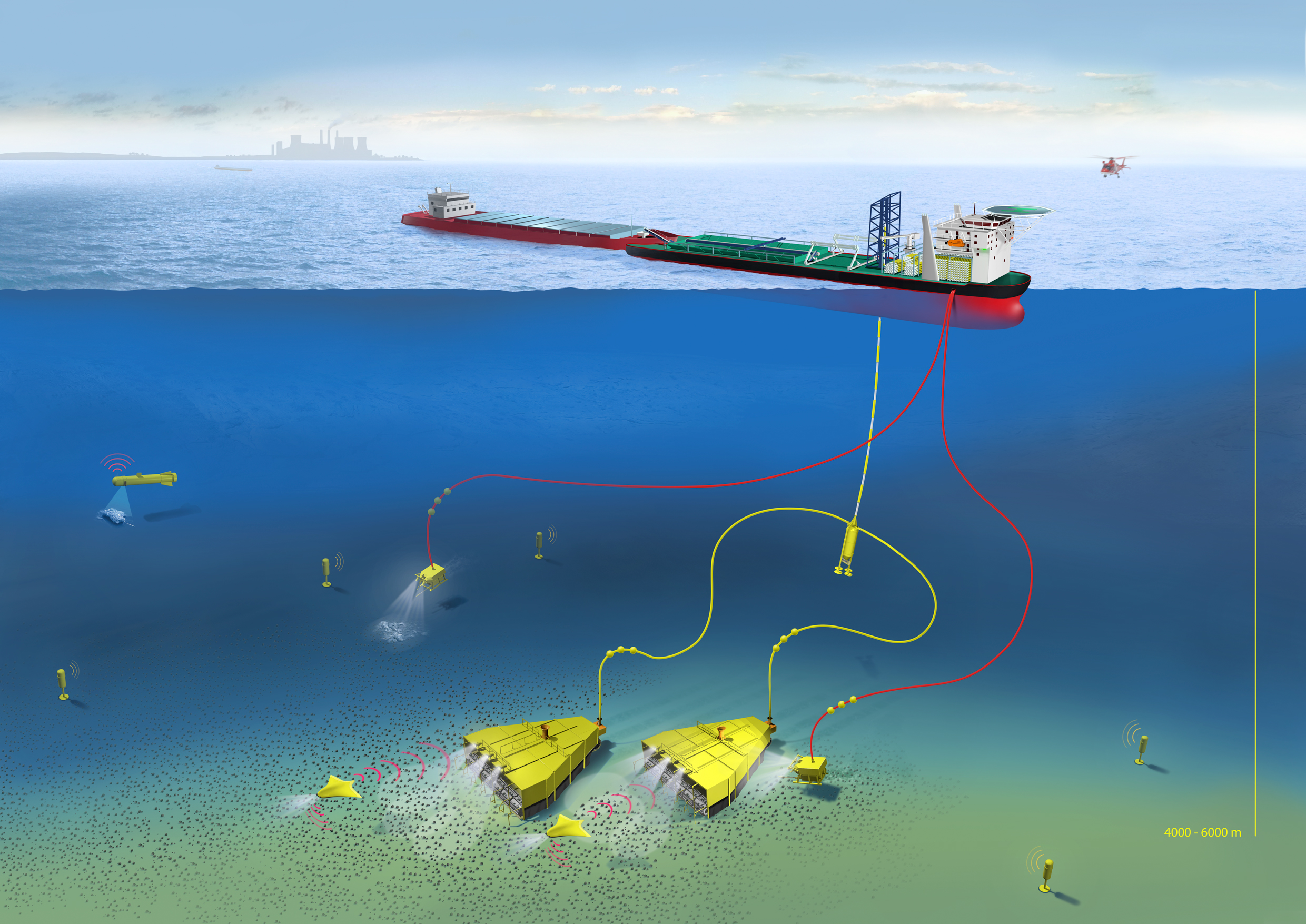
For many years we have known about manganese nodules littering the deep sea floor. In truth there is more than manganese to mine at the bottom of the ocean. The nodules are also rich in nickel, copper, cobalt and rare earths. Now Lockheed Martin UK plans to harvest nodules from a 58,000 square kilometers (22,400 square miles or about the surface area of Lake Michigan) of the Pacific Ocean seabed 1,500 kilometers (about 950 miles) southwest of Mexico. Operations are expected to begin within 5 to 6 years. Nodules vary from the size of golf balls to potatoes. The technology to be deployed would be a combination vacuum-rake that would gather the nodules which then be ground into a slurry for pumping to surface ships. Environmentalists are concerned that any disturbance to sediments at the bottom of the ocean could irretrievably harm seafloor communities. That’s why the operation is delayed so that data can be gathered about the ecology in the harvest zone to ensure the environmental impact is minimized.
A Postscript
Comments, questions and ideas for postings are always welcome. If you come across a technology you feel should be part of this conversation please let me know by writing to [email protected].
– Len Rosen
]]>