We recently highlighted the faulty logic of a pseudoscientific argument against addressing climate change: the proposition that because CO2 is necessary for plants, increasing emissions is good for the planet and the life it supports. Those who read, write or talk regularly about climate change and ecology are familiar with other anti-environmental arguments not coated with a scientific sheen.
A common one is that if you drive a car, buy any plastic goods or even type on a computer keyboard your observation that we need to reduce fossil fuel use is not valid — no matter how much evidence you present. Like the “CO2 is plant food” claim, it’s a poor argument, but for different reasons. It’s easy to refute the junk science claim with large amounts of available evidence. This one’s simply a logical fallacy.
The statement that gas-fuelled cars cause pollution is true whether or not the person making it drives a car, just as a claim that automobile emissions are harmless is false, regardless of the claimant’s car ownership or driving habits.
As well as being a faulty assertion, pointing out the many uses for fossil fuels in an attempt to reject the need to reduce reliance on them is actually an argument in favour of burning less coal, gas, and oil. Fossil fuels are useful for many purposes — from life-saving medical equipment to computer keyboards — so why extract, transport and burn them so rapidly and wastefully? Supplies aren’t endless.
Perhaps some people haven’t thought things through. Or maybe they don’t have strong arguments against the need to protect the air, water, soil and biodiversity that keeps us healthy and alive. With a subject like climate change, it’s somewhat understandable. In this “post-truth” era of infinite information, it’s difficult to get a good grasp on many subjects, let alone one as complex and massive as global warming. Most people don’t have the time or expertise to read through and comprehend the massive volumes of peer-reviewed science on phenomena such as feedback loops, ocean acidification, extreme weather events, species extinction and sea level rise.
Fortunately, some excellent resources provide information for people with varying levels of knowledge and expertise. Skepticalscience.com offers a big-picture approach by examining the peer-reviewed literature. It’s “Most Used Climate Myths” section describes false claims and lets users click for “basic,” “intermediate” or “advanced” explanations of real evidence.
You can also find accessible science on the U.S. National Oceanic and Atmospheric Administration and National Aeronautics and Space Administration websites. The American Institute of Physics offers a comprehensive history of climate science, as well as other information.
Media outlets with considerable, credible coverage include The Guardian and National Geographic, and environmentally focused websites such as Grist, EcoWatch and the National Observer. Desmog Blog’s timely articles and extensive database shed light on what’s behind concerted efforts to downplay or dismiss the seriousness of climate change. Websites for environmental groups like the David Suzuki Foundation, Pembina Institute, and others are also good information sources. Just Cool It!, a book coming out April 22 by Foundation senior editor Ian Hanington and me explains climate change and focuses on solutions.
Many other books, websites, publications, films and more offer clear explanations of climate change and what it means for us. The point is that evidence-based information arms people with tools to confront humanity’s greatest crisis. It’s increasingly clear we can’t rely on politicians to get us out of the mess we’ve created. The current U.S. administration is full of people who reject the overwhelming evidence for human-caused climate change. In Canada, our government has some good climate policies but continues to approve fossil fuel infrastructure projects.
Will good information change the views of those who reject environmental protection? It’s hard to know. But for people who care and want to understand, facts are crucial to bringing about much-needed change.
The silver lining of the irrationality that has descended on the U.S. is that it has sparked a growing movement to promote scientific evidence and science-based solutions. The March for Science, taking place in cities throughout the U.S. and beyond on Earth Day, April 22, is one example.
We have scientific evidence and rational arguments on our side. Let’s use them to support solutions.

It’s been shocking to watch news of the Brexit vote in Britain, Donald Trump’s promise to build a wall between Mexico and the U.S. and the ongoing threats and violence against ethnic minorities in many parts of the world. I’m not a political or social scientist, but my training as a biologist gives me some insight.
When I began my career as a scientist, geneticists were starting to analyze the molecular properties of single genes within a species. When we started looking at highly evolved species such as fruit flies, we thought we would find that their genes had been honed through selection over time, so they would be relatively homogeneous within single species. Examining one kind of protein controlled by a specific gene, we expected to find them all pretty much the same. Instead, we learned there was a great deal of heterogeneity, or diversity. A gene specifying a protein could exist in a number of different states.
This is now called “genetic polymorphism” and is considered to be the very measure of a species’ health. Inbreeding or reduction of a species to a small number reduces genetic polymorphism and exposes harmful genes, thereby rendering the species more susceptible to sudden change. In other words, genetic polymorphism confers resilience by providing greater possibilities as conditions shift.

Within ecosystems, species diversity provides greater flexibility to adjust to disturbances. Around the planet, ecosystem diversity has enabled life to flourish under different conditions. Like nested Russian dolls, life seems to have been built on diversity within diversity of genes, species and ecosystems.
Over time, conditions on the planet have not remained static. In response to change, life has had to adapt or disappear. The sun is 30 per cent warmer today than it was when life arose four billion years ago. The atmosphere changed from oxygen-free to oxygen-rich after plants evolved. Continents have moved, collided and pulled apart. Oceans have filled and emptied. Mountains have risen up and worn down. Life spread from the oceans to land and into the air. Ice ages have punctuated warm periods. And all the while, life fluctuated and flourished because of the resilience conferred by diversity.
Human beings have added another level of diversity: culture. Cultural diversity has enabled our species to survive and flourish in regions as different as deserts and Arctic tundra, wetlands and steaming tropics, prairies and mountains.
Monoculture — the spreading of a single gene, species, ecosystem or idea — runs counter to the biological principle that diversity confers resilience. It creates vulnerability to change, especially sudden change. As a biologist, I believe we should encourage, spread, maintain and celebrate diversity. The drive to restrict immigration of people with different beliefs and the hostility to people of different ethnic, religious or cultural background are extremely dangerous.
In Canada, the apparently well-meant exhortation for Indigenous people to abandon their remote communities reflects the failure to see the enormous value offered by a sense of connection to place and accumulated cultural knowledge. As newcomers to these lands over the past five centuries, many of us lack the deep ties to place that are critical in a time of vast ecological change and degradation.
The United States is built on colonization and destruction of the diverse cultures that existed on this continent before European contact. That nation has evolved on the assumption that it’s a “melting pot,” where newcomers shed their identity of origin and blend with the dominant culture as Americans.
Similarly, Canada developed with a policy of growth while maintaining immigration dominated by a British majority. Under Pierre Trudeau’s government, Canada deliberately embraced the notion of the “cultural mosaic,” valuing diversity within society. I believe this is an exciting experiment in nation-building based on fundamental scientific truths. The challenge is to ensure that we can celebrate our diversity while recognizing our place as a country without elevating some groups above others.
From the microscopic level of genes to large-scale biological systems, and from natural ecosystems to human communities, diversity brings strength and resilience in the face of ever-changing conditions. In today’s world, that’s more important than ever. We must resist attempts to reduce diversity in all its forms.

———-
Sustainable development means different things to different people. The concept was popularized in 1987 by the groundbreaking Brundtland Commission report to the United Nations, “Our Common Future”. Over the past three decades it has entered conversations around global poverty, health, environmental quality and social justice. It’s even been used to rationalize the ongoing extraction of globally significant natural resources, and some people think it means sustainable growth. (Some cynics said environmentalists got the sustainable part while corporations got the development.)
It’s possible to extract resources with attention to environmental consequences, but unless it’s done in ways that ensure the planet remains healthy enough to support human life, where all people enjoy peace, health and food security, can it really be called sustainable?
In 2000, world leaders convened under the UN umbrella to establish a set of objectives and strategies that became known as the Millennium Development Goals. Although they weren’t perfect, they offered new ways of looking at and targets for addressing issues like poverty, hunger, disease, lack of adequate shelter, gender equality, education and environmental sustainability.
Fifteen years later, on its 70th anniversary, the UN has established new objectives called Sustainable Development Goals. Building on the previous strategy, these include 17 goals and 169 specific targets. Developed through years of consultation among people from around the world, including social and environmental science and policy experts, the program aims to secure global peace and prosperity.
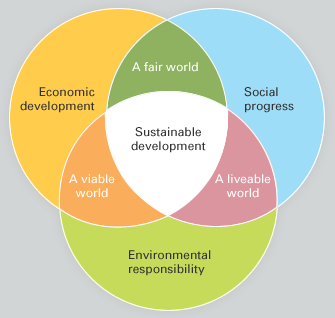
A UN statement offers a compelling vision: “A world in which consumption and production patterns and use of all natural resources — from air to land, from rivers, lakes and aquifers to oceans and seas — are sustainable. One in which democracy, good governance and the rule of law, as well as an enabling environment at national and international levels, are essential for sustainable development, including sustained and inclusive economic growth, social development, environmental protection and the eradication of poverty and hunger. One in which development and the application of technology are climate-sensitive, respect biodiversity and are resilient. One in which humanity lives in harmony with nature and in which wildlife and other living species are protected.”
Although I take issue with some elements, such as the reference to “economic growth” (an outdated concept in an overpopulated world with increasingly scarce resources), I’m encouraged that the new plan builds on the Millennium Goals to offer more specific and stronger targets for protecting the air, land, water and natural environments on which we depend for health, well-being and survival. There’s also a specific goal for protecting oceans, recognizing that ocean health is essential for peace, food security and resiliency in the face of global warming.
The Sustainable Development Goals take effect in January 2016, when UN member states are expected to enact policies and legislation to realize them and their associated targets. Canada is part of the UN, and up until 2010 we held a coveted seat on the UN Security Council. We’re one of the world’s wealthiest countries with the eighth-highest standard of living, according to the Human Development Index. Are we contributing in ways that will help the world meet the goals, or are we hindering their chances for success?