Twenty-seven years later we now know that what Fleischmann and Pons were observing was some kind of nuclear reaction but certainly not fusion. Why do we know this? Because isotopic shifts have been observed in room temperature experiments conducted at many other places, many with very prestigious credentials. Los Alamos National Laboratory, Lawrence Livermore National Laboratory and the Naval Research Laboratory have all conducted experiments roughly akin to Fleischmann and Pons. At Bhabha Atomic Research Center (BARC) in India, researchers noted the phenomenon occurring in tritium.
What appears to not be fusion, but rather a neutron-induced reaction, has now been observed in many labs. The moniker LENR standing for low-energy nuclear reactions seems apt. Fusion is not what is happening. Rather the ambient room temperature chemical reaction being observed appears to be caused by weak interactions of ultra-low-momentum neutrons and neutron-capture processes. This is equivalent to the transmutation of elements something once thought of as being an alchemist’s wizardry rather than science.
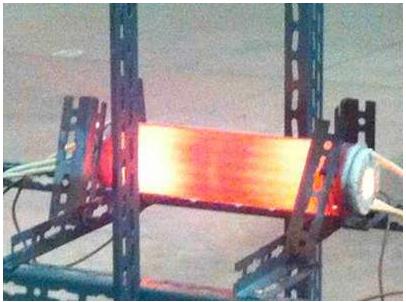
Anomalous heat detected in E-Cat devices built by Andrea Rossi, the name most associated with cold fusion other than the original experimenters, may have a non-cold fusion explanation. And the reason that no commercial product has ever been shipped despite imminent promises of delivery has more to do with the fact that the anomalous heat generated is not always consistent, at least not enough to be a reliable new energy generating source.
States David Nagel, formerly with the Naval Research Laboratory and currently on the faculty of Electrical and Computer Engineering Department at George Washington University, “LENR is real experimentally, and not understood theoretically…..here are results that you just can’t explain away. Whether it’s cold fusion, low-energy nuclear reactions, or something else—the names are all over the place—we still don’t know. But there’s no doubt that you can trigger nuclear reactions using chemical energy.”
Nagel calls LENR “lattice-enabled nuclear reactions.” One thing for sure, this is new science.
]]>