Back in May, I wrote a posting entitled, What Happens to The Digital Me After I Die? Omar provides enlightenment on how these assets and other online content can survive me when I am gone even if not in a will. Before I read Omar’s submission I had not thought of putting my digital assets in the will. Now I will reconsider.
Enjoy the topic and I look forward to readers’ comments.
In today’s world, our belongings go beyond the tangible—extending to digital assets such as online photos, cryptocurrencies like Bitcoin, and non-fungible tokens (NFTs). If not familiar with the latter, NFTs, today include:
So what happens when you die without a will detailing the fate of your NFTs and other digital possessions? Executors end up facing the daunting task of managing them amid a tangle of vague legal standards.
In this discussion, we look at the executor’s role in handling our digital legacies.
Firstly, understanding what constitutes digital assets is vital. We’re talking about anything from online accounts like banking, investments, and social media to digital
content such as eBooks and music.
Each type of asset needs to be handled differently, and not having a will makes this process more complicated.
Without a will, U.S. and Canadian intestacy laws typically dictate the distribution of assets. Intestacy laws govern how to distribute an estate when a person dies without a will. With digital assets as opposed to physical ones, plans become complicated because of their intangible nature and strict privacy laws that protect them. That’s why you should seek advice when doing estate planning by consulting digital asset specialists.
You will need to navigate a complex process when tasked with managing digital assets without a will. Here are some practical steps to help ensure a thorough and respectful management of digital legacies:
It’s essential to consult trusted resources such as firms like Westcoast Wills & Estates and qualified others to navigate this process. Their legal advice can assist you in effectively navigating the digital aspect of estate management.

As an executor, you might encounter challenges such as the following when managing digital assets without a will, making the entire process even more complex.
Digital asset laws are constantly in flux, leaving you needing clarification on their legal standing. Many jurisdictions lack clear guidelines for handling these assets after death, creating a potential legal minefield.
Accessing digital assets can be a technically complex process, requiring you to possess skills in how to encrypt data, recover passwords, or navigate various security protocols.
Managing a deceased person’s digital footprint often exposes you to deeply personal aspects of their life. This can add an emotional burden to the already challenging task of estate execution, especially if you are close to the deceased.
Digital platforms are governed by strict privacy policies that may prevent you from easily accessing the deceased’s accounts. These policies are designed to protect user privacy, even in death, which can hinder your ability to gather assets.
The digital world moves quickly, and certain assets like domain names or social media accounts can diminish in value if not managed promptly. You must act swiftly to secure these assets before they are compromised or lost.
Each of these challenges requires careful consideration and a strategic approach. Consider seeking support and advice from professionals when navigating these complexities.
Managing digital assets without a will can be daunting, but you don’t have to do it alone. There are various resources available to help, from legal advice on navigating complex laws to technical tools for organizing digital assets. Accessing professional services and support can greatly ease the process, ensuring you are well-equipped to handle your responsibilities effectively.
As technology evolves, managing a digital estate becomes more crucial. Key future considerations include the following:
Managing digital assets without a will requires you to navigate complex landscapes, utilize supportive resources, and stay informed about technological advances. By addressing these challenges comprehensively, you can ensure the thoughtful and effective stewardship of both digital and physical estates.
]]>For those of you who don’t know what a blockchain is and how it works, here is a quick history and primer.
Blockchains emerged in 1991 as a way to timestamp digital documents but became much more widely-known in 2009 when Satoshi Nakamoto, whose true identity is disputed, used blockchain to create the cryptocurrency Bitcoin. What a blockchain is, is a decentralized database shared across a network of computers, or “nodes,” that can only be altered after approval from all the nodes in the system. Once information is created in a blockchain, it becomes very difficult to change.
Every block within a blockchain contains (1) data, (2) the hash, a digital fingerprint of the block, and (3) the hash from the previous block in the chain. Different types of data can be stored within blocks, including the name of the sender, the name of the receiver, and the transaction amount in the case of cryptocurrencies like Bitcoin. A block’s hash, generated using the data within the block, changes if that data is in any way altered.
Blockchains are seen as extremely secure because:
One of the most successful entrepreneurs in government and enterprise technology, Eric Pulier is the go-to expert on all things blockchain. The best-known venture capital groups in the world have financed companies that Pulier has founded or co-founded, including MediaPlatform, US Interactive, Desktone and SOA Software.
“Blockchain is a new way of looking at value and a new way of creating a transaction between parties where you don’t need a third-party intermediary and can track things and really have trust.” — Eric Pulier, Founder, CEO, vAtomic
Pulier’s predictions for blockchain trends for the next five years follow.
An NFT is a token on the Ethereum blockchain that contains unique metadata that differentiates it from other tokens. While currency is fungible and can be easily transferred, NFTs can be used to store much more complex and individual-specific information including government documents such as marriage certificates, land registrars, food-grade ratings, and driver’s licenses. In retail, consumers use can verify the legitimacy of luxury goods, digital goods, and tickets which can all easily be stored as NFTs on blockchains. Pulier predicts, “Now, the token, which is like a Bitcoin, can be a ticket, or a coupon, or a collectible. It could represent a real world good, like a coffee or a piece of art. So, what you’re going to see is the emergence of an entirely new space where non-fungible tokens are going to completely change the economy.”
Security tokens are cryptographic, programmable securities that serve as an asset that can also take action. Security tokens can pay dividends, pay interest, or even invest in other tokens or assets. Smart contracts, for instance, allow assets to automatically pay dividends on a specific date if all criteria are met. As Pulier explains, “Most of the tokens that you might be familiar with are called utility tokens, and they don’t represent a piece of a real-world object or of an actual equity. Security tokens are now emerging this year.” Security tokens have huge potential to decrease liquidity issues but will require additional infrastructure to take hold, such as their own exchanges, Security Token Offerings (STOs), and wallets.
“Everything that you can imagine that doesn’t have liquidity is going to be fractionalized and tokenized and put on exchanges,” predicts Pulier. Over the next five years, security tokens will start to represent a new form of liquidity in assets that traditionally have lacked liquidity, such as real estate or art. Pulier anticipates these assets will start trading 24/7, 365 days a year. Today, Malta and Switzerland are leading the way in developing the infrastructure for tokenized assets. The U.S. SEC and EUs ESMA have begun issuing comments about plans to put regulations in place.
As cyber attacks continue to proliferate, new forms of identity verification will emerge to protect users. Self-sovereign allows users to maintain a single digital identity across multiple platforms while selecting the information they wish to share on each. This mode of interaction would drastically transform the current digital marketplace that has turned personal data into a commodity. “Identity is going to be returned through blockchain back to the individual so that the individual will own their data and then be able to marshal it out based on what’s best for them as opposed to how Facebook or Google or other people may want to exploit it,” Pulier predicts.
In 2014, identity assurance processes cost the U.K. a staggering £3.3 billion. Self-sovereign identity would significantly reduce these costs. In e-commerce, online logins will be exponentially more secure and efficient. For financial services, Know-Your-Customer (KYC) and Anti-Money-Laundering (AML) work will be transferable from one bank to another, dramatically reducing costs. In healthcare, self-sovereign identities will put medical history records back into the hands of individual patients, and the transparency of permissible access will become the new standard.
“Blockchain allows you to have an immutable record, something that no government can tear down no matter what, because a distributed ledger all over the world is going to undermine the despots, undermine the organizations and the governments that want to clamp down on free speech, and coupled with ubiquitous bandwidth, create a world where everybody is going to be able to have a voice. No speech is going to be able to be brought down or in some way kept away from the masses,” predicts Pulier.
The trend away from hierarchical societies towards networked structures has become increasingly prevalent over the last few decades. Blockchain will only accelerate this transition across the globe, unleashing profound social impacts. Enabling trust within vast networks of decentralized control, blockchain is about to unlock a phenomenon that few human societies have ever achieved before.
Operating as peer-to-peer decentralized “digital ledgers,” blockchains will reduce the spread of corrupted information, increase transparency, witness multiplied efficiency in countless processes, and cut out unnecessary intermediaries across almost every industry.
Within supply chains, blockchains will seamlessly record each touchpoint of an item, increasing production transparency for buyers who wish to make more informed purchase decisions. For elections anywhere, blockchain is poised to decentralize the voting process while maintaining fidelity to prevent election hacks. And in real estate, property record histories stored on blockchains will dramatically shorten the time invested in due diligence and financial verifications.
At the individual level, blockchain technologies will allow you to more easily verify your identity, share your health records, maximize gain from your financial assets, and track the origins of each purchase.
And at the broader societal level, blockchains will catalyze a sweeping shift away from hierarchical structures towards democratized networks at larger scales than ever before experienced by humankind. A next-generation tool capable of maintaining trust in large populations, blockchain will define a brand new order.
Although not mentioned in Pulier’s predictions, I see the use of blockchain to help in mitigating climate change. For example, blockchain can become a place for the trading of carbon credits and currency exchange for a carbon token of which a quantity could be issued to citizens based on an initial calculation of their personal carbon footprints. In this use of blockchain, citizens would be able to buy and sell carbon tokens with the buyers those who have run out of tokens before each year ends, and the sellers, those who have managed to reduce their carbon footprints leaving them with a surplus. Carbon tokens like Bitcoins could be converted into currency so that those who have lowered their carbon footprints could exchange the tokens for hard cash.

]]>
Governments and businesses have struggled in coming to grips with cryptocurrencies, initial coin offerings (ICOs) as a way to raise funding, and using the blockchain technology within supply chains. But if we are to see blockchain ledgers become ubiquitous then the technology has to solve a number of its limitations.
On the Global Legal Insights website, it states that “blockchain and cryptocurrencies have taken the world by storm.” I believe this is meant to suggest a positive outcome. But I see “storm” and that to me is troubling.
Being a distributed ledger makes blockchain difficult to regulate. And don’t even start talking about cryptocurrencies like Bitcoin which have risen and fallen like the tide, and in some cases have seen fortunes won and lost in a matter of hours and days. Describing these digital currencies as the “Wild West” of financial instruments seems apt.
One concern is the laundering of real currencies through cryptocurrencies. Since transactions in Bitcoin or other digital currencies don’t go through organizations like banks and financial institutions, but rather get recorded and moved about using blockchain, the technology provides an attractive medium for financing criminal or terrorist activity.
With no central authority to police the currencies traded on it, and the ledger owing nothing to any legal jurisdiction it is no wonder that a number of countries today have banned both technologies. But Bitcoin has also inspired countries to consider using the underlying blockchain for a range of new purposes from managing taxation to voting. And some countries have begun to issue a national digital currency for a variety of purposes.
Canada enacted the first law to treat digital currencies as money service businesses to regulate the use of the blockchain technology in transacting Bitcoin and other digital currencies. The country’s mint even dabbled with the idea of issuing the MintChip, a national cryptocurrency. But for what purpose? At the time of its introduction, it was to be used by a limited number of merchants and storefronts in Toronto along with an e-wallet. The MintChip, however, was given dollar equivalency so that those making purchases could turn their digital coin into Canadian money. The experiment had limited success and by the end of December of last year the MintChip was declared dead, gone the way a number of other digital currencies.
And then there is the story of QuadrigaCX, a cryptocurrency exchange whose founder died while vacationing in India, and going to the grave were the passwords and encryption routines needed to access the 190 million USD equivalent dollars tied up in the company’s blockchain ledger records. To date, the money remains inaccessible for the many who invested their real cash in QuadrigaCX digital currencies.
Separating the blockchain from digital currencies may yet give us an exciting new technology that could serve to streamline and improve processes in many industries. Private blockchains are starting to be used by banks and financial institutions. Governments are considering using them to improve delivery of services to the public. Identity systems using blockchain could give users a secure online healthcare record. Lawyers are looking to blockchain for the issuance and management of contracts, and eliminating legacy document processes. Realtors are considering using blockchain for managing property transactions. Musicians, writers, and artists are considering it for ensuring ownership and provenance. And finally, for managing supply chains for manufacturers, distributors, and service providers, blockchain is seen as a tool that can replace proprietary databases.
At a conference this month in Thailand, attendees from around the world discussed blockchain, digital currencies and their transformative capabilities. Separating the coin from the ledger is where the future lies I think. Governments need to ensure incidents like QuadrigaCX don’t reoccur. And there has to be a way for a central authority to override the encryption that made digital currency transactions so attractive to the darker side of human nature. Existing laws such as those enacted in Canada and the European Union have to tackle the money laundering and tax avoidance that digital currencies and a distributed ledger owned and operated by no central authority can encourage.
In July of 2018, Malta passed legislation establishing a regulatory environment for blockchain, any other distributed-ledger technology, and any digital currencies using the technology for transactions. The new laws established a Digital Innovation Authority to certify distributed ledger platforms providing legal certainty to users, the setting up of exchanges and companies dealing with digital currencies, and a regulatory regime for all types of cryptocurrencies and other units being transacted over distributed ledgers.
Now if blockchain can solve the two nagging problems that remain – lower than acceptable feeds and speeds when compared to dedicated proprietary systems (you can’t do tens of thousands of transactions per second), and that because transactions are distributed across the network tying up lots of systems and the energy needed to run them every time, it may yet become a mainstay in our future rather than a passing fancy.

]]>
The promise of blockchain has led to many academics, business people, and governments singing its praises. Almost every major technology company has a blockchain initiative on the go. Similarly, banks and many key industries have launched blockchain trials. The reason why is that the application of the blockchain for record keeping has significant advantages. An open, distributed ledger which records transactions between various parties in transparent and yet secure fashion is highly desirable.
Blockchains feature shared databases that are tamper proof and protected from potential deletion. Every transaction, task, and record submitted to the blockchain’s open ledger is stored on multiple servers across the Internet. Blockchain uses peer-to-peer networking and distributes exact copies of a single transaction both at the source and to all participants.
So whether it’s being used for bitcoin and other cryptocurrency purchases, e-mail transmission, stock trade, registration of property deeds and land transfers, or any other business or personal transaction, the blockchain replicates all of these in identical databases each hosted by those who are party to each action. If a change occurs in any single document on a participant’s database, it instantly is reflected on all the other databases.
For record keeping such powerful transparency is seen as a great bookkeeping leap forward. But wholesale adoption of blockchain technology will require significant increases in computer and energy usage.
That’s where blockchain runs smack dab into our efforts to combat global warming. The more we adopt blockchain technology the more electricity demand. The more electricity we need the more we will seek energy sources to produce it. Unless we tie blockchain adoption to renewable energy growth, the universal ledger may prove to be a showstopper in the battle to reduce carbon emissions since the bulk of power generation still involves the burning of fossil fuels.
For cryptocurrencies like bitcoin, which is where blockchain technology was first conceived as the back end regulatory process for managing production and trades, to mine and process coinage units has proven to be energy intensive. Every new bitcoin produced requires the use of high-powered computers solving complex mathematical equations. If cryptocurrencies continue to grow, these digital currencies could singlehandedly be an impediment to achieving the goal of keeping global mean temperatures from rising above the 1.5 Celsius target set as the more desirable upper limit for atmospheric warming.
Some advocates of the blockchain argue that it could help us to solve the global warming challenge by accelerating the flow of ideas, by sharing best practices, or by becoming the global ledger for carbon pricing and trading, for openly shared emission tracking as well as reporting on all types of climate initiatives. The site Blockchain for Climate sees the technology becoming the reporting tool for all the countries of the world in managing the programs and goals of the Paris Climate Agreement of 2015. Blockchain technology would serve as the repository for the world’s carbon markets. It would be used to calculate, track, and trade carbon emissions. It would be the single verifiable source of all reporting on emission reductions. And it would be a repository of best practices, tools, and expertise in addressing climate change.
There is no doubt that the distributed nature of the blockchain universal ledger makes it highly attractive in tackling climate change, but not if its usage creates significant increases in energy demand leading to more and not fewer carbon emissions.

Interesting things have been happening to currency in the 21st century. Once the purview of state actors or corporations set up by governments (think beaver pelts as currency in the Hudson Bay Company), it is now being challenged by the digital realm with cryptocurrencies and, initial coin offerings (ICOs).
Bitcoin, the most well-known cryptocurrency, has risen and fallen with the same speculative hype as that which occurred in the markets of 17th century Holland around, of all things, tulip bulbs. Bitcoin is today’s tulip bulb, an alternate form of exchange and a form of currency that some including members of the U.S. Congress see as in our immediate future.
Will bitcoin or some other unit of exchange replace world currencies?
And if so, will that lead to a uniform global medium of exchange that is different from the current global standard which is the American dollar?
Which would be the better choice for transacting business across the planet?
Although a dollar can be counterfeited and stolen, it is a very recognizable physical unit of exchange that is pegged to every other national currency on the planet. A bitcoin isn’t and rides and falls purely on speculation. Although it is better secured than physical currency through the use of the blockchain universal ledger which tracks and legitimizes each currency transaction, millions of bitcoins have gone astray or been stolen since the cryptocurrency’s inception.
But in the 24th century of Star Trek, all forms of currency have been dispensed with in The United Federation of Planets. There are exceptions. Gold-pressed latinum appears as a unit of exchange used by the Ferengi, members of The Federation. The coining of the name latinum sounds like it has value. Maybe because if you take away the “p” from platinum you have latinum.
Is that the only time we hear of monetary exchanges in Trekonomics? For the most part, because most other exchanges that occur in the science fiction series involve some forms of horse trading. Need a new part, the crew of the Enterprise trade a biological circuit, or a replicator, or something else that can be fabricated on board. And when Star Trek engines need dilithium crystals to go to warp speed, the Enterprise pulls up next to an asteroid where dilithium is being mined and an exchange occurs. There is no currency involved. It just appears that in the 24th century advanced civilizations have reverted to a practice that pre-dates the dawn of currency: barter.
Is the world of Trekonomics really in our future?
Is it likely we will evolve beyond the economic reality of buying and selling and using mediums of exchange to do this?
Maybe the answer to Star Trek’s lack of currency requirements can be found in another of its many astounding technological innovations: the replicator. Gene Roddenberry imagined a device that could replicate anything requested of the ship’s computer system. It seemed that from thin air Captain Picard could get a cup of Earl Grey Tea, hot, which included not just the tea, but the cup, the spoon, a saucer and anything else within the computer’s memory buffer.
Is that kind of technology in our near future?
Some would argue yes. We appear to be dabbling with this in 3D printing. High-speed printers today replicate material designs from digital files stored on computers. We fuel these printers with inks that can be a variety of materials from metals, to polymers, to living cells. The next step in 3D printing is to create objects from the atoms swirling around us. Would we then have Roddenberry’s replicator? We are never told how the replicator works on Star Trek. It’s probably not creating these finished objects from thin air. Likely, if Roddenberry were around to explain it, he would tell us that replicators are really a form of fusion reactor fuelled by a plasma stream coming from the warp technology on the ship.
Peter Diamandis in his book “Abundance” states that we are approaching the age when scarcity will be a thing of the past. Is he predicting a Trekonomics future? No, but he is crystal balling about a future where demonetization occurs for almost every material thing. Demonetization, however, doesn’t mean the end of currency and exchanges. But it does move us in the direction of Picard’s rather interesting 24th-century description of society.
And speaking of Trekonomics, back in March of this year the U.S. House of Representatives released an economics report in which it suggested that bitcoin and cryptocurrencies may replace government-sanctioned dollars as the common means of exchange. It didn’t say when. Entitled “The 2018 Joint Economic Report” it describes how blockchain and cryptocurrencies could become the basis of every type of transaction going forward. So instead of pegging the value of goods and services to dollars, we would be doing it to bitcoins or some other form of sanctioned cryptocurrency.


MintChip, developed at the Mint, was originally conceived in 2012 with a first implementation in 2014. The Mint later sold its interest in the technology to a financial app Toronto startup, nanoPay. And now that company is introducing MintChip, the currency and app, to a limited number of merchants and for use in peer-to-peer transactions beginning in downtown Toronto.
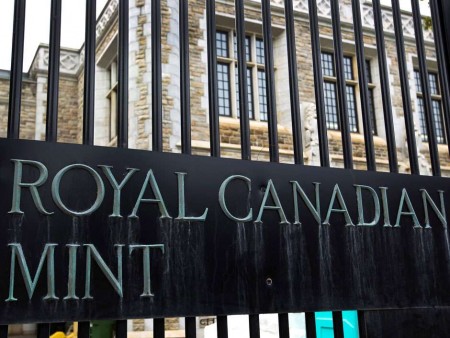
The test program, being conducted in Liberty Village, a downtown neighbourhood, involves local merchants who can accept payment using the app running on an iPad or iPhone. Inputting a transaction automatically generates a QR code which can be scanned to complete a purchase. nanoPay’s Chief Marketing Officer Simon Keogh states, “Liberty Village is perfect because it has sort of an isolated environment and offers a millennial population that can download and try MintChip.”
MintChip works just like BitCoin. It replaces cash and can store units of commonly accepted currency. It can convert any item with assigned value such as loyalty points into dollar equivalents expressed as MintChip currency.
Users store their MintChips in an e-wallet. Merchants accepting MintChips pay no transaction fees. It works the same as cash which means no debit or credit card fees. In peer-to-peer transactions buyers and sellers can move MintChips from one e-wallet to another also for free.
This fall MintChip plans wider distribution. But for now thirteen Liberty Village merchants and the residents living in the condos in the surrounding area are Canada’s guinea pigs. To get people using the cryptocurrency, MintChip, until July 29 will offer a 20% cash back bonus up to a maximum of $50.