This escalation of technological innovation has been accompanied by a demand for more and more energy. And because we have remained, largely dependent on polluting technologies for that energy, we have consequences, a warming atmosphere along with the existential threat that accompanies this phenomenon.
The elixir of technological innovation and the information it delivers at our very fingertips every day has proven to be a Pandora’s Box unleashing misinformation, rumour, hate, selfish malfeasance, and violence. Since when did access to knowledge produce so much havoc? Because that’s what appears to be happening.
By illustration, I read today about a 31-year old man who needs a heart transplant and won’t get a COVID-19 vaccination because he fears it will make his existing heart condition worse. He suffers from atrial fibrillation (a condition I share with him and one that was brought on by being infected with COVID-19 in April of 2020). In the young man’s case, it has obviously led to congestive heart failure and the need to put him on an external assist device to keep him alive.
When taken off the transplant list, the young man’s family began a crowdfunding campaign The hospital’s reasoning was that transplantable hearts were in short supply and without being protected from COVID-19 infection he would likely not survive post-operatively and a healthy heart would have been wasted. Described by his mother as “an informed patient,” I can’t help but wonder informed by whom, and from where? It would seem that being informed isn’t the same as being capable of discerning good from bad information.
Has no doctor explained that if he were to get COVID-19 it would likely attack his already damaged heart and more than likely kill him because this virus inherently finds our vulnerable spots where it can then do the most damage?
Has he not been advised that regardless of which vaccine he takes, an adenovirus-based delivery one or one of the mRNAs, he will have much greater protection from being a victim of the virus?
It is true that a very small percentage of young adults who have received vaccines have developed myocarditis, pericarditis, or rhythm disturbances. But these are conditions that can be managed and resolved with medication. And in his case, considering he is currently hooked up to a life-saving heart assist device, I would think vaccine management would involve intensive monitoring and follow-up.
It is harder to discern valid knowledge today living in a world awash with technology that makes us subject to receiving misinformation proffered as fact each day. As the above case illustrates, this young man has real fears being amplified by technobabble and the mumbo jumbo of “fact influencers” on the Internet these days.
A relevant piece written by Christine McDougall, of Syntropic World, an organization based out of Australia came across my inbox this morning. Why relevant? Because Syntropic World teaches people to build, design, and create new ways of doing things to leave the world a better place and helps them discern fact from fiction.
In her article Christine writes “few of us appreciate the power of the algorithm, few of us understand the degree to which we are all being manipulated.” From there she goes on to describe the erosion of trust in public and private institutions, the non-existence of integrity in so many of our leaders in government and business, and a media hijacked by algorithms that feed on fear and rage and deliver untruths. The end result is humanity is suffering from a growing inability to make sense of information, to discern what is malicious and false from what is virtuous and true.
The phrase “the arrogance of ignorance” is one she uses that is particularly apt today for much of what we see and read. It describes the state of political discourse here in Canada on this weekend in the midst of a truckers’ convoy and protest that has rolled across the country demanding the end of vaccine mandates and restrictions. It describes our American cousins’ Trump and post-Trumpian descent into willful ignorance led by spokespersons who certainly display arrogance while being downright ignorant about so much almost every time they open their mouths.
I am pulling for this young man to get a new heart and I hope he receives lifesaving advice from those with the knowledge to share to help him make the right decision. I speak of this from personal experience because my wife and I have a daughter born with a complex heart defect back in the early 1980s. This was well before the rise of the Internet putting both knowledge and misinformation at everyone’s fingertips.
For us to help our daughter survive (a less than 50/50 prospect in the first few years of her life) my wife and I turned to experts and became knowledge seekers and questioners. We kept a binder full of notes from every appointment. We sought and gathered the best books and articles available to learn about her condition, treatment, and potential outcomes. It was a rollercoaster ride of highs and lows, and crises averted.
We read journal articles and with the help of medical professionals parsed the jargon to become more knowledgeable and better decision-makers for our daughter. She survived and today is 37-years old, married, with a healthy daughter who will turn one in a week’s time.
My more recent personal experience is equally relevant. When I got COVID-19 in April 2020, it attacked the lining of my heart temporarily enlarging the upper left chamber where pulmonary veins interact with the muscle. Those veins were damaged by the virus leading to the beginning of changes to my heart rhythm and the onset of atrial fibrillation and other arrhythmias.
Three weeks before getting infected I had a full physical in preparation for upcoming knee replacement surgery. At the time I was told that my heart was healthy with no underlying medical conditions of concern. Then COVID-19 struck leading me to go to the hospital emergency where I was told that I was in danger of an imminent stroke and was now a heart patient.
There was no vaccine at the time to protect me, but today there is now, and more than one good option. So I would say to this young man, the certainty of the virus further damaging your heart is much greater than the likelihood of vaccination doing more damage to it than already is there. And I would say to his mom, please help your son find the real experts and not Internet-based influencers so that you together can separate the disinformation chaff from the knowledge wheat, and by doing so give him the best chance to survive.
]]>
In Part 1 we look at COVID-19 and how the virus has both devastated the nations of the world and at the same time accelerated development of a technological and scientific breakthrough known as mRNA. Messenger RNA, mRNA for short, represents what some biomedical experts call the cheapest fix ever invented to address so many chronic and often fatal diseases that inflict our species as well as others.
In an article appearing in the spring in the Penn Medicine News, a publication of The University of Pennsylvania (UPenn), Alex Gardner writes about how mRNA vaccines for COVID-19 are launching a paradigm shift in the treatment of influenza, and herpes with research at UPenn on each as well as work being done on future COVID variants and other coronaviruses.
Using mRNA technology to produce a seasonal version of the COVID-19 vaccine is in the works. Borrowing from what we have learned about the influenza virus and its seasonal mutations, scientists believe they should be able to predict mutational trends and conceive where the virus is going to create a vaccine each year, and even regional versions of the vaccine where a mutation is localized.
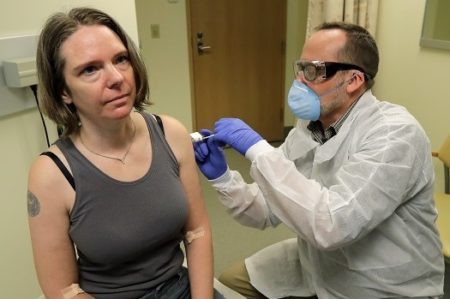
The transformational nature of RNA molecules and the ability to use them as a vaccine delivery mechanism has been researched for 27 years at UPenn. The current Pfizer-BionTech and Moderna mRNA vaccines owe their origins to research that started in 2005. The vaccines when injected instruct the body to make the definitive viral signature of COVID-19, a single spike protein that then triggers the body’s immune system to create specific antibodies that recognize the real virus immediately when present. But the beauty of the mRNA vaccine delivery mechanism is that the instructions can be changed to produce unique protein structures associated with other invaders whether viruses or microorganisms and as a result get the body to generate the antibodies to address each of them. And a single mRNA vaccine can be used to create several protein structures to help the body combat many invaders in one fell swoop.
mRNA vaccines are easy to construct. States Dr. Drew Weissman, a Professor of Infectious Diseases at the Perelman School of Medicine, UPenn, “mRNA vaccines are essentially plug-and-play. We believe you can change the part of the mRNA that encodes a protein, plugging in new code specific to the virus we hope to protect against, and cause one’s body to produce proteins that match that virus’ proteins. We do not have to develop and manufacture an entirely new formula.”
At UPenn, research to develop an mRNA vaccine to tackle herpes simplex virus 2 (HSV-2), a non-curable disease, is well underway. The vaccine identifies three HSV-2 proteins to create an antibody to stop the virus from entering cells, and two other antibodies to stop the virus from interfering with the immune system of the host. Human clinical trials are planned for 2022. The success of the HSV-2 mRNA vaccine will spur efforts to address other sexually transmitted diseases (STDs) using the technology.
Then there is influenza which evolves rapidly each year requiring scientists to scramble to identify which of the many viral flu strains is likely to have the greatest impact on human populations. Again, the beauty of mRNA technology is you can tick all the right boxes by delivering several different protein structures in a single vaccine. At UPenn, they have already started human influenza mRNA vaccine trials.
Elsewhere in scientific laboratories around the world, mRNA technology is being used to invent vaccines for Hepatitis A, B and C, Rubella, Measles, Rotavirus, HIB, HIV, HPV, Tetanus, Diphtheria, Chickenpox, Polio, Diphtheria, Pneumococcal pneumonia, Meningococcal Meningitis, Ebola, Pertussis, Malaria, Rabies, Zika, Chikungunya, and a range of cancers.
In its listing of breakthrough technologies for 2021, the MIT Technology Review states, “We got very lucky” that COVID-19 happened at a point in time where mRNA technology was arriving on the scene to transform medicine. The promise of this technology cannot be underestimated in the 21st century.
]]>
The influenza vaccine we formulate to deliver to millions of Canadians each fall gets developed in a six-month window and is based on changes to the viruses observed on the opposite side of the equator. So when Australia gets inundated with the flu, the latest version of the viral outbreak is broken down to develop a vaccine countermeasure which gets administered in the Northern Hemisphere before the advent and during flu season. And any changing characteristics experienced this side of the equator influence the flu vaccine subsequently administered Down Under before their season commences.
Other vaccines don’t go through such a quick process as does flu. In the case of COVID-19 (the acronym stands for coronavirus disease 2019) there is no immediate existing viral infection upon which to model a vaccine. The closest coronavirus kin are SARS-COVID-2, an outbreak in China that traveled overseas here to Toronto where it killed many in 2002, and MERS-COVID-12, a Middle-Eastern originating coronavirus that struck in 2012. In both SARS and MERS no specific vaccine has ever been developed which means, we have nothing in our global medicine chest upon which to base a preventive treatment.
Treatment for COVID-19 is approximating that which was put in place for SARS and MERS. The only difference is the overwhelming size of the COVID-19 outbreak compared to the previous coronavirus epidemics. It is the explosive growth in the number of infections that is overwhelming existing medical infrastructure. Hospitals and the worldwide medical community seem to have been caught unaware despite the fact that the initial outbreak in Wuhan, China, was very much in the news as early as December of 2019.
Right now the way organized medicine is fighting COVID-19 is to wait out those experiencing the worst symptoms by putting them on ventilators until the virus runs its course. At the same time, hospitals are turning to a stock of older drugs to try and see if any can ease a patient’s symptoms. Among these are:
Then there are some very recently announced approaches that include:
And finally, there is a race to develop the first vaccines from a number of different providers including:
In the title of this article, I suggested that COVID-19 could alter our approach to finding new treatments for novel diseases humanity encounters in the future. It would seem that necessity is driving us in this direction. Why?
Here are the latest coronavirus pandemic statistics as of 3:00 p.m. Eastern Daylight Savings Time, March 30, 2020:
Number of COVID-19 cases as of right now: 770, 165 compared to 86,604 on February 29th, one month ago (889% increase). What will it be a month from now? Over 6.8 million cases.
Number of those who have died: 36,938 compared to 2,977 on February 29th (1241% increase). What will this number be a month from now at this rate of growth? Over 458,000.
With these types of numbers, making haste in the testing of new therapies and trialing vaccine trials makes sense. The old clinical trial review processes may just not cut it in the face of the explosive growth potential of this pandemic.
]]>