The first winners, as well as finalists for each category, were onstage along with Prince William in the first week of the just concluded COP26 conference in Glasgow. The Prince described his Earthshot initiative as a plan “to galvanize and bring together the best minds, the best possible solutions, to determine and address some of the world’s greatest environmental challenges. We have to harness our ingenuity and our ability to invent. The next ten years are a critical decade for change. Time is of the essence, so we believe this ambitious global award is the only way forward.”
I will discuss the results of COP26 in a future posting but the above words seemed to largely be ignored by the gathering of political leaders in Glasgow over these last two weeks. But more on that later.
Let’s look at the winners of the five Earthshot categories.
Costa Rica, the small Central American nation no bigger than West Virginia, was recognized for its long-serving conservation model involving communities and citizens in protecting the country’s natural terrestrial and marine ecosystems. The initiative, Payment of Environmental Services (PSA), provides income to communities and citizens and goes back to 1997. The first dedicated conservation zones were established in 1963. Today the land-based conservation zones have grown to 10 and the country has reversed the deforestation of the previous century to the point that in 2020, forests covered 52.4% of its entire land-based territory.
The President of the country, Carlos Alvarado, described his reaction when he heard about the award.
“Today the country demonstrates once again to the world that we are pioneers in successfully developing conservation models on land…We will invest these resources in replicating and strengthening these models in marine conservation; We know that we must be diligent and act now to counteract the impacts of climate change, or the effects will be irreversible.”
Alvarado noted that 92% of the country’s territory is marine today with 2.7% of it protected. The money from the award will help initiate an equivalent marine ecosystem conservation model. Protected areas in Costa Rica today have become engines of economic development and a major draw for tourists. The plan now will be to extend the work to the country’s offshore environments. The marine conservation model will evaluate the ocean’s natural resources providing innovative programs in protected areas with payments similar to the land conservation initiative for marine ecosystems.
An Indian company, Takachar, which describes itself as a social enterprise, was the Earthshot winner in this category. Takachar has developed an inexpensive and portable device to attach to tractors to convert crop residue into sellable bioproducts like fuel and fertilizer. Currently, in India and other countries, much of this biomass is burned in the open each year contributing volatile particulate matter into the air.
Takachar’s technology makes it possible to eliminate more than 95% of smoke emissions from the common practice of burning crop and forest residue in the open. The Earthshot award should help the company to increase production of units of its portable system which uses a novel concept called oxygen-lean torrefaction, a type of pyrolysis that converts waste at relatively low temperatures, (typically between 200 and 320 Celsius) into a dry end product with no smoke emissions.
Takachar’s goal for 2030 is to mitigate up to 700 million tons of carbon dioxide (CO2) emissions annually while increasing income to rural communities by 40% through the creation of a market for torrefaction process end products.
The importance of this technology for India’s future cannot be underestimated just in looking at current events. In the last week, the open burning of biomass from waste and surrounding farmland has led to emergency measures being issued in Delhi and the National Capital Region of the country. Worsening pollution is producing high levels of particulate matter in the air (almost off the measurable scale) and a toxic white foam on the main river that flows through the city. The condition is expected to continue for several more weeks threatening the health of Delhi’s over 30 million inhabitants.
Coral reefs can be found throughout the world largely in shallow waters of our oceans and seas. They are home to almost 25% of the 500,000 marine animal species on the planet. Described as tropical oases, they are the equivalent of land-based tropical rainforests and today, they are in peril all over the world because of ocean acidification and warming. Current predictions indicate up to 90% of coral reefs could be gone by 2050.
To reverse this, Coral Vita, a Freeport, Grand Bahama company, was established to grow coral on land for replanting in degraded ocean reefs. Coral Vita’s methods grow coral as much as 50 times faster than other systems and processes with a single coral farm able to supply enough for a country’s offshore reef systems.
The farms are also proving to be an educational resource within the countries where they are established and an eco-tourism attraction. A single farm has the capacity to grow millions of resilient corals annually. With the money from the Earthshot award, combined with the company’s adopt-a-coral program, it should help to scale its growth enabling the creation of more coral farms in countries where threatened reef systems exist.
Back in 2015, I wrote the following:
‘We, humans, waste 1.3 billion tons of food every year. The loss amounts to 2 to 3% of global gross domestic product (GDP). It happens on a planet where one in nine of us is malnourished. And it contributes 3.3 billion tons of greenhouse gases (GHGs) to the atmosphere every year. That makes food waste the third largest emitter of GHGs after China and the United States.”
That’s what makes the program established by the city of Milan, Italy, an important first step in ending this human practice. Back in 2019, to address the problem of fresh food being thrown into landfills, Milan launched a food-waste recovery program aimed at halving the amount of discarded fresh food in the city by 2030.
It was the first program of its kind in the world and has become core to the city’s waste management program involving public companies, major retailers, supermarkets, restaurants, universities and private businesses.
The city currently operates three food-waste hubs responsible for collecting and redistributing fresh food. The current capacity for each hub is 130 tons per year or the equivalent of collecting and delivering 260,000 meals to those in the city in need. The Earthshot award should help Milan as it plans to open two additional waste-food hubs in the near future.
Christiana Figueres who I interviewed back in 2019 at a Collision conference, and who formerly headed up the United Nations on the climate change issue, is a native Costa Rican. She described her government’s introduction of a permanent ban on fossil fuel development and extraction legislation as a way “to remove the temptation….for there to be any current or future government who might think that returning to fossil fuels of the past century is actually a good idea.”
Costa Rica is by no means a fossil-fuel powerhouse. The country’s major source of electricity comes from hydro, geothermal, and wind renewable energy. So in some respect, this legislation is symbolic.
But could it become a template for other countries in helping to speed up the conversion of the global economy from fossil fuel dependence to a net-zero emission, low-carbon future? Figueres told Reuters “Just because Costa Rica is tiny, it doesn’t mean that we don’t have a voice.” The vote to enact the bill is expected in October.
Costa Rica is by no means the first country to take this step. In 2017, France was the first to announce a ban on oil production on its territory. This was largely symbolic as well because the country has very little oil and gas and imports 99% of the fossil fuels it uses. And the ban wasn’t immediate, with it to take effect in 2040.
In 2018, New Zealand announced an immediate end to future offshore oil and gas exploration. Stated Jacinda Ardern, the country’s Prime Minister, “We must take this step as part of our package of measures to tackle climate change.” Also in 2018, Belize pledged an immediate end to exploration and drilling for oil and natural gas on its land territory and surrounding waters. Belize is home to the second-largest barrier reef in the world and has feared offshore exploration would decimate its flora and fauna.
Denmark announced in 2020 that it was ending fossil fuel exploration in the North Sea immediately and ending extraction from its existing assets by 2050. The significance of this announcement cannot be underestimated since Denmark is the largest oil producer in the European Union. (Note: the UK and Norway are not EU members and produce more oil and natural gas than Denmark.) At the time of the announcement, the government cancelled an oil lease auction and described its decision as one that will “resonate around the world.”
In February 2021, Eire (Ireland), another EU member, approved a ban on new oil and natural gas exploration to take place immediately. Stated its Minister for the Environment, “By keeping fossil fuels in the ground we will incentivize the transition to renewable energy and put ourselves on a pathway to net-zero by 2050.”
In May 2021, Spain announced plans to end fossil fuel production by 2042. Its Prime Minister stated, “For the planet, for our future and for the next generations…from today, Spain has a climate law on which to build a green, sustainable, fair and prosperous future for all.”
And this July, Greenland, which operates with a high degree of autonomy from its parent country, Denmark, announced its plans to abandon oil exploration with the government making the following statement, “The Greenlandic government believes that the price of oil extraction is too high…This is based upon economic calculations, but considerations of the impact on climate and the environment also play a central role in the decision.” For Greenlanders, the willingness to strand both west and east coast seabed assets with more than 50 billion barrels of oil and trillions of cubic feet of natural gas is a statement in making the entire planet safer.
National governments aren’t the only ones focused on ending the fossil fuel industry. In 2020 I noted that the Bulletin of Atomic Scientists was in the process of drafting a non-proliferation treaty to end the exploration for and use of fossil fuels globally. The Fossil Fuel Non-Proliferation Treaty is a work in progress backed by 100 Nobel Prize laureates and the Dalai Lama who recently drafted an open letter calling on world leaders to begin the ordered transition to a net-zero emission world. Over 400 organizations along with the Bulletin have joined in this growing effort.
The non-proliferation treaty calls for a fossil fuel exit strategy with an orderly wind-down of these resources and a corollary build-up of renewable energy power generation. A report produced by the Institute for Sustainable Futures, University of Technology, Sydney, Australia provides some ammunition and guidance for the non-proliferation effort. It notes:
Even if fossil fuel expansion ended overnight, too many fossil fuels are already under production in existing coal mines and oil and gas wells to stay below the 1.5 Celsius threshold of the Paris Climate Agreement.
To keep warming below 1.5 Celsius requires there can be no more expansion in fossil fuel exploration and production, something the International Energy Agency (IEA) has fully endorsed.
There are more than enough renewable energy resources that can be scaled rapidly enough to meet energy demands on every continent to provide 100% renewable energy for the entire planet. With the cost of the technology for renewables continuing to drop and the technical potential improving and taking into account environmental safeguards, land constraints and technical feasibility, there is enough energy potential in solar and wind to power the world 50 times over.
Persisting with fossil fuel exploration and extraction locks the players and their supporters in the industry into investments that shortly will turn into stranded assets costing investors trillions of dollars.
In their open letter to the world in support of this treaty, the Nobel laureates make some interesting points. One of them is that the Paris Climate Agreement never mentions coal, oil or gas. This omission has given the fossil fuel industry continued license to develop new projects, and banks and insurers to keep underwriting and funding them. The non-proliferation treaty, therefore, needs to:
If you are interested in learning some more about what should be in this treaty, the journal, Climate Policy, in June of 2019, published an article entitled, “Towards a fossil fuel non-proliferation treaty.” It’s worth reading.
]]>Prior to going, I had read a Reuters report dated February 25, 2019, in which the president, Carlos Alvarado, announced an economy-wide plan to decarbonize the entire country by 2050. The initiative is being driven by the First Lady of the country, Claudia Dobles. An urban planner by profession, Dobles wants the focus of Costa Rica’s next green strides to be on transportation.

Having visited Costa Rica over the last four years, and having seen the state of transportation in the country I am convinced Dobles is right. The country can make great strides toward zero emissions if it can make improvements to its transportation infrastructure.
One way would be to wean Costa Ricans from their automobiles. They love their cars with the average age of a vehicle topping 17 years. Everywhere your drive there is traffic and little attention seems to be paid to the rules of the road. When we visited San Jose last year, at times the traffic was as congested as the streets of New York, Chicago, Los Angeles or Toronto during the daily commutes. Only in San Jose, with the majority of vehicles appearing to be pretty old, the fumes from cars, buses, and trucks, created a smoggy haze which we could view when we looked back on the city from a nearby volcanic peak.
As for mass transit, Costa Rica has both a bus and railway network. The latter today operates using diesel locomotives with limited coverage. The last significant railway company suspended operations in 1995.
The road network like the railway is seriously deficient. Stray from the Pan-American Highway and driving turns into a harrowing road adventure. Secondary and tertiary roads go from asphalt-topped, to gravel, to nothing. When we visited four years we traveled to a spectacular waterfall just a few kilometers from Liberia, the capital of Guanacaste province. A road of a mere couple of kilometers took a considerable amount of time to negotiate. It was more a field of boulders interspersed with clay, sand, and gravel. On another trip to the interior of the country just two years ago, our drive took us several hours to cover no more than 10 to 15 kilometers, leaving us exhausted as we attempted to avoid numerous road obstacles large and deep enough to break an axle or puncture a tire.
So not only does Costa Rica have to make infrastructure improvements to both its road and rail networks it also has to get its citizens to give up driving their pollution-spewing clunkers in exchange for electric vehicles (EVs) and mass transit alternatives. It also means building a fast charge network, all of which is an ambitious undertaking for this nation of 5 million people.
The initial amount of money needed to achieve these ambitious plans is pegged at $6.5 billion over the next 11 years according to a March 12, 2019 article in the New York Times. For a Developing World country as small and as poor as Costa Rica, is the plan too ambitious?
Today Costa Rica has weaned itself off the use of fossil fuels for power generation relying heavily on hydroelectric, wind and geothermal power. Solar and power from biomass remain in their infancy. In its efforts to be fully off fossil fuels for electricity the country is First World. Even the most remote and humble Costa Rican homes have electric lighting.
But now comes a much tougher next step. Dobles envisions a new transportation network with a fully electrified rail system, a biking infrastructure, and country-wide fast charge stations on all major roads. It will certainly take more than $6.5 billion to achieve the 2050 goal of being the first zero-carbon nation. And that means the government needs to get a buy-in from Costa Ricans who will be asked to pay higher value-added, property, and income taxes. In a country that is pretty loosey-goosey about enforcing its regulations and collecting taxes owed, and where tax avoidance is commonly practiced by its citizenry, it will mean a behaviour change for the entire nation.
One potential source of funding could come from abroad. Today forest conservancy in Costa Rica is partially funded by wealthy nations and companies who are offsetting their carbon emissions by purchasing carbon credits through the preservation and expansion of the country’s dry and tropical rainforests. But with a land mass no bigger than the state of West Virginia, there is only so much money to be made from afforestation, reforestation, and preservation.
For Dobles, Costa Rica’s First Lady, she hopes to show the world that even a small nation can provide global-sized answers and overcome the negativity and chaos that surrounds the climate change issue and what can be done to mitigate it.

As we drove to the airport in Liberia before departing, the winds were providing the evidence of change in the skies in front of us. Loose, dry soil blew across the highway. Palm trees bent over. And debris from sugar cane fields scattered on the roadways. In the three years we have been visiting the country we had seen nothing like this. And our guide and driver agreed. In his late 30s, he couldn’t recall conditions like this in his memory. And nor could other Ticos (what Costa Ricans call themselves) to whom we spoke. When we return to Costa Rica in 2019 we may see even more evidence of climate change, no longer creeping along, but rather accelerating in unforeseen ways.
Why is this happening?
According to the latest satellite observations change is accelerating. We may blow through the IPCC Paris target of containing the rise to less than 2 Celsius (3.6 Fahrenheit) far sooner than what our climate models of the last decade predicted. In fact, the odds are global mean temperatures will increase by as much as 4 to 6 Celsius (7.2 to 10.8 Fahrenheit) by 2100. Revised climate models fed by new real-time data are predicting our world will be 15% hotter than any previous estimates.
Researchers into climate change are refining existing models, narrowing the range of uncertainty to a point where today their predictions are a better reflection of the real world of climate. But even so, it appears that change is accelerating creating real-world extreme weather that the best models cannot predict. Just look at the rate of Arctic Ocean sea ice melt versus models and you can note the difference. The reality is outpacing the simulation. As one climate scientists recently stated, it’s no longer about predicting the future, it’s about explaining the extreme present.
So what happens if we see mean temperature rises of 4 to 6 Celsius?
Back in January, I wrote about what the difference between 1.5 and 2 Celsius would mean to global climate. It was huge with projections indicating an increase in planetwide aridity of 25% over the next half-century.
But a 4 Celsius rise would be far worse. In a recent World Bank report it describes the consequences:
In the World Bank report, it notes that a 4 Celsius rise would be a return to a period that followed the end of the last Ice Age. It states that unless the nations of the world seriously cut their carbon burning habits that we could see a 4 Celsius rise as early as the 2060s. It goes on to say that left unchecked the warming could increase a further 2 Celsius by the end of the century.
For the poorest regions of the Earth, this will be an unrecoverable condition. And where are these poorest regions? Largely in the tropics where extreme heat, wind, and other weather will become more the norm. Coping will be far more difficult under these extremes.
In the polar regions, absolute warming will be much higher than 4, 5 or 6 Celsius. Today with the world almost 1 Celsius degree warmer than it was in the pre-Industrial era of the mid-19th century, Arctic temperatures have risen between 3 and 5 times the global mean. So we likely can expect temperatures in places like northern Canada, the Scandinavian countries, Alaska, and Siberia, to rise by 10 Celsius or more.
And with warming will come sea level rise. It will vary regionally based on the shape of land masses, and the presence of coastal ocean currents. But it will be substantial particularly in tropical zones. In fact, the variability will be as much as 20% between the tropics and temperate ocean latitudes. The rise will be between 0.5 and 1 meter at 4 Celsius, and more if the thermometer gets closer to 6. That’s above the projections of a 1 to 2-meter rise expected by 2100 in the face of global warming of only 1.5 Celsius.
For my wife and I, these dire predictions have us traveling to Costa Rica annually while we can still appreciate what we have. I hope that world leaders end their temerity in addressing the carbon issue, educate the public to the threat we collectively face, and double down on moving away from burning fossil fuels to support our modern world. We have the means and technologies to end our carbon addiction. We need the will to do it.
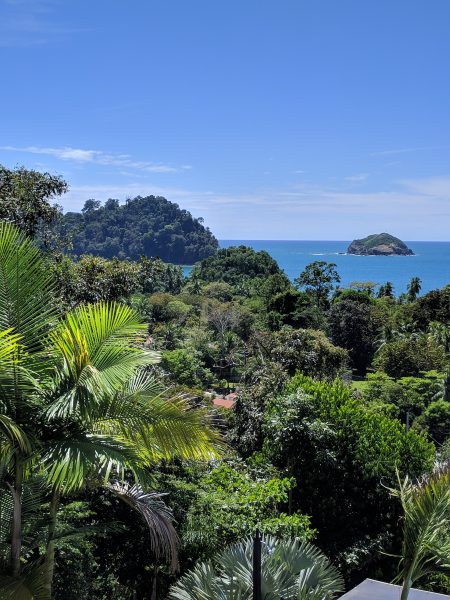

January 27, 2018 – My wife and I have been going to Costa Rica for the last two years and are about to return to that country next week. For lots of reason Costa Rica is a terrific place to visit, and may even be a place where we inevitably choose to spend much of our time in the future. The country ranks first on the Happy Planet Index (HPI) not because it is a wealthy nation, but because in measuring its population wellbeing, life expectancy, income inequality, and ecological footprint, Costa Rica comes out on top.
HPI, in future, may prove more important than GDP, the current way we measure national success. Purely economic, GDP tells governments very little about the wellbeing of citizens, how stressful their lives are, how it impacts jobs and family, and how ultimately measures whether people are happy or not. But in the age of anthropogenic climate change with extreme weather events, HPI may ultimately provide nations with a means to measure future success.
Until this generation, most of us felt our children would enjoy a better life than the one we have had. Not anymore. The most recent surveys in North America and Europe state the opposite. Our measure of success, GDP, is letting us down because it isn’t designed to measure inequality in wealth distribution, social disruption from extreme weather, geopolitical uncertainty from nuclear proliferation, cyberterrorism, and more. GDP is incompatible with our planetary limits because it is growth-oriented exclusively.
Getting back to why Costa Rica is number one when its GDP per capita is one-quarter that of richer nations in Europe and North America, has everything to do with balance. The country’s economy is built on tourism and agricultural exports. It has no army, abolished in 1949. It spends government raised funds on education, health, pensions, and preserving the environment. It invests more per capita in education and health than the United Kingdom. It protects its forests and generates 99% of its electricity from renewable sources. Costa Rica is likely to be the first country on the planet to become carbon neutral.
By no means are all Costa Ricans happy. There is still income inequality, and the environmental effort towards sustainability has a few warts. But Costa Ricans say hello and goodbye with the words “pura vida,” which translates to English as “pure life” or “good life.”
Costa Rica fascinates me for more than just its HPI. Although the country is wed to tourism and agriculture, it also is experimenting with a number of technological innovations that place it at the forefront of the 21st century.
Powering a Country without Carbon
A car trip across Costa Rica takes you to the central spine of the country where wind turbines sprout everywhere. Costa Rica has been harvesting wind now for several decades. It also has constructed a major hydroelectric facility in the north creating an artificial lake, the largest in the country, that serves as a source of irrigation water for much of the farmland in Guanacaste, the driest state in the country. Added to hydro and wind is geothermal energy. That same spiny ridge where wind turbines are in abundance features a series of volcanoes with geothermal energy potential.
Last year when we visited Rincon, one of Costa Rica’s many volcanoes, we saw evidence of the country’s investment in geothermal energy which is greater than countries like Iceland, and New Zealand, both known for this type of energy source. The challenge for the country is to ensure that its commitment to preserve its natural habitats does not get compromised by the build-out of geothermal plants, some of which are causing incursions into the country’s conservation zones. By 2025 Costa Rica plans to grow the number of geothermal plants to nine in total from the current six. This will make this West Virginia-sized country one of the top ten in the world in geothermal technology and capacity.
Geothermal, wind, hydroelectricity, and the beginning of an investment in solar may make the country the first negative emissions state.

Smart Agriculture and Biochar to Reduce Greenhouse Gases, Fertilizer and Pesticide Use
Which country or state is the largest producer of pineapples in the world? It’s not Hawaii. It’s Costa Rica. Pineapple is a pretty intensive crop to grow. Fertilizers, pesticides and machine use make producing these fruit carbon intensive. At the University of Costa Rica’s Environmental Pollution Research Centre (CICA), however, agricultural scientists are working with biochar from pineapple residue. Waste from pineapple harvesting amounts to 10 million tons every 18 months. The pineapple after-harvest residue is a source of greenhouse gas emissions and a breeding ground for insect pests that devastate local cattle.
Turning the pineapple residue into biochar seems like a good idea. It can replace fertilizer and sequester carbon at the same time. The scientists are studying the impact of introducing biochar into fields growing pineapple by using trace radioactive Carbon 14 (14C), the same carbon used to date archeological finds. The 14C will help establish the resiliency of carbon sequestration done this way.
Biochar application from pineapple residue can be used on pasture as well helping to offset greenhouse gas emissions from dairy and beef cattle. Researchers are directly gathering soil emissions data from farmers’ and ranchers’ fields. States Mohammad Zaman, a soil scientist, “This information arms policymakers with sufficient knowledge to make informed decisions about national and international carbon policies, which will ultimately determine the future of the planet.”

Contributing to Space Propulsion to Take Us to Mars and Beyond Faster
Costa Rican physicist, Franklin Chang Diaz, is the founder of Ad Astra Rocket Company, and the inventor of VASIMR, the Variable Specific Impulse Magnetoplasma Rocket. NASA calls this the engine that does matter. The meaning can be interpreted several ways. The engine converts matter into a plasma to create thrust. And the engine matters because if successful testing to be completed this year proves the technology is viable, it may become the way NASA moves satellites and humans around once they get into space. Ad Astra’s headquarters is in Liberia, Guanacaste, in the dry northwest of the country.
When Andy Weir wrote his book, “The Martian,” he featured VASIMR as a technology that would get humans to Mars. Chang Diaz is a graduate of MIT and an astronaut who has served on the International Space Station and the Space Shuttle over several decades.When he retired from NASA in 2005 to form Ad Astra with the goal of designing an engine that would reduce the time to get to Mars and other places in the Solar System much faster. VASIMR, claims Chang Diaz will get astronauts from Earth to Mars in 39 days versus 6 to 8 months by chemical propulsion.
VASIMR is a hybrid technology that requires a power source to heat the matter injected into it to create plasma. The hybrid options for a trip to Mars could be large solar panels or a small nuclear reactor. This year the plan is to demonstrate VASIMR in a 100-hour continuous operation generating 100-kilowatts. If successful with this prototype, this Costa Rican company will, in the very near future, be the engine of choice for exploring the Solar System.

According to Environment Canada, as reported in today’s Toronto Star, based on current federal, territorial and provincial government policies Canada will miss the target by as much as 270 megatons, 30% below what was promised through the country’s commitment in Paris. The TransMountain Pipeline and the completion of Keystone XL means a continuing commitment to oil sands economics. And other than a published framework and statements about additional future measures, nowhere in Canada’s policies on carbon emission reductions can one find concrete planning other than carbon taxes and cap and trade schemes. In other words letting the market drive emissions downward.
If the rest of the world thinks that the market can lead us to a low-carbon future without making a significant public investment in alternative energy and technologies that can accelerate reductions, then the COP21 agreement will be a fiction.
So what is happening elsewhere?
Since Paris, the nations of the world have met again in 2016 at COP22 in Marrakech, Morocco, for the purpose of beginning to implement the global effort to combat climate change. The event coincided with the U.S. federal election and an anti-climate change regime change in that country. At the time of the meeting, 141 of the 197 countries which had signed on in Paris had ratified the agreement. Since then more have ratified.
Post Marrakech the world’s nations agreed to a COP23 May 2017 meeting in Bonn, Germany. But as of yet, the nations of the world still have to figure out an accurate and consistent way to measure emission amounts among all signatories to the Paris Agreement. Also, still missing, is consistent reporting on national carbon emission reduction progress. When you look at the latest national submissions on carbon reduction, no new reports have been provided to the
When you look at the latest national submissions in the fallout from COP21, no new reports have been submitted to the United Nations Framework Convention on Climate Change (UNFCCC) that post-date 2015. In fact, most are from 2014 or earlier. And to-date only six countries have provided formal documents containing long-term strategies on carbon emission reductions and climate change adaptation and mitigation. We cannot be heartened too much by these six since two of them, the United States and Canada, for very different reasons, are already veering from achieving COP21 commitments. The remainder includes France, Benin, Mexico, and Germany. Benin, a small African country whose emissions per capita amount to 0.34 million metric tons per capita, (the U.S. figure is 19.78) has the capacity and commitment to submit a plan while much of the rest of the world is derelict.
The whole issue of commitment to carbon reductions is further exacerbated by the absence of climate change leadership from the United States. The latest from the new head of that country’s Environmental Protection Agency, an appointed skeptic and a man who in previous roles sued the agency which he now leads, describes carbon dioxide as not the problem. Of course, he is not a scientist.
But other countries are stepping up in the U.S. absence. The European Union, although beset by the Brexit brouhaha, and led by France and Germany, remains committed to carbon emission reductions. The EU, however, is off its reduction schedule in meeting targets set for 2020, 2025 and 2030. The United Kingdom, also, very much committed to an emission reduction strategy with hard dates for ending coal-based energy, is also distracted by formal Brexit negotiations which will start, as of today, right now.
China remains ahead of its scheduled emission reduction targets although the country coming in set very low expectations making it easy to exceed them. India, which appeared to be a reluctant climate change player, in recent weeks has announced pledges to lessen commitments to coal power in favour of renewable and nuclear energy. You can call the EU, UK, China and India commitment, the Merkel, May, Xi and Modi alliance, a much-needed antidote to Trump’s latest executive declaration aimed to kill carbon emission reduction milestones to supposedly, revive coal-belt jobs in states where the new President one the popular vote back in November.
Even Saudi Arabia, the key driver of OPEC and fossil fuel globally, has made a $50 billion clean power investment commitment for the next 6 years to begin reducing the country’s carbon footprint.
And little Fiji in the middle of the Pacific Ocean, plus members of the Asia-Pacific Parliamentary Forum, that includes South Korea and Indonesia, have committed themselves to not just ratify but implement carbon emission reduction policies.
For other global results refer to Results 2017, a publication of the European Climate Action Network, which looks at 58 countries and their activities on climate change since Paris COP21.
A country my wife and I recently visited, (see my posting of February 9), Costa Rica appears to be alone in achieving its 2030 COP21 commitments nine years ahead of schedule. By 2021, the country’s bicentennial, it will be carbon neutral.
In 2013, geothermal sources accounted for less than 8% of the country’s total electrical power generation capacity. But that 8% produced 15% of the total energy consumed by Costa Ricans.

Why the difference between capacity and actual power consumption? Geothermal, unlike solar and wind, represents baseload capacity because the source of the energy is the continuous heat lying underneath Costa Rica’s geologically active volcanoes.
At Rincon, we didn’t get to the main caldera (see image at the bottom of this posting) which would have required an all-day hike uphill and back. Instead my wife and I traveled along a 3 kilometer trail that wound through a variety of landscapes including lush rainforest and dry desert-like scenes. We visited fumaroles, boiling mud fields with mini-geysers, steaming water pots and a volcancito (Spanish for, tiny volcano), growing on the flanks of the larger active peak.

Water contacting the magma chamber under the mountain was producing megatons of steam, a perfect source for driving turbines connected to generators.
As we approached the hiking trail, large pipes snaked across the landscape. These conduits of power generation disturbed what was a pristine landscape, bearing a similarity to Yellowstone in the United States, but with added tropical and dry rain forests, and howler and spider monkeys.

Rincon is one of the volcanoes contributing to Las Pallas, a geothermal installation consisting of five power plants contributing as much as 41.5 Megawatts of energy for the country. The energy derived comes from seven production wells and four injection wells. The injection wells are used to feed water into the underground chamber of hot rock. The production wells channel the steam to the surface where they provide the energy to drive turbines attached to generators.
It seems obvious to me that geothermal would be a key component in Costa Rica’s efforts to become a renewable energy powerhouse. The country has 100 volcanoes with six currently active. Yet it has only begun to tap the potential that lies beneath.
Having said that Costa Rica, unlike most countries in the world, pretty much generates all of its energy needs from renewable sources today including hydro and wind.
Do you need volcanoes to exploit geothermal energy capacity?
No. Back in October of last year, I wrote about the plume geothermal capacity of the United States. No volcanoes involved. Yet the U.S. continues to develop its geothermal potential at a snail’s pace.
In 2016 the global operating capacity of geothermal was spread across 24 countries and amounted to 13.3 Gigawatts. This year will add 12.5 Gigawatts covering 82 countries. And future estimates indicate an additional 18.4 Gigawatts to be added by 2021. By 2030 geothermal is expected to contribute 32 Gigawatts of power globally. This represents a 500% increase in geothermal capacity from 2014 but only 6 to 7% of the current global potential.
32 Gigawatts, when compared to solar growth is a mere fraction. In just one year solar capacity grows by that amount. And when compared to total energy consumed by humanity, over 104 Terrawatts, geothermal is a mere drop in the bucket.

States Esteban Vega, National Coordinator of Pharmaceutical Services, “we’re talking about patients that need to travel for hours in difficult conditions to reach medical care.” Currently the only way to get drugs to patients is to use all-terrain vehicles (ATVs). Having driven Costa Rican roads recently I can fully appreciate the challenge faced by the country in getting medicine to remote communities. The terrain is rugged and many roads after rains become rutted and filled with potholes. This is particularly true in western Talamanca, a very mountainous area of the country where CCSS will test the technology.
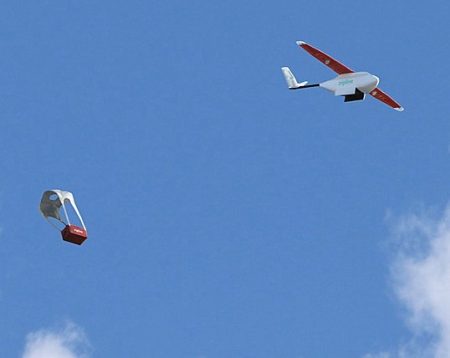
The company providing the service is called Zipline. The name is entirely appropriate for a country where ziplining through mountain and tropical wet and dry rainforest is a huge tourist draw. Zipline has developed a small robot airplane capable of carrying vaccines, medicine or blood. A fleet of these planes, called Zips can provide delivery of small mass, high value goods like medications to large population areas where roads are not always passable. The Zips weigh about 10 kilograms (22 pounds) and travel at speeds of 100 kilometers per hour. They drop their supplies by parachute at prescribed locations, usually an open field where sight lines ensure an accurate drop.
Zipline began working with the government of Rwanda this year delivering blood products to 20 hospitals. It has been a very successful program in that African country. Now Costa Rica is following suit hoping in this pilot project to deliver 13,200 medical packages to doctors located in these isolated communities where they can then dispense the medications to their patients. Total cost of the project is estimated at $26,000 U.S.
]]>In a study appearing in Energy & Environmental Science this last spring, researchers at Stanford University and U.C. Berkeley, analyzed how the country could convert energy production, transportation and industry to 80% renewable power by 2030 and 100% by 2050. In the transition net energy demand would be reduced nearly 40% through efficiency built into the distribution of electricity.
The study states that the energy capacity mix needed for 2050 would come from the following sources:

There would be a significant increase in storage capacity to ensure peak demand and power grid stability. Storage would be integrated within renewable energy facilities.
The conversion from a predominantly fossil-fuel energy mix would produce 3.9 million 40-year construction jobs, and 2 million 40-year operations jobs, outweighing the 3.9 million jobs eliminated by the closing of fossil-fuel and other current energy power plants.
There is no reference in the study to the continued use of nuclear power, or thermal coal with carbon capture, natural gas, and solid biomass. The exclusion of nuclear is interesting because the development of fusion and hybrid fission-fusion power is ongoing in the United States and China, as is the development of thorium-fueled fission reactors. The exclusion of thermal coal, natural gas and biomass, however, does makes sense because the combustion processes in these types of energy sources would still contribute air pollution and life-cycle carbon emissions from them would be highly uncertain.
The conversion to 100% renewable energy will eliminate an average 62,000 premature deaths today that occur annually and are linked to air pollution.
In terms of global warming costs, the elimination of U.S. emissions would mean an overall savings in mitigation and adaptation of approximately $3.3 trillion per year by 2050.
The average American by 2050 will save $260 per year in energy costs and $1,500 per year in health and global climate costs.
The study comes with a road map on how to get to the 100% renewable target for all 50 U.S. states. The roadmaps are based on current ones developed by the states of New York and California.
Extensive tables calculate the energy capacity for all renewable sources state-by-state. For example, the total calculation of wind onshore and offshore capacity before transmission, distribution and energy losses equals 67.8% of anticipated total U.S. energy requirements in 2050. That’s 17.8% higher than the calculated wind-turbine power forecasted as doable by 2050.
In calculating solar power the report studies sun angle, day-night distribution, and cloud coverage across all 50 states projecting residential rooftop capacity alone to equal 660 Gigawatts. By 2050 based on this study only 57% of the total solar potential would be installed.
Some interesting numbers to compare solar capacity with current sources of electricity production. In 2010 conventional hydroelectric capacity amounted to 78 Gigawatts not including power imported from foreign sources (Canada).
Tidal and wave energy generation by 2050 is projected to equal approximately 56.6 Gigawatts. That represents less than half the total capacity which has been calculated at 135.8 Gigawatts just for wave energy alone.
Necessary to make this all work is a revamping of the power grid and the development of a range of storage technologies from battery to pumped storage (air and water) and the use of soil and water as heat sinks.
Achieving 100% energy from renewables biggest benefit will be the health of the population of the country. The estimated cost savings will equal 3.6% of the 2014 U.S. gross domestic product. The investment payback from the conversion in air pollution costs alone is calculated at 20 years.
In calculating the social costs of carbon dioxide from power generation the study uses data on projected global warming damage including these specific categories:
The timetable for the conversion begins with the following:
During the transition the study recognizes that conventional fossil fuels will remain in use.
The study includes policy options including incentive structures to cover in priority sequence:
Every state governor and legislature can derive guidance within this paper’s 132 pages. The big question is will they?
And what applies to the United States can be a good starting point for other countries in converting to a zero-carbon future within the 2050 time frame.

Although poor, with an average annual income of $6,810 U.S., the country does have some natural advantages to let it achieve almost carbon-free power generation. Its geography is mountainous. It gets significant rainfall which means lots of rivers and vertical drops. And it has a vast geothermal well of capacity with a series of volcanoes running down the centre spine of the nation. That means lots of natural power generation latent capacity. Now add a high sunshine per square meter capacity and you have a recipe for renewable self-sufficiency.
The country’s goal is to be carbon neutral by 2021. It already has set aside 25% of its forest canopy as a permanent eco-preserve. Its government has a 115-year history of green energy investment, largely hydroelectricity, and since the 1990s it has been one of the most active contributors to making the world aware of climate change and its implications. Its Environmental Services Payment program is a leading market mechanism for forest conservation. Today the country boasts 52.4% forest coverage. That’s more than an 800 million ton carbon sink of which 52% is contained underground, and a significant bank of carbon credits that high carbon emitting nations and industries can purchase. Its forests are also a primary eco-tourism attraction.

The country has included in its plans an Adaptation to Climate Change component. It intends to have a full road map in place by 2018 which will include strengthening conservation programs, and expanding Environmental Services Payment to include ecosystem-based adaptation, further development of agro-forestry, watershed management, a commitment to more renewable energy development, enhanced food security, and improvements to infrastructure to deal with rising sea levels and extreme weather events. Education and citizen participation are planks in the adaptation strategy.
The focus on driving down emissions is aimed at the following industry segments: transportation, solid waste management, energy production and agriculture. Sector by sector dialogues have brought together the country’s key stakeholders to come up with a game plan. In transportation this includes construction of a nationwide network of electrified rail to connect the nation’s cities and towns. In energy the goal is to phase out the last fossil fuel sources for producing electricity. As of the fall of 2015 this represents less than 2% of the country’s energy generating capacity and mostly serves as a backup to renewables. In agriculture the country is looking at providing financing mitigation efforts with payment rewards, carbon auctions and micro credits. A national low carbon livestock strategy is being applied to both the beef and dairy industry with a number of pilot programs designed to reduce greenhouse gas emissions. Solid waste is Costa Rica’s third largest emissions source and therefore the target of a low emission urban strategy focused on improving transportation, management and achieving sustainability through recycling, organic composting and other forms of waste segregation.
Costa Rica has been measuring the impact of climate change on the country. Extreme rain and drought has resulted in growing economic losses. In 2011 these amounted to $1.3 billion U.S. over the previous six years, impacting roads, power distribution, agriculture and housing. Trend analysis suggests that by 2030 losses will grow to $7 billion and by 2050, $30 billion. The rural poor will be the most vulnerable. This is one of the principle reasons for developing a National Adaptation Plan. with ten priorities:
If the past 30 years are a measure of what Costa Rica can do in the future, the country should remain the model for others seeking a sustainable low-carbon future. The best example is how Costa Rica turned around rampant deforestation over those past 30 years with coverage growing from 26% to 54.4% in 2013. Costa Rica’s forest coverage goal by 2030 is 60%.

]]>


