I am far from alone in having to go through this cycle of repeat testing. Colorectal cancer (CRC) is the third most common cancer in humans. As our global population ages CRC is expected to increase by 60% to 2.2 million new cases annually by 2030, and 1.1 million deaths.
Yet CRC which occurs in men and women more often after age 50 is preventable through regular screening which can find pre-cancerous polyps and remove them before they become cancer.
And since CRC is asymptomatic in its early stages, without screening you may never know you already have it.
Is a colonoscopy the only screening method to detect CRC?
There are other means by which CRC can be detected. These include:
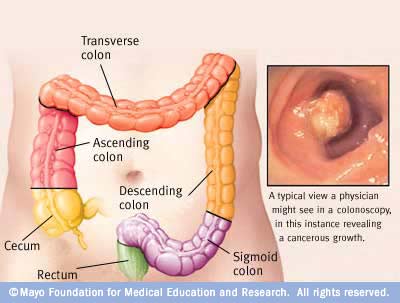
But the gold standard remains the colonoscopy which involves inserting through the rectum and into the large intestine, a flexible tube called a colonoscope. The tube contains a video camera and light, and instrument port to allow the colonoscopist to use a tool for excising and sampling suspect tissue. Images are viewed on an external monitor.
Making colonoscopies smarter
Finding pre-cancerous polyps, called adenomas, and literally nipping them in the bud is today the best way to stop CRC before it starts. But colonoscopies don’t catch every adenoma. In fact, the rate of detection varies from 7 to 53% based on the skills of the colonoscopist. The best in the business may get to 80% detection rates during and in post-procedural review.
Increasing detection by 1% is a big deal because it reduces the risk of CRC by 3 to 6% within 5 years of having a colonoscopy. That’s why the researchers at UC Irvine are applying artificial intelligence (AI) algorithms to see if they can increase adenoma detection rates and eventually have the tool identify cancerous ones on the fly.
Dr. William E. Karnes is the team leader in the research. He is working with UC Irvine Health, and AI specialists at DocBot, a university AI spinoff. So far the algorithms developed by DocBot are encouraging, finding far more adenomas than the best of UC Irvine’s high-risk colon cancer colonoscopists. Karnes describes the first results, applying the tool to review video feeds from past colonoscopies.
“We had them [the colonoscopists] mark every polyp they saw. On first review, they found about 20% more polyps than the original colonoscopist had removed. Then they viewed it with an AI overlay; AI found all the polyps they had discovered, plus about 20% more.”
And the AI tool processes 98 images per second, four times faster than the live video feed from a colonoscopy procedure. But now comes the important next step: starting to use the tool during live colonoscopies to see, if in real-time, it can increase rates of polyp detection and provide warnings to the colonoscopists during the procedure.
What Karnes hopes will be the final product is a tool that will not only identify adenomas but also detect whether they are benign or cancerous in real time. That could increase detection rates to a point where virtually no adenoma gets are missed and CRC is caught at its earliest stages before it can progress.
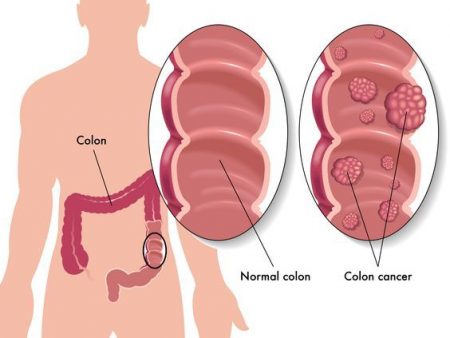
If you have ever gone through a colonoscopy prep it is a couple of days of “living hell.” But nonetheless having the examination with all of its attendant discomfort is far better than the alternative, dying of colorectal cancer. And yet most people living in North America choose not to get screened despite some dramatic mortality statistics associated with the disease.
But because traditional screening involves a colonoscopy the majority of Americans and Canadians over age 50 choose not to be screened. Now consider places in the world where the technology and infrastructure to do colonoscopies is non-existent and you have a populations at extreme risk to this form of cancer.
That’s why researchers seeking ways to screen for polyps are trying to find less invasive methods that are more portable and ubiquitous. Among those leading in this effort is Rochester, Minnesota’s Mayo Clinic. Our family visited the Mayo Clinic a number of years ago seeking answers for my daughter’s congenital heart life challenges. The week we spent there changed our lives and today my daughter is 31 and doing well. So when the Mayo comes up with a new test or technology I listen.
For colorectal cancer the Mayo has developed a screening test called Cologuard. It is a kit that can be mailed to your home. It provides instructions for collecting a small stool sample which then gets mailed back for screening. Results are returned within a couple of weeks.
This multimarker screening test detects traces of blood within the intestinal tract as well as DNA alterations to cells in the lining of the colon. There is no prep required, just a stool sample. The results are highly accurate detecting precancerous polyps and early-stage colorectal cancer. The latter detection is really important because Stage 1 5-year survival rates for colorectal cancer are between 87 and 92%.
A Cologuard test doesn’t replace a colonoscopy. If the test comes back positive then prepare yourself for the colonoscopy prep. But a negative result will give you some peace of mind. Cologuard has yet to be used enough for multiple testing staged over years. But in a 10,000 patient clinical study the screening found 92% of colon cancers and 69% of high-risk precancerous polyps. False positives occurred in 13%.
Today Cologuard is approved by the U.S. Food and Drug Administration and also available in the United Kingdom. It’s not in Canada as of yet but should be.
In the absence of Cologuard the recommendations for those at average risk are as follows:
And don’t be fooled. Early stage colorectal cancer is often asymptomatic so screening may be the only way to find out if you are safe. This is one cancer that all of us can prevent through colonoscopy screening and now it appears using a simple mailed-in stool sample.
]]>