Twenty-seven years later we now know that what Fleischmann and Pons were observing was some kind of nuclear reaction but certainly not fusion. Why do we know this? Because isotopic shifts have been observed in room temperature experiments conducted at many other places, many with very prestigious credentials. Los Alamos National Laboratory, Lawrence Livermore National Laboratory and the Naval Research Laboratory have all conducted experiments roughly akin to Fleischmann and Pons. At Bhabha Atomic Research Center (BARC) in India, researchers noted the phenomenon occurring in tritium.
What appears to not be fusion, but rather a neutron-induced reaction, has now been observed in many labs. The moniker LENR standing for low-energy nuclear reactions seems apt. Fusion is not what is happening. Rather the ambient room temperature chemical reaction being observed appears to be caused by weak interactions of ultra-low-momentum neutrons and neutron-capture processes. This is equivalent to the transmutation of elements something once thought of as being an alchemist’s wizardry rather than science.
Anomalous heat detected in E-Cat devices built by Andrea Rossi, the name most associated with cold fusion other than the original experimenters, may have a non-cold fusion explanation. And the reason that no commercial product has ever been shipped despite imminent promises of delivery has more to do with the fact that the anomalous heat generated is not always consistent, at least not enough to be a reliable new energy generating source.
States David Nagel, formerly with the Naval Research Laboratory and currently on the faculty of Electrical and Computer Engineering Department at George Washington University, “LENR is real experimentally, and not understood theoretically…..here are results that you just can’t explain away. Whether it’s cold fusion, low-energy nuclear reactions, or something else—the names are all over the place—we still don’t know. But there’s no doubt that you can trigger nuclear reactions using chemical energy.”
Nagel calls LENR “lattice-enabled nuclear reactions.” One thing for sure, this is new science.

]]>
I have described the pursuit of cold fusion in the past as an unsuccessful adventure into alchemy, the transmutation of elements that was pursued in Medieval times. I have commented frequently on the lack of independent verification of the energy output of cold fusion devices, particularly those promoted by Andrea Rossi, the Italian inventor of the E-Cat seen in the picture below.

Rossi’s behavior has been secretive. On numerous occasions his E-Cat reactor when demonstrated has been hidden in a black box. His justification, a fear of losing his competitive advantage. Tests run with his device have produced anomalous heat but sufficient and consistent enough for commercial application? Not necessarily. When Rossi has applied for patents in Europe and the United States, his applications have been rejected. Announcements of commercial agreements have been made and about imminent product shipments of E-Cats capable of replacing home furnaces and the like. But no commercial E-Cat has ever been shipped. You can read some of the past history on this blog site by typing “cold fusion” in the search window.
This latest paper, however, sheds new light on cold fusion and although I remain a skeptic, should reignite the conversation and controversy. The testers included participants from Bologna University (who have been involved in past demonstrations of the E-Cat), Uppsala University and the Royal Institute of Technology in Stockholm.
In this test of an E-Cat containing “hydrogen-loaded nickel power plus some additives, mainly lithium” and conducted over 32 days beginning in March of this year, the reactor ran at temperatures between 1,260 and 1,400 Celsius (2,300 and 2,552 Fahrenheit) degrees. The measured energy input to output yielded a COP factor of between 3.13 and 3.74. If you are unfamiliar with COP, it stands for coefficient of performance, comparing the amount of power input to output. Compare the E-Cat results to conventional air conditioning and heat pump systems which yield COP values of between 2 and 4 and have theoretical efficiency of up to 32.9 based on maximum ranges in temperature between outside and inside air. At the COP ranges produced the E-Cat results lie within a reasonable range of output performance related to energy input. Over the full 32 days of testing the E-Cat generated about 1.5 Megawatt hours of electricity.
The researchers noted that the E-Cat they tested in this experiment appeared “quite different from the ones used in the tests held in past years.” You can see below a picture of it being weighed by the researchers.

The graph below provides a plot of the net power output of the E-Cat through a 32-day time span with each segment representing a 2-day period. Net power is the difference between total watts produced versus watts consumed to generate output. As you can see E-Cat output varies but this can be explained by power consumption throughout the test which follows a similar curve, i.e., when the E-Cat temperature was raised. COP results are also consistent with power input increases. The more power in, the higher the COP ratio, with the highest results occurring in the last few days of the test period.
The researchers note that the COP values obtained only “refer to the performance of the reactor running at the capacity selected by us, not at its maximum potential” They continue stating, “we do not know what the limits of the current technology are, in terms of performance and life span of the charges.”
The researchers did a fuel analysis looking at the powder and concluded the “large amount of heat is…way beyond what can be expected from chemical burning.” They could not reject the notion that some form of fusion reaction was happening within the reactor but no radiation was detected.
Which brings us to an analysis of the fuel containing nickel powder containing hydrogen and combined with lithium, aluminum, iron, carbon and oxygen. In their analysis they found the quantities of these elements varied from grain to grain within the powder. That may speak to a lack of uniform mixing of the fuel in the production process.
Further analysis of the fuel after the test noted a depletion in lithium and changes to nickel composition. The conclusion, a nuclear reaction had taken place. The researchers stated it was very hard to comprehend how a fusion process could take place at the low levels of energy involved in the E-Cat’s operations, but nevertheless observed an isotope shift in both lithium and nickel.
One caveat in their conclusions. They could analyze the fuel but lacked detailed information on “the internal components of the reactor, and of the methods by which the reaction is primed.”
In summation the report states:
“The performance of the E-Cat reactor is remarkable. We have a device giving heat energy compatible with nuclear transformations, but it operates at low energy and gives neither nuclear radioactive waste nor emits radiation. From basic general knowledge in nuclear physics this should not be possible. Nevertheless we have to relate to the fact that the experimental results from our test show heat production beyond chemical burning, and that the E-Cat fuel undergoes nuclear transformations. It is certainly most unsatisfying that these results so far have no convincing theoretical explanation, but the experimental results cannot be dismissed or ignored just because of lack of theoretical understanding.”
So there you have it. What should happen next? Many more independent studies akin to this one I would think. The corroboration of similar results. And a drill down on the internal components of the reactor and the priming system to ensure a better understanding of its workings. Such testing using rigorous scientific protocols should validate Rossi’s invention. And then maybe we will finally have a commercially viable working E-Cat.
In any event, the cold fusion pot got warmer with the release of this report.
JT Vaughn, the manager of Industrial Heat stated when asked about the acquisition, “The world needs a new, clean and efficient energy source. Such a technology would raise the standard of living in developing countries and reduce the environmental impact of producing energy.”
Vaughn cited two multi-day tests by European scientists as evidence that Rossi’s E-Cat device actually works. In two tests, one in December 2012 and another in March 2013 independent researchers investigated E-Cat technology at Rossi’s own lab (see image of the testing below). The investigators charged reactor tubes with hydrogen, nickel powder and some other additives. The E-Cat required 360 Watts of power input per hour. Energy output was measured by calculating the thermal output which was determined to be equivalent to 2,034 Watts in the December test and even higher in the subsequent test in March. For December the power output to input ratio was 5.65:1.

The authors of the study have concluded that E-Cat energy output is a “magnitude greater than conventional energy sources.” So that led me to ask what are conventional energy source ratios or EROIs?
Data from different sources has given me a range of figures which I am sharing here with you:
Based on this data I question the statement made by the E-Cat testers.
Nevertheless Vaughn’s company intends to support the cold fusion technology and has started preparing patent applications for submission, something that Rossi was unsuccessful at doing in the past.
Vaughn is the founder of Cherokee McDonough Challenge, an environmental start up incubator working out of the Research Triangle Park area. And Industrial Heat has found private equity investors focused on environmental plays who see a future for E-Cat.
As I have often stated about cold fusion technology – there continues to be more talk than substance. I will be most interested to see if Industrial Heat can successfully commercialize Rossi’s invention and prove that my many doubts were unfounded. Apparently Chinese officials have expressed interest in E-Cat but have yet to make an investment. I guess like me they are waiting for further proof.

The number of viewers has almost doubled since this morning with over 900 now watching. Lots of people have been commenting during the live demo. Some have been people who have read my blog postings on cold fusion.
This part of the demonstration is not as painfully slow as the earlier demo using argon. But I agree with many who are posting in the chat session that there is nothing here that could be called an independent test of the technology being demonstrated.
At around 20 minutes after introducing the hydrogen and heating up the reactor to 179 Celsius the LENR readings display energy outputs exceeding inputs. In the screen below you can see that with 2 kilowatts of energy input, consisting of heat and high voltage, the reactor generates more than 4.8 kilowatts of output, a ratio of 2.4:1.

As the test progresses the ratios eventually exceed 3:1 energy output to input. The values constantly vary but as the reactor stabilizes it seems to get better output. There is no doubt in my mind that something is cooking inside the Defkalion LENR. But what?

I don’t know how this demonstration proves a nuclear or other type of interaction to explain the excess heat. And I think it has to be said that a demonstration is far from being an independent test, for as much as the moderator can claim “transparency” and invite a journalist to nose around there is no independent way to verify that the data screens we are seeing aren’t doctored in some way. That’s why, as I have stated in the past, an independent test by a neutral and recognized third party is the best way to validate Defkalion’s claims without revealing their trade secrets.
For those of you who missed the live demonstration you can view it on the Livestream site.
]]>
In the first demonstration the reactor is primed with argon, an inert gas. In the second demonstration the reactor will be primed using hydrogen. I have been watching the argon testing so far and as I said before, there is nothing terribly exciting about watching this in real time.
The narrator has stated to the viewers who are watching the live demo that we will not see a net energy output gain from argon but will see one when hydrogen is injected into the reactor.
Defkalion could learn a thing or two about marketing when doing a demo. If you had wanted to create a buzz in the room I would have started with the hydrogen to show net energy gain from the reactor and then used the argon control to show the difference. But maybe by doing it this way they want to demonstrate scientific rigor.
It will be interesting to see the results from the hydrogen. I’ll keep watching.

]]>
I was told by another reader “if you think that the production of U238 fission products by transmutation in a LENR (low energy nuclear reactor) reaction is not nuclear, then you are in the wrong line of work…please educate yourself.” I’m all for educating myself so I looked up one of the terms introduced by this particular commenter – nanoplasmonics, (see image below) which I found out is the study of optical phenomena at a nanoscale. Nanoplasmonics concerns plasmons described as entities that “lurk on and below the surface of metals.” I must admit this was an entirely new subject for me and I wondered what it had to do with cold fusion and the presence of observed anomalous heat generation.

I was given a link by this same reader to a paper. Here is the link for all who are interested. In the article it states that “recent theoretical work shows the capability of laser radiation to directly excite nuclear levels of energy.” The technology described uses lasers to initiate nuclear reactions in nanoparticles suspended in liquid. This leads to nuclear decay. This phenomena is what my reader was referring to when he commented on my denial of transmutation as being anything more than alchemy. The paper goes on to state:
“If the results from works on “cold fusion” raised (and still raise) certain doubts due to their irreproducibility in different laboratories, experimental evidence on the possibility of the transmutation of various nuclei upon the laser excitation of nanoparticles and electro-explosions of metallic electrodes in aqueous solutions of salts of unstable isotopes are well reproducible. These results confirm the possibility of initiation of nuclear transformations in cold plasma.”
I won’t quarrel with the prose although it is quite a mouthful. The paper, however, goes on to describe experiments using lasers to irradiate different nanoparticles in cold suspensions and concludes that in fact transmutation is observed with the synthesis of tritium from deuterium oxide (heavy water).
Here, however, is where I have some problems. The paper is undated. In my attempts to find if it had been published anywhere I came up empty. That included doing Google searches, a search on the CERN pub site and on other journal article aggregation sites. So for the moment all I can conclude is that I have been given a document that may or may not have been peer reviewed, and may be on to something or not. But I am sure I will hear more from this reader who did ask me to educate myself and so I have lived up to the request.
Another reader also questioned my intelligence and knowledge and pointed me to the work being conducted by Defkalion, a company that has been associated with Andrea Rossi and has sought funding from the Greek government in the past. I find it funny that anyone would seek funding from a government that has itself sought a bailout from the European Union, but that’s another subject.
So what does Defkalion add to solving the mystery of cold fusion? Here is what one reader sent me although I found no reference to it on Defkalion’s web pages:
“There will be an official announcement of this technology during ICCF 18 (International Conference Cold Fusion 18) at the University of Missouri (USA). For those interested you can see this webcast of all phases of the experiment , ignition, performance and switching off. Two independent scientists and two science journalists at international level will participate in this broadcast, as well as a member of the Cicap. ”
This announcement was purported to come directly from the CEO of Defkalion, Franco Cappiello.
Another reader had things to say about Defkalion that were less than kind but I will let you find their comments in the postings. To me Defkalion remains a quandary. I have viewed presentations they have posted in which they describe observed transmutations from vulcanism and high-voltage accidents with the implication that, therefore, LENR is real. But I have yet to see or read about any of the supposed companies that are partnering with them to rollout OEM versions of the Hyperion (seen below), a commercial LENR product that has been promised on several occasions.

For those of you seeking answers to the mystery of cold fusion and the anomalous heat observations I would recommend you either attend the upcoming ICCF-18 Conference at the Columbia, Missouri campus of University of Missouri taking place next week (July 21-27) or research the presenters and get access to the papers they submit.
I will leave you with a quote from the document ascribed to the keynote speaker who is presenting at the conference.
It is certainly not nuclear fusion as we understand it because the transmutation of elements as described by those who purport to have developed cold fusion reactors defies the laws of physics. Once the quest of medieval alchemists, transmutation of the elements sought a way to convert dross metals like lead and turn them into gold. Well it didn’t work then and it doesn’t work today, that is, unless you compress two chemical elements with such force that they fuse to create a new element and emit elementary particles, gamma rays and a ton of heat. But that is not cold fusion. That’s what processes in the Sun do, and what a tokamak reactor does. And that’s the force behind hydrogen bombs.
But nothing to date quite explains the anomalous excess heat that appears to be the outcome of the chemistry that goes on in low-energy nuclear reactors or LEN-Rs, the newer term for what Pons and Fleischmann initially called cold fusion. When they first announced they had discovered anomalous heat in their experiment they were using deuterium (heavy water) and palladium. The interaction between these two was reported by them to be fusion although they found no evidence of fusion having actually occurred. There were no elementary particles discharged. And certainly no transmutation of deuterium to another element. What they observed was anomalous heat.
But if fusion were occurring what would it look like? Two deuterium atoms fusing together could become Tritium, Helium 3 or Helium 4. In all three cases elementary particles and gamma rays would be byproducts. But Pons and Fleischmann never detected any of these three elements, nor the elementary particles, just anomalous heat.

That takes us to Andrea Rossi, who I have written about on several occasions in the past. He is the developer of the E-Cat which he describes as a low energy nuclear reactor or LEN-R. He claims that in combining powdered nickel and hydrogen and introducing a secret catalyst that the output is transmutation to copper with anomalous heat as the byproduct.
Rossi is seen by many to be a fraud. Recent tests of his E-Cat however indicated net power output six times greater than input. How could that be? Well one thing we don’t know about Rossi’s device is what’s under the covers. He calls it a catalyst and has declared it an industrial trade secret. When he has attempted to file patents for the device, however, they have been rejected. And the recent independent testing that has verified anomalous heat output did not get a peak inside to see what physically is happening. Not only that the testers reported “that the device was already in operation when the trial began,” that observation cameras and sensors were placed by Rossi and not the independent team, and that elements introduced into the device were not weighed prior to the test. Does this suggest a bit of larceny? Perhaps! One thing we do know, Rossi’s claim that what is happening, the transmutation of nickel and hydrogen to copper and heat, is not possible under any current known physical laws.
But what Rossi is peddling is not the same as what Pons and Fleischmann detected. And that remains a mystery that to-date no single theory explains. A simple explanation may be that we are witnessing spontaneous combustion occurring when two chemical elements in the presence of a third generate a catalytic heat response. To date 66 different theories have been propounded to explain what Pons and Fleischmann observed. But one thing for sure as an article published in Forbes yesterday stated, we know there is anomalous heat but the term “cold fusion” needs to go away so that the alchemy and magic is finally removed from the equation.


For those of you who have been reading my previous postings on cold fusion this independent study represents a very interesting cold fusion development. But some of you who are new to this blog site may be unfamiliar with the subject matter. So here is a quick explanation.
Cold fusion the way Rossi is doing it is a process that involves infusing hydrogen into nickel. This causes a reaction in which electrons from the nickel combine with hydrogen to produce neutrons which then get absorbed by the nickel converting it into copper. This process is called transmutation and a great deal of energy is one of its byproducts. It is that energy that the E-Cat can then use to power devices.

The benefit of cold fusion over hot fusion reactors such as the ITER Tokamak, is relative safety. Cold fusion happens slowly. Hot fusion is fast. Cold fusion produces little if any ionizing radiation. Hot fusion produces a ton.
In this most recent development and because of Rossi’s past reputation t is hard to know whether we are being conned or that the report is the real deal. But the results announced come from seven scientists, two from Bologna University, four from Uppsala University and one from the Royal Institute of Technology in Sweden. These scientists state:
“Measurement of the produced heat was performed with high-resolution thermal imaging cameras, recording data every second from the hot reactor tube. The measurements of electrical power input were performed with a large bandwidth three-phase power analyzer. Data were collected in two experimental runs lasting 96 and 116 hours, respectively. An anomalous heat production was indicated in both experiments. The 116-hour experiment also included a calibration of the experimental set-up without the active charge present in the E-Cat HT.”
But there is another comment in the report that puzzles me. The authors state at one point “no extra heat was generated beyond the expected heat from the electric input.” Does that mean that input equaled output? So are we not seeing a net gain in energy derived from the interaction of the elements within the E-Cat? A final comment, however, states: “Even by the most conservative assumptions as to the errors in the measurements, the result is still one order of magnitude greater than conventional energy sources.” And by conventional they mean fossil fuel derivatives like gasoline.
So has Rossi with his E-Cat produced a commercial cold fusion reactor? Are we witnessing the beginning of a revolution in energy production?
The Martin Fleischmann Memorial Project, a web site dedicated to verifying Fleischmann and Pons’ cold fusion discovery raise some interesting questions about this latest finding. On their website they state the following:
“We …. on behalf of the global population, call on the authors and Andrea Rossi to make the raw data and more detailed instrumentation details for the entire test available for verification of calculations made from the data. We are willing to host the data and help stimulate the analysis of it, or simply be another participant re-analyzing it.”
I think Rossi should take up this offer. After all if cold fusion proves viable it can be an incredible energy source and Rossi would be a leader in producing a commercial cold fusion reactor. But without independent verification to validate his claims, Rossi’s past and current secretiveness and obfuscations continue to make any of his pronouncements on cold fusion sound dubious.

]]>
Is Dr. Cravens for real?
The donations page link he uploaded to YouTube doesn’t work. I hope he fixes that.
You can learn more about what he is doing by following along as he posts notes on the Dennis Fusioncar Facebook page.
The engine he is building runs on steam like the old Stanley Steamer. I’ve given you a link to a previous blog posting of mine in which I described how steam-powered cars lost out to the internal combustion engine in the 1920s. But if Dr. Cravens can make his cold fusion power plant reliable enough to heat up a boiler filled with water and get enough torque to get the car moving then maybe we will see a steam engine revival.
Whether Dr. Cravens succeeds or not, he has started a countdown clock with the hope of driving his fusion-powered car in a parade in his hometown of Cloudcroft, New Mexico.

]]>
Artificial Intelligence Update: Computers Being Taught to Read Lips
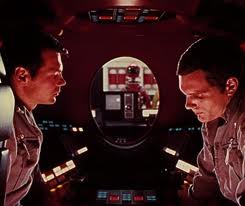
In “2001: A Space Odyssey,” the astronauts fail to realize in a private conversation that the HAL computer could read their lips. Subsequently events unfolded in dramatic fashion. That was science fiction. Now for the reality.
Scientists in Malaysia are teaching computers to interpret human emotions by following lip and facial patterns. Their research has been published in the International Journal of Artificial Intelligence and Soft Computing. The computer is not just being taught to read lips, but to understand through human facial expressions, human emotions. Using a “genetic algorithm” that keeps getting better with each iteration, the computer is capable of recognizing happiness, sadness, fear, anger, disgust and surprise. Hope that means no surprises for all us intelligent life forms going forward.
Energy Update: After Zurich Conference on Cold Fusion We Remain in the Dark
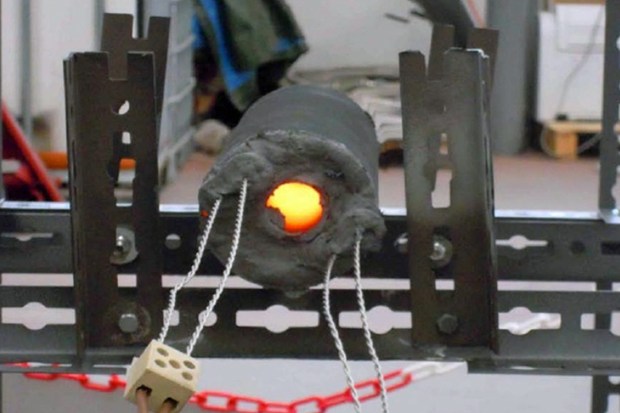
Andrea Rossi, the idol of the cold fusion community, talked a lot in Zurich, at the much anticipated September 8 conference, about a working, commercial, cold fusion reactor. But “talking” is the operative word. Rossi held up a paper from an independent third-party contracted to test the E-Cat cold fusion device called the Hot Cat. Results of these tests, Rossi claimed, showed net energy produced amounting to 3.6 kilowatts for every 1.28 kilowatts of input, roughly a 3:1 ratio.
Measuring energy output and input remains a challenge for the industry. Is a 3:1 return better than what we get from damming a river to generate hydro? I’ve tried to find ratio measures for different energy producing technologies and hope one of you, my readers may have found a source you can share with me. Then we could compare apples to apples.
But getting back to the Rossi Hot Cat results, a day after the conference, Hydrofusion Ltd., a company that is a licensee of Rossi’s E-Cat, stated in a press release that it had witnessed independent tests of the Hot Cat on July 16th and August 17th, and could not support any claims made, “written or other, about the amount of excess heat generated.”
Now I know that those who are followers of cold fusion are going to get your shorts in a knot, but once again, Rossi, as the leading spokesperson of the LENR community, continues to fail to demonstrate an independently verifiable, workable device. And once again, for those who will send me comments stating I don’t know what I’m talking about, all I say is show me. I’m not from Missouri but would welcome reviewing a demonstration, a scientific paper, a real device that actually is marketable. Because if it works then LENR opens a world of possibilities.
Robotics Update: Cockroach Cyborgs Can Go Places No Human Has Gone Before
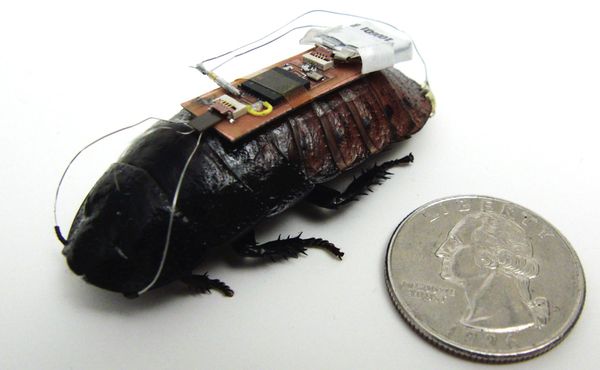
Building bio-mimetic robots is one way to take advantage of what evolution has already proven works. But another way is to take an animal and add bot technology to it to create a cyborg. That’s what engineers at North Carolina State University are doing with the Madagascar Hissing Cockroach, saddling it with a backpack of electronics that includes a micro controller, wireless receiver, and battery pack. Wired into the roaches antennas, a sent signal guides the insect where the sender wants it to go. It could be called riding the roach just like being on horseback.
Why a roach? Because roaches can get around. A roach can slip into a building after an earthquake and traverse the wreckage to spot survivors. A roach can enter a hostile environment and provide surveillance. A roach can get into pipes and walls. And roaches are durable, surviving in extreme conditions. Isn’t that why we hate them?
Space Update: Symposium Looks at the Next 50 Years of Spaceflight
The 100-Year Starship Symposium began its meeting in Houston on September 13 of this week to discuss a very big idea – interstellar travel. With seed funding from DARPA, the symposium is bringing together engineers, political leaders and scientists to study the feasibility of building a starship within the 21st century to travel to our nearest stellar neighbour, Proxima Centauri. At 12% the speed of light, such a ship would take 50 years to reach this red dwarf star approximately 4.24 light years from Earth. Former American President, Bill Clinton, has signed on as honorary chair because he believes the technology to drive humanity outward will also provide benefits for those who remain here on Earth.
Two Greek myth-inspired project ideas, one from the 1970s, called Project Daedalus, and its more recent successor, Project Icarus, will certainly be discussed. Both projects conceived of building an enormous fusion-powered spaceship for interstellar flight.

The spaceship, seen in the artist rendering above, is the one proposed for Project Icarus. It would consist of an enormous banded cylinder with habitation bays (the long rectangular yellow objects) connected by pedestrian viaducts (the spokes). The ship would rotate around a central zero-gravity core which would also be connected to the engines and the central power generators. Design specifications propose a radius of 400 meters (approximately 1,300 feet), and a length of 775 meters (over 2,500 feet) for each of up to five habitation modules. In full compliment the spacecraft target population would be 10-12,000.
A self-contained environment, seen in the artist depictions below, as well as two images of the design, show an artificial world where inhabitants could wander several kilometers on a walk through highly variable neighborhoods joined by transit spokes. Diverse housing styles and accommodation would create a variable interior landscape with lots of “green” space and open courts. The internal habitat would be reconfigurable to provide variety for the space travelers on their long voyage to the stars. A fantasy? Maybe, but those convening at this symposium see this as a future 21st century reality.

A Postscript
Readership continues to climb. Thank you for inspiring me to continue to write.
Some of you may have come to Techso Mogro through my Facebook site. If you did please go back and “Like” the Facebook page. I’m getting close to the 30 “Like” readers to give me access to analysis of reader traffic through that site.
To the many thousand of you who continue to visit here each month, and to all of you who are here for the first time, thanks for dropping by and keep on coming back. You can do this by subscribing so that you receive every new posting in your email inbox.
For your efforts I promise to keep you interested and intrigued about 21st century technology and our future. – Len Rosen
]]>


