Why is the IMO taking this first step? Because fuels containing sulfur are known producers of greenhouse gas emissions. The decision marks an interim step in the effort of the marine transport sector to address its contribution to climate change. Ship owners are already being asked to install smokestack scrubbers to reduce particulate matter, an aerosol known as black carbon, a known short-lived climate pollutant.
So what are the greenhouse gas emission numbers for maritime transport?
Until recently the IMO dragged its feet in regulating greenhouse gas emissions from its members. The reduction measures being applied encouraged shippers to build bigger boats because the CO2 and equivalent emissions were applied to transport units of work. This is the same logic used by regulators of Alberta’s oil sands that applied emission constraints based on CO2 per barrel content, rather than the total amount of oil being produced. The results for maritime shipping have been the same as those in the oil sands. Overall emissions have continued to climb.
The IMO has a roadmap to reduce emissions in what it describes as recognizing its “fair share” of contributions to global targets. Meanwhile, bigger ships and more bunker fuel is contributing to global carbon emissions.
The sulfur limit states members of the IMO represents a demonstration of its commitment to meet environmental obligations. The next step, the organization states, is to address CO2 with 2050 the target date for a 50% emission reduction. And beyond that, the IMO is committed to a 100% reduction in greenhouse gas emissions by 2100.
With more than 50,000 ships traveling the world’s oceans, the sulfur limit in bunker fuels starting in 2020 should have a meaningful impact. But for the maritime shipping industry to achieve the CO2 target means a wholesale change in propulsion technology looking at converting ships to burn liquid natural gas (LNG), hydrogen, and to draw supplemental power from solar, wind, and batteries.
When asked about the impact this will have on maritime shippers, Frank Starke, Global Product Manager Medium Speed Engines, at Caterpillar, states “The required massive investments of creative intelligence and capital can only be justified if there is a predictable, globally harmonized emission regulation regime. Adherence to these regulations must be monitored effectively and enforced strictly to create a level playing field around the world.”
So the question remains, is the IMO prepared to rigorously enforce multi-decadal changes to the technology being used by its members in an effort to combat greenhouse gas emissions? Will it produce target milestone dates as guidance for its members to reach interim reduction levels beginning today and until that 2050 target date and beyond?
In a recent survey, UBS, the Swiss bank, stated that the maritime industry between 2019 and 2023 needs to spend more than $250 billion US on equipment to comply with current green shipping requirements. Meeting the 2050 goal will represent multiples of that $250 billion. Will the industry commit to it? Starke and others in the IMO leadership say “we must.”

Now turning to cities that are on the leading edge in setting CO2 reduction targets. Joining Copenhagen, Denmark and Melbourne, Australia, is the Colorado city, Fort Collins, home to 150,000 residents. This month the city government set an 80% emission reduction target for 2030 and a carbon neutral goal by 2050. Fort Collins is one of 228 cities that have committed to carbon reductions.
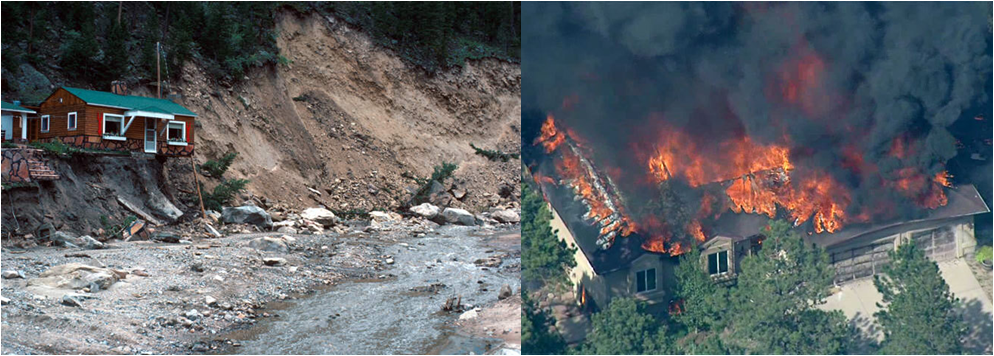
Why has this very conservative American city become climate change conscious? In 2013 Colorado’s Big Thompson River inundated parts of the state causing more than $2 billion in damages. The same year Colorado dealt with a forest fire that was equally damaging. Fort Collins was in the centre of both extreme events.
How will Fort Collins achieve its ambitious goals? Currently 50% of the city’s emissions come from power production. The thermal energy power plant that provides 75% of the city’s electricity burns coal. And since Fort Collins is a one fourth owner of the power plant in partnership with three other local Colorado communities it has the means to make changes to the way power is generated.
Another 25% of the city’s emissions come from transportation. And 20% comes from the use of natural gas in industries, home and institutional heating.
Part of the city initiative will be a plan to pay upfront to upgrade homes to make them more energy efficient. This may include installation of solar panels on residential and institutional locations. The city would recover the costs through future monthly electricity bills.
Total cost to become carbon neutral – about $4.6 billion by 2050. The estimated savings by then may exceed double that amount.
Now Fort Collins has only 150,000 people. In contrast Copenhagen and Melbourne have many millions. But every city that makes a commitment to carbon reduction brings us one step closer to managing our climate future in a sustainable away rather than burdening future generations with a world suffering from runaway greenhouse effect.


So what did the President announce? What are called a series of executive actions focused on preparing Americans for climate change impacts while setting national carbon pollution limits by reducing CO2 emissions from existing power plants across the United States. These are Environmental Protection Agency guidelines (contained in a 645 page EPA document) to be administered and monitored in every American state. They govern existing fossil-fuel-fired power plants. The guidelines will receive hearings this summer giving the public and industry stakeholders the opportunity to provide comments and data in response to the stated targets.
The objective is to reduce America’s greenhouse gas (GHG) emissions, primarily CO2 coming from power plants by 30% from 2005 levels. Today, 32% of all GHG emissions come from power generation and 82% of what is produced in CO2. With these reduction targets to be met by 2030 the net benefit calculated by the EPA for both climate and health will be worth worth between $48 and $82 billion U.S. annually.
Does this mean the end of coal-based energy production? No. The EPA believes that by 2030 30% of U.S. power will still come from coal.In 2013 that number was close to 40%. How is it possible then to reduce CO2 with so much energy production still coming from coal? The EPA believes that lower-emitting technologies deployed in these power plants, upgrades to existing electricity infrastructure, more efficient use of electricity by industry and consumers, conservation and carbon sequestration projects will make it possible to still use coal while achieving the overall reduction goal.
States are to receive individual emission reduction targets reflecting the fuel mix used within the existing power generation infrastructure. But no state is specifically told how to meet its goal. That is up to state planning “consistent with the EPA guidelines” which are laid out for the states to use in creating compliance strategies. States can go it alone or collaborate with others.
Why are power plants the target of this executive action? Because as the executive action guidelines state, fossil fuel power plants are “by far, the largest emitters of GHGs, primarily in the form of CO2, among stationary sources in the U.S.” As proof, just last week I wrote about two of those producers, AEP and Duke, who collectively contribute over 275 million tons of CO2 to the atmosphere annually.
Targeting coal-fired power plants recognizes that these facilities are sites that by 2025 will average 49 years in age. About 20% of them will exceed 60 years in age. So making plans to phase them out, upgrade their technology or rebuild them entirely seems logical.
As in the acid rain programs developed in the 1990s compliance with GHG “can be monetized such that it is factored into power sector economic decision making in ways that reduce the cost of controlling pollution.” Does that mean a carbon tax or a carbon trading market? It certainly puts a price on carbon but we will see what falls out from the public and stakeholder discussions in the coming weeks.
It is good to read in these guidelines words like “state plans must establish standards of performance that reflect the degree of emission limitation.” I state this because guidelines is not a word I associate with enforceable compliance. A framework of components for each state plan is provided. In addition to achieve emission reduction the EPA offers a number of “building blocks” for power generators to implement:
With state oversight and policies conducive to help the utilities achieve these blocks the EPA believes the reduction objective of 30% can be achieved in 2030. In preparation for the announcement today President Obama released a video on Saturday, May 31st that you can watch here. It talks about the impact of carbon pollution on children’s health as well as the most recent reports that show that climate change is impacting the United States now.

]]>
The mayor of London announced this week a partnership between UK Power Networks, Transport for London and the city’s Islington Council district to supply more than 500 homes in the area with green heat from the London Tube. Currently Islington uses the Bunhill Heat and Power network to supply green heat to 700 homes in Islington. The expansion will use a Northern Line vent to pipe heat into the network to expand the number of homes being supplied.
Recycling the heat from the London Tube will help the City reduce its CO2 emissions by as much as 500 tons annually. Its continued success should lead to additional waste heating systems coming onboard throughout London.
The project is part of a European Union initiative called CELSIUS, a partnership involving five European cities developing district heating and cooling systems. London’s plan is to eventually produce 25% of the City’s power requirements through decentralized generating stations and district heating networks rather than from energy derived from the grid. In the process the City expects to reduce its CO2 emissions by 60%.

Related articles across the web
]]>What’s this technology all about?
A New Type of Sail
Ships will be outfitted with multiple 20-meter wide (65.6 feet), 50-meter high (164 feet) telescoping sails made from aluminum or fibre-reinforced curved plastic. The material of each sail is hollow in the centre to expand and contract as weather and wind conditions change.
A computer control system will position each sail to take advantage of maximum wind force. In simulation and wind tunnel experiments on models, the sails work effectively even in heavy cross winds. When in port the sails will collapse. At sea the sails can be partially to fully deployed based on prevailing wind and weather conditions.

Weather and Wind Tracking Technology
The control system will use weather forecasting live feeds, networked maritime navigation information from other ships at sea, on-board wind measurement including both direction and speed to optimize sail usage. Individual sail wind analysis will be combined with wind-flow analysis for the multiple sail array to ensure that all sails gain optimum value from prevailing winds.
Navigation Routes Redefined by Wind and Weather
Currently ships at sea seek the shortest distance routes to get from one port to another. Wind is not a factor in defining these routes. But that would change if merchant and cruise vessels were outfitted with these high-tech sails. Each sail equipped ship would be equipped with ocean wind forecasting technology for plotting an optimal course.
Measurable Benefits
Current model tests are built to scale to a size suitable for large merchant ships. The next step is to build a half-scale model for testing at sea before full-scale manufacturing and first sea trials on a 180,000-ton bulk carrier outfitted with 9 sails as early as 2016. Wind Challenger is a project headed up by researchers at University of Tokyo along with a number of ship builders and vessel and fleet operators.
]]>