Under Donald Trump’s presidency the United States has adopted an America First response to global issues. What’s good for the USA is all that matters to this president and his weak grasp of supply chains, global trade and the imposition of tariffs.
In an escalating economic war with China using ever increasing tariffs on goods being imported from that country, he is disrupting American businesses that from 1990 to 2010 established relationships with suppliers across the globe as international trade agreements and low tariffs made it cheaper to use Chinese labour to manufacture products, and maritime shippers to bring them to America’s shores. Global supply chains by 2010 were producing 70% of all international commerce with American consumers the beneficiaries of low prices and just-in-time efficiency in delivery.
In the United Kingdom(UK), a narrowly one vote to leave the European Union (EU) has seen two prime ministers leave office while a third take over just a few months before an October 31, 2019 deadline for dropping out of the 28-country organization. In coming to Biarritz, Prime Minister Boris Johnson is meeting with a number of G7 members who he has told without reservation that he wants to walk away from nothing to do with them after being a member for 50 years. During this half-century, the UK has integrated its economy closely with its European partners from its banking and finance institutions, to open borders across which billions of Euros and British pounds in goods and services are transacted daily. UK industry has integrated supply chains with businesses in almost every EU country.
Then there is China, a country that is seemingly Communist, yet also capitalist in many ways. Chinese businesses have supplied much of the labour that has fueled the growth of international trade in the last three decades. China’s rising technology companies have also bought into global supply chains to provide key components to support these businesses. Growing trade with China and the US reflects an interdependence that one would think is unbreakable, yet Donald Trump is doing his damnedest to unravel it all. To complicate matters further, China has been buying much of America’s debt in US dollars and could find itself holding it in the face of a growing hostility not just on the trade front, but also militarily.
Amazon, the online global marketer to the world, owes its success to the economics of global trade as practiced over these last thirty years. Can this behemoth of a company come crashing down, along with many others who rely on global supply chains, within the next decade because of Trump’s tariffs, the dissolution of the EU, or China calling in America’s debt? Or is there an even bigger factor to be considered in these next ten years that will scupper global supply chains for the foreseeable future? What would that be?
I would argue that climate change is more likely to radically alter supply chains than all the machinations of a Donald Trump, a Boris Johnson, or China’s Belt and Road Initiative and other of its monetary, trade, and finance policies.
One could argue that global supply chains are incompatible with a world attempting to deal with the risk of rising global temperatures from greenhouse gas (GHG) emissions in the atmosphere. The infrastructure, largely in the form of marine shipping, is a significant contributor of GHGs. Where it has been cheaper in terms of production cost to manufacture a component in a low-wage environment and transport it long distances to an overseas destination, this is unlikely to be the case in the very near future when more economies implement carbon pricing for GHG emissions.
Of course there much more to climate change than the price put on carbon. Supply chains are likely to be impacted by other environmental factors such as rising sea levels that impact seaports, extreme weather events that have an impact on suppliers and their ability to continue to produce goods cheaply. Whether climate change impacts power production and distribution, or freshwater supply, or causes extreme heat events or droughts, the risk to global supply chains will become more acute as the century unfolds. Business-as-usual will no longer be possible.
So maybe Trump, even though he is a climate change denier, is doing businesses a favour in his trade and tariff wars with China, Mexico, Canada, and the EU. Maybe he is preempting the impact that climate change will inflict on global supply chains to force changes that would have occurred inevitably as global warming inflicted its disruptive forces on the global economy.

]]>
The GeoPhy dataset is composed of projections of sea level rise, precipitation, heat stress, and extreme weather events like Hurricane Michael which this week struck the Florida Panhandle. The company behind GeoPhy is Four Twenty Seven, a market intelligence provider. They launched the dataset and a summary paper at last week’s Urban Land Institute meeting in Boston, Massachusetts.
Founder and CEO of Four Twenty Seven, Emilie Mazzacurati is quoted in a press release stating, “Real estate is on the frontline of exposure to climate change. Many valuable locations and markets are often coastal or near bodies of water, and therefore are going to experience increases in flood occurrences due to increases in extreme rainfall and to sea level rise. These risks can now be assessed with great precision …. to perform comprehensive due diligence which reflects all dimensions of emerging risks.”
A chief economist of GeoPhy, Nils Kok, pointed out some of the potential impacts that market is already experiencing from climate change risk. For example, in some parts of the United States, properties at risk to sea level rise are seeing a 7% decline in value according to a study done jointly by the University of Colorado – Boulder, and Pennsylvania State University, published in the Journal of Financial Economics.
Key findings from the GeoPhy dataset include:
Four Twenty Seven’s market risk scoring system applied to the GeoPhy dataset rated sites most at risk to climate exposure on a scale from 0 to 100 with anything at 50 or above deemed to be an exposed property.
Are buyers of homes in vulnerable areas paying attention? Zillow Research in a recent report estimated that 1.9 million homes in the United States will be underwater by 2100 with losses estimated at $1 trillion.

Despite this, the post-Hurricane Sandy experience shows us that buyers’ memories are short, with the tendency for real estate valuation markets to return to normal when the last extreme weather event fades from memory.
]]>
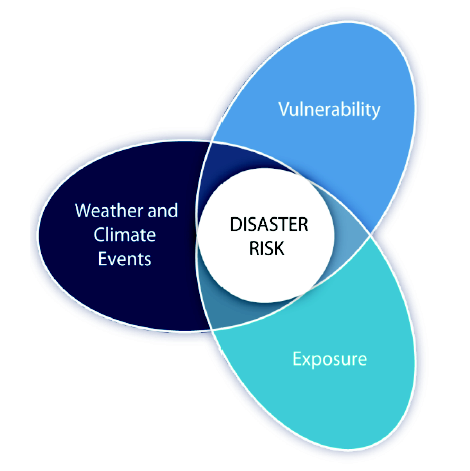
More and more private business is realizing the need to take climate change seriously and start planning for the impacts it could have on them. Much of the current focus has been on mitigating the effects, but companies now need to start adapting to climate change impacts that are inevitable. Elevated temperatures, droughts, flooding, hurricanes and climate change events are already hurting businesses with these incidents likely becoming more frequent and severe no matter what organizations do to become more sustainable.
Here are six things businesses need to do to adapt to the risks of climate change.
The first step in addressing any vulnerability is assessing risk. Businesses need to evaluate how both gradual and extreme impacts could affect them. The Intergovernmental Panel on Climate Change provides resources that are a great starting point for understanding the effects that climate change could have on a company.
Various factors impact a firm’s vulnerability to climate impacts, including location, the resources it uses and the impact that has on the environment. Moving forward, these considerations should play an integral role in all relevant risk assessments.
Companies must prepare for what climate change will do to weather. That means making physical improvements to facilities and infrastructure to protect against damage from floods, winds, violent rainstorms, hurricanes and other weather extremes. Utilities have been at the forefront in preparing for what a warming atmosphere will bring and are investing heavily in recent years in resiliency upgrades, such as replacing wooden utility poles with steel ones and installing controls that can prevent outages from spreading. In extreme cases, companies may need to move facilities to lessen their risk. They will also have to look at safety standards to incorporate managing climate change vulnerability. And likely they will also have to take steps to mitigate their financial risk including taking on additional insurance.
Businesses are bound to face risks to supply chains from climate change. In assessing these risks they will have to look at jurisdictional regulation of energy. They will also have to look at how extreme weather could impact offshore production. A good example occurred in 2011, when flooding in Thailand caused significant production disruption for technology companies including Apple, Samsung, Acer, and Lenovo, and car manufacturers, Honda and Toyota. The flooding took two months to clean up causing the equivalent of approximately $44 billion USD in economic losses. Ensuring that facilities such as these are more resilient to disasters is critical. Also, businesses need to look at diversifying the supply chain, spreading out to more sites where there is less climate risk so that they cannot be impacted by a single source bottleneck.
Recent assessments estimate that having access to climate and hydro-meteorological information, as well as early warning systems, can save between $596 million and $3.5 billion of assets and hundreds of lives each year. Companies need to become members of organizations that can help them predict potential disasters and to invest in forecasting technology, where possible.
Nonprofit organization, BSR notes that telecommunication companies, particularly, are investing in enhanced forecasting and warning systems. NTT Group provides earthquake early warning technologies to alert employees if a disaster occurs. And KT plans to collaborate with its stakeholders to develop disaster-forecasting systems through real-time monitoring utilizing sensor networks.
It is, of course, not enough to know when disasters may be approaching. You also need to have plans in place for how you will react to recover from climate change events. Putting such policies in place, and training employees on them need to be prioritized.
Collaborating with other organizations by sharing lessons learned can help in developing industry best practices. Various industries have already started cooperating this way.
Companies must respond to a growing public awareness in the marketplace about environmentally harmful products and practices. To address this risk, companies are abandoning fossil fuels as a primary energy source and seeking out ways to make products more environmentally friendly.
Growing numbers of businesses are investing in greener practices with companies like Apple, Google and Ikea, committing to sourcing all their energy requirements from renewables. Companies are also working to produce more sustainable products, both to protect the environment and also because consumers have indicated their willingness to spend more on green products.
Business leaders around the world are waking up to the reality that climate change causes risks to the future of their companies. Taking action to adapt to climate change vulnerability is now seen as an important indicator of their future business success.


And in Southern Florida after Hurricane Irma, the storm surge and rain produced alligators on roadways, water snakes in people’s backyards, and an occasional octopus swimming around in city parkades.

For those who stay behind and rebuild, there are others who have reached their limits and decided to move elsewhere. It is fair to say that climate change, extreme weather and other natural disasters rather than economic determinants will be the fuel for human migration throughout much of the remainder of the 21st century.
And as nations fail to achieve significant carbon reductions this phenomenon will accelerate not just in the United States but in almost every country impacted by rising sea levels, rising temperatures, and rising weather extremes.
Today 4 in 10 humans live 60 kilometers (37 miles) or less from the world’s oceans. More than 1 billion of us live in areas with elevations above sea level of less than 5 meters (16 feet). The vast majority of these people live in Asia. In the United States, the population living along or near the coast exceeds 130 million.
I have stated before on this site that if you want to fully comprehend the impact of climate change ask insurance underwriters. These companies that reinsure the insurer of your home measure the cost of climate change annually. They are calculators of risk and right now they are raising costs to insurance companies who provide policies to homeowners who remain in areas deemed most likely to be inundated as sea levels rise. If you are contemplating buying a beachfront property or planning to build one, the sticker shock you’ll experience for flood protection should make you think twice. And if you are not putting new construction on stilts, then you may not even qualify for these inflated premiums. Whereas insurance companies, banks, and other financial lenders act because of rising risk, it appears, to-date, that governments continue to fail at recognizing the risk to their citizens.
In doing the research background to this posting I came across an article appearing in Newsroom, a New Zealand publication. Written by Eloise Gibson, Newsroom’s environment, and science editor, and appearing on January 15th of this year, she writes about Belinda Storey, a climate risk specialist in her country that has been studying how government, insurers, and homeowners need to adapt to rising sea levels. Storey notes, “A lot of people focus on, when does the probability [of flooding] become an annual event or a daily event. But that is not the most important question…..The most important question is, when does it reach that insurance threshold?” So that threshold when insurers withdraw from the world’s coastlines is only a matter of when and not if.
Storey is working with a team of researchers at Victoria University, in Wellington, New Zealand, to create a roadmap predicting areas of greatest risk in her country. She believes that the insurance thresholds when they withdraw are much sooner than most people realize. A 10 centimeter (about a 4 inch) rise in ocean sea levels off New Zealand’s coasts turns the 1 in a century flood event into a 1 in 20 years event. And that’s just sea level rise incidents and does not include additional extreme weather storm surges which will impact New Zealand’s coastlines.
Where does the government of New Zealand, or for that matter any national government, fit into the equation of risk? Likely when the government facing the rebuilding costs of coastal infrastructure finally gives up.
States Storey, “Property effectively has a time limit on it now….the value won’t go to zero immediately, because there will still be people who want to live, work and play at the coast, even if….risks increase.” But when governments say they can no longer repair repeatedly damaged roads, and rebuild the pipes to deliver fresh water, and remove sewage, then the migration will inevitably begin.
For New Zealanders, Americans, Europeans, and many others the migration won’t be a decision driven by a lack of insurance coverage, but rather by basic Malthusian-defined needs which will go wanting as oceans rise and extreme weather events take their toll.
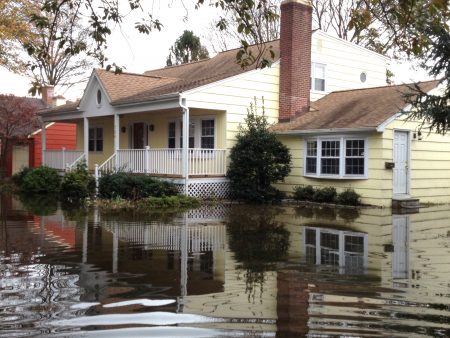
On November 28, 2017, Moody’s gave notice to all U.S. states and local governments that climate change was very much going to be a factor in its issuing of credit ratings for governments. It cited climbing global temperatures, rising sea levels, and mitigation and adaptation strategies as factors it will use in the near future as it incorporates climate trends and climate shock into its rating structure.
Climate trends was defined as change over decades.
Climate shocks were defined as extreme weather events exacerbated by climate change such as severe heat waves, droughts, and floods.
Moody expects governments to develop the means to withstand shocks. For example, for flooding a city would spend tax revenue on infrastructure projects such as strengthening levees, raising the height of berms, reinforcing dams, and removing structures at risk in floodplain areas. States Michael Wertz, a Vice President at Moody’s, “While we anticipate states and municipalities will adopt mitigation strategies….costs to employ them could also become an ongoing credit challenge….Our analysis of economic strength and diversity, access to liquidity and levers to raise additional revenue are also key to our assessment of climate risks as is evaluating asset management and governance.”
In a press release issued to announce this change in its rating policy, Moody’s used the example of Hurricane Katrina and New Orleans (currently A3 rated). It noted that the city’s ratings were negatively impacted by, not only the extensive infrastructure damage to the city, but also by the loss of tax revenue, and the permanent abandonment by a large percentage of its population.
What Moody’s seeks is not just level of exposure to risk from sea level rise, storm surges, intense storms and other weather events, but also adaptation and mitigation strategies. It wants government reassurance, particularly related to impact on economic capacity and activity. Moody’s identified Texas, Florida, Georgia, and Mississippi as states most at risk. No cities and municipalities were mentioned but the credit rater noted that measures like property values, cost of repair for damages, and tax revenue would be areas of considerable interest in determining ratings.
As I stated above, no state or city has yet to see its credit score impacted on the basis of climate risk. But Moody’s is clearly sending a shot across the bow and putting a market value to climate change.
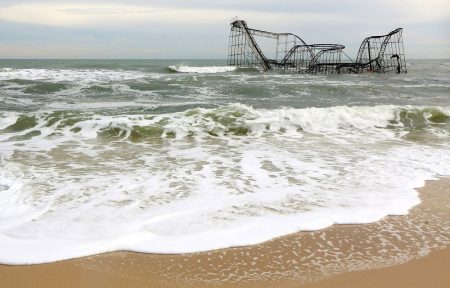
Back in May, Bloomberg published an article by Christopher Favelle, which described how rising sea levels and storm surges along the New Jersey shore was going to impact bond ratings because of extreme weather leading to declining property values, reduced tax revenues, and cost of repairs for Atlantic coastal communities. It sounds like someone at Moody’s may have been reading Favelle’s prose.
So far what does the report say about how we are adapting to all of the above?
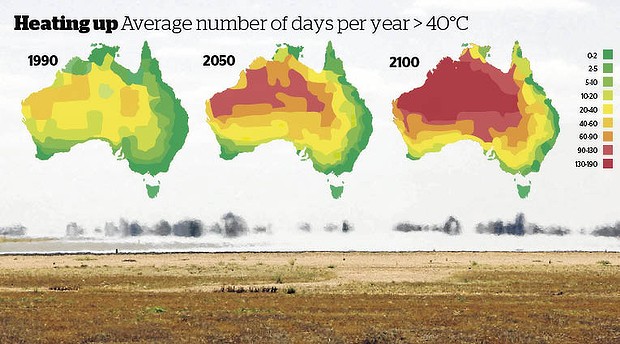
For the first time the IPCC report openly states the key risks from the changing climate, everything from food insecurity, extinction of animal and plant species on land and sea, submerging of coastlines and coastal communities, disappearance of island nations, weather event risks to human health, infrastructure, jobs, and income. The study report even measures the war probability brought on by nations fighting over declining resources.
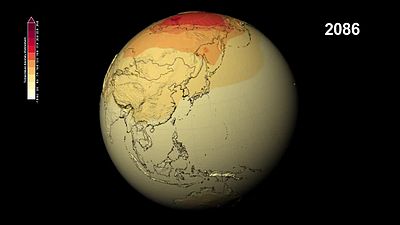
States the IPCC, what is certain – we will see global warming with mean global temperature rising an average of 0.2 Celsius (0.36 Fahrenheit) per decade based on current rates of carbon emissions. Should emissions, however, continue to rise the rate of warming could be as high as 4 Celsius (7.2 Fahrenheit) by the century’s end. At the extreme end of this warming projection the IPCC report points out that the warmer the atmosphere the less land and ocean is capable of sequestering carbon feeding the cycle of warming even faster.
For policy makers the latest report lays out a roadmap for sustainable development, hardening of infrastructure, and adaptation. Failure-to-act is not considered a good option.
The kind of catastrophic events we are talking about include rising sea levels, prolonged drought, drying up of rivers, melting of alpine glaciers, unexpected monsoonal and other heavy rain events, floods, and the like.
The write down in farmland values runs counter to what we have witnessed over the last several decades. Today the value of all farmland real estate around the globe tops $14 trillion U.S. A drop of $8 trillion would wipe out well over half that amount. The study arrives at the $8 trillion number as representing a mean between the least and greatest impact.
The report entitled, Stranded Assets in Agriculture: Protecting Value from Environment-Related Risks, highlights the following physical and economic drivers in reaching its conclusions:
The study points out that recent history shows us that climate change is already having a negative impact on crop yields. For example, for every day above 30 Celsius (86 Fahrenheit) degrees, corn yields decline by 1% in optimal rain conditions, and 1.7% in drought conditions. Similarly studies show that rice production is increasingly under stress because of drought events in primary rice growing regions around the planet.
Animal operations on farms are also subject to weather-related risk. High temperatures and drought affect all kinds of animal operations. But ranches in particular that use grazing as a food source for their livestock are particularly vulnerable. This will impact both meat and dairy production.
Multi-year crops such as coffee, tea, fruit trees and vines are considered highly vulnerable to changes in rainfall and temperature patterns. It takes years for such operations to recover from prolonged drought.
Of all the risks to farmland the greatest is the one that impacts access to freshwater. Water scarcity in today’s world is on the increase and our growing population and climate change are the prime culprits. And although some areas of the globe will experience increases in precipitation, those areas of greatest population growth are not in those zones. The map below illustrates risk areas most prone to water scarcity. Note that with the exception of the American southwest and southeastern Australia, areas of greatest vulnerability lie in Africa, South Asia and Andean South America.

In its conclusions the report states:
The business of farming today is global. And the report concludes that all “risks are interconnected.” Production on one continent impacts consumption on another. Supply chains can easily be disrupted by climate change. In the study, for example, it cites the rise of the Arab Spring coincident with water supply shortages in North Africa coupled with extreme weather events in Russia resulting in rising food prices and contributing to the fall of governments in Tunisia, Libya and Egypt.