Canada has an escalating price on carbon pollution and this week announced new tax credits to polluting industries to match those in the IRA. At the same time, Canada is vested in an oil pipeline to increase the capacity of oil sands operators to ship their products offshore and to the U.S.
Then there is Australia with the Labor Party now in power. It has reversed policies from the previous Liberal Party governments and committed to carbon emission reductions in 2030 by 43% compared to 2005 levels. At the same time, it is continuing to back natural gas projects, pipeline development and new coal mines.
All three governments are preaching from the same hymnal. They remain committed to fossil fuels because without them the impact on their countries’ current and near-future economies would be devastating. Their strategies emphasize an orderly transition with predictable outcomes that ensure the democratic nations of the world will be able to buy “democratic” oil, gas and coal. And at home, emission reductions would make each of their countries reduce emissions to achieve interim and 2050 net-zero targets.
None mention that the oil, gas, and coal that they export will end up being burned by their customers. The emissions and their contribution to global warming will not be coming from them.
Does this sound like greenwashing?
Originally, greenwashing was something businesses did to mislead investors and the public about their environmental credentials. But it sounds to me like we can add democratic governments to that definition. Expect more of it as COP27 begins next week in Egypt.
Holding this environmental gab session on the continent of Africa, the canary in the climate change coal mine should be an interesting affair. The promises of the Paris Climate Agreement to provide US $100 billion annually to Global South countries to help mitigate and adapt to climate change has yet to be fulfilled. And Africa more than any other continent is suffering the most because the money isn’t flowing, the projects to mitigate and adapt cannot get going, and the climate is changing.
Just look at Kenya in the last couple of years. The northern half of the country has hardly seen a drop of rain while the southern half is inundated with flooding. Or take Somalia which has experienced three years in a row of little to no rain. That’s three years of crop failures contributing to further political destabilization.
Our atmosphere is a shared commons. It doesn’t matter where emissions are produced. Political boundaries don’t stop greenhouse gas emissions. Global warming doesn’t stop at borders.
If you can encase your country in a glass bubble then you might be on to something. But you can’t. And although we will hear about the progress being made by the United States, Canada and Australia when their representatives speak at COP27, they are all acting like they are already living under glass bubbles.
]]>How does this compare to the current European Commission price which governs most of the members of the European Union? At the moment, that price is 60 Euros ($70 USD) which is better than most other jurisdictions but far from the largest carbon price on the continent. That number belongs to Sweden at 1,183 krona ($135 USD) per ton of carbon.
Putting a price on carbon (primarily carbon dioxide emissions, but also methane) is a market mechanism first tried out through a global agreement in the 1990s aimed at reducing hydrofluorocarbons (HFCs) responsible for the depletion of the ozone layer. A market exchange system involving caps on the amount of HFCs each country could produce ended up establishing a price for these polluting gasses. It proved effective in getting countries and the industry to reduce HFC use and find alternative refrigerant gasses.
Under the umbrella of the United Nations, the meetings on climate that we call COP (Conference of the Parties) adopted the HFC agreement applying it to carbon to begin the process of changing business as usual to one where reductions in the combustion of fossil fuels, namely coal, oil and natural gas, could become the new normal. Whether the mechanism being employed is a market exchange trading carbon credits or a tax imposed by national, state, provincial, or municipal governments, the idea is to raise the cost of doing business the old way to change industry and consumer behaviour.
Where the European countries go, does the rest of the planet follow?
Not so far. Take, for example, the United States, which to date still hasn’t instituted federal carbon pricing or emissions trading system. Instead, it has left it to states and cities to do it with a confusing array of programs and schemes. The American states that have imposed carbon exchanges or taxes are largely found along the eastern and western seaboard roughly reflecting Democratic Party governments. The rest of the United States, however, has little in the way of regulation or taxation in place to reduce carbon emissions.
The Citizens’ Climate Lobby, a growing global organization, has been lobbying U.S. Members of Congress to pass a carbon pricing bill that would establish a benchmark price of $15 USD per ton in the current year with $10 annual increases to $105 by 2030. The likelihood of achieving this result, however, is hampered not just by Republican opposition, but also by the indifference of the executive branch to imposing a price on carbon.
Canada began instituting a price on carbon several years ago. It currently sits at $40 CDN (approximately $30 USD) per ton and will rise in $15 increments annually to $100 by 2025 and $175 by 2030 (approximately $140 USD). As a federation, however, Canada gives its provinces and territories license to create equivalent programs which mean carbon pricing regulation varies across the country.
What constitutes a quality carbon pricing or exchange policy? The consensus is the following:
Unfortunately, current carbon taxes and emission trading schemes across many countries do not conform to much of the above. A recent Fraser Institute study issued in the fall of 2020 notes that most carbon pricing schemes are wanting. States Elmira Aliakbari, Associate Director of Natural Resource Studies, at the Fraser Institute, “overall, no high-income OECD country with a carbon tax has implemented it based on sound design.”
The OECD is the Organization for Economic Cooperation and Development consisting of 38 countries. The Fraser Institute, in its study, looked at 31 OECD countries with carbon emissions or carbon trading schemes. Fourteen of them had implemented a carbon tax where almost three-quarters of the revenue being collected never got returned to citizens through tax rebates or payments. In addition, a mere 12% of the revenue collected from these carbon levies was being spent on environmental and climate change issues. In its conclusions, the Fraser Institute pointed to these failures in carbon policy that were contributing to increased costs and deterring entrepreneurship and investment, rather than driving down emissions.
A bit more about carbon exchanges needs to be said here. Market-driven emission exchanges similar to the ones instituted in North America in places like California, Quebec, Ontario, and some New England states, are known as cap-and-trade systems. Why? Because they put a ceiling on the amount of greenhouse gas emissions (GHGs) an industry sector is allowed to produce. All companies within a sector are assigned a quota and if they produce fewer emissions than their quota they can sell the credits earned on an open exchange to others who have exceeded their quotas. In this way, an entire sector can achieve its GHG goals. For the exchange to be an effective emissions deterrent, each year the GHG cap is lowered which encourages companies within these sectors to reduce their emissions from all aspects of operations. Carbon exchanges don’t involve consumers directly whereas a carbon price on gasoline, diesel and home heating fuel does.
A final cautionary note: Carbon pricing and market exchanges do not of themselves constitute an all-encompassing program to address GHGs and climate change. Governments, industry and service sector associations as well as NGOs can work together to provide direction on the implementation of policies targeted at emission reductions. Decisions made within every department of government, whether local or national, need to be filtered through a climate change lens. In an article I read recently it was proposed that every country appoint a super ministry for climate change. By doing this we may be capable of keeping atmospheric temperatures from rising above 1.5 Celsius in the next two decades, which is what current trends are showing based on existing programs and policies.
]]>For six years I have led a local riding committee focused on policy development. The Liberal Party holds biennial conventions in which policy discussions are featured. Riding associations (ridings are the districts that members of parliament run in and represent) are asked to make resolutions which then go through a vetting and voting process at these biennial meetings. The resolutions can cover almost any topic. For example, our riding association so far in the deliberation process which involves monthly themed discussions, is drafting a number of resolutions including:
The focus of this posting is on the latter resolution. How do you construct a policy that uses both regulation and taxes to achieve decarbonization at a pace that ensures global warming doesn’t exceed the upper limit of what the Paris Climate Agreement of 2015 deemed acceptable? How do you get industry and public buy-in? How do you get the rest of the developed nations of the world to join you in decarbonizing while helping less developed countries build low-carbon energy and transportation infrastructure so as not to repeat the mistakes of the former which have created the global warming crisis we collectively face?
In the last week, I have been reading “The Citizen’s Guide to Climate Success,” authored by Mark Jaccard. If you type the title into a Google search, you can download an ePub version of the book to read online. Jaccard is a professor of sustainable energy at the School of Resource and Environmental Management at Simon Fraser University in Burnaby, British Columbia. Many years ago when I was an acquisitions editor for a technology publishing house, I visited Simon Fraser. It was an early December day with a heavy marine layer covering Vancouver. As I drove out to Burnaby and climbed to the hilltop university I emerged into the brilliant sunlight. That first impression has always remained with me, a place rising above the fog and all the symbolism that it projects.
Jaccard is an economist. He teaches graduate students about sustainable energy. He has been an adviser to the British Columbia government and helping them to deploy a decarbonizing agenda with a mix of regulation and carbon tax. He advised the federal Liberal Party in Canada when it chose to run in 2009 on implementing a carbon tax and subsequently lost to the Conservative Party running their campaign against “job-killing carbon taxes.” That aforementioned phrase remains the mantra still of politicians opposed to pricing carbon ever since, whether they reside in this country, the United States, Australia, or elsewhere.
Jaccard writes, “The carbon tax is, from an economic efficiency perspective, the perfect policy, which is why lots of people, especially economists, keep saying we must price carbon emissions. But this statement is factually incorrect; even 100% decarbonization can be achieved by regulations alone. And, in the real world of politics and policy, the selection of GHG reducing policies involves a trade-off between cost-effectiveness and the likelihood of implementation. Single-mindedly pursue carbon pricing and we could end up with nothing.”
Therein lies the challenge in developing an effective decarbonization policy that can conceivably be adopted nationally, and get buy-in internationally.
In a previous effort to develop a national carbon policy, I had proposed that the Liberal Party develop a number of carbon calculators to reflect the various regions and climates within the country, and to issue every citizen a quantity of carbon currency in a carbon wallet to be spent on purchases where carbon content was measurable. An application similar to the SWRM carbon calculator could allow consumers to use their smartphones to calculate carbon content and track their individual carbon footprints annually. Each year citizens would trade carbon currency in a national consumer cap and trade program with those with empty wallets the buyers, and those with remaining currency the sellers. The proposed resolution didn’t pass muster. In hindsight, I believe it was premature to consider it at this stage in the climate change battle.
That was two years ago. In returning to the issue of decarbonizing the Canadian economy, let me share with you the current draft of a brand new policy resolution attempting to tackle the most significant sources of emissions in the economy to get us closer to net-zero by 2050, and to surpass the current 30% emissions reduction target for 2030.
Policy resolutions follow a particular structure beginning with a series of “whereas” statements, followed by the resolution. You have to keep them short (under 250 words), but you can include supporting documents to follow. I won’t provide the latter to you at this moment. But here is the resolution. See if you can buy into what it addresses, and let me know through comments on the blog site, Facebook, Twitter, Momentum, and LinkedIn.
WHEREAS Canada is committed to decarbonizing its economy to net-zero emissions by 2050,
WHEREAS the voluntary Paris Climate Agreement has failed to reduce greenhouse gas (GHG) emissions nationally or globally,
WHEREAS, in a recent polling of Canadians, climate change is considered either the top or one of the top three issues of public concern,
WHEREAS, there is a necessity to reduce carbon emissions to reverse the worst effects of climate change,
BE IT RESOLVED that the Liberal Party of Canada in consultation with the people of the country in all provinces, territories, municipalities, First Nations, Inuit, and Metis, begin to tackle climate change by concentrating on the two largest contributors to GHGs: the energy and transportation sectors which represent more than 50% of total emissions by proceeding as follows:

]]>
So far what does the report say about how we are adapting to all of the above?
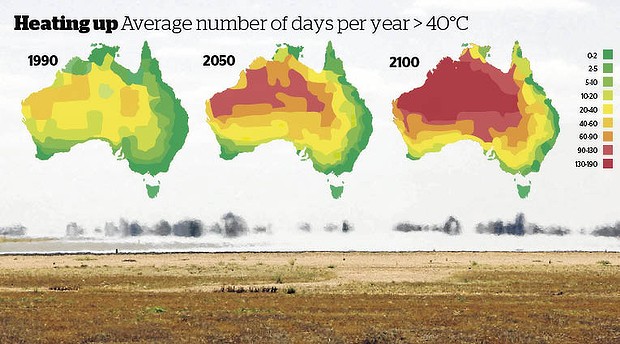
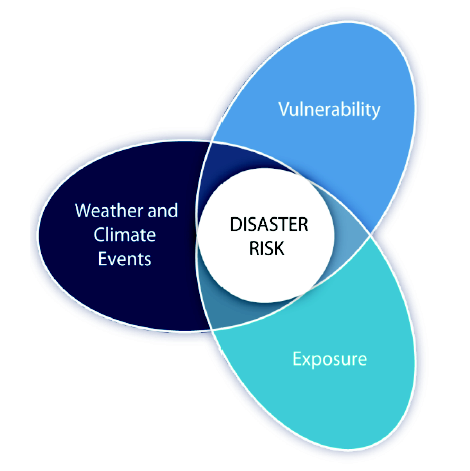
For the first time the IPCC report openly states the key risks from the changing climate, everything from food insecurity, extinction of animal and plant species on land and sea, submerging of coastlines and coastal communities, disappearance of island nations, weather event risks to human health, infrastructure, jobs, and income. The study report even measures the war probability brought on by nations fighting over declining resources.
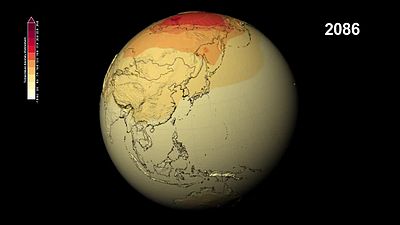
States the IPCC, what is certain – we will see global warming with mean global temperature rising an average of 0.2 Celsius (0.36 Fahrenheit) per decade based on current rates of carbon emissions. Should emissions, however, continue to rise the rate of warming could be as high as 4 Celsius (7.2 Fahrenheit) by the century’s end. At the extreme end of this warming projection the IPCC report points out that the warmer the atmosphere the less land and ocean is capable of sequestering carbon feeding the cycle of warming even faster.
For policy makers the latest report lays out a roadmap for sustainable development, hardening of infrastructure, and adaptation. Failure-to-act is not considered a good option.