In advising policymakers, the report notes that every region of the planet will experience climatic impact drivers whether atmospheric mean temperatures rise 1.5 Celsius, 2.0, or higher. The higher the temperature, the more extreme the impacts will be on ecosystems, agriculture, and health.
If we can keep warming to 1.5 Celsius (2.7 Fahrenheit) then predictions rated as highly likely for the continents of Africa and Asia, which include extremes in precipitation and flooding, and in other areas, declines in precipitation with prolonged droughts can be mitigated. The current data indicates that the 1.5 Celsius ceiling will lead to lesser impacts in Europe and North America.
But if the atmospheric temperature rises by 2.0 Celsius (3.6 Fahrenheit), then a magnitude of change in extreme weather conditions is expected across most of the globe including impacts to the Pacific islands, North America, Europe, Australasia, Central and South America, Africa and Asia. The latter two will see even more extreme climate events than what was described in the 1.5 Celsius scenario described in the previous paragraph.
Above 2.0 Celsius, tropical cyclones and extratropical storms will become more intense and frequent. Fire-weather seasons, such as we are seeing occur annually today across the Mediterranean Basin, North America, and Central Siberia, will lengthen.
Extreme sea-level events that occurred once a decade to once a century in the past, will become an annual thing leading to repeated coastal flooding in low-lying areas and erosion. With so many of Earth’s cities located at or near the coast, flooding of these communities from the combination of sea-level rise and storm surges from increasingly more frequent and intense tropical and extratropical storms will escalate.
Lower likelihood outcomes that are talked about in today’s newspapers on a semi-regular basis, such as the collapse of Antarctic and Greenland ice sheets, or abrupt changes to ocean circulation such as the shutting down of AMOC, the Atlantic Meridional Overturning Circulation (expected to weaken but not stop in the 21st century) responsible for the Gulf Stream are less likely. Although the report states they “cannot be ruled out.” And neither can “abrupt responses and tipping points” including mountain glacier retreats, drying up of the rivers they feed and significant forest dieback.
Should the AMOC abruptly collapse before 2100, deemed a low risk at present, the changes to weather patterns and precipitation will be notable. Climatologists predict a southward shift in the tropical rain belt, a weakening of the African-Asian monsoons, a drying out of Europe, and increasing Southern Hemisphere monsoonal activity will ensue.
We already know the answer to the above question. The report states:
“From a physical science perspective, limiting human-induced global warming to a specific level requires limiting cumulative CO2 emissions, reaching at least net-zero CO2 emissions, along with strong reductions in other greenhouse gas emissions. Strong, rapid and sustained reductions in CH4 emissions would also limit the warming effect resulting from declining aerosol pollution and would improve air quality.”
The linear relationship between atmospheric carbon emissions and the changes happening to the world’s climate requires us to act with one specific purpose: zero-out carbon emissions in the world economy using natural and technologically created sinks that will limit atmospheric temperature rise to 1.5 Celsius (2.4 Fahrenheit), the goal originally aspired to at the Paris Climate Agreement six years ago. That means all the nations of the world have to adopt a carbon budget in parallel with normal fiscal budgets. And that also means that these carbon budgets take precedent over all fiscal and economic decisions going forward.
If you are not familiar with the term carbon budget, it refers to the maximum amount of cumulative net global anthropogenic CO2 that the atmosphere can handle to keep global warming from topping the targeted mean temperature rise of 1.5 Celsius. The figure seen below which comes from the IPCC report illustrates the linear relationship between CO2 emissions and the warming atmosphere. The grey areas surrounding the central line show the corresponding estimate of historical human-caused atmospheric warming. The areas in colour show the likely range of global atmospheric temperature projections with the thick coloured central lines indicating the median estimate of cumulative CO2 emissions from now until the year 2050.

The challenge of sticking to a carbon budget when doing fiscal planning for an entire national economy, let alone a global one, is that much of the budget has already been spent. All we have left to work with is an increasingly shrinking remainder. That’s why what was thought of as unnecessary a few decades ago, such as mass-scale carbon capture and sequestration, has been adopted by the IPCC as important for national governments to implement. This is in addition to removing CO2 by natural means such as afforestation and reforestation, wetland preservation, and expanding natural grasslands and ocean kelp growth.
Policymakers need to understand that whatever we put in place today will only begin to have a net negative impact well into the future. That’s because we have already built into our planet’s atmosphere through our carbon expenditures, climate changes that will continue in the present direction for “decades to millennia.” As one example, the reversing of sea-level rise through the implementation of negative carbon emission policies will not alter the current trend of accelerating rise for several centuries to millennia. The damage is done.
And as for dealing with shorter-term emissions such as CH4, N2O and other aerosol and ozone precursors from the air pollution our modern industrial society produces, we will continue to observe net global atmospheric warming spikes until we remove the industrial sources of these emissions. Fortunately, these contributors to atmospheric warming and climate change can be addressed in the short term with notable impacts on health, and extreme heat and precipitation events.
Policymakers need to note that the work has to begin immediately in every country on Earth. Why? Because as we lower emissions we will begin to discern improvements to the global climate with the emergence of more of what we have known as natural variability as early as 20 years from now and throughout the remaining 21st century and beyond.
Beyond 2040, if we can rapidly approach net-zero emissions, we may be able to limit some of the more extreme changes we have described here, including diminishing the rate of coastal flooding, reductions in heavy precipitation and flooding events, and lessening the number of dangerous heat thresholds we surpass, the latter particularly in areas of our planet that within 30 years could become uninhabitable if we continue along our present course.
]]>The report contains more than 12,000 cited scientific references including journal papers, studies and metadata analyses. 1,729 experts in 84 countries, including natural and physical scientists, engineers, social scientists and others nominated by their governments, reviewed all drafts contributing more than 50,000 comments. Final acceptance involved a line-by-line review of the summary for policymakers from all 195 participating countries.
In addition to the formal document that included technical assessments and observations, plus the summary for policymakers, they included a section dedicated to FAQ, frequently asked questions. The questions are worth reading because they express some of the confusion that many have in trying to understand the difference between climate and weather, mitigation and adaptation, and other issues. Each answer in the FAQ section is cross referenced to content to be found in the technical assessments but the summary responses are insightful to read. One in particular stands out. It is a response to FAQ 5 which asks “Can science identify thresholds beyond which climate change is dangerous?”
I cite a portion of the response which states “while science can quantify climate change risks…based on the probability, magnitude and nature of the potential consequences of climate change, determining what is dangerous is ultimately a judgment that depends on values and objectives.”
Hence the question “what next?”
Are all nations committed to carbon reduction after all?
Governments like Australia, and Canada, seem to suffer from tunnel vision on the issue, more worried about extracting fossil fuels and shipping them to overseas markets, then the consequences of the burning of those fuels.
Are they alone in their indifference?
Some nations, like India, are put off by the latest assessment because developing nations are lumped in with the Developed World as net contributors to the carbon problem, not based on a per capita contribution but on the total amount of greenhouse gases which loads the dice against the former’s further development. India, right now has made a pledge to decrease emission intensity per population by 20 to 25% from 2005 levels by 2020. But overall emissions continue to climb.
Does that mean India will bug out or participate at Paris in December?
The Paris meeting is all about a global commitment to carbon reduction giving nations some leeway on putting their own spin on what that actually entails. Once a deal is concluded it will be important to know that a mechanism is in place to address “what next?”
Here are just a few of my immediate questions for the 195 country leaders who will gather in December.
If you have questions for your country’s leaders about carbon and how we can mitigate climate change impacts please share them here by commenting. I’ll be happy to publish them on this site, LinkedIn, Facebook and Twitter.
]]>
Is this a sign that China is tackling carbon emissions with the same determination that it has applied to economic growth? Or is it a condition of a slowing Chinese economy? Probably a bit of both along with a move to growth in service industries in China rather than expanded investment in heavy industry.
China’s economy has tripled in the last 12 years. China’s coal consumption has more than doubled during that period. Today the country emits 30% of the world’s carbon dioxide at a rate of 7.2 tons per person per year. That makes it the biggest polluter on the planet, bigger than Europe and bigger than the United States. So in September’s Climate Summit at the United Nations in New York City, when China’s Vice Premier pledged to “make greater effort to more effectively address climate change,” it was difficult to believe in the sincerity of his remarks.
In China’s state news agency recently stated the following government position: “We cannot put aside the past when we look into the future. The carbon dioxide currently in the atmosphere was mostly produced during the industrialized process of the developed countries.” This pointing of fingers has been the Achilles Heel of climate negotiations. Why countries pulling themselves up economically should be subject to the same carbon emissions rules as those who created the problem in the first place, is a poor defense when the entire world is impacted by climate change. And as true as the observation may be, it does not address China’s contributions to climate change over the past few decades and going forward through its massive expansion of the economy accompanied by burning carbon at unprecedented rates.
China recently announced that in 12 of its 44 provinces, coal consumption controls have been put in place. The goal, to cut carbon intensity per unit of energy produced by up to 45% in 2020. Of course, as I have often stated, carbon intensity looks better on paper than it does in the environment, particularly when a country is growing the amount of coal and fossil fuels it consumes. The reduction benefits get offset by the growth leading to even more carbon entering the atmosphere.
The decline in coal consumption in 2014, when combined with intensity reductions, however, is a far more hopeful sign than all the statements coming from Chinese officialdom. It will be interesting to see what China has to offer in its next five year plan covering 2016 to 2020. From where will China derive most of its energy capacity? Clearly if we are to believe the assurances of China’s leaders it will not come from coal but from hydroelectric, wind and solar.
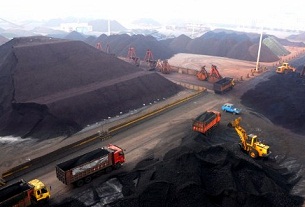
For other countries who are formulating action to address climate change, the American solution, focused on coal-fired power plants, is not necessarily a good fit. In Canada’s case it is no fit and yet our federal government led by our Prime Minister, can make statements like the one I have quoted below suggesting we are well ahead of our American cousins. There is a whopper of a lie in this declaration. For Canada coal is not the carbon polluter and although we have implemented regulations in 2012 the emission maximums of 420 tons of CO2 per Gigawatt hour from coal-fired power plants is far too high to provide much of an overall carbon reduction impact. In Canada only 11% of the greenhouse gas (GHG) emissions we produce come from coal-fired power plants. Compare that to the nearly 40% in the United States. That’s why the American solution which focuses on these plants cannot be Canada’s carbon reduction solution.
Instead Canada has to look at its principal source of carbon emissions, oil and gas, and principally the oil coming from the bitumen being mined and steamed out of the sands of Northern Alberta and Saskatchewan. The government has been promising to regulate pollution and carbon emissions from oil and gas for a number of years but continues to procrastinate. The excuse has been we needed to be in lock step with our American neighbors for a carbon reduction policy to work. It has been a specious argument from the beginning and now when action is required our Prime Minister pretty much says “been there, done that.” I quote his actual words spoken yesterday:

“Not only have we already been acting, but under the regulations this government has already brought forward we will have a 150 per cent larger reduction than those in the United States.”
The little bit of truth in this statement is rankling because it fails to address the much larger problem of oil and gas carbon reduction here in Canada. The industry produces 25% of the country’s total carbon emissions (see pie chart below) and the number isn’t dropping. In fact it is continuing to climb because to-date Canada measures carbon reduction by production intensity rather than by production volume. Intensity looks at the amount of carbon generated in producing a barrel of oil. And while the bitumen producers in the oil sands have been getting better at polluting less per barrel, the industry has been expanding producing a lot more barrels. So many in fact that GHG emissions continue to climb.

What should Canada be doing? Taking the example of the United States and its willingness to tackle its largest source of carbon emissions, should give Canada the direction to make the same effort in the country’s oil and gas industry. Setting carbon reduction targets of 30% by 2030 would be a good start. The three biggest producers, Alberta, Saskatchewan and Newfoundland and Labrador could be given the mandate to create made-in-province solutions just as President Obama has charged U.S. states with a similar task. Putting a monetary value on carbon, something already in place in British Columbia, should become a way for the entire country to participate in tackling GHGs. There is no more reason to procrastinate.
In 2015 the nations of the world will meet in Paris to hammer out a successor to the Kyoto Accord on GHGs. The United States in President Obama’s executive action has taken a leadership role. So have many other countries in Europe. Even China, now the number one carbon emitter in the world, is attempting to implement regional carbon pollution control in its populous coastal plain. But the solution China is implementing is different from the one the Americans are attempting to put in place.
In Europe with the changing geopolitics associated with Russia’s annexation of Crimea, the reliance on Russian natural gas to eliminate coal-fired power plants may be put in jeopardy. But European nations have demonstrated greater leadership in the climate change file than much of the rest of the world. Now the United States is catching up and let’s hope that represents the incentive for all nations to address our global carbon footprint, each in our own way, but with a common purpose.
]]>
I have often written about the need for a carbon tax or cap and trade system, or a combination of both, to be put in place in every country on the planet. But it seems that for most political leaders the future is not as important as the near present and the next election cycle.
That’s why what is being proposed in this week’s journal, Environmental Science and Technology, may make a lot of sense. A paper by an assistant professor and three MIT graduate students from the Engineering Systems Division and Department of Urban Studies and Planning, talks about a segmented approach to carbon emission reductions using smaller initiatives and policies rather than chasing the global agreement that seems to be very much a pipe dream these days.
In their paper they talk about the “various drivers of emissions and how influencing each can affect overall emissions.” They also talk about combining segmental and global policy around carbon. In their view a hierarchical approach may be in order, one “that would involve capping carbon dioxide emissions, but then using these segmental policies to address particular areas of concern, where the market alone may not have sufficient foresight.”
In reading the paper it made me start thinking of how to make the cause of carbon reduction sexier to more of society so that government doesn’t look like the heavy in trying to institute a carbon tax or cap and trade policy. Although government would have to take a leadership role, other segments of society could also become forces for change in dealing with the challenges we face from a warming atmosphere.
So here are some of my ideas for initiatives that may keep political leaders in office while enacting policies that meet the challenges we face:
Through policies and initiatives like these we may put a dent in GHGs. Our politicians may sleep easier knowing they don’t have to fear losing the next election because large segments of society will have accepted GHG reduction responsibility. And by backing initiatives with prizes and money, the old “greed is good” approach, we may create a groundswell of actions that will percolate across the planet.

Related articles across the web:
]]>


