Savings made by lifestyle choices show how much carbon dioxide (CO2) is being removed from the atmosphere for each of the 16 categories shown on the graph. If it serves your purpose, you may want to look at the list and see how each of your life choices compares in terms of CO2 saved. I know I did a quick inventory and compared my wife and me to the items displayed on the graph.
These are my conclusions about our lifestyle choices and reducing our CO2 output:
I don’t consider myself low-carbon virtuous although I aspire to attain a low-carbon lifestyle whenever possible.
My wife and I’s personal vice is an addiction to reading things in print, which means we subscribe to two daily newspapers and a weekly news magazine. One hopes the paper used is recycled. I know we recycle all of it after reading.
About other reading materials, we stopped buying hardcover books some time ago and now only get e-books.
Our one other vice is using Amazon for stuff unavailable at local shops.
Making lifestyle choices based on our carbon footprint is not easy. That’s because reducing personal carbon footprints is hard work. What we have done is the bare bones because we both are retired and at a stage in life where stuff no longer defines us. For others, however, getting the carbon footprint smaller is much harder.
I’ll give you an example of carbon footprint challenges. My daughter and son-in-law bought a more than 100-year-old home in Toronto two years ago. It needed upgrading of the insulation, windows, doors, heating, cooling, and more. These were significant investments even though the federal government had launched an energy efficiency grant and low-interest loan program to help with energy efficiency upgrades for residential homeowners. One challenge of being dependent on government incentives like these is that you have to do a lot of paperwork, wait for approvals, and pay out-of-pocket before you get reimbursed. That can put a lot of stress on a family budget.
Other family considerations when making decarbonizing decisions include visits. Today, virtual visits have become more common after the onset of the COVID-19 pandemic. These online visits are not the same as seeing family in person. The difference between them has psychological consequences. Going for a visit often requires the use of a car, particularly if public transit requires multiple transfers and a significant amount of extra time.
What was not on the list of the 16 CO2-saving lifestyle choices that surprised me was carbon savings from planting a food garden. Victory gardens were planted during World War 2 because of food shortages. The tradition of having a small vegetable patch, or a fruit tree in the backyard continues. Another confession: we have a grapefruit tree in our apartment with a near-full-size grapefruit hanging off a branch.
Does planting a vegetable garden reduce our CO2 footprint? Apparently not. It turns out it is an urban myth. A January 22, 2024 article in the journal Nature Cities, provides evidence that shows CO2 contributions from urban agriculture are six times greater than that produced by conventional farms or greenhouse operations.
Only tomatoes and peppers when grown in backyards and on balconies can help reduce CO2 footprints. There is good news. Urban vegetable growers love tomatoes. They constitute 25% of what we plant in our city backyards and on balconies. For urban gardeners who love tomatoes, if you add composted organics and use rainwater you can reduce your carbon footprint even more.
]]>Why is that? We downsized and decluttered. The building we chose to live in is environmentally far greener than where we lived before. Documenting what has changed is an interesting exercise.
So how can one quantify the net carbon benefit of our move? Back in 2018, I posted a series of articles on this site entitled, How Canadians Can Lower Their Carbon Footprint and Show The World How It Can Be Done. Part 3 introduced a carbon calculator of my design. When I add up the score from before and now the change is dramatic. We’ve cut our carbon emissions contribution almost in half which if we could all do this in energy-rich countries like Canada, would help to mitigate global warming.
]]>Where the Government of Canada has focused on a market-driven solution to price carbon pollution, and additional regulatory frameworks focused more specifically on the energy and transportation sectors, direct engagement with the public is an avenue still to harness.
The first carbon dividend payments to Canadian families that we received in the last week may make citizens take notice of the efforts of the federal government to tackle climate change. But there is more to be done to engage Canadians to understand the emissions issue and how their carbon footprints can alter to contribute to mitigating these emissions. That is one of the purposes of creating carbon labelling.
Today, nutritional and content labelling can be found on packaged foods. The Government recently announced plans to enhance those labels. Why, because of concerns that Canadians need to learn more about what they eat so that they can make healthier choices.
Carbon labelling would serve a similar purpose by allowing Canadians to make healthier choices about carbon emissions. A carbon label would let consumers understand the environmental impact of items they purchase and consume. The label would contain the total carbon footprint of the product.
Is it being done elsewhere? Look for some examples at the top of this article courtesy of the CleverCarbon website.
What every consumer needs to understand is that we all produce a carbon footprint. It’s not just the fossil fuel companies, the energy and power companies, or the transportation sector, manufacturers, and service industries. It is also families. Everything we consume or do produces a carbon footprint. That’s why engaging consumers directly through carbon labelling for products and services is so important.
Carbon labels need to reflect the lifetime contribution of what goods we buy and the services we purchase. This type of labelling is referred to as “cradle-to-grave.”
It should be understood that every carbon footprint is different even if we are talking about similar products. And within an individual product line, if the manufacturer uses more than one supplier for the same finished goods, the carbon footprint of each will differ.
Cradle-to-grave includes:
Currently, there is a body of regulations that can be used to help in the implementation of carbon footprint quantification standards. These include:
Labelling to date comes in three flavours:
In a world where we have access to portable digital technology in the form of smartphones with the ability to scan bar codes, carbon labelling can be linked to apps that provide consumers with personal carbon footprint calculations to track the environmental impact of their goods and services purchases. One of these apps has been developed by an Australian software company Greenswrm. It is one of a growing number that recognizes through carbon labelling we can change consumer behaviour and help mitigate climate change.
]]>In this article, Katie talks about how individuals can practice sustainability. This is a subject near and dear to my heart and reflected in citizens’ movements like Take the JUMP and the Citizens’ Climate Lobby.
Each of us can make a contribution to greenhouse gas emission reductions through lifestyle, and consumption choices. Katie lists some of the actions you can do, so please enjoy her article and send your comments and questions this way.
Climate change is the biggest threat to life on earth in the 21st century. What’s worse: we are not headed in the right direction.
Even after COP26, experts predict that global warming may reach 4 degrees Celsius by the end of the century. This would take us far beyond pre-industrial atmospheric temperatures and would increase the frequency and intensity of extreme weather events and climate disasters around the world.
We need to take definitive, collective action to combat climate change and ensure that the Earth remains in a healthy balance for all living things. So what can you do? Here are a few of the changes you can make to prioritize your sustainability goals.
We hear a lot about reducing our carbon footprint, but it can be hard to know how to get started. Recycling a few jam jars might feel good, but it’s certainly not the biggest change you can make to reduce your footprint.
A recent report shows that to get the most bang for your buck, you should opt for green transportation options, switch to renewable energy, and reconsider consumption habits. These steps sound simple but require major lifestyle changes, particularly if you are used to driving everywhere or eating foods that are unsustainably sourced.
Transportation accounts for 29% of all carbon emissions. To take a significant chunk out of your total carbon footprint you can choose a bicycle over a car, or reduce the number of long-haul flights you take every year. To achieve this, you should host more work-related activities over remote software like Zoom and start taking vacations nearer to home rather than jetting out of the country.
Renewable energy used to be reserved for only hardcore climate activists. In 2020 alone, however, renewable energy capacity grew by 45%, and global trends continue to show that renewables will be the cheapest energy on offer before the end of this decade. To start the process of switching energy sources to renewables, if you own your own house, get in touch with solar panel companies that will give you a quote. Or if that is not feasible, look at finding energy providers who only source from renewables.
According to The World Bank, humanity produces 3.4 billion tons of waste every year. What’s worse: that number is set to rise by 70% by 2050 unless we take urgent action. As an individual, you can play your part by looking at what you consume and what you throw out.
Fortunately, reducing your waste is fairly straightforward and is something to do immediately. Begin by keeping better track of food purchases. Aim to source more of your food locally when possible. Additionally, consider shopping second-hand. For clothes and other products, thrift stores can provide lots of useful items still in great condition.
Individual responsibility is necessary if we are to reverse climate change, but it is nowhere near as important as collective action. That’s because individual action alone cannot “solve” global warming. Instead, the fossil fuel firms that emit 70% of all greenhouse gasses must be held responsible by our governments and be held to account by citizens.
It’s hard to face up to this reality, but it needn’t turn you away from the cause of combating climate change. Instead, you should strive to turn your resolve into collective action. This may sound a little bit like a workers’ revolt, but it is much more than that and necessary for the public to engage with polluters and counteract the millions of dollars that they spend to lobby against climate action.
This doesn’t mean you need to don an ushanka and start marching. You can start taking collective action by focusing on community groups and connecting with climate leaders. This will likely help you solve other issues, too, like waste disposal, recycling, and community clean-up projects in your locale.
Combating climate change requires all of us to reconsider our individual and collective climate responsibility. As an individual, you can do your part and let others know what you are doing. It has never been easier to connect with the world and share than it is today. You can join others in writing letters to the editor of your local newspaper, or your local and national government representatives. You can join groups like Citizens’ Climate Lobby and learn how to engage policy decision-makers. And in your daily routines, you can lead by example.
]]>My wife and I have made changes in the last decade. We moved from a house in the suburbs to a midtown apartment in the city, dramatically reducing our personal footprint. We switched from an internal combustion engine vehicle to a hybrid. We no longer use incandescent lighting anywhere in our home.
The apartment we live in is in a condominium and is rented. That is a challenge for us as we try to further reduce our carbon footprint because we have no say over the building’s budget for tackling climate change through retrofits. At nearly two decades old the building is a significant contributor of greenhouse gas emissions. In our Canadian winters, the original windows no longer insulate as we leak heat into our outdoors daily. The heating system burns natural gas. Electricity is bulk metered.
As renters, we have little to no say in retrofitting budgets to address these impediments to fighting climate change. But we can talk to our neighbours and members of the condominium board and building management about measures to collectively address issues such as window replacement to reduce heating costs while fighting greenhouse gas emissions.
The building roof is gravel composite and there is plenty of space for solar panels which could reduce the electricity we draw from the grid. We could install plugin capacity for residents who see an electric vehicle (EV) as a personal way that they can contribute to lowering their carbon footprint. These two acts: solar panels and EV recharge stations would be a community-wide contribution to make our building more climate change friendly.
Other personalized ways for those of us living in the building to mitigate climate change can be as simple as insulating areas of walls where we detect drafts (plug outlets are often culprits), upgrading to more energy-efficient appliances, and changing lighting fixtures.
When we all are invested in personalizing our climate change response then we can make great strides in reducing greenhouse gas emissions and mitigating global warming.
Can governments play a role in helping us in these efforts?
Absolutely. But so many government initiatives I come across aren’t focused on personal acts to address climate change. None help me measure my carbon contribution and give me tools and strategies to make personal reductions.
As I went looking for examples here in Canada, I studied federal, provincial and city programs and what follows are just a sampling of what each offers.
Canada, at the federal level, offers a number of programs including:
The Climate Action and Awareness Fund (CAAF) – a community-based initiative with $206 million to be spread over five years to support youth climate awareness (really, our youth aren’t aware?), climate research, science, and technology coming from think tanks and academia.
Environmental Projects – no specific investment numbers are disclosed but what is described states financial support to raise climate change awareness, implement emission reductions, preserve ecosystems and species at risk, restore coastlines, and make improvements to freshwater and saltwater bodies. Specific funding mentions a $50 million First Nations’ project budget.
Low Carbon Economy Fund – is a $2 billion federal investment in projects focused on clean growth, emission reductions, and meeting or exceeding Canada’s Paris Climate Agreement commitments. Nothing personal here.
Green Infrastructure Fund – started in 2009 and scheduled to end by 2022, this initiative supports infrastructure investments for wastewater, green energy generation and transmission, solid waste, and carbon transmission and storage projects. Once again, nothing personal.
At the provincial level in Ontario the government has provided a climate change plan that describes how good things are locally with nothing aimed at individual projects. One program is The Ontario Carbon Trust, a $400 million fund aimed at private investors developing clean technology solutions.
At the municipal level, Toronto takes a more activist role on the climate file. I selected three initiatives that invite the public to participate. They are:
TransformTO – a net-zero strategy to seek public engagement and feedback on achieving emission reduction targets.
Community Energy Plans – looking at local infrastructure and land-use projects from an energy solution perspective.
Live Green Environmental Grants and Incentives – offering residential and homes and building rebates, low-interest loans for energy retrofits, tree planting on properties, and solar power consulting and planning.
At this stage in our collective climate change fight, we are still far from getting ourselves as individuals involved. The big Canadian strategy that has a personal impact is the putting of a price on carbon pollution which currently at $30 per ton amounts to less than 7 cents per liter for diesel and gasoline at the pump but will rise to $170 per ton or 37 cents per liter by 2030. Sounds meaningful at the back end. But the current government policy is to rebate much of that money back to individuals in the form of income tax relief. So we feel a bit of personal pain when we pump gas and that’s about it. I believe for our climate change mitigation efforts to succeed we need greater personal involvement than that.
]]>The research found that the training of a series of AI models emitted almost 284,000 kilograms (626,000 pounds) of carbon dioxide (CO2), five times the average lifetime emissions of an automobile including the CO2 released during manufacturing.
New AI models based on neural network computing require many hours of training and exposure to vast amounts of data. In many cases, the hardware used is top-of-the-line supercomputers or multiprocessor server farms. The energy requirements to power the hardware, plus the manufacturing of the systems themselves, if not sourced from renewables produces net new carbon emissions. This is particularly true when the hardware being used to develop the AI models is sourced from often, energy-intensive in-house data centers, and not from cloud sources which more recently have become greener by developing accompanying wind, solar and battery storage farms.
For the purpose of the study, the authors looked at model training for natural language processing (NLP), teaching AI to understand human language. The training of NLP models has involved mega datasets of scraped pages from the Internet, computationally expensive, and an enormous energy consumer. In studying the four models that represent state-of-the-art NLP performance, they were able to calculate resource usage, and total energy consumed over the model training process. They then converted the energy and resources consumed into CO2 equivalents.
What they found was that the more complex the AI model, the higher the environmental cost in CO2 equivalent emissions, with the most costly model of the four producing a carbon footprint equal to 635 kilograms (1,400 pounds) of CO2, equal to a single fare round-trip flight from New York City to Los Angeles. The CO2 amount described here covers only one modeling effort. So imagine when you are testing a number of options, how quickly the emission equivalent values would rise. For example, in a six-month AI training effort involving 4,789 modeling options, the amount of CO2 emitted equaled 35,800 kilograms (78,000 pounds). Multiply that last statistic by the geometric growth in AI research, and particularly, using large neural networks, and you have a growing and massive carbon footprint issue that needs to be addressed.
In the paper, the authors address this issue by looking at the shared computing resources offered by companies such as AWS, Google, and Microsoft, looking at advantages and disadvantages of doing the research using third-party commercial data farms. What they found out is that in most cases, the economic benefit is not immediately apparent using cloud-based commercial server farms proving to be twice as expensive as relying on home-built resources. And once built, the home-based servers can be repeatedly used for subsequent projects for the cost of energy and operational maintenance.
The authors post for consideration that because of the burgeoning field of AI research, a good national strategy consider cloud-based data farms built by governments for common use and that these facilities be powered from renewable energy sources. Continuing down the current path, the authors conclude is not feasible because the computational resource requirements for advancements in AI will in time become environmentally, energy, and cost prohibitive.

The organizers of this year’s Earth Day celebration have called for a billion acts of green, stating that each of us through some small action can make a difference. What kind of acts are we talking about? You may want to:
In the past few postings, I have mentioned Greta Thunberg, the teenager from Sweden, who is becoming the representative of youth calling for action from governments to combat global warming. Thunberg’s action to do a weekly one-day walkout from classrooms has inspired millions to join her in shaming their governments. The argument about skipping school and homework raised by politicians opposed to these demonstrative acts doesn’t wash with these young people who see leaders as skipping their responsibility to do the homework necessary to save the planet.
Thunberg’s movement is tame compared to what may soon follow as more and more youth are heeding a call to action to demonstrate against governments and their inaction related to anthropogenic climate change. It reminds me of the growing anti-war movement of the 1960s as Americans and supporting youth from other countries began to mobilize against the war in Vietnam.
How much longer before we see, not just Greenpeace protesting a new drilling rig in Arctic waters, but people massing in cities to march in protest against governments and industry that threaten existence as we have come to know it? If you don’t believe this is inevitable you should visit the site of Extinction Rebellion, a movement that is targeting government inaction on climate in many countries. On its site, it notes that all it needs is 3.5% of the population of any regime to become actively engaged in resistance over a period of time to cause that government to concede or collapse. It states that governments not addressing the climate change and environmental crisis of the 21st century “have lost their legitimacy.” In the week before Earth Day, the movement called for “everyone who knows we are in a climate emergency to use nonviolent direct action to confront, disrupt or shut down” governments, fossil fuel companies, and those who make money by protecting the fossil fuel industry.
It is not surprising to read about such groups forming on the Internet today. With the emergence of the Alt-Right, the Anti-fascist movement, white supremacists, and jihadists, we are seeing fringe actors take centre stage and occupying more and more column inches in the media each day. This is the world we live in where extreme arguments are becoming normalized.
My hope is that Greta Thunberg and youth around the world succeed in shaming politicians and CEOs of polluters to act in the best interest of the planet, and do it now. For young people like Thunberg who despairs about her future and the planet, how many more Earth Days will it take before the vast majority of humanity organizes to defend the planet’s health and a sustainable future for all who live on it?

The four goals of the NGCRP are:
Which departments of government within the United States are involved?
Agriculture, Commerce, Defense, Energy, Health and Human Services, Interior, State, Transportation, EPA, NASA, National Science Foundation, Smithsonian and U.S. Agency for International Development.
What have these U.S. institutions concluded?
In its analysis of the science, the report discusses “potential pathways for climate intervention.” Climate intervention equals geoengineering. Among the strategies is the removal of carbon dioxide (CO2) from the atmosphere and sequestering it. A second discussion looks at reflecting sunlight to cool the Earth. The report also considers intended and unintended consequences should geoengineering be applied to global warming. Carbon removal and storage, states the report, is no substitute for reducing greenhouse gas emissions, or for adaptation to the changes that the climate will cause. It is seen, rather, as one of a number of tools that humans could deploy to manage future climate change. The report also acknowledges that “other countries or the private sector may decide to conduct intervention experiments independently from the U.S. Government.” The report also notes that experimentation with any geoengineering will require global agreement. After all, any atmospheric experiment with aerosols would impact the global commons the same way naturally occurring phenomena such as volcanic eruptions. And carbon removal will require a better understanding of impacts on the geochemistry of the locations where sequestration occurs.
Although not discussed in this report, one of the more promising industry trends is to find ways to convert CO2 emissions from a waste product into a marketable commodity. This goes well beyond existing sequestration technologies that pump captured CO2 into existing fields to enhance oil recovery (EOR). Known as CO2-EOR, the oil and gas industry has applied a variety of solutions within oil fields since the 1970s. Back then no one thought of it as a means of permanently sequestering carbon. Today, however, the benefit is acknowledged. In a report last fall the International Energy Agency (IEA) stated that CO2-EOR produced a 0.19 metric tons of CO2 storage for every recovered barrel of oil. The National Coal Council in the United States, in a recent report concluded that CO2-EOR provided the “most immediate, highest value opportunity to utilize the greatest volumes of anthropogenic CO2.”
But the use of CO2 for commercial purposes goes well beyond pumping it into oil fields. An X-Prize competition offering $20 million U.S. to applicants has drawn many entries with plans to create products from CO2 including concrete, biofuels, paint, fertilizers, health supplements, toothpaste, and carbon nanotube batteries. The size of the CO2 utilization market for carbon aggregate products has been estimated to be as much as $700 billion U.S. by 2030, using 7 billion metric tons of CO2 per year, or 15% of current global emissions.
For the new administration in the United States, experimentation through geoengineering could be seen as an excuse for eliminating the reduction strategies of President Obama. So could CO2 utilization and commercialization. But this would be a mistake. Intervention and commercialization are complimentary strategies but no substitute for carbon reductions, adaptation and mitigation to deal with current and future environmental consequences from the present carbon footprint and the state and rate of anthropogenic-caused global warming.


The Ministry of Health in its latest ten year plan recommends that individual Chinese consume no more than 40 to 75 grams (1.4 to 2.6 ounces) of meat each day. So much for a 10-ounce steak. Why?
For two reasons:
I think we can all understand the public health angle. Eating a lot of red meat is correlated to increases in cardiovascular disease and obesity. But greenhouse gas emissions? How does that work?
Agribusiness is a large source of greenhouse gas emissions. Cows, chickens, pigs and other livestock contribute 14.5% of all the carbon dioxide and methane emitted into the atmosphere today. That amount is not that far below emissions from transportation, the second largest source of carbon atmospheric pollution.
The Chinese government hopes by reducing meat consumption it can significantly decrease its overall carbon footprint. It is needed because as China has raised the living standards of more than 500 million of its citizens the average consumption of meat has dramatically increased. In 1982 consumption amounted to 13 kilograms (458 ounces) per year. Today that number is 63 kilograms (2,222 ounces). And at present trends will grow to 93 kilograms (3,280 ounces) by 2030. That’s a far cry from the 5111 to 950 ounces in the new guidelines. Imagine trying to enforce what China is trying to do in North America or Europe where meat consumption is significantly higher.
The answer of course for the people in China and elsewhere is to switch from meat to vegetable substitutes. That’s a tall order unless you can find a palatable equivalent to meat, not the the vegeburgers and tofu turkey substitutes that try to make you forget what meat actually smells and tastes like. Another potential answer is lab grown meat but today’s early efforts puts lab hamburger beyond the scope of anyone to afford.
Enter Impossible Foods. In a Bloomberg Technology article appearing yesterday and entitled, “Frankenburger Comes Eerily to Life in the Lab,” authors Katherine and Lucy Wells describe a hamburger patty made from vegetables that looks, tastes and bleeds like meat. Pat Brown, Founder and CEO of Impossible Foods is making meat the way animals turn plants into themselves. The company uses plant sources that produce the same sensory perception that we get when we smell and taste meat. To this they add heme, the chemical compound that is a component of hemoglobin responsible for oxygenated our blood. In the plant world heme is found in clover, yeast and the root of soybeans.

When heme is mixed with soy and other plant ingredients seen in the picture above it turns a vegeburger into a food that tastes indistinguishable from a burger made from ground beef. The company plans to distribute its products in select restaurants in New York City, Los Angeles and San Francisco. The next step is to drive down the cost of production and eliminate waste from the process to make it cost competitive with ground beef sold in supermarkets.
The end product could be the answer to not just North America and Europe’s love of beef but also China’s rising middle class consumers. And Impossible Foods is not just limiting its research to the perfect substitute for a hamburger. The company is also producing cheese substitutes from grains, greens and beans, separating the proteins, fats and other nutrients and selecting those that produce equivalent flavor and texture.

When Wall Street Journal reporter Kurt Soller took “a lunchbox full of raw, slider-size burgers” to San Francisco’s restaurant, Jardiniere, a little over a week ago the result he described as “surprisingly good” with an aroma and taste “exactly like cooked beef.” The only downside he noted was texture, describing it as “slightly off,” more grainy than meat-like.
So the impossible may now be possible. Meat not on the hoof but coming from plants. And think of the opportunity represented by new Chinese dietary standards which should create enormous demand.
]]>I will admit what we are doing is not a lot but it is an incremental step. And if more of us were to do it, we collectively could significantly reduce our contribution to global warming.
There are other next steps. It is only a matter of time before we give up our car and subscribe to a ride-sharing program. But in the interim I am happy to report that we have reduced our gasoline consumption, and therefore, its contribution to global warming by almost 300% from two years ago. The secret, our move to mid-town Toronto over two years ago which has led to us using the car far less and public transit much more. In our local neighborhood we don’t drive to shop, we walk. It’s a lot harder to make these carbon reductions when you live in the suburbs and have fewer transit options and further to go to get basic necessities.
So I’m feeling pretty good about what my wife and I are doing. The State of the Climate however is another matter when you read the latest NOAA report published on July 15, 2015. The news is far less promising. Here are a few highlights:
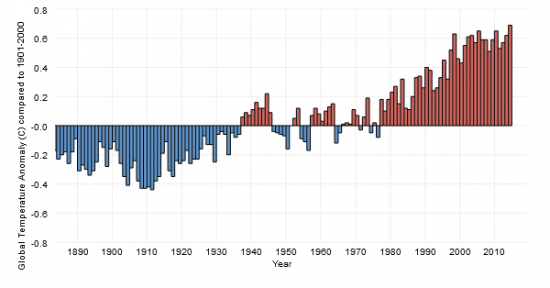
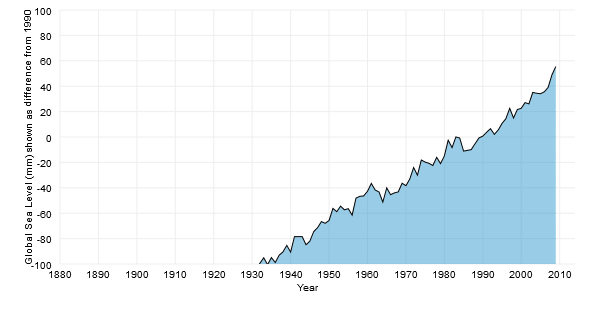
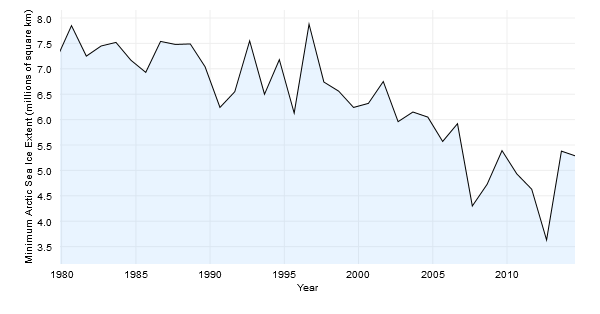
To read the complete NOAA report go here.