The post Two Climate Stories of Consequence – On a Highway to Hell or About to Turn the Corner appeared first on Techso Mogro.
]]>In a recent speech, UN Secretary-General António Guterres warned that the planet is on a hot streak and that we need “an exit ramp off the highway to climate hell.” He noted that the nations of the world are playing Russian Roulette with the planet and that the decisions we collectively make in the next 18 months will be critical stating “It’s climate crunch time.”
The rate of warming has sped up based on results from recent studies that calculate fossil-fuel-driven warming is increasing atmospheric mean temperatures by 0.26 Celsius (0.468 Fahrenheit) degrees per decade not including the effect of the latest effect of the cyclic El Niño arising in the mid-Pacific Ocean.
A World Meteorological Organization report states there is an 80% probability that in one of the next five years, we will see mean global temperatures exceed the 1.5 Celsius (2.7 Fahrenheit) lower threshold target established in Paris at COP21 back in 2015.
The mean temperature rise in Canada has already surpassed the 1.5 Celsius threshold. In the last 12 months, Canada is 1.63 Celsius (2.93 Fahrenheit) higher than it was in the mid-19th century.
Guterres noted in his speech that action is needed by the richest 1% whose emissions equal the lowest 66% on the planet. He stated, “It is a travesty of climate justice that those least responsible for the crisis are hardest hit: the poorest people, the most vulnerable countries, Indigenous peoples, women and girls.”
According to a Bloomberg research study confirming results from a Climate Analytics report, 2024 may be the turning point in our struggle to reduce global carbon dioxide (CO2) emissions.
The International Energy Agency (IEA) reports that rapid growth in renewable energy has upped power generation capacity by nearly 50% approaching 510 Gigawatts. This is the fastest growth rate in the last 20 years.
Based on existing policies and forecasts the IEA projects renewable capacity to reach 7,300 Gigawatts by 2028. It’s encouraging news but if projected to 2030 will still fall short of the 11,000 Gigawatts forecasters state we need to reverse CO2 emissions significantly.
Renewables need to triple to meet Paris climate goals and emission reduction targets. Instead, we will only grow 250%. We can make up the difference over the next six years if we can increase capacity by 21% annually. Bloomberg’s report states we can keep temperatures from rising beyond 1.75 Celsius (3.15 Fahrenheit) in the next two decades by spending an additional $215 trillion on new renewable projects. Based on our pace, however, we see CO2 emissions drop by 27% by 2050, and a rise in global temperatures of 2.6 Celsius (4.68 Fahrenheit) as a consequence by 2100. This would be an unacceptable outcome with dire consequences for countries nearest to the equator making many areas unliveable.
If you want to know why cannot get to net zero by 2050, look no further than to the governments of several countries and the fossil fuel industry they support. Oil companies are doubling down on exploration and pumping out more products, they say, to meet growing world energy demand.
The industry is on a consolidation and growth path. Exxon has just acquired Pioneer Natural Resources. Chevron is acquiring Hess. ConocoPhillips is buying Marathon. These companies are spending hundreds of billions of dollars betting on the gamble that nothing will replace petrochemicals in the short to mid-term.
China isn’t about to abandon coal. The United States has become the largest exporter of fossil fuels to the world. These two countries and fossil fuel companies that operate within their boundaries and elsewhere hold the rest of the world hostage to their national and corporate objectives. The fossil fuel industry intends to exact its pound of flesh until it has pumped out and sold every last barrel and mined and delivered every last ton of coal.
Meanwhile, the Fossil Fuel Non-Proliferation Treaty (FFNPT) which represents an alliance of environmental groups, scientists, and the public tries to muster international collaboration to end global dependence on fossil fuels. Against the ambivalence of China, the United States, and other countries equally committed to their fossil fuel industries, it will take years before the FFNPT is ratified by the UN.
The post Two Climate Stories of Consequence – On a Highway to Hell or About to Turn the Corner appeared first on Techso Mogro.
]]>The post COP28’s Focus and Agreed to Action on Methane is Delusional Collective Thinking appeared first on Techso Mogro.
]]>But what is missing when describing CH4’s atmospheric impact is its short duration lasting a mere 12 years, and certainly no more than 20. CH4 after becomes CO2 and water vapour. So we still have two potent greenhouse gasses to deal with after the fact.
A quick comparison with CO2 shows that its impact is far greater lasting between 300 and 1,000 years. CO2 only leaves the atmosphere when it is absorbed by oceans, plants, soil, and the weathering of rocks. The latter occurs when CO2 combined with water falls as precipitation on basalt which turns into calcium carbonate, better known as limestone.
CH4 and CO2 aren’t the only greenhouse gasses. What follows gives you some pertinent facts:
Why is a potency comparison between CH4 and CO2 such an issue? Because headlines from COP28 in Dubai included agreements about CH4 and got front-page coverage.
A global pledge by 155 governments and 50 oil and gas companies to reduce CH4 from oil and gas, waste, and agricultural activities was featured in press conferences and the final communiqué. It contained a CH4 reduction target of 30% by 2030 from 2020 levels, describing this as “the fastest way to reduce near-term warming” and “to keep a 1.5 Celsius temperature limit within reach.”
CH4 was described as contributing 30% of current global warming and was further seen as a contributor to tropospheric ozone (aka ground-level ozone), the latter described as being the cause of hundreds of thousands of deaths and millions of tons in crop losses annually.
The communiqué went further, stating that a rapid reduction in CH4 emissions would mitigate near-term global warming and contribute to better health, food security, and energy security for humanity and the planet.
CH4 emissions are the least of our greenhouse gas worries. The amount of warming caused by CH4 is short-term because it doesn’t accumulate in the atmosphere for 12 to 20 years. Then it degrades to become a CO2 problem. Delay CH4 action and its effect vanishes in two decades. Delay acting on CO2, and it keeps accumulating for up to 1,000 years. That’s why every added kilogram of CO2 is the much greater global warming threat.
If you don’t believe me, Raymond Pierrehumbert, a physicist and professor at the University of Oxford, in a recent interview appearing in the Bulletin of the Atomic Scientists makes the same point. He states,
“Whereas a kilogram per year of CO2 will mount up to a certain amount of warming in the first 20 years…if you keep emitting that kilogram per year, the amount of warming you get continues to increase indefinitely, which does not happen with CH4.”
Pierrehumbert compares the two gasses for their global warming impact using the analogy of a car trip.
“CO2 is like the total distance your car has gone, so it’s the cumulative progress towards your destination, and our destination, in this case, is making the world too hot to be livable. Whereas CH4 is just like the speed at which the car is going…a stock versus flow problem…CH4 is a flow pollutant; it doesn’t accumulate in the atmosphere. CO2 is a stock pollutant. The harm is determined by the cumulative stock of it in the atmosphere.”
Regarding COP28, Pierrehumbert concludes that the fixation with CH4 is a “seduction” a “mass delusion and wishful thinking.” The focus on CH4 reduction will not contribute significantly to mitigating climate change when “compared to how much warming we’re going to get in 100 years if we don’t decarbonize.”
The post COP28’s Focus and Agreed to Action on Methane is Delusional Collective Thinking appeared first on Techso Mogro.
]]>The post IPCC Sixth Assessment Lays Out Possible Climate Futures for Governments to Initiate Policy appeared first on Techso Mogro.
]]>In this second summary of my read of the IPCC Summary for Policymakers report, we review five climates outcomes this century as described in the document.
In the first climate outcome, the report looks at the consequences from greenhouse gas (GHG) emissions retained in the atmosphere, plus those added throughout the remainder of the century. A doubling in carbon dioxide (CO2), methane (CH4), and nitrous oxide (N2O) levels from the mid-century to 2100 and beyond is highly likely even with mitigation efforts such as the application of net negative CO2 reduction technologies and the expansion of natural carbon sinks on land and in the ocean.
Under these circumstances, global surface temperatures will continue to rise exceeding 2.0 Celsius (3.6 Fahrenheit) by 2100. Note, that was the upper limit of the Paris Climate Agreement’s agreed-to temperature constraint.
If new emissions, however, remain lower then temperatures may rise no higher than 1 to 1.8 Celsius (1.8 to 3.2 Fahrenheit). But if not contained and increase the outcome could see a rise between 3.3 to 5.7 Celsius (5.9 to 10.2 Fahrenheit) over mean temperatures from the years between 1850 and 1900. The Earth’s atmosphere would be akin to what was experienced 3 million years ago during a significant warming period.
This outcome looks at the frequency of heat extremes on land and in the oceans, heavy precipitation and tropical cyclone events, agricultural and ecological droughts, and reductions in permafrost, sea ice and snow cover with every additional 0.5 Celsius rise increasing intensity and duration.
Mid-latitude and semi-arid regions will see the highest peak land temperatures averaging 1.5 to 2 times more hot days. And the Arctic will see a 3-times increase in temperatures for its coldest days. Both the tropical and polar oceans will see increases in the frequency of marine heatwaves.
Extreme precipitation events will be more frequent with increases in intensity by 7% for each 1 Celsius (1.8 Fahrenheit) degree of warming. Add to this an increasing intensity in tropical cyclones with peak winds registering at Category 4 and 5 levels.
Permafrost thaw, seasonal snow cover, and land ice in the Arctic will be impacted with the Arctic Ocean being practically ice-free in September at least once before the year 2050.
This outcome looks at the vulnerability to global warming of the atmosphere’s water cycle. Average annual land precipitation is projected to increase by up to 5% from the present if we can keep new emissions low., but up to 8% under the median emissions in Scenario 1, and 13% under high emissions. These projections are for the period at the end of this century.
Precipitation is expected to increase more in high latitudes, the equatorial Pacific and parts of monsoon regions, but decrease in parts of the subtropics and tropics.
Changes in season intensity are projected as global atmospheric temperature rise causes changes to regional atmospheric circulation. The annual monsoon, a seasonal event is expected to be delayed.
The southern hemisphere will see a poleward shift of mid-latitude storms. The northern hemisphere storm tracks are likely to remain unchanged although the intensity and frequency of the storms as stated in Scenario 2 will increase.
This outcome concerns the effectiveness of natural carbon sinks on land and in the ocean where increased CO2 emissions in the atmosphere will lead to less effective sequestering of the greenhouse gas. What that means is more CO2 will remain in the atmosphere contributing to increased warming. The rate of CO2 uptake by these natural sinks is expected to decrease in the second half of the century.
Could the natural carbon sinks become CO2 contributors as the century unfolds, accelerating atmospheric warming? Based on the data in this report, it is deemed unlikely to happen before 2100. What is uncertain at present is just how much CO2 will find its way into the atmosphere by the turn of the next century. The impact of higher amounts of greenhouse gasses on ecosystems is not yet fully understood. And the current climate models are still weak in understanding CO2 and CH4 emission contributions from wetlands, permafrost thaw and wildfires, all expected to increase through the century.
This outcome notes that past and future greenhouse gas emissions will be irreversible for centuries to millennia. Where will the impacts be greatest? On the world ocean, polar and mountain glaciers, and on sea levels.
Over the rest of this century ocean warming will be up to 8 times faster than the recent period between 1971 and 2018. The upper ocean, that is, the surface water will be most impacted although warming will find its way throughout the entire water column because of the natural conveyor belt that brings water from the depths to the surface and then down again.
Ocean water will become more acidic and deoxygenation is expected to increase as the century progresses. Atmospheric CO2 volumes will govern the rate of both acidification and deoxygenation. Both conditions will have a profound impact on ocean ecosystems with the changes described as irreversible for at least a century to millennia.
Mountain and polar glaciers will continue their current melting for centuries to come. Permafrost thaw is seen as irreversible. Both the Greenland and Antarctic ice sheets will be impacted either slower or faster based on the volume of greenhouse gasses still being emitted from human sources let alone from reversing natural carbon sinks as the century unfolds.
Sea levels will rise throughout the 21st century with the likely global mean increase by 2100 at between 0.28 and 0.55 metres (0.9 to 1.8 feet) under lower emissions, 0.32 to 0.62 metres (1 to 2 feet) under intermediate emission rises, and between 0.63 and 1.01 metres (2 to 3 feet) if emissions remain high. These estimates do not include the uncertainties that could manifest from sudden ice sheet melting events, particularly in Antarctica.
The report notes that longer-term sea-level rise is expected for centuries to millennia because of overall ocean warming and ice sheet melt. The prediction, if warming is limited to between 1.5 and 2 Celsius (2.7 and 3.6 Fahrenheit) will be a 2 to 6-metre (6.5 to 19.6-foot) rise in the next 2,000 years. And if temperatures rise by 5 Celsius (9 Fahrenheit), the rise will be 19 to 22 metres (62 to 72 feet) over millennia.
These projections are consistent with reconstructed sea levels from paleoclimates. For example 125,000 years ago, when global temperatures were between 0.5 and 1.5 Celsius (0.9 to 2.7 Fahrenheit) warmer, sea levels were 5 to 10 metres (16 to 32 feet) higher. And 3 million years ago when global temperatures were 2.5 to 4 Celsius (4.5 to 7.2 Fahrenheit) higher, sea level rise was as much as 25 metres (82 feet).
No person living today should look at these findings with skepticism. The data collected, based on hard evidence when fed into numerous climate models, point to these outcomes within the variations and ranges described.
We will continue to look at the IPCC report in our next posting when we cover what the document states about risk and adaptation, as well as how to limit future climate change. We know the answer already but it bears being repeated.
The post IPCC Sixth Assessment Lays Out Possible Climate Futures for Governments to Initiate Policy appeared first on Techso Mogro.
]]>The post Geoengineering: A Tool To Use After a Stain Has Set – Part 2 appeared first on Techso Mogro.
]]>Back in 2015, I described the work of Carbon Engineering, a Canadian company backed by Bill Gates, of Microsoft fame, and Murray Edwards, an oil sands magnate. A project that began its life at Harvard University and the University of Calgary. At the time of the first launch of a pilot project in Squamish, British Columbia, the Direct Air Capture or DAC carbon dioxide (CO2) extraction cost was as much as $1,000 USD per ton, ten times more than what was seen as the break-even point to make the technology viable. But now after more than three years of operation, DAC costs per ton are approaching the $100 break-even point.
And what makes the DAC solution even more interesting is that the CO2 is being converted by an air-to-fuel process to become an alternative to gasoline and diesel, capable of being used in existing internal combustion engines on the road today. The cost of this fuel today is 25% more than conventional gasoline and diesel, but with scale could become cost-competitive.
Carbon Engineering isn’t the only DAC technology. Climeworks AG, a Swiss company, launched in 2009, has developed a competing solution to capture atmospheric carbon directly and fixing it permanently underground in basaltic rock turning it into stone in a few years. The company currently has installations in Italy, Iceland, and Switzerland.
These two companies could make it possible for the nations of the world to continue to use fossil fuels for energy if their technologies are replicated by the thousands. One would think that the fossil fuel companies would be knocking on their doors to invest.

A consequence of increased CO2 and methane (CH4) in the atmosphere means the largest natural carbon sink on the planet is being stressed. I’m talking about the world’s oceans which today play a key part in the normal carbon cycle of our planet. In fact, the oceans have absorbed between one-quarter and one-half of the CO2 we humans have produced since the dawn of the Industrial Revolution. And they are continuing to absorb carbon even if we were to go to net zero emissions globally today. Scientists estimate that the legacy of current atmospheric carbon will continue to impact the world’s oceans for at least the next two centuries before the trend gets reversed.
What happens when the oceans absorb carbon? The CO2 combines with water to create carbonic acid which alters the acid-base pH balance. If enough carbon is absorbed it means the animals that require exoskeletons and shells for survival are threatened. It means shellfish, corals, and many other species are at increased risk. And it means the base of the ocean food chain, coccolithophores, a form of plankton and a food source for small fish and zooplankton are at risk as well. To describe the danger as an extinction-level event throughout the entire ocean food chain is not too far off base. We may find ourselves lucky with some forms of plankton that can adapt to changes in pH balance in our oceans, but we have no idea what will ensue as acidity increases. Can the base of the ocean food chain adapt to a more acidic ocean world? Or should we be intervening to counterbalance the increased acidification?
In October 2012, Russ George, an American decided to dump 100 tons of iron sulfate into the oceans off the British Columbia coast covering an area of 10,000 square kilometers (3,861 square miles). The goal was to create an oceanic algae bloom that would then absorb CO2 and when it died, would sink to the seafloor where the carbon would be permanently sequestered. At the time research from the University of Sydney discounted the value of such activities noting that the cost to make the iron in terms of carbon emissions was greater than the carbon savings that would be derived.
George isn’t the only one who has been thinking along these lines. Before him, a joint project of the Indian and German governments in 2009 dumped six tons of iron sulfate off the coast of Argentina. And even prior to that date some 12 iron-enrichment experiments were carried out up until the year 2005. More recently there is the Korea Polar Research Institute which has funded iron fertilization experiments off Antarctica. And Chile’s Oceanos Marine Research Foundation has also dumped iron off its coast in 2018.
What kind of scale would be needed to raise the oceans pH levels by 0.1 to restore them to levels more friendly to carbonate dependent ocean life? One study says the area of coverage would have to be equal to twice the Earth’s surface done every year.
One other consequence of iron fertilization of the ocean is the impact it will have on levels of oxygen in seawater. When algae bloom and die it deoxygenates the surrounding water. Thus iron fertilization on a global scale could produce an extinction event for much of life in the world’s oceans.
The unintended consequences of experiments of this type are fearful to contemplate.

In Part 3 of this series on geoengineering, we will conclude with a look at current thoughts and experiments to stop polar ice melt, and the building of green walls, afforestation, and reforestation projects, all in the name of offsetting anthropogenic carbon contributions.
The post Geoengineering: A Tool To Use After a Stain Has Set – Part 2 appeared first on Techso Mogro.
]]>The post An Earth Day Postscript appeared first on Techso Mogro.
]]>

When asked by reporters about the results being linked to human activity, the researchers at the Scripps Institute answered:
“The rise in CO2 is unambiguously caused by human activity, principally fossil-fuel burning. This is clear from the numbers: We know how much fossil fuel is converted into CO2 each year and emitted into the atmosphere. The CO2 doesn’t all stay there because some enters the ocean and some is taken up by photosynthesis, which ends up in land plants and various types of biomatter.
“Carbon atoms are not created or destroyed in any of these processes, so the total fossil-fuel emission to date must equal the combined increases in these other reservoirs. We can document large carbon increases in all these reservoirs. In the atmosphere, it’s especially easy, because the atmosphere is quite well mixed. As it happens, about 57 percent of the emissions have remained in the air.
“It’s true that atmospheric CO2 has almost certainly been higher than present in Earth’s distant past, many millions of years ago. But because fossil-fuel burning is not natural, the recent carbon increases in the atmosphere, oceans, and land biosphere cannot be natural either. And you are correct that even though the levels of CO2 in the air may not be unprecedented, the pace of rise probably is. Few if any natural processes can release fossil carbon into the atmosphere as fast as we humans are doing it now via the extraction and burning of fossil fuels.”
And if we reconstruct atmospheric CO2 levels going back 800,000 years (we can do this by sampling gases in ice cores taken from alpine and continental glaciers) then we see that at no point in recent history has CO2 increased so dramatically as it has since 1950.

Through interglacial periods, CO2 levels have fluctuated from below 200 ppm to nearly 300. These variances have happened over thousands and tens of thousands of years.
Now look to the right end of the graph and see how the tracing suddenly goes almost vertical. That’s representative of our modern industrial society and correlates with the burning of carbon-based fuels since the Industrial Revolution in the 19th century and its spread from Europe and North America to the rest of the planet. The curve also matches the growth in Earth’s human population.
No occurrence in nature can account for this sudden rise. There have been no sudden methane or CO2 burps from the ocean depths or any massive greenhouse gas releases from melting permafrost. There has been no bombardment of the Earth by a celestial source bringing these gases to the atmosphere during this period of recorded history. All there is just us humans burning coal, oil, gasoline, diesel, and natural gas, and at the same time increasing our population by more than 700% in just over a century.
The post An Earth Day Postscript appeared first on Techso Mogro.
]]>The post Global Emissions in 2018 Hit a New All-Time High appeared first on Techso Mogro.
]]>These three countries accounted for 85% of net new carbon emissions into the atmosphere.
For the first time, the IEA looked at the burning of coal and its contribution to the 1.0 Celsius (1.8 Fahrenheit) increase in mean atmospheric temperatures since the Industrial Revolution back in the mid-19th century. It concluded that 0.3 Celsius (0.54 Fahrenheit) of the total rise came from coal usage.
Why was coal singled out? Because the growth of coal use particularly in India, South Asia, and Sub-Saharan Africa was seen as the single largest contributor of new carbon emissions in 2018. Coal-fired thermal electricity plants in 2018 were producing 30% of all global carbon dioxide (CO2) emissions. As a result, average CO2 atmospheric concentrations in 2018 rose by 2.4 parts per million from the previous year.

Overall global electricity capacity grew by 900 Terrawatt hours (TWh) in 2018, two-times faster than overall energy demand and the fastest growth since 2010. By source, half of the new capacity came from renewable energy sources as seen in the graph below.

The increasing demand for electricity, states the IEA report, came because of changing climate conditions with air conditioning requirements up in the summer (it was the fourth hottest year on record), and heating needs rising from occurrences of polar vortices during the winter in North America. The lion share of new electricity demand came from the United States and China followed by India.

The post Global Emissions in 2018 Hit a New All-Time High appeared first on Techso Mogro.
]]>The post Dutch Government Receives Petition from 2.9 Million Citizens to Reduce Country’s Ecological Footprint appeared first on Techso Mogro.
]]>The petition was inspired by a government report acknowledging that the country’s “wealth and ecological footprint are attained at the expense of people elsewhere on Earth and seriously threaten the welfare of our children and future generations.”
The petitioners stressed that fighting greenhouse gas emissions was not enough. That the country needed to look at tackling the overuse of biological resources and of pollution in the environment.
Our average human ecological footprint, the amount of land and water needed to sustain each and every one of us, today is measured at 1.7 hectares which totals 12 billion hectares when you take into consideration the total population of the planet. But in 2012 our ecological footprint was already 2.84 hectares (7 acres) per person. That meant we were consuming 1.75 Earths to sustain us, and for the Dutch, based on 5.9 hectares per person, nearly 3.5 Earth equivalents.
In the petition it states the following:
“The ‘Broad Prosperity Monitor’ of the Dutch Central Statistics Bureau (CBS) makes clear that we have a global and ecological footprint. Because of this, we are violating many human rights. Fortunately, the government is planning to reduce our CO2 emissions considerably, because climate disruption is already a threat to the world and every year. change – for example, a dramatic decline in the biodiversity, quality, and productivity of agricultural and fishing grounds, our disproportionate claim on those grounds, and the pollution of the environment that is happening everywhere. Continuing to strive for even more unqualified economic growth is irresponsible. Effective and just measures are needed in a coherent way. That is why we urge the policy to drastically reduce our ecological footprint within 10 years.”
The “Broad Prosperity Monitor” referred to above, is a 124-page report published in 2018 in which is recorded the discussions of the Dutch Parliament about the country’s prosperity including current and future quality of life. The Parliament concluded that The Netherlands is unjustly using a larger part of the global ecospace than what is deemed sustainable. The report further noted that as long as the planet appeared to have enough space, there was no problem. But around 1970, humanity shot through what is described in the report as the sustainability barrier where the planet became too small for us.
The report further states that despite several serious warnings from organizations like the Club of Rome in 1972, the United Nations in 1987, and the most recent warning by 21,000 scientists from 184 countries in 2017, humanity continues to not take our ecological footprint seriously.
Stated Eric Wiebes, the Minister of Economic Affairs and Climate Policy, “It is no secret that the Netherlands has a large footprint. We also have the obligation to clean up our own mess.”
The petition goes on to describe the sacrifice Dutch society needs to make for the planet to be safer in the future, and that by reducing the country’s global footprint it ensures the survival of the future generations of all humanity.
Stated Ingrid Robeyns, of Utrecht University, “What we need is national unanimity as if we were in a war.”
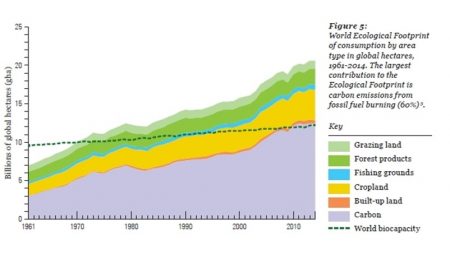
The graph on the left shows a dotted line that indicates sustainable eco-capacity. Around 1970, based on the categories of land use and carbon output you can see how we exceeded the planet’s capacity to sustain us over the long term.
The post Dutch Government Receives Petition from 2.9 Million Citizens to Reduce Country’s Ecological Footprint appeared first on Techso Mogro.
]]>The post Did the European Arrival in North America Set Off “The Little Ice Age?” appeared first on Techso Mogro.
]]>In an article entitled, “Earth system impacts of the European arrival and Great Dying in the Americas after 1492,” authors Alexander Koch, Chris Brierley, Mark M. Maslin, and Simon L. Lewis, calculate that the population of the Americas decreased by 56 million in a little over a century. For much of the Americas, the depopulation led to the land reverting to forest. And by 1610 it meant atmospheric carbon dioxide (CO2) dropped leading to the dawn of The Little Ice Age, a period in Europe marked by much colder winters and summers.
The Holocaust in the Americas was largely brought on by epidemics of diseases for which the Indigenous people had no immunity. Before the European arrival, much of the Americas was cultivated. European explorers who traveled up the Mississippi valley some fifty years after Columbus found abandoned villages and towns surrounded by cleared fields. It was as if the people who lived in these locales had upped and vanished. But that was not the case. They died on a massive scale.

Within fifty years the continents reverted to forest and grassland states, natural carbon sinks that led to reductions in atmospheric CO2. It is this consequence of Europeans arriving on the shores of the Western Hemisphere that altered the heat capacity of the atmosphere causing radiative forcing and The Little Ice Age.
The authors tested their hypothesis by examining the historical and archaeological record.
So how does that translate to CO2 uptake? The authors of the study took into consideration that the death of Indigenous populations and land abandonment occurred in stages. But over the century-and-a-half after Columbus, they estimate CO2 reductions of as much as 7 to 10 parts per million (ppm) by the beginning of the 17th century, with overall CO2 atmospheric levels averaging 272 ppm. This level of CO2 equates with the lowest atmospheric concentrations in the last two millennia.
The authors conclude, based on the evidence they have gathered, the following: “that the Great Dying of the Indigenous Peoples of the Americas led to the abandonment of enough cleared land in the Americas that the resulting terrestrial carbon uptake had a detectable impact on both atmospheric CO2 and global surface air temperatures in the two centuries prior to the Industrial Revolution.”
What did The Little Ice Age mean for the European conquerors of the Americas?

The post Did the European Arrival in North America Set Off “The Little Ice Age?” appeared first on Techso Mogro.
]]>The post NASA Researchers and Elon Musk Differ in Their Views About Mars Habitability appeared first on Techso Mogro.
]]>Because our own human activity here on Earth shows just how hard it is to do. We have been geoengineering Earth over the last 150 years because of the Industrial Revolution. With all that burning of carbon-based materials we have altered Earth but in geological terms, one would not describe it as substantial.
What we humans have done is raise global mean temperatures by nearly 0.8 Celsius (1.44 Fahrenheit) degrees. The consequences of our current carbon consumption mean that temperatures will continue to rise for the foreseeable future (many centuries) with other physical planet-wide effects including sea level rise, changes to ocean and atmospheric temperatures, altered wind and precipitation patterns, and increased extreme weather events. Ultimately the planet’s biology will be stressed, unlike anything we humans have witnessed since the dawn of the Agricultural Revolution over 12,000 years ago.
Speaking of that last number, nature’s ability to do geoengineering works on time scales where 12,000 is akin to a nanosecond in geological time. Our planet is more than 4.5 billion years old. During its lifetime it has been re-engineered numerous times from birth as an aggregated mass of proto-planetary materials to being heated to a molten state, to the moment when crustal plates formed moved along by the hot mantle conveyor belt beneath, then to several prolonged ice ages where Earth turned into an ice ball, and now to the present world we know.
So what makes people like Elon Musk believe we humans can do to Mars what geological time has not accomplished? Pure fantasy in my opinion.
Today Mars is a perpetually dry and cold place. It has a tenuous atmosphere that is thinner by a factor of ten than the air at the top of Mount Everest here on Earth. The atmosphere is largely carbon dioxide (CO2). Any water on Mars is either locked up in the ice caps along with dry ice (frozen CO2) at its poles, or in subsurface formations that at best are in a briny liquid state (see the recent findings described in a previous posting at this site) or permanently frozen. To add to this Mars has no planetary magnetic field to shield it from cosmic and solar radiation. So all in all, this is an inhospitable environment except for well designed robotic landers and rovers, or in the future, humans encapsulated in protected habitats largely dug-in beneath the surface.
Geoengineering Mars in what science fiction has called terraforming would require humans to alter the planet to make it suitable for terrestrial life. In an article just published in Nature Astronomy, authors Bruce Jakosky, University of Colorado Boulder, and Christopher Edwards, Northern Arizona University, describe the work of other authors on this subject before stating the whys and wherefores that make the notion of terraforming impossible.
Among the tasks we humans would have to do on Mars includes the following:
Increasing the air pressure is beyond any current technical capability of we humans to do on any large scale. Yes, we could set up a number of highly polluting smokestack-based industrial plants on Mars to churn out tons of greenhouse gases. But we would have to do this for many centuries to begin to increase the air pressure to approximate conditions on Earth at 5,000 meters (over 16,400 feet) above sea level. Even then we would have to continuously run these polluting sites to deal with the fact that Mars would lose a significant amount of these gases to space in the process because of the lack of a magnetic field. We’ve had lots of experience with smokestack pollution on Earth but building such an infrastructure on Mars with little in the way of free oxygen present would be extremely expensive.
Another could involve releasing the water vapour (another greenhouse gas) stored in the subterranean ice found at many locales on the planet. We would want to ensure that a significant amount of water vapour got released at the beginning of the operation. Elon Musk has suggested a thermonuclear detonation as one means of water release. His idea is to set off a big bomb over a large block of subterranean ice and watch it vaporize. But the pressure gained would be only temporary for the same reasons other greenhouse gases, when released through the smokestack option, would over time vanish. And there is no assurance that released water vapour would condense to become stable liquid water on the surface. It would more than likely in a very short time be lost to space because of ultraviolet light bombardment (no magnetic field to stop this) and the exposure of the atmosphere’s edge to the solar wind. The Maven orbiter has been measuring this phenomenon on Mars showing that the current atmosphere continues to lose CO2 and ionized oxygen split from the carbon into space.
Another idea as explored by Jakosky and Edwards would be to release CO2 from the planet’s carbon sinks including the dry ice, water ice fields found at the poles, carbon-bearing minerals at or below the surface. But that means finding those minerals which so far based on orbiters, landers, and rovers, seem to be sparsely spread. Analysis of atmospheric dust holds little hope for finding anything more significant in this regard.
In any terraforming scenario, we humans would have to release enough carbon in the form of CO2 to be of such volume as to increase the current atmosphere’s carbon content by a factor of 167. That’s because today’s Martian atmosphere has an atmospheric pressure on the surface of 6 millibars, equivalent to about 15 grams of CO2 per cubic centimeter. Liquid water would need surface pressures to be 1 bar with an atmosphere containing about 2,500 grams of CO2 per cubic centimeter.
In Jakosky and Edwards’ paper there is little discussion on methane (CH4) emanations which have been detected seasonally coming from the Martian surface. CH4 is a potent greenhouse gas of higher density than CO2. But it, too, would over time be lost to space or would degrade into carbon and hydrogen isotopes with the hydrogen quickly escaping.
Jakosky and Edwards in their conclusions stated: “there is not enough CO2 left on Mars in any known, readily accessible reservoir, if mobilized and emplaced into the atmosphere, to produce any significant increase in temperature or pressure.” They go on to state that large-scale processing of CO2 from the surface would have to be on a planet-wide scale, well beyond any present human technology. And finally, they have no solution to the outgassing to space of anything we humans would add to the Martian atmosphere that soon wouldn’t be lost.
But Elon Musk disagrees going back to the idea of using a thermonuclear explosion to release massive amounts of CO2 in the Martian soil. Musk believes that Mars, of all the planets in the Solar System, is the best option to terraform. He thinks humans can come up with technical solutions to the lack of a natural magnetic field. He believes that plants would grow on the Martian surface if atmospheric pressures using the trapped CO2 were released. Among Musk’s idea for heating up Mars is the notion of creating artificial pulsing suns above the poles to heat up the planet.
Musk is convinced that Mars must be colonized by humans to give us a multi-planetary foundation in the event that life should end here on Earth. He has and will continue to plan for getting to Mars early in the 2020s, first with two supply ships to land in 2022 followed by four spaceships with humans aboard to arrive in 2024. The Mars they will come to will remain inhospitable for life as we know it. With certainty, life that accompanies us to Mars in the form of bacteria will threaten microbial native life that may already be there. But no one seems to be talking about the implications of Martian colonization in the face of an already living planet. Our arrival would be equated with an extinction event for the Red Planet’s own ecology.

The post NASA Researchers and Elon Musk Differ in Their Views About Mars Habitability appeared first on Techso Mogro.
]]>The post The Cost of Carbon Capture is Getting Closer to Affordability appeared first on Techso Mogro.
]]>Founded by David Keith, a Harvard University professor of Applied Physics, the technology is designed to capture carbon dioxide (CO2) from ambient air. The Squamish plant began operations in 2015 and now has three years of collected data. It was the first of its kind, a complete direct air capture (DAC) system that could be used to capture CO2 and convert it into liquid hydrocarbon fuel to be mixed with gasoline, or permanently store the greenhouse gas underground.
In the journal article, it describes the evolution of CO2 capture beginning in the 1950s and 60s to be used as a feedstock for hydrocarbon fuels. But in the 1990s researchers started talking about capturing CO2 from the air as a means to mitigate climate change. That’s when the term DAC was coined. At the time no one could calculate what it would cost to capture a ton of CO2. Estimates varied from $50 to $1,000 per ton. But since no one had built a DAC plant to see what the real numbers would be these estimates were entirely speculative.

But now we have the reality check after the Squamish pilot plant has operated for three years. And those numbers are looking pretty good. Running the plant, continuously since startup has achieved CO2 capture at cost levels that are now approaching $100 per ton. This is far removed from the $1,000 or $600 per ton of earlier speculations. And in addition to CO2 capture, since December 2017 the company has started converting the captured gas into fuel, not derived from crude oil, using its trademarked AIR TO FUELS process. In describing the latter, Steve Oldham, CEO of Carbon Engineering, notes “Our clean fuel is fully compatible with existing engines, so it provides the transportation sector with a solution for significantly reducing emissions, either through blending or direct use.” He’s not describing a gasoline-blended fuel, but one that conceivably can be used by any vehicles currently on the road. Although the carbon fuel is 25% more expensive to produce than conventional fuels like gasoline and diesel, unlike them it is very low carbon, and as a Carbon Engineering product, part of the net-zero carbon loop that the company is bringing to market since the emissions the fuel produces can be recaptured by the DAC technology.
The company which initially raised $30 million from government grants, and private investors like Bill Gates, is now in the process of seeking an additional $60 million to build a full-sized commercial DAC plant.
In today’s The Globe and Mail, Global Energy Reporter, Shawn McCarthy describes how DAC could fit into a different world paradigm than the one most of us envision for a low-carbon future. Instead of eliminating fossil fuels, DAC could conceivably make it possible to continue using them with the carbon produced being removed from the air to maintain or reduce CO2 levels within the atmosphere. That would mean the complete electrification of our transportation infrastructure would no longer be necessary.
Oldham describes what this means for the planet in a conversation with The Globe and Mail. “Our low-carbon fuel is entirely compatible with any automobile, any truck, any airplane that exists today. By making the fuel carbon neutral, the entire transportation sector can become carbon neutral without changing all of the infrastructure – we don’t have to get a new car, we don’t have to replace every gas station with an electric grid for charging.”

The post The Cost of Carbon Capture is Getting Closer to Affordability appeared first on Techso Mogro.
]]>