Michael’s topic is the collation and analysis of large data sets. This is not just a business tool. Today scientists, doctors and engineers employ analytical tools to study millions of records in multiple databases seeking correlations that normally would be difficult to uncover. It is leading to new discoveries, medical cures, new materials, and countless other innovations.
Please enjoy Michael’s article, his first here at Techso Mogro blog.
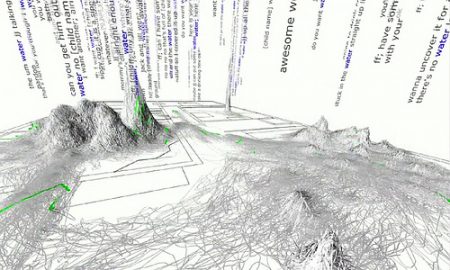
Today big data is the key to big business. That’s the sentiment of tech experts and business owners these last few years. But is that really the case?
Big data is an overarching term used to describe the collation and analysis of large data sets. Thanks to the increase in ways to collect data online, businesses now have more information to analyze than ever before and that, in theory, means they can refine their products to better suit customers.
Of course, with companies now collecting more data on us people often worry about their privacy. Thanks to laws governing the collection and use of big data, however, it certainly seems as though the practice is a force for good in the business world at least. And with more companies making use of big data, it is useful to look at some of the more interesting places it is being used today.
Here are two very different industry examples.
Online Betting Uses Big Data to Target Specific Demographics

Online casinos are using big data to improve their return on investment (ROI). According to researchers at Oregon State University-Cascades, the common profile of an online slots player is a woman aged between 55 and 60 with a household income of $55,000+ US. Taking information like this into account more than 300 casino games for Canadian players at 32Red and many other sites are skewed to this demographic.
For example, if you take a look inside 32Red’s slots lobby you find games such as Bridesmaids (based on the popular movie) and Agent Jane Blonde. Both offer a distinct feminine slant. They are not only designed to appeal to women, but also offer six-figure jackpots to make them enticing propositions for those who have mid-to-high annual incomes.
Taking this application of big data a step further, Oregon State University-Cascades’ study also found that younger male players tend to prefer games like roulette. Using this knowledge, Casino Euro has stocked 11 of its 20 live dealer games with female croupiers, while Dazzle Casino’s live roulette is an all-female affair.
By using big data to breakdown the profile of the average online player, casinos tailor their menu of options accordingly. If they offer games with a female slant, casinos know they are more likely to hit the core of the market. In contrast, a platform that wants to go for something a little more unusual can move away from the norm and target outliers in a bid to offer a niche audience a niche product.
Big Data Streamlines Service Industries
Companies in the service sector have embraced big data to not only help them design their offerings to meet user requirements but also as a way to streamline business practices. UPS, the largest shipping company in the world, uses big data not just to improve service but, more importantly, to make it a more environmentally friendly company. With consumers more aware of issues such as climate change, often they look at a company not just for what it offers but also for its sustainability and environmental sensitivity. According to a recent IPSOS survey, 50% of Canadians are more inclined to buy from environmentally conscious companies. Additionally, 75% of Canadians are prepared to pay more for a product if they feel the company was socially and environmentally responsible. Taking this knowledge and combining it with its own big data insights, UPS Canada vehicles now use On-Road Integrated Optimization and Navigation (ORION). This is a system designed to create “optimal” routing to reduce fuel usage and hence carbon emissions. The result, a more fuel-efficient service which is better for the company’s bottom line and better for the environment. Indeed, it’s often the case that when you solve one issue with big data, you also solve another. As UPS has shown, tackling efficiency reduces both costs and emissions and that makes the company more attractive to customers on a variety of levels.
Big data isn’t a universal panacea. It can’t solve every business challenge. But using the technology is proving that businesses can make themselves more attractive to consumers while improving the way they operate.

On the weekend while walking across a street at a light I was struck by a car turning right. I’m fine but shaken. I came home a bit bruised and more frightened than anything else. When I got home I told my wife and she messaged my daughter. Within minutes my story was on my daughter’s Facebook page and everyone with “friend” access knew what happened to me. In less than an hour our phone started ringing as our friends who read our daughter’s Facebook postings started calling asking “is there something you are not telling us?”
Yes, privacy is dead in the Internet and social media age. But the lack of privacy brought about by data sharing is even more insidious. How many of you bank online? How many of you use an electronic calendar? How many of you text message or post comments and thoughts on social media sites? All of this data is permanent. In the cloud it remains forever. And there are people and businesses packaging up those bits of data and marketing them to make money.
In Alec Ross‘ book “The Industries of the Future” he describes how even before we talk to our children about the “birds and the bees,” today in the Age of the Internet and mobile technology, we need to have a conversation about “data privacy.”
Ross knows what he’s talking about. He was senior advisor on technology innovation to Hillary Clinton when she served as the American Secretary of State from 2009 to 2012. Before that Ross was convenor of the technology and media policy for Barack Obama’s campaign in 2008. He has seen how online data is today a threat to privacy and a disruptive consequence of the digitization of everything.
He calls data the raw material of the Information Revolution, as important as land in the Agricultural Revolution and iron and coal in the Industrial Revolution. Think about how we stored data before the Internet. Information got put on paper…books, newspapers, magazines, company annual reports, medical charts, letters, etc. I remember reading a science fiction novel about a future when whole planets would serve as libraries filled with the collective knowledge of civilizations. Obviously that writer never saw the Internet coming.
Ross observes that until 2000 “only 25% of data was stored in digital form.” By 2007 “that percentage had skyrocketed to 94%. And it has continued to rise since.” In political campaigning mining personal data to target specific constituencies proved to be the key to victory for Obama’s primary and presidential campaigns. Targeted messaging worked because the Obama team knew more personal information about individual voters than had ever been gleaned before.
Ross quotes Michael Slaby, former Chief Technology Officer, Obama for America 2008, about the emergence of big data. Slaby states, “Big data’s really just the application of the commodification of computing power combined with the wider availability of cloud computing. We can now chew through enough data fast enough in a way that people can afford…and storage got cheap, so we can store lots of data…and then we can actually process it fast enough to make use of it.”

Inside big data is an intimate knowledge of every data bit associated with your Internet activity. Companies like Alphabet (formerly Google), and Amazon, governments and cyber criminals all can parse your contribution to big data.
So how much of your privacy is threatened? Anything in your public online persona is out there for data analytics to parse and exploit. Only your reliance on the security and privacy assurances of Cloud-application providers protects you. And sometimes when you read the fine print of the licenses for those cloud applications you download to your latest smartphone, you find wording that describes how your data can be marketed to third parties.
In a talk to the 2015 World Economic Forum in Davos, Switzerland, Margo Seltzer, Professor of Computer Science, Harvard University, stated, “Privacy as we knew it in the past is no longer feasible.” Ross points out that the Internet of Things will only further establish the fact that “privacy is dead.”
With the Cloud we have let data out of Pandora’s Box and the only question remaining is how do we get some of it back in the Box to ensure that at a future time our entire personal genome doesn’t become public property or owned by a third party. This is a subject explored by Michael Crichton’s 2006 science fiction novel, Next. Crichton describes a potential future where an individual treated for leukemia ends up losing ownership of his own DNA to a biotechnology startup.
Going back to what a parent needs to tell a child before giving him or her a cloud-connected device, what should that conversation sound like?
Parent: You are about to enter a new chapter in your life.
Child: What do you mean?
Parent: I’m about to give you a [smartphone, tablet, laptop, gaming device, etc.] You are about to become a digital citizen of the world.
Child: Wow. All I thought was I was getting a [GameBoy, an iPhone, iPad, whatever]. What’s the big deal?
Parent: To become a digital citizen means sharing information about yourself in the Cloud. There are some things about yourself you shouldn’t share.
Child: But I want to be on Facebook with my friends and use Google, and play games?
Parent: I know but I just want you to understand what you should and shouldn’t share. Never give out personal information that could come back to hurt you. No personal details or photographs that could be exploited by someone you don’t know. That means never friend or connect to someone if you don’t know who they are or where they are. And when you are about to install a free app make sure you look at the license agreement to see if you have given the developer the right to sell your digital persona.
Child: All I wanted to do was play games and connect to my friends. Boy are you ever paranoid.
Parent: No…not paranoid….just knowledgeable about how privacy can be compromised and exploited. Now I’ve prepared a contract for you to sign agreeing to what we have talked about. Sign it and I’ll hand you the keys to the Cloud. Oh, and about that other thing….you know, sex, we can have that conversation another day.
]]>We are awash in it as more of what we humans do gets recorded and entered into computer systems tied together by the Internet. Big data is global, bigger than any single database kept by the largest corporations. It is so massive that a whole set of new tools have been created to mine it. Companies like SAS who provide expertise through a range of tools dubbed analytics. Analytics mine these huge and diverse datasets, combining information and detecting the many patterns that can provide answers of value to government, and business. And with data growing at a rate of 40% per year, the business of data mining is an arms race filled with new algorithms designed by programmers who seek answers to questions.
All of this focus on big data is creating waves of concern in the minds of the general public as the Pew Research poll reveals. Here are some of its findings:
This overall insecurity is largely fed by public fear of government surveillance, and to a lesser degree, sees commercial data sharing as equally guilty. Which brings me to a book I just finished reading, a novel called “The Circle” by Dave Eggers. Given to me by a good friend in the financial sector, I finally got around to reading it over the last two days and found it very difficult to put down.
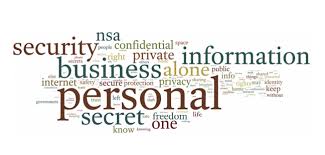
Without ruining the plot for those of you who will want to read this book, it is about a post-Google like company that builds tools to make the Internet more accessible, and in the process learns a signifcant amount about each of its users. What it chooses to do with that information is the essence of the story.
George Orwell would have written this book if he had lived in the Internet Age. But Eggers does a pretty good job telling the story about a company focused on making all of us transparent, declaring that secrets and privacy are equivalent to theft. He would find the results of the Pew Research poll prophetic.
The Circle, the name of the book and the company is about to create a new world where we no longer have secrets because everything is known. All is transparent. In the minds of the brain trust of the company, the closing or completion of the circle will manifest a new utopian existence for all global citizens. But is this Utopia or mob rule. I’ll leave the rest of the plot for you to read and welcome your comments about the novel which I would love to see appear here.

]]>

