The post When Should National Self Interest Take a Back Seat to Global Interest? appeared first on Techso Mogro.
]]>As the text of the agreement is being written the authors have had to do a balancing act:
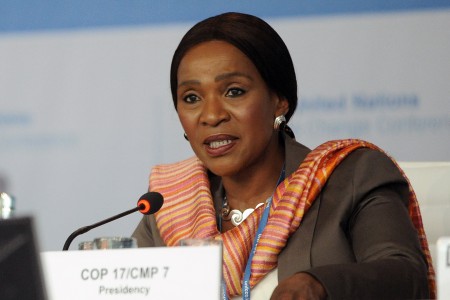
It is this lack of balance in the last point that Mxakato-Diseko is referencing in her “apartheid” comment.
South Africa does not oppose dealing with climate change. At the 2009 Copenhagen Conference the country pledged action to reduce emissions growth by 34% by 2020 and 42% by 2025. At the Lima climate conference in 2014 South Africa along with all other nations participating agreed to begin drafting the text for COP21, a call for global climate action. South Africa’s position to date has been:
What South Africa’s delegate fears is that poor nations are being ignored or disenfranchised by the wording of the COP21 agreement in its current form. In her view the developed nations are being cut too much slack when it is they who created the problem of greenhouse gases in the first place. It, therefore appears, from a developing nation’s perspective, that developed nations must take the main responsibility in reducing greenhouse gas emissions while also developing the tools and technology to innovate to low-carbon energy models.
Part of the developed world’s responsibility, therefore, as the prime agents for the current levels of greenhouse gases in the atmosphere, should be to help developing nations financially and technically to implement low-carbon solutions while recognizing these countries’ rights to alleviate poverty. Developing nations should also provide the necessary tools and finances to both help developing nations mitigate and adapt to changing climate, a condition which they will experience brought on through no fault of their own.
For the United Nations’ leadership narrow national self interest is seen as the greatest roadblock to achieving a global agreement on addressing global warming from human-produced greenhouse gas emissions. Stated Secretary General Ban Ki-moon recently, “there is no time to waste….it has been quite frustrating to see negotiators negotiating only based on their very narrow national perspectives. This is not a national issue, it’s a global issue.”
Yet it is hard not to understand Mxakato-Diseko’s view on the subject. A global agreement does need a balancing among nations even if this frustrates the Secretary General.
The post When Should National Self Interest Take a Back Seat to Global Interest? appeared first on Techso Mogro.
]]>