A new drug shows promising results inhibiting metabolic pathways in the immune system. The work which was focused on limiting the metabolism of cancer cells appears to also work on T cells. T cells are the principle cells in our immune system. And lupus, a chronic autoimmune disease is caused by our own T cells attacking healthy cells in our bodies.
About 1.5 million Americans suffer from systemic lupus erythematosus, referred to as lupus, and 16,000 new cases get reported annually. Canada reports about 35,000 cases or 1 in 1,000 of the population. The disease is most common in people between the age of 15 and 45. It has been referred to as having “1,000 faces” because the symptoms vary dramatically and can be confused with other chronic diseases. Typically a person with lupus experiences:

Lupus patients report several different phases in the disease from flare ups to periods of chronic pain, swelling and rashes. Symptoms can disappear completely going into remission and then flare up again.
The treatment includes anti-inflammatory medication and steroids which have their own dramatic side affects.
The University of Florida team includes co-author Laurence Morel, Ph.D., Director of Experimental Pathology, at the university’s College of Medicine. The focus was on two things within T cells:
The energy state of immune cells is compromised when lupus occurs. They become hyper activated. So the researchers used two drugs to see if they could block the level of activity. The drugs are 2DG, short for 2-Deoxy-D-glucose, an experimental drug which targets glucose metabolism, and metformin, a commonly used drug for treating patients with Type 2 Diabetes. The application of these two reversed lupus in mice. In testing human T cells harvested from lupus patients,similar results were obtained with a noticeable slowing of cellular metabolism. In mice without lupus the two drugs had no affect on their T cells.
Dr. Morel believes this “may also open the door to targeting other metabolic pathways” replacing treatments for multiple sclerosis, Parkinson’s, Huntington and even Alzheimer’s. It is still no known whether the treatment will produce a complete cure for lupus. It will be a few more years before we will know.
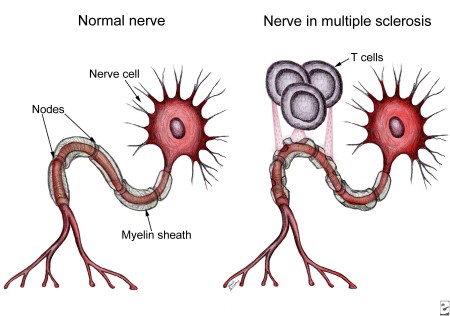
Over time MS scars the myelin leaving it sclerotic. In many cases MS patients experience remissions where, they can function normally, followed by relapses. Common symptoms include fatigue, loss of vision or double vision in one eye, muscle weakness, balance problems, and prickling or numbness in the skin. Living with MS, therefore, can be debilitating to a point where patients experiencing the worst symptoms become wheelchair bound and unable to function normally.
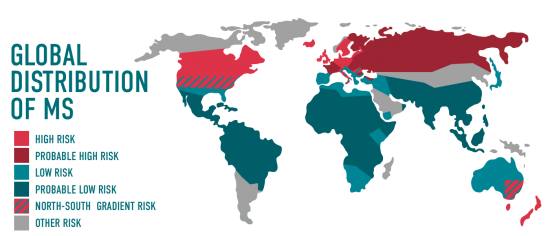
A striking aspect of MS is its geographic distribution. Almost exclusively north or south of the 37th parallels of latitude on either side of the equator with twice as many cases on the polar side of the line versus those in warmer latitudes. Highest density distribution can be found in Northern Europe, Russia, Canada, the northern United States, New Zealand and southeastern Australia. Average number of cases in these areas amounts to 30 incidents per 100,000 of population. Compare that to 5 in 100,000 in the tropics and in much of Asia. And another peculiarity of MS is that it appears to be a disease associated with people of northern European origin. Those of African, Japanese and Chinese descent have much lower incidents. Total number of people affected – an estimated 2.3 million worldwide. Why estimated? Because many people go about their lives with undiagnosed MS and some suspected cases of MS prove to be false with symptoms attributable to other conditions, some autoimmune in nature.
Diagnosing MS is not easy. The common tests such as magnetic resonance imaging to identify spinal cord scarring, lumbar punctures to check for spinal fluid abnormalities, and electrical stimulation tests are not always conclusive.
Identifying the autoimmune triggers that cause the body to turn on itself has been the pursuit of medical research teams around the world for more than a decade. One thing that has been noted, the T cells responsible for demyelination leading to scarring symptoms are found in both healthy and MS patients. The question then is why do these cells behave abnormally in some and not others.
Researchers at the Yale School of Medicine and Massachusetts Institute of Technology have discovered that the T cells in MS patients are producing inflammatory proteins not found in healthy patients. In the study the T cells of 45 patients were analyzed. Of these 23 were diagnosed with MS while the rest were free of the disease. In doing the comparison the researchers were able to isolate the MS protein trigger.
Proteins play an important role in the normal functioning of the cells in our bodies. They function as communicators, signaling cells for all kinds of function. Grow new bone here. Repair bruised tissue, and so on. In the case of proteins and the immune system, they signal T cells directing them to sites where there is infection or trauma. In MS patients, they produce this unique set of proteins that don’t repair the body but rather attack the sheath around healthy nerve tissue. The identification of these specific MS protein triggers means the potential to create specific protein blockers to stop the disease.
The researchers believe that what they have discovered for MS may also hold true for many other autoimmune diseases such as rheumatoid arthritis, ulcerative colitis, celiac , Crohn’s, angioedema, juvenile and Type 1 diabetes, drug hypersensitivity and others.
The Yale and MIT research paper appeared in the May 14th issue of Science Translational Medicine.
But my wife also suffers from an autoimmune disease which causes her to breakout in hives when subjected to any pressure exerted on her skin. These appear within a few minutes to a few hours after exposure and can last several days before resolving. They are painful and disfiguring. She takes an experimental drug that only recently was approved for treating hives. It’s brand name is Xolair and it is classified as a biologic and administered by injection. She carries an epipen just in case she has an allergic reaction to the drug, not to her autoimmune disease.
And then there are much more serious autoimmune diseases such as multiple sclerosis, arthritis, and lupus. Previously I wrote about curing autoimmune diseases on this blog site. Check out the list I put together. It is far longer than you could imagine.
Which brings me to the subject of this story, the discovery by researchers from the School of Cellular and Molecular Medicine at the University of Bristol, in the United Kingdom, of a way to stop the body’s autoimmune response from attacking healthy tissue. The research appears in the September 3rd issue of Nature Communications in a paper entitled Sequential transcriptional changes dictate safe and effective antigen-specific immunotherapy.
What the Bristol researchers found was a way to reinstate immunological tolerance without compromising the immune response. They selectively targeted cells responsible for autoimmune disease and converted them into cells functioning to protect against the disease. This in effect is allergic desensitization, the same method and approach allergists use to correct the body’s response to an irritant, by exposing the person suffering from the disease to fragments of proteins normally the target of the autoimmune attacks and gradually increasing the dosage.
The research looked inside immune cells to discover the genes and proteins that turn on and off during treatment and this led them to discovering a way to convert aggressive autoimmune responses into protective ones. The end result, the restoration of a normal autoimmune response with the immune system no longer attacking the body in which it operates.
This discovery may lead to effective treatments that no longer require immunosuppressive drugs like Xolair or Cyclosporin. The biotechnology company, Apitope, a spinoff of the University of Bristol, is developing the treatment for clinical trials.
What further implications are for this discovery? For example, can immunological tolerance treatments similar to allergy shots be used for those who currently take immunosuppressive drugs after receiving an organ transplant?

What is an Autoimmune Disease?
Autoimmune diseases are inflammatory response diseases caused by our immune system attacking us. They are non-discriminating and can be found in almost every organ and system in the human body. They tend to be chronic conditions continuing throughout the lifetime of the individual. There can be periods of remission followed by reappearance of symptoms. They tend to strike women more than men. Hormones may play a role. But there are some autoimmune disorders that are more prevalent in men such as Type 1 Diabetes.
How significant is the problem? It is estimated that 24 million Americans and 5 percent of the population in Western countries suffer from autoimmune diseases. Compare that to cancer at 12 million Americans and you begin to see the enormity of the problem.
There appears to be a correlation between our genetic inheritance and autoimmune diseases with children tending to develop diseases that appear in parents, and close relatives exhibiting common autoimmune diseases within extended family groups. Multiple sclerosis represents one of the most common autoimmune diseases that tends to run in families.
What confounds the medical field today about autoimmune diseases is finding the smoking gun or guns, the direct causal link that triggers the immune system response. Lots of circumstantial evidence points to viruses, chemical exposure, foods and environmental toxins but doctors and researchers continue to investigate what triggers these diseases. Having a family member who continues to experience an autoimmune disease has made studying this subject very personal to me.
Autoimmune diseases attack every part of the body. The American National Institute of Health identifies at least 80 different autoimmune diseases that include many familiar conditions you probably never thought were caused by our immune system. See how many you know from this partial list.
Today’s Autoimmune Controls Create Their Own Problems
Currently autoimmune disease treatment is all about reducing or reversing symptoms. In the case of diabetes we treat sufferers with insulin rather than restore pancreatic cell function. In the case of many of the inflammatory responses from autoimmune diseases we treat patients with a cocktail of drugs that include prednisone and other corticosteroids, anti-inflammatories like aspirin, acid blockers, antihistamines and immune suppression drugs (the kind used to stop rejection in organ transplants). In many cases the side affects of these drug cocktails proves to be worse than the diseases.
HLA, T and B, Autoimmune Diseases and a Potential Cure
When scientists and researchers talk about the immune system the letters in the above title become part of the conversation.
What is HLA?
What does T refer to?
What is the B all about?
HLA stands for Human Leukocyte Antigen, the genes that reside on the 6th chromosome in our cells and that govern immune response. The proteins associated with these genes are called antigens.
The T and B refer to different types of leukocytes, the white blood cells that reside in our circulatory systems and marshal our response to infections. The T and the B refer to T-cells, and B-cells. In addition there are sub-categories to leukocyte groups. One is the T-regulatory cell or T-reg and researchers study it because these cells play a role in regulating the level of immune response by other leukocytes.
If we could develop a technology to stop specific unhelpful autoimmune reactions while allowing our normal immune response to deal with unwanted bacterium and viruses then we would be making a big leap forward in our ability to deal with autoimmune diseases. That’s exactly what researchers at the University of Calgary in Alberta, Canada, have been working on using nanotechnology as the delivery mechanism for a vaccine that cures Type 1 Diabetes and has implications for other autoimmune disorders.
Dr. Pere Santamaria works at the Julia McFarlane Diabetes ResearcherCentre in the University’s Faculty of Medicine.

Working with mice with Type 1 Diabetes, Dr. Santamaria and his team looked at stopping the autoimmune response that damages the pancreas leading to the condition. They studied the behaviour of specific T-cells responsible for the disease and the T-reg cells whose role is to inhibit the former from attacking healthy host tissue. Their goal was to strengthen the T-reg cells to stop the destructive autoimmune response. Using synthetic iron oxide nanoparticles and a cocktail of antigens from insulin producing cells, the team created a vaccine that could be directed at the autoimmune attack, strengthening the T-reg cells. The treatment not only restored normal blood sugar and insulin levels in the mice, it also prevented the onset of the disease. At the same time the vaccine treatment did not compromise the rest of the immune system.
The implication of using nanovaccines such as the one Dr. Santamaria’s team developed to treat other chronic autoimmune diseases is enormous. For those who suffer from one or more of that long list of autoimmune diseases described above, this is technology with great promise.
]]>


