T-cells, however, come in four varieties. There are natural killer T-cells, memory T-cells, CD8 cells that attack viruses and tumors, and CD4 cells, also known as helper T-cells. The latter, the so-called helper cells are turning out to be the causal agents for MS. And it isn’t all helper T-cells that are the culprits. It’s a group of cells designated TH17, and not all of them in that group, just some. Apparently a subset of TH17 cells bears a specific marker and are fast proliferators. The marker is a protein, labeled CXCR6, which can be found on the surface of a TH17 cell subgroup. The research shows that the TH17 cells bearing this protein damage nerve cells by turning on other proteins that stimulate inflammatory attacks including turning on other T-cells to join the assault.

In a paper published last month in PNAS, The Proceedings of the National Academy of Sciences of the United States of America, a team of researchers from Children’s Hospital of Boston, describe potential treatments for MS targeting T-cells with the CXCR6 protein to deplete them while not impacting other immune defense mechanisms. Using monoclonal antibodies the researchers were successful in eliminating the harmful T-cells. They have patented their research and plan to commercialize the cure under a newly-formed company, Edelweiss Immune, Inc., in partnership with the Children’s Hospital.
Eileen Remold-O’Donnell, Department of Pediatrics, and Hematology/Oncology, at Harvard Medical School, and Lifei Hou, of the Program in Cellular and Molecular Medicine, Children’s Hospital and Department of Pediatrics, at Harvard, are lead authors in the research study. In an article published on the Medicalexpress.com site, Hous is quote stated, “Many drugs have been developed to treat autoimmune diseases, such as glucocorticoids and cytotoxic reagents…However, none selectively target pathogenic T-cells, and long-term use of immunosuppressive agents results in broad immunosuppression and compromised immune defenses.”
Remold-O’Donnell and Hou may have uncovered a means by which to deal with many other autoimmune diseases. Among these is Addison’s Disease made famous by President Kennedy, Celiac and Crohn’s both affecting the intestinal tract, Hemolytic Anemia attacking red blood cells, Juvenile and Type-1 Diabetes, Lupus, Psoriasis, Angioedema, Rheumatoid Arthritis, Ulcerative Colitis, and more.
If Hou and Remold-O’Donnell are correct in their findings. then their discovery of a specific protein could lead to finding the signature genes involved that influence the development of various helper T-cells and the potential to tackle other autoimmune diseases by revealing other proteins associated with these cells that trigger the autoimmune system to attack the host body in which they reside. The discovery of a cell surface protein marker, CXCR6, and treatment to deplete cells with the protein in finding a potential MS cure, therefore, bodes well for this line of medical research and for those suffering from autoimmune diseases globally.
How many people are we talking about? According to the American Autoimmune Related Disease Association (AARDA), there are more than 100 different autoimmune diseases affecting 5 to 10% of the world’s population, and in particular, women who are two to ten times more likely to suffer from an autoimmune disease than men. That means between 375 and 750 million people on the planet, the majority of them women, have an autoimmune disease. Of these, some 2.3 million suffer from MS, and most MS sufferers are found in more northerly climates which in itself, marks another peculiarity about this particular autoimmune disease.

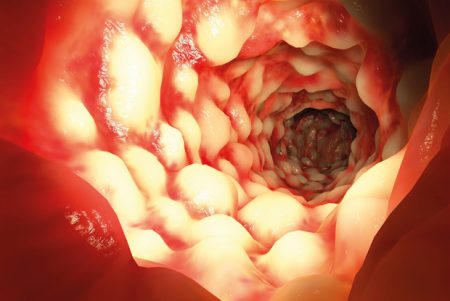
Current methods for confirming the condition based on a patient history involves different versions of examinations of the colon, from colonoscopy to capsule endoscopy, to balloon-assisted enteroscopy. CT scans and MRIs are also used to look at the entire bowel tract to pinpoint the extent of inflammation and potential ulcerations in the lining of both the small and large intestine.
The drugs of choice are anti-inflammatories including corticosteroids and aminosalicylates. Immune suppression medications are also used with methotrexate often prescribed. And then there are antibiotics given to try and heal ulcerations and abscesses in the bowel including Cipro and Metronidazole. And for the treatment of common symptoms patients take fibre supplements, pain medication, iron supplements, Vitamin B-12, Vitamin D, and calcium.
Diet and nutrition counseling is something every Crohn’s patient receives to help reduce inflammatory bowel episodes. Limiting dairy products, low-fat foods, and high-fibre is recommended.
Ultimately, however, many Crohn’s patients end up having surgery to remove the damaged portions of the bowel and to excise abscesses and drain infections.
The Mayo Clinic provides an excellent summary of Crohn’s Disease, treatment, and lifestyle options.
With no cure for Crohn’s researchers have turned to look at how to reverse what causes it – a broken immune system. Among those seeking an answer are researchers at Queen Mary University of London, and the University of Sheffield, where a clinical trial has started using stem cell transplants. In a press release James Lindsay, Professor at Queen Mary is quoted stating, “Despite the introduction of new drugs, there are still many patients who don’t respond, or gradually lose response, to all available treatments…..We’re hoping that by completely resetting the patient’s immune system through a stem cell transplant, we might be able to radically alter the course of the disease. While it may not be a cure, it may allow some patients to finally respond to drugs which previously did not work.”
So what’s involved for patients enrolled in the clinical trial? There are a number of steps including:
The protocol being used here is based on stem cell transplant treatments of patients with multiple sclerosis which have seen some success. The hope is that the newly acquired immune system will no longer attack the patient’s bowel and digestive tract, and will better tolerate medications used to reduce Crohn’s symptoms. You can watch a YouTube video which provides additional information about Queen Mary University’s clinical trial.
The clinical trial is being funded by the UK’s National Institute for Health Research (NIHR). Tom Walley, Director of the NIHR evaluation in the Queen Mary press release states, “Stem cell therapies are an important, active and growing area of research with great potential. There are early findings showing a role for stem cells in replacing damaged tissue. In Crohn’s disease, this approach could offer real benefits for the clinical care and long-term health of patients.”
The current clinical trial is built on a previous stem cell trial where the approach was similar but the drug doses, particularly the chemotherapy, produced serious side effects. Despite this, the first trial did show some positive results. So in this current trial, treatment doses of the drugs being used are lowered with the hope that this will lead to better patient outcomes.
For Crohn’s sufferers, of which my nephew is one, the results of this clinical trial may lead to a far more promising future in having to cope with this debilitating disease.
]]>
What is an Autoimmune Disease?
Autoimmune diseases are inflammatory response diseases caused by our immune system attacking us. They are non-discriminating and can be found in almost every organ and system in the human body. They tend to be chronic conditions continuing throughout the lifetime of the individual. There can be periods of remission followed by reappearance of symptoms. They tend to strike women more than men. Hormones may play a role. But there are some autoimmune disorders that are more prevalent in men such as Type 1 Diabetes.
How significant is the problem? It is estimated that 24 million Americans and 5 percent of the population in Western countries suffer from autoimmune diseases. Compare that to cancer at 12 million Americans and you begin to see the enormity of the problem.
There appears to be a correlation between our genetic inheritance and autoimmune diseases with children tending to develop diseases that appear in parents, and close relatives exhibiting common autoimmune diseases within extended family groups. Multiple sclerosis represents one of the most common autoimmune diseases that tends to run in families.
What confounds the medical field today about autoimmune diseases is finding the smoking gun or guns, the direct causal link that triggers the immune system response. Lots of circumstantial evidence points to viruses, chemical exposure, foods and environmental toxins but doctors and researchers continue to investigate what triggers these diseases. Having a family member who continues to experience an autoimmune disease has made studying this subject very personal to me.
Autoimmune diseases attack every part of the body. The American National Institute of Health identifies at least 80 different autoimmune diseases that include many familiar conditions you probably never thought were caused by our immune system. See how many you know from this partial list.
Today’s Autoimmune Controls Create Their Own Problems
Currently autoimmune disease treatment is all about reducing or reversing symptoms. In the case of diabetes we treat sufferers with insulin rather than restore pancreatic cell function. In the case of many of the inflammatory responses from autoimmune diseases we treat patients with a cocktail of drugs that include prednisone and other corticosteroids, anti-inflammatories like aspirin, acid blockers, antihistamines and immune suppression drugs (the kind used to stop rejection in organ transplants). In many cases the side affects of these drug cocktails proves to be worse than the diseases.
HLA, T and B, Autoimmune Diseases and a Potential Cure
When scientists and researchers talk about the immune system the letters in the above title become part of the conversation.
What is HLA?
What does T refer to?
What is the B all about?
HLA stands for Human Leukocyte Antigen, the genes that reside on the 6th chromosome in our cells and that govern immune response. The proteins associated with these genes are called antigens.
The T and B refer to different types of leukocytes, the white blood cells that reside in our circulatory systems and marshal our response to infections. The T and the B refer to T-cells, and B-cells. In addition there are sub-categories to leukocyte groups. One is the T-regulatory cell or T-reg and researchers study it because these cells play a role in regulating the level of immune response by other leukocytes.
If we could develop a technology to stop specific unhelpful autoimmune reactions while allowing our normal immune response to deal with unwanted bacterium and viruses then we would be making a big leap forward in our ability to deal with autoimmune diseases. That’s exactly what researchers at the University of Calgary in Alberta, Canada, have been working on using nanotechnology as the delivery mechanism for a vaccine that cures Type 1 Diabetes and has implications for other autoimmune disorders.
Dr. Pere Santamaria works at the Julia McFarlane Diabetes ResearcherCentre in the University’s Faculty of Medicine.

Working with mice with Type 1 Diabetes, Dr. Santamaria and his team looked at stopping the autoimmune response that damages the pancreas leading to the condition. They studied the behaviour of specific T-cells responsible for the disease and the T-reg cells whose role is to inhibit the former from attacking healthy host tissue. Their goal was to strengthen the T-reg cells to stop the destructive autoimmune response. Using synthetic iron oxide nanoparticles and a cocktail of antigens from insulin producing cells, the team created a vaccine that could be directed at the autoimmune attack, strengthening the T-reg cells. The treatment not only restored normal blood sugar and insulin levels in the mice, it also prevented the onset of the disease. At the same time the vaccine treatment did not compromise the rest of the immune system.
The implication of using nanovaccines such as the one Dr. Santamaria’s team developed to treat other chronic autoimmune diseases is enormous. For those who suffer from one or more of that long list of autoimmune diseases described above, this is technology with great promise.
]]>