
How To Mine A £60 Trillion Asteroid by Fuel Fighter.
Deep Space Industries‘ (DSI) launch of Prospector-X (see infographic below) will test out all systems to ensure that the sequel, Prospector-1, succeeds as the first space mining mission to an asteroid.

States Grant Bonin, chief engineer, “DSI is developing Prospector-1 both for its own asteroid mining ambitions, as well as to bring an extremely low-cost, yet high-performance exploration capability to the market. We hope to enable both existing and new public and private organizations to explore the inner solar system using this affordable platform.”
DSI is a California company with roots in NASA’s Ames Research Laboratory. Recently it entered into partnership with the nation of Luxembourg who through the Spaceresources.lu initiative have established a European equivalent to the American commercial space act. The goal is to give Europe the ability to create a space-based economy using in situ space resources.
DSI isn’t the only company with which Luxembourg is working. A similar understanding has been entered into with Planetary Resources, a rival to DSI in the race to mine asteroids.
What is novel about DSI’s technology?
Prospector-1 weighs less than 50 kilograms (110 pounds) when fueled so it doesn’t require a powerful booster rocket to get it to orbit and beyond. It also uses a water propulsion system called Comet (TM) that generates thrust by expelling heated water vapour. Comet is an electrothermal micro-propulsion thruster that can be incorporated into a wide range of spacecraft. The advantage of this propulsion technology is that it can harvest water from the asteroids it visits and refuel.

As its name suggests the Prospector-1 is an exploration spacecraft designed to assess a target for its resource value. It has on board an optical navigation system, visible and mid-wave infrared camera, a scanning antenna and star tracker for deep space navigation and communication, and a triple array of solar panels. It is capable of studying an asteroid in detail, able to assess its resource content including locating water ice to a depth of one meter (3.3 feet) below the surface regolith. Once Prospector-1 successfully maps the asteroid it will touchdown on the surface with its instrumented landing legs testing the geological characteristics of the surface.
The follow up mission is a mining robotic spacecraft which will upon rendezvous and contact with the asteroid begin the process of harvesting water ice for fuel and other materials of value for return to Earth orbit. Once back the mining spacecraft will rendezvous with a harvester in orbit which will perform material separation. Materials from these missions will be used to build a space manufacturing capacity capable of fabricating structures impossible to launch and assemble from Earth. These mega-structures will become the home of humans in Deep Space. Other structures will be sent to the Moon or Mars where they will serve to make us an interplanetary species.

]]>
They plan to provide a year in review, current developments of their Arkyd series of spacecraft, (telescopes, interceptors, prospectors and extractors) and future plans for exploring, prospecting and mining.
Planetary Resources intends to exploit what it calls the “low-hanging fruit” of the Solar System. The “fruit” are the Near Earth Asteroids or NEOs. There are close to 9,000 known NEOs with 1,000 new ones discovered every year. Using low-cost robotic spacecraft the company intends to assess NEOs for composition and accessibility and then begin to visit, with robotic mining technology, those deemed commercially viable.
Mining in space will be a lot different from mining here on Earth. For instance the most precious resource the company will seek immediately is water. Water in the form of ice is abundant in asteroids. For example, Ceres, the largest of the asteroids in the Asteroid Belt is almost certainly almost entirely ice. But although the Dawn spacecraft may go and study Ceres, Planetary Resources isn’t interested that much in the science associated with such an asteroid mission. Instead its goal will be to turn smaller icy NEOs it assesses and visits into life supporting materials (water and oxygen) as well as hydrogen fuel for future missions. And for stony, metallic NEOs it assays, it plans to use the materials and precious metals it extracts to fund its operations and build a space infrastructure, and do it all at a handsome profit.
So if you want to hear first hand from Planetary Resources on their first anniversary send your RSVP and listen in on Wednesday.

]]>
Over the next few blogs dedicated to this topic we will look at the progress of our species and our technology in the 21st century and where it will take us beyond Earth. To begin think about the state of humanity and technology in 1900 and where we ended up in 2000. The 20th century packed in lots of technological innovation. And like our ever-expanding universe technological innovation accelerated throughout the last century to a point where knowledge went from doubling over multiple decades to doubling every couple of years.
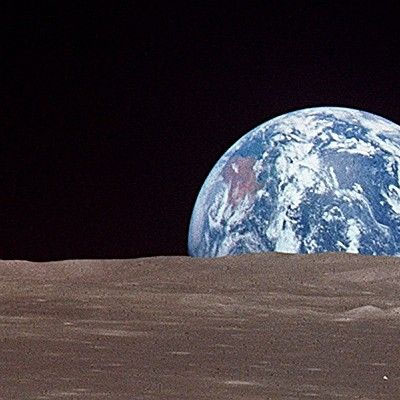
In outer space we went from our first rocket launches in the 1940s, to placing satellites in orbit in the 50s, to human space flight, walking on the Moon and our first interplanetary robotic missions in the 60s. We filled the space above our atmosphere with ever increasingly intelligent robotic technology, aimed at Earth, to provide us with a planetary-wide picture. We saw our planet suspended in space for the first time, our big blue marble. And finally, as the century closed, we took the first steps to build long-term habitable environments in near-Earth space.
So where are we headed as we approach and reach 2100? Here are some predictions:
2012 = 6
Today our human space population equals 6, the impermanent astronaut and cosmonaut inhabitants of the International Space Station. Once China’s taikonauts occupy their new space station our near-Earth space population will increase by 50% to 9.
2050 = 10,000
In 2050 the human population of space will have reached 10,000. Where will they be?
The primary industries of space will focus on maintaining and building capacity for humans to survive in the many different environments we will encounter.
Artists will join engineers and scientists going into space. Tourism will spread from near Earth to the Moon. Human space populations will remain dependent to a large degree on support from Earth but increasingly our human presence in space will become self-managing and self-sustaining.
2100 = 1,000,000
By 2100 human space population will exceed 1,000,000, a drop in the bucket compared to the billions of us on Earth, but still a substantial population. Many humans living in space will have been born there. Human colonies on the Moon and Mars will have spread to multiple locations exploiting the resources available on the surface, the beginning of a land rush.
Permanently occupied mining and manufacturing operations will locate on asteroids and moons to exploit resources useful for space industries. Most of these will be remotely run using telepresence and intelligent machines.
Earth will be a customer of many space enterprises particularly those dealing with rare materials of technological value to the planet’s population.
How Will Humans Organize Themselves in Space in 2100?
Today nations pursue space objectives and only recently have commercial enterprises entered into the picture. Will nationalism remain the identifier for humans in space as we establish permanent occupancy of Deep Space, the Moon and Mars?
If the International Space Station is an indicator of our future then we will see nations forming consortia and commercial enterprises entering into partnerships. But for how long will this be the case?
Once human populations begin to grow on the Moon will it become its own nation state? As human presence on Mars grows will it follow?
Will humans be the only beings and citizens of these new states? Or will intelligent machines be recognized as equal to humans and granted corresponding rights?

In future blogs we will take a look at these prognostications in greater detail. So come along for the ride and send me your predictions, questions and observations. I promise to reply at sub-light speed which by now you know is pretty darn fast.
]]>
