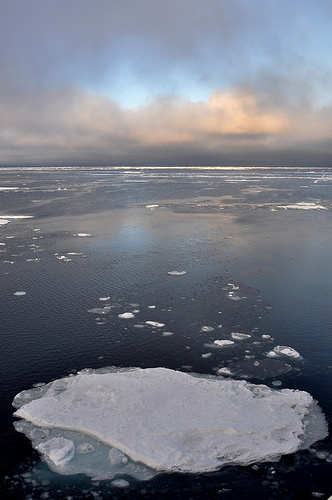
Is the pace of a melting land-based ice on Greenland and the trend of declining Arctic sea ice responsible? As one climate scientist recently stated, “What happens in the Arctic doesn’t stay in the Arctic.” And climate models are confirming this.
According to a study by the Atmosphere and Ocean Research Institute at the University of Tokyo, there is a distinct connection between freaky cold weather in the Northern Hemisphere and Arctic ice loss. The study appeared in the journal, Nature Geoscience on October 26, 2014. Its conclusions, that global warming is doubling the risk of extreme winters in North America and Eurasia. The study involved simulations from 22 climate models.
What do the simulations show?
Coincidentally the models match observed weather. Hence confidence in using them to predict likely long term climate effects.
So Toronto getting a blast of winter earlier shouldn’t be a surprise. And based on what the long-term weather forecasts are predicting, fall right in line with the climate models and simulations.
And scientists who do these climate simulations also point out that sometimes all we are witnessing is natural variability which may have nothing to do with sea ice decline.
Some climatologists argue that the Arctic Ocean is too small an area and the sea ice decline not significant enough to be responsible for the movement of cold air masses in the way we are presently observing. They seek another explanation, that this is just a freaky series of weather events coincident with declining sea ice cover but not caused by it. Could it be natural variability, and if not, could changes in solar radiation levels, cosmic rays, volcanic eruptions, wind patterns and oceanic heat transport be the potential cause or causes?
No scientists, however, have yet to find the smoking gun for any other explanation and until they do, the prevailing opinion is the warming atmosphere caused by greenhouse gases (GHGs) is the only clear and plausible correlation. And that the carbon dioxide, methane, and other GHGs are largely coming from human industrial and extractive processes, and not from nature.