The ability to fly again is a far cry from NASA’s current model with its upcoming Space Launch System (SLS) which may finally fly within the next two years. SLS is a monster rocket that is largely a throwaway, costing billions of dollars. SpaceX launches, on the other hand, cost under $60 million per flight, averaging a cost of $5,500 per kilogram of payload ($2,500 per pound). This is expected to go down to less than $1,000 per kilogram (approximately $450 per pound) once reusable first stages are commonly deployed in launches. Compared to other space launch providers, national and commercial, SpaceX is driving costs down by at least 50% in the short-term.
But now SpaceX has decided to take its next rocket with reusable first stages, and send a crewed flight of two space tourists to the Moon before the end of 2018. The timing of 2018 is interesting and probably not a coincidence. If you remember, 1968 marked the first crewed mission to fly to the Moon on Apollo 8.
In making the announcement, Elon Musk paid tribute to NASA thanking them for making it possible for the company to attempt to achieve what was, at the time, the greatest NASA milestone, only to be surpassed in the following summer with the first Moon landing.
How will SpaceX accomplish this mission?
The Falcon Heavy, an enhanced version of Falcon 9 with two additional first stage rockets strapped to the original. Falcon Heavy will launch sometime in 2017, likely before the end of the summer. With twice the thrust of existing commercial and national rocket launchers, Falcon Heavy will be the launch heavyweight until SLS is ready to go.
SpaceX has developed a crew capsule to ride on top of the Falcon 9 and the Heavy, that will eventually carry NASA astronauts to the International Space Station (ISS). The crewed version of the capsule, called Dragon 2, will replace the current one used to resupply ISS. From 2018 onward, Dragon 2 launches will deliver humans to low-Earth orbit.
From 2018 onward, Dragon 2 launches will deliver humans to low-Earth orbit, and now, with the planned trip to the Moon, will return us to Deep Space, abandoned as a destination for human crews after the end of Apollo.
If the flight is planned to reach the Moon on Christmas Eve we may have a repeat of one of the most famous readings from the Bible ever broadcast. The three crew members, William Anders, Jim Lovell and Frank Borman, ended their broadcast with a reading that began with “In the beginning” and ended with “God bless all of you…on the good Earth.” As they read live pictures of the Moon passing beneath them were broadcast to hundreds of millions watching.
The SpaceX announcement doesn’t draw attention to the timing coincidence. But I am sure Elon Musk, who understands the symbolic importance, will have thought deeply about this.

A final thought. Can SpaceX achieve this milestone within the 2018 timeframe? The company’s history to-date would suggest the timing is very tight between the first tests of the Falcon Heavy and the Dragon 2 capsule. Anything could go wrong with both components. One would want to have a number of flights under SpaceX’s belt before putting two people in a rocket to the Moon. So standby to see if the real Tony Stark, Elon Musk, can make this latest dream, a reality.
]]>
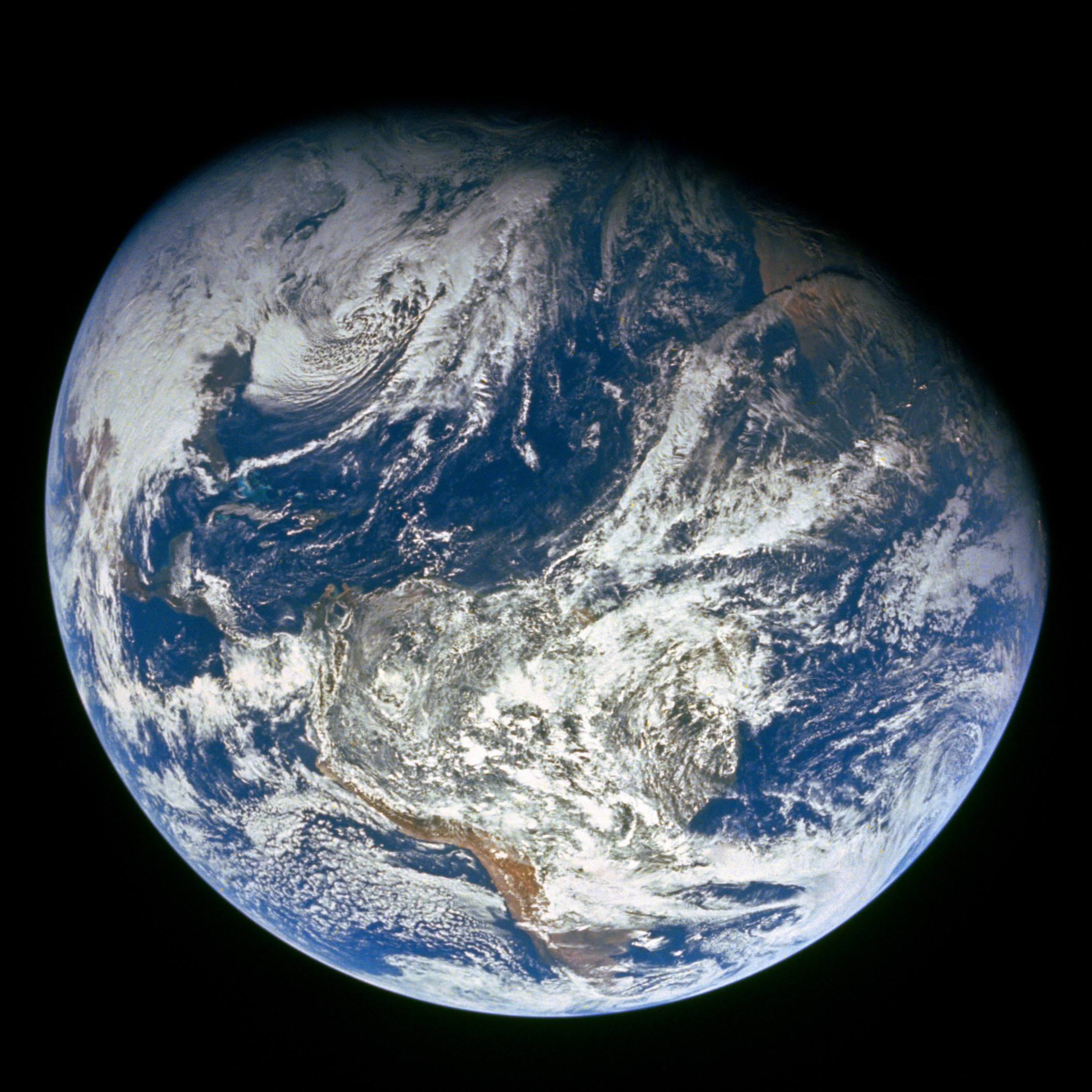
Apollo 8 was the first time human space travelers had gazed down upon our planet from afar. What it showed was just how fortunate we were to be inhabitants of such a benign and beautiful place.
But the President continued. He described Earth observations by scientists from even before 1968 to today that indicated changes were happening on the planet and that those changes were a consequence of human activities. The President didn’t skirt around the subject. He stated, “science, accumulated and reviewed over decades, tells us that our planet is changing in ways that will have profound impacts on all of humankind.” He went on to describe the recent past, “the 12 warmest years in recorded history have all come in the last 15 years,” and “last year, temperatures in some areas of the ocean reached record highs, and ice in the Arctic shrank to its smallest size on record.”
The President went on asking if “we will have the courage to act” on the overwhelming evidence, almost universally supported by scientists, of human-induced climate change . The percentage he quoted was 97% including world-renowned physicists, chemists, climatologists, geologists, paleontologists and even some former climate science deniers.
And as he spoke to the students he exclaimed, “I refuse to condemn your generation and future generations to a planet that’s beyond fixing.” These are welcome words from a world leader and from a nation who along with China represent the biggest greenhouse gas emitters on our planet.
In past postings I have written about China’s efforts to deal with carbon emissions. It is now gratifying to see the United States move from a lukewarm approach to concerted action to address carbon pollution. I have also stated in previous postings that the biggest threat to our atmosphere comes from coal-fired power plants and their emissions, and from politicians who bury their heads in the sand by talking about improbable technologies like “clean coal.” This is true for the United States, China and Canada, where I live, let alone other countries around the world.
I have faulted President Obama for what I have considered a public relations approach to the issue of climate change up until now. That polls and elections have driven policy rather than scientific certainty. And I continue to wonder when the nations of the world will make a “Manhattan Project” investment in developing an economy not built around the energy derived from burning fossil fuels.
So parts of the President’s speech to me seemed so far removed from addressing the issue of climate change which was supposedly his main message. Instead he talked about the revival of domestic oil and gas production, job creation and the issue of reducing American dependency on foreign fossil fuel sources. I guess this was a sop to those on the American right who think the President is out to destroy “Big Oil.” Clearly he is not.
So what concrete announcements about policy came from yesterday’s speech?
President Obama, in one part of his speech, addressed the ongoing issue of the Keystone XL Pipeline. Here are his exact words:
“Now, I know there’s been, for example, a lot of controversy surrounding the proposal to build a pipeline, the Keystone pipeline, that would carry oil from Canadian tar sands down to refineries in the Gulf. And the State Department is going through the final stages of evaluating the proposal. That’s how it’s always been done. But I do want to be clear: Allowing the Keystone pipeline to be built requires a finding that doing so would be in our nation’s interest. And our national interest will be served only if this project does not significantly exacerbate the problem of carbon pollution. The net effects of the pipeline’s impact on our climate will be absolutely critical to determining whether this project is allowed to go forward. It’s relevant.”
It was interesting to read in my two morning newspapers the interpretation of what the President was stating. In one paper the comments by the President indicated a rejection of the pipeline. While in the other the comments were interpreted as a conditional OK to proceed.
As I have written in the past, the issue of Keystone and climate change is more symbolic than real. Environmentalists have drawn a line in the sand over shipping bitumen by pipeline from Alberta to Texas. The President called the Alberta oil sands, “tar sands,” considered a pejorative phrase by Alberta oil producers and the Canadian government. For environmentalists this was a hint that the pipeline would ultimately be rejected. But those in support of the industry believe that the actual operation of the pipeline will be far less carbon intensive than when, not if, the oil finally gets shipped to Texas refineries. That’s because the oil would go by rail if no pipeline exists. By rail oil sands production would then include the additional carbon output from train transportation. And in the event of a derailment, the potential risk to the environment would probably be greater than any leak from a pipeline.
What the President didn’t include in his climate change speech was any commitment to a carbon tax or a cap-and-trade scheme. What does this say about politics in America today? How can a President no longer running for re-election and therefore no longer in fear of losing, not implement what could be the fastest way to begin addressing rising carbon pollution in the atmosphere.