Permafrost covers 20% of the Northern Hemisphere. By definition, it is ground that stays frozen for at least two consecutive years. In the Arctic, Antarctica and alpine areas, permafrost persists.
Some areas of permafrost go through seasonal partial thaws. Much never does until recent years as polar regions and mountainous areas are increasingly impacted by global atmospheric warming.
What’s stored in permafrost is about what we need to be concerned. It contains an enormous amount of biomass, which is a natural carbon sink. That’s a good thing as long as the permafrost doesn’t melt. But biomass also contains what is being referred to as zombie viruses and bacteria.
In 2016, an anthrax outbreak in Siberia killed thousands of reindeer. The cause was traced to thawing permafrost that exposed a 75-year-old infected reindeer. The thaw had revived Bacillus anthracis, the anthrax bacterium that unfortunate reindeer ingested or inhaled.
It could just as well have been:
Here are some recent permafrost discoveries.
Today, scientists are increasingly concerned about the potential pandemic threat coming from the equatorial and polar areas of the planet. We know that mosquitoes, ticks, fleas and other wildlife can be common carriers of many equatorial diseases posing a threat: Malaria, Dengue, Zika, and Chikungunya, to name a few. But now we need to be on guard for viruses and bacteria emerging from the permafrost.
Today, we have a vaccine for smallpox and one for bubonic plague. We annually update influenza vaccines. But the zombie viruses and bacteria that have been buried in permafrost pose a threat because we have no recent exposure to them, meaning we won’t immediately have medical treatments to contain outbreaks. We won’t have built-up immunity either. That’s why there is an emerging Arctic monitoring network of scientists looking for viruses and bacteria that could come from permafrost and meltwater.
Although thawed permafrost contains traces of genomic information from viruses, Dr. Jonathan Stoye, a retrovirus researcher at the Francis Crick Institute in London, UK, notes that the “inherent instability of the viral nucleic acids” makes the likelihood of infection transmission less. He believes the greater threat would come from an awakening bacteria.
COVID-19 may have done humanity a favour. Our rapid response to it including new vaccines, and comprehensive global reporting, has us much better organized to recognize and fight an outbreak. Add permafrost to the list of disease vectors that include mosquitoes, ticks, fleas, rodents, snails, monkeys, bats, and other forms of wildlife posing a pandemic-starting threat.
]]>
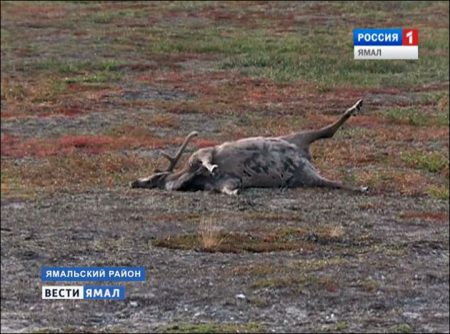
This is one example of what may become an even greater problem as Arctic permafrost melts in a warming world. The Arctic is warming at a rate three times faster than the rest of the planet. Preserved within it are microbes and viruses to which modern animals and humans have never been exposed. The reindeer that died is one of many that succumbed to anthrax in the early 20th century.
The agent that caused Spanish influenza, the 1918 pandemic, resulting in more deaths than all those who died on battlefields in World War One, was recently discovered very much alive in corpses buried in Alaskan permafrost. It is likely that permafrost will yield other pathogens as it melts with the biggest concerns smallpox and bubonic plague. Why? Because those diseases were endemic in animal and human populations in Siberia in the 18th and 19th century and can be found in remains buried in Arctic permafrost. One known event, a smallpox epidemic in the 1890s in Siberia wiped out 40% of the people in one town. Their bodies were buried in the permafrost by a river which 120 years later because of flooding from warming is now experiencing erosion.
The unknown diseases of prehistoric populations buried in the Arctic permafrost remain as much a threat as those diseases we do know. Sampling at burial sites has produced viral fragments of both known and unknown origin.
What other bacteria should we fear? Any microbe that can enter a spore hibernation phase requires us to be vigilant. Anthrax is just one that becomes dormant like this, capable of surviving tens of thousands of years. Tetanus and botulism also form spores and will likely be found in the remains of animals and humans as the permafrost melts. And don’t forget the viruses. The latter are far more likely to survive for long periods of hibernation and emerge as infectious agents capable of harming plants and animals.

And as the Arctic melts encouraging tourism, mining and other commercial activities, more humans will transit the polar region or decide to live there. The isolated incident of the Yamal Peninsula anthrax outbreak may become far more commonplace as our Arctic presence grows.
Just how far back in time can viruses and bacteria buried and frozen in the permafrost impact us today?
States Jean-Michel Claverie, an evolutionary biologist at Aix-Marseille University, “The possibility that we could catch a virus from a long-extinct Neanderthal suggests that the idea that a virus could be eradicated from the planet is wrong, and gives us a false sense of security….This is why stocks of vaccine should be kept, just in case.” Claverie found DNA from giant viruses in radiocarbon-dated samples emerging from the Siberian permafrost in 2014 that date back 30,000 years. And in another study, scientists revived bacteria trapped in Antarctic ice core samples dating back 8 million years.
Claverie’s recommendation on retaining vaccines for diseases we once considered extinct makes a lot of sense. But what about diseases caused by microbes to which we and other modern living things have never been exposed?
Climate change is turning out to be far more than a concern about a hotter Earth, rising sea levels, the death of coral reefs, changing weather, and animal and plant extinctions. We now add the threat of prehistoric pathogens which may emerge from what was thought of as permanently frozen ground dating back to the last Ice Age.
]]>Northern Siberia this summer has seen daytime temperatures at 35 Celsius (95 Fahrenheit) degrees (10 Celsius or 18 degrees Fahrenheit warmer than normal). This is unprecedented warmth and along with it has emerged an outbreak of anthrax. As of August 2nd eight people were confirmed to be infected, 9 were being tested, one had died, and 2,300 reindeer had succumbed as well. The Russian government has sent in troops trained to combat biological warfare.

No scientist has yet declared that the anthrax rose from the melting permafrost but the coincidence of record warmth is not to be ignored. States Jennifer Francis, climate scientist from Rutgers University, “this is uncharted territory in the human experience, and especially the ecosystem is likely to respond in abrupt ways.”
Vladimir Romanovsky, climate scientist, University of Alaska-Fairbanks, theorizes that melting permafrost may have released anthrax buried in the biomass. The anthrax entered local water sources. He states, “we warned about it, several years ago…a kind of theoretical discussion.” Now we may be seeing theory turn to reality.
Climate change and disease spread go hand in hand. Zika, Dengue, Chikungunya, and Malaria are mosquito-spread diseases finding new geography as the world warms. But biological agents and nuclear contamination buried in the permafrost and ice of the north during the height of the Cold War may soon find its way into the biosphere. Just this week Canadian scientists raised concern about nuclear contamination buried in Greenland ice that may soon emerge with the potential to threaten local wildlife on land and in the nearby ocean waters.
The anthrax outbreak may not have come from biological weapon caches. The disease could have come about naturally from an infected reindeer carcass or human remains emerging from permafrost-bound ground. The release of pathogens from permafrost has been the subject of scientific speculation for years. Siberia, Alaska and Canada could be harboring bacteria three million years old. We don’t know what impact these bugs when released from their icy prison will have on human and animal populations. We may have never encountered some of what will emerge.
States Francis, “the record-warm Arctic so far this year, which is probably a preview of a two-degrees-warmer globe, will spawn all sorts of surprises that we cannot foresee.”
